Matcha Roll Cake (Green Tea Chiffon Sponge with Cream)
Baking Medium

Matcha Roll Cake (Green Tea Chiffon Sponge with Cream)

Quick answer

A Japanese-style roll cake built on a matcha chiffon sponge and filled with softly whipped cream.

What makes this special

  • Sifted matcha powder tints this soft Matcha Roll Cake sponge, filled with whipped cream.
  • Sifted matcha folded into chiffon sheet for even green color
  • Meringue added in three stages preserves airy texture
Total time
40 min
Level
Medium
Servings
8 servings
Ingredients
8
Calories
250 kcal
Protein
6 g

Key ingredients

cake flourmatcha powdereggssugarvegetable oil

Core cooking flow

  1. 1 Preheat the oven to 180°C and line the pan with parchment.
  2. 2 Whisk 4 egg yolks with 40 g sugar until lighter in color.
  3. 3 Add the sifted flour mixture to the yolk batter and fold with a spatula, scraping the bottom.

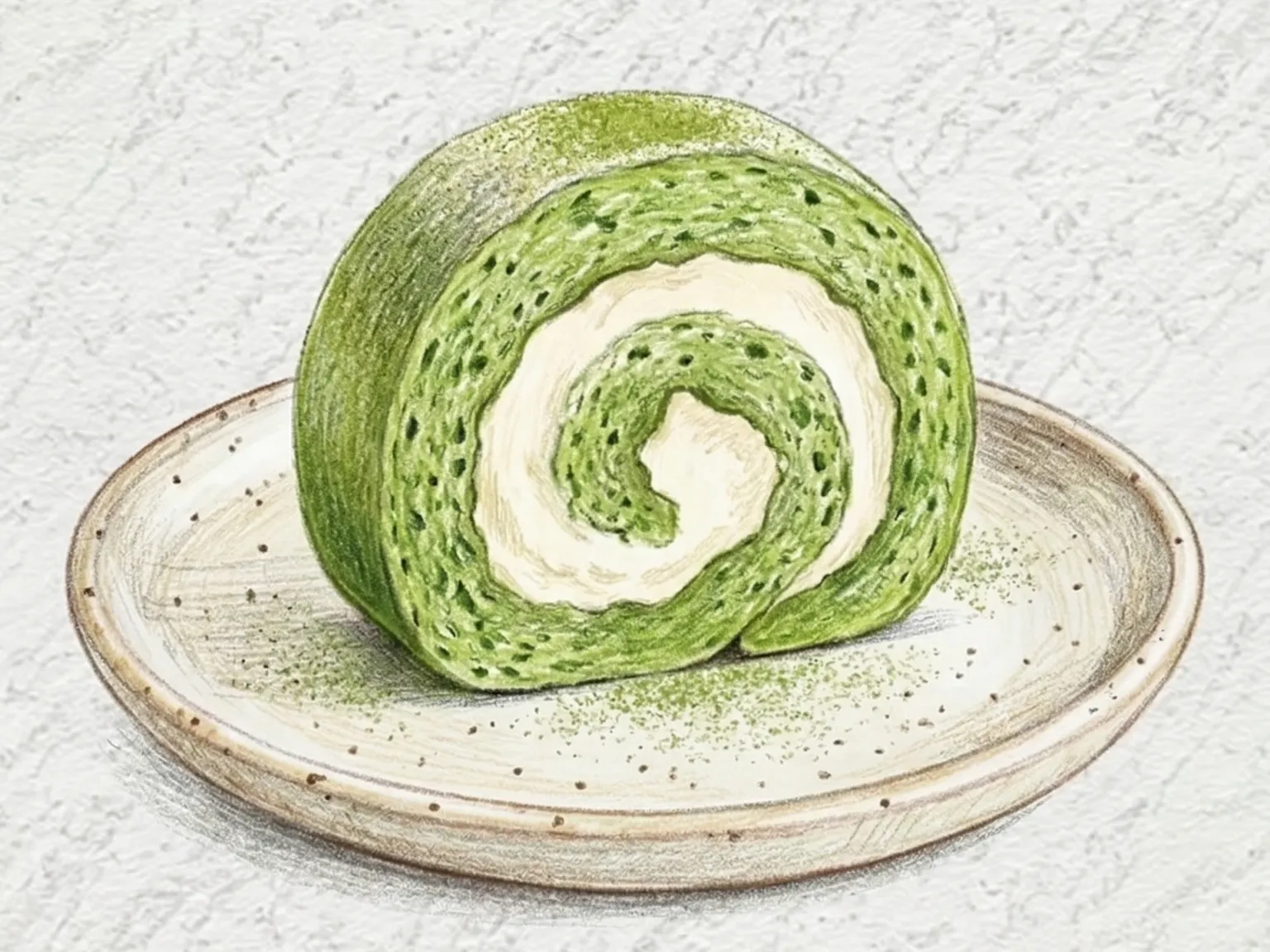
A Japanese-style roll cake built on a matcha chiffon sponge and filled with softly whipped cream. Sifting matcha powder into the egg yolk batter distributes the vivid green color evenly, while a stiff meringue folded in three additions preserves the air bubbles that give the sheet its light, springy structure. Baking at 180 degrees Celsius for 12 to 15 minutes, just until the surface springs back to the touch, keeps the sponge pliable enough to roll without cracking. After inverting and cooling, cream whipped to about 80 percent stiffness is spread across the sheet, thinner at the edges and thicker down the center so the finished cross-section shows a uniform spiral. Rolling tightly in plastic wrap and refrigerating for at least two hours sets the shape and allows the matcha flavor to meld with the cream. Slicing with a hot, damp knife produces clean edges. The matcha's gentle bitterness lingers after the cream's sweetness fades, leaving a layered aftertaste that distinguishes this roll from vanilla or chocolate versions.

Prep 25min Cook 15min 8 servings

Instructions

Read the steps as a cooking flow: prep, heat, seasoning, doneness control, and finish.

6 steps
  1. 1
    Step

    Preheat the oven to 180°C and line the pan with parchment.

    Sift 60 g cake flour and 12 g matcha powder twice so the color spreads evenly and no bitter lumps remain.

  2. 2
    Season

    Whisk 4 egg yolks with 40 g sugar until lighter in color.

    Add 30 ml vegetable oil and 40 ml milk little by little, mixing until smooth so the batter does not split.

  3. 3
    Prep

    Add the sifted flour mixture to the yolk batter and fold with a spatula, scraping the bottom.

    Stop as soon as no dry streaks remain, before overmixing dulls the matcha color.

  4. 4
    Season

    Whip 4 egg whites, adding the remaining 40 g sugar in portions, until the meringue is firm and glossy.

    The peak should hold but bend slightly at the tip, not look grainy.

  5. 5
    Heat

    Fold the meringue into the batter in three additions, then spread it evenly in the pan.

    Bake at 180°C for 12-15 minutes, removing it when the surface springs back lightly to the touch.

  6. 6
    Season

    Invert the sponge and let it cool, then whip 250 ml cream with 25 g sugar to about 80 percent stiffness.

    Spread it thinner at the edges, roll tightly, chill for 2 hours, and slice with a hot damp knife.

After the steps

Pick a recipe that fits this dish.

Continue with shared ingredients, meal pairings, or a similar method.

Recipes That Go Well With This

More Baking →

Based on shared ingredients and meal pairing

Earl Grey Roll Cake (Tea-Infused Chiffon Cream Roll)
Shared ingredient: cake flour Baking

Earl Grey Roll Cake (Tea-Infused Chiffon Cream Roll)

Earl Grey roll cake is a chiffon sponge sheet baked with finely ground tea leaves folded directly into the batter, then spread with lightly sweetened whipped cream and rolled into a tight spiral. The meringue folded into the batter gives the sponge enough structure to hold its shape while rolling without cracking, a balance that depends on not overworking the batter after the egg whites go in. The tea leaf particles embedded throughout the crumb release bergamot fragrance with every bite -- a different quality from flavoring the cream separately, because the heat of baking fixes the aroma into the sponge itself. The cream filling is deliberately understated in sweetness so it supports the tea flavor rather than competing with it, and the fat content keeps the crumb moist even after overnight refrigeration. The cross-section of a sliced roll shows a clean gradient of pale brown sponge against white cream, with the tea flecks visible throughout. Bergamot aroma peaks when the cake is slightly cool rather than cold, making it worth pulling from the refrigerator fifteen minutes before serving.

Strawberry Shortcake
Shared ingredient: cake flour Baking

Strawberry Shortcake

Three layers of airy chiffon sponge are stacked with generous swirls of whipped cream and halved fresh strawberries in the style of Japanese patisseries. The sponge is made by warming eggs and sugar over a water bath before whipping to ribbon stage, which traps enough air to give each slice a pillowy, cloud-like texture. Cream is whipped to roughly eighty percent - firm enough to hold its shape between layers yet soft enough to feel silky on the tongue. Strawberry acidity cuts through the fat in the cream, keeping every bite bright rather than cloying. A light brush of simple syrup on each sponge layer before assembly adds moisture that sustains the cake through refrigeration overnight. The whole cake is then coated in cream and decorated with berries on top. This is the default birthday cake in many Japanese and Korean households, and its clean, fruit-forward flavor makes it adaptable to any seasonal fruit.

Roasted Kabocha Miso Nut Salad
Serve together Salads

Roasted Kabocha Miso Nut Salad

Kabocha squash is sliced into half-moons and roasted in a hot oven until the cut surfaces caramelize and the flesh turns chestnut-soft and dry in the best possible way. The dressing combines white miso, rice vinegar, and maple syrup into a mixture where salt, acid, and a restrained sweetness reinforce each other and amplify the roasted squash underneath. Arugula provides the peppery, slightly bitter base that keeps the salad from tipping too sweet. Chickpeas add lean protein and a firm, satisfying chew that holds up against the tender squash. Walnuts, crushed roughly rather than chopped fine, contribute crunch and a deep, roasted nuttiness that layers well with the soft squash in each forkful. The contrast between textures, tender squash against resistant walnut, is what makes this salad interesting across every bite. Autumn kabocha, at the peak of its natural sugar content, delivers the most pronounced sweetness, and the dish is filling enough to stand as a vegetarian main course with nothing else alongside it. If using refrigerated squash, adjust oven time and temperature to ensure even caramelization.

Matcha White Chocolate Brownies
Similar recipe Baking

Matcha White Chocolate Brownies

White chocolate melted with butter forms the base of this brownie, and matcha powder folded in at the end gives it a vivid green color and a distinctly bitter tea note. The cocoa butter in the white chocolate is responsible for the dense, fudgy chew that sets these brownies apart from cakey versions, while the matcha's astringency offsets the sweetness so that neither flavor dominates. White chocolate chips added to the batter do not fully melt during baking; they hold their shape partially, creating pockets of concentrated sweetness that punctuate the more restrained matcha base. Baking at 175 degrees Celsius for 22 to 25 minutes, pulling the pan when the center still wobbles slightly, is the key to achieving the chewy interior; the residual heat finishes the set as the brownies cool. Overbaking dries them into crumbly squares and mutes the matcha color. Sifting the matcha powder thoroughly before adding it eliminates the dry clumps that would otherwise appear as bitter spots. Once cooled completely, the brownies cut into clean-edged squares with a glossy top.

Serve with this

Grilled Sliced Rice Cake (Pan-Fried Rice Cake with Soy Honey Glaze)
Desserts Easy

Grilled Sliced Rice Cake (Pan-Fried Rice Cake with Soy Honey Glaze)

Jeolpyeon-gui is a Korean grilled rice cake snack made by pan-frying flat rice cake slices in sesame oil over medium-low heat until golden on both sides, then glazing them in a sauce of soy sauce, honey, sugar, and water over low heat. Searing the rice cakes in sesame oil before adding the glaze creates a thin, crisped surface layer that performs two functions at once: it keeps the interior from losing its chewy, dense character and creates enough texture for the glaze to cling to rather than slide off. Once the glaze goes in, the heat must drop immediately to low -- the sugar content is high enough to burn in seconds if left on medium heat. The entire coating step takes only two to three minutes of flipping the pieces until the sauce reduces into a lacquered shell. Soy sauce delivers a salty, savory backbone, honey brings a weighted sweetness that granulated sugar alone would flatten, and together they form a glaze that tastes more complex than the ingredient list suggests. Toasted sesame seeds and pine nuts scattered over the finished pieces add a nutty fragrance that plays off the soy-based umami below. Leftovers reheat well in a dry pan and regain most of their crispness.

🧒 Kid-Friendly 🌙 Late Night
Prep 10min Cook 12min 2 servings
Beef Empanadas
Western Medium

Beef Empanadas

Beef empanadas wrap a cumin-and-paprika-seasoned filling of ground beef, onion, olives, and boiled egg inside flour dough, folded into a half-moon shape and baked until the crust turns golden and flaky. The oven heat crisps the outer shell while the meat filling steams inside, staying moist against the dry exterior. Cumin gives the beef a deep, earthy warmth that distinguishes these from other stuffed pastries; olives add pockets of briny saltiness, and sliced boiled egg introduces a softer texture throughout the interior. Pressing the edges firmly with a fork before baking is essential to keep the juices sealed inside. Compact enough to eat with one hand, each empanada delivers a burst of concentrated, layered flavor the moment the crust breaks, earning its place as both a convenient snack and a genuinely satisfying one.

🧒 Kid-Friendly 🎉 Special Occasion
Prep 30min Cook 25min 4 servings
Korean Ssanghwa Herbal Tea
Drinks Hard

Korean Ssanghwa Herbal Tea

Ssanghwa-cha is a traditional Korean tonic tea made by slow-simmering astragalus root, angelica root, cinnamon bark, licorice, and jujube in approximately 1800 ml of water over low heat for more than fifty minutes. The prolonged extraction coaxes layered complexity from each herb, producing a brew that is simultaneously bitter, sweet, and warmly aromatic with cinnamon woven through every sip. Jujubes added during the simmer soften the sharpest herbal edges while contributing a mild natural sweetness that rounds the overall profile. Honey is stirred in after straining to let each person adjust the sweetness to taste. The tea is poured hot into a ceramic cup and finished with a small cluster of pine nuts whose oil blooms on contact with the steaming surface, releasing a gentle, nutty fragrance. The deep medicinal warmth lingers in the throat long after each sip, making the drink a reliable remedy for fatigue and cold weather.

🍺 Bar Snacks 🎉 Special Occasion
Prep 10min Cook 60min 4 servings

Similar recipes

Mochi Daifuku (Soft Rice Cake Stuffed with Red Bean Paste)
Baking Easy

Mochi Daifuku (Soft Rice Cake Stuffed with Red Bean Paste)

Glutinous rice flour is mixed with water and sugar, steamed or microwaved until it becomes a translucent, stretchy mass, then dusted with starch and wrapped around a ball of sweet red bean paste. The outer mochi shell is soft and pliable, yielding to the teeth with a slow, elastic pull before giving way to the dense sweetness of the filling inside. Because the dough begins to firm and lose its characteristic chew within hours, daifuku is best eaten the day it is made. Swapping the red bean for fresh strawberry or ice cream produces popular seasonal and modern variations. The starch coating - typically potato or cornstarch - serves a dual purpose: preventing the pieces from sticking to each other and adding a dry, powdery contrast to the otherwise tacky surface.

🧒 Kid-Friendly 🎉 Special Occasion
Prep 20min Cook 10min 4 servings
Tea Rice Bowl (Japanese Green Tea Poured Rice with Salmon)
Rice Easy

Tea Rice Bowl (Japanese Green Tea Poured Rice with Salmon)

Ochazuke is a Japanese dish of cooked rice topped with grilled salmon flakes, dried seaweed, green onion, and wasabi, over which hot green tea is poured just before eating. The astringent bitterness of the green tea works against the fatty richness of the salmon, cutting through the oil and keeping the palate clean throughout the bowl. Wasabi adds a sharp, nasal heat that punctuates each spoonful differently depending on how much dissolves into the surrounding liquid. A light drizzle of soy sauce provides a salty baseline that ties the ingredients together without overpowering the tea. The seaweed flakes soften and dissolve into the hot liquid, gradually releasing a subtle oceanic aroma that spreads through the broth. As the meal progresses, the rice releases some starch into the tea, thickening the broth slightly and shifting the flavor toward the end. Using dashi stock made from kombu and bonito instead of green tea produces a richer, more umami-forward version. Variations with pickled plum or mentaiko in place of salmon are equally common.

🥗 Light & Healthy ⚡ Quick
Prep 10min Cook 10min 2 servings
Mentaiko Yuzu Cream Udon
Noodles Medium

Mentaiko Yuzu Cream Udon

Myeongran yuja cream udon is a Japanese-style noodle dish that features a sauce made from a combination of salted pollock roe and yuzu marmalade. The base of the liquid consists of heavy cream and milk, which are enriched with butter to create a dense and smooth texture. The preparation begins by melting butter in a pan and sauteing minced garlic until the aroma is released. Once the garlic is fragrant, the cream and milk are poured in. This mixture needs to simmer over low heat for approximately two to three minutes until it thickens enough to coat the back of a spoon. Instead of adding the yuzu marmalade all at once, the cook incorporates it in small amounts. This gradual process allows for precise control over the citrus acidity so that it complements rather than overshadows the richness of the heavy cream. After removing the pan from the heat, two-thirds of the salted pollock roe is stirred in. The residual warmth of the sauce is sufficient to gently cook these eggs, ensuring they remain tender. The remaining third of the roe is reserved to be placed raw on top of the finished bowl, providing a distinct briny flavor and a grainy texture in every bite. To finish the dish, freshly cracked black pepper is added for a subtle sharpness, and shredded nori is scattered over the top to provide a roasted, oceanic scent that works well with the yuzu fragrance. The thick udon noodles provide a substantial chew that allows them to carry the heavy sauce and stand up to the combination of salty, creamy, and acidic elements without the flavors becoming lost.

🎉 Special Occasion 🌙 Late Night
Prep 12min Cook 15min 2 servings

Tips

Culinary-grade matcha works, but ceremonial grade gives a more rich color.
Spread cream thinner at the edges and thicker in the center for an even swirl.

Nutrition (per serving)

Calories
250
kcal
Protein
6
g
Carbs
22
g
Fat
16
g