Matcha White Chocolate Brownies
Quick answer
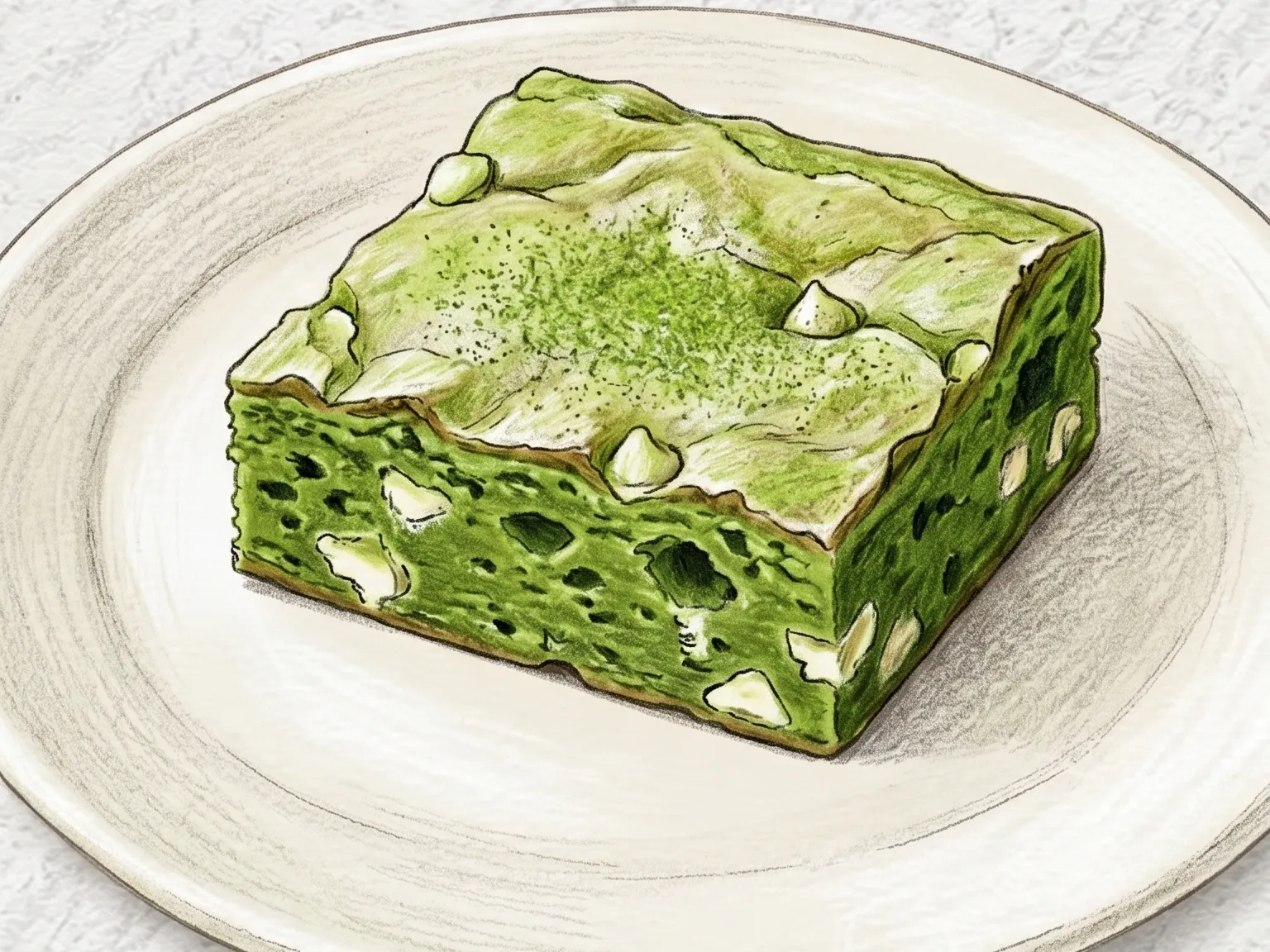
White chocolate melted with butter forms the base of this brownie, and matcha powder folded in at the end gives it a vivid green color and a distinctly bitter tea note.
What makes this special
- White chocolate cocoa butter creates a fudgy, dense chew in these Matcha Brownies.
- Cocoa butter from white chocolate gives the brownie its fudgy chew
- Matcha bitterness offsets white chocolate sweetness into balance
Key ingredients
Core cooking flow
- 1 Preheat the oven to 175°C and line a square pan with parchment, leaving edges to lift the brownies later.
- 2 Place 140 g white chocolate and 80 g unsalted butter in a bowl over a gentle double boiler.
- 3 In another bowl, whisk 2 eggs with 70 g sugar until the color looks lighter...
White chocolate melted with butter forms the base of this brownie, and matcha powder folded in at the end gives it a vivid green color and a distinctly bitter tea note. The cocoa butter in the white chocolate is responsible for the dense, fudgy chew that sets these brownies apart from cakey versions, while the matcha's astringency offsets the sweetness so that neither flavor dominates. White chocolate chips added to the batter do not fully melt during baking; they hold their shape partially, creating pockets of concentrated sweetness that punctuate the more restrained matcha base. Baking at 175 degrees Celsius for 22 to 25 minutes, pulling the pan when the center still wobbles slightly, is the key to achieving the chewy interior; the residual heat finishes the set as the brownies cool. Overbaking dries them into crumbly squares and mutes the matcha color. Sifting the matcha powder thoroughly before adding it eliminates the dry clumps that would otherwise appear as bitter spots. Once cooled completely, the brownies cut into clean-edged squares with a glossy top.
Instructions
Read the steps as a cooking flow: prep, heat, seasoning, doneness control, and finish.
- 1Season
Preheat the oven to 175°C and line a square pan with parchment, leaving edges to lift the brownies later.
Sift the 90 g cake flour, 10 g matcha powder, and 1 g salt together so no bitter dry clumps remain.
- 2Control
Place 140 g white chocolate and 80 g unsalted butter in a bowl over a gentle double boiler.
Stir on low heat until smooth and glossy, keeping water and steam from splashing into the chocolate mixture.
- 3Season
In another bowl, whisk 2 eggs with 70 g sugar until the color looks lighter and the sugar begins to dissolve.
Add the melted chocolate mixture only when it is warm, not hot, so the eggs do not scramble.
- 4Season
Add the sifted flour, matcha, and salt to the batter, then fold with a spatula while scraping the bottom of the bowl.
Stop as soon as the green color is even and no dry flour streaks are visible.
- 5Step
Fold in 40 g white chocolate chips with only a few turns so the pieces stay distinct.
Scrape the batter into the pan, push it into the corners, and level the surface for even baking.
- 6Heat
Bake at 175°C for 22-25 minutes, removing the pan when the center still wobbles slightly when pressed.
Let the brownies cool completely in the pan before slicing, which keeps the fudgy texture and clean edges.
After the steps
Pick a recipe that fits this dish.
Continue with shared ingredients, meal pairings, or a similar method.
Recipes That Go Well With This
More Baking →Based on shared ingredients and meal pairing
Matcha Roll Cake (Green Tea Chiffon Sponge with Cream)
A Japanese-style roll cake built on a matcha chiffon sponge and filled with softly whipped cream. Sifting matcha powder into the egg yolk batter distributes the vivid green color evenly, while a stiff meringue folded in three additions preserves the air bubbles that give the sheet its light, springy structure. Baking at 180 degrees Celsius for 12 to 15 minutes, just until the surface springs back to the touch, keeps the sponge pliable enough to roll without cracking. After inverting and cooling, cream whipped to about 80 percent stiffness is spread across the sheet, thinner at the edges and thicker down the center so the finished cross-section shows a uniform spiral. Rolling tightly in plastic wrap and refrigerating for at least two hours sets the shape and allows the matcha flavor to meld with the cream. Slicing with a hot, damp knife produces clean edges. The matcha's gentle bitterness lingers after the cream's sweetness fades, leaving a layered aftertaste that distinguishes this roll from vanilla or chocolate versions.
Fudgy Brownies
A fudgy brownie delivers dense, moist chocolate intensity in every bite, distinguishing itself from cake-style brownies through a higher ratio of butter and chocolate to flour. Melting chocolate and butter together before folding in sugar and eggs produces a glossy, pourable batter that bakes into a thin crust on top while the interior stays rich and slightly underdone. Pulling the pan from the oven just before the center fully sets is critical: as the brownie cools, that center sinks into a chewy, truffle-like layer. Using dark chocolate with a high cacao percentage shifts the flavor toward bittersweet depth rather than simple sweetness. A scattering of flaky sea salt on top before baking creates a sweet-salty contrast that amplifies the chocolate. Walnuts or pecans folded into the batter introduce crunch amid the dense crumb. Cutting clean squares requires patience, as the texture firms only after the brownie has cooled completely.
Wafu Daikon Salad (Shredded Radish with Japanese Soy Dressing)
Wafu daikon salad shreds daikon radish into very fine julienne strips and dresses them with a Japanese wafu dressing made from soy sauce, rice vinegar, and sesame oil, finished with bonito flakes and torn nori. Soaking the shredded daikon in cold water for five minutes draws out excess starch and maximizes its crisp, snappy texture - draining and drying thoroughly afterward prevents the dressing from becoming diluted. The dressing layers soy salt over the gentle acidity of rice vinegar and the nuttiness of sesame oil, giving depth to the otherwise neutral radish. Bonito flakes placed on top wave gently in the residual heat and release a smoky umami that permeates the salad. Shredded nori adds a briny crunch that creates textural contrast throughout the bowl.
Japanese Cotton Cheesecake
Japanese cotton cheesecake pursues a cloud-light, moist texture in place of the dense, heavy richness of a New York-style cheesecake. Cream cheese is melted and blended with egg yolks and milk, then stiffly beaten meringue is folded in three additions to keep as much air in the batter as possible. Baking in a water bath at around 150 degrees Celsius prevents the surface from setting too quickly and allows the interior to cook gently, so the finished cake wobbles when nudged from the pan. A slight collapse after removing from the oven is expected and normal. Resting in the refrigerator overnight redistributes moisture evenly through the crumb, deepening the cheese flavor while adding a silkier texture to each slice. On the palate, the cake dissolves almost weightlessly, releasing a mild tang from the cream cheese and a soft, eggy warmth. Very little flour goes into the batter, which keeps the texture smooth and delicate rather than cakey, making toppings entirely unnecessary.
Serve with this
Korean Dalgona Coffee (Whipped Instant Coffee Foam Milk)
Dalgona coffee is made by whipping equal parts instant coffee, sugar, and hot water with a hand mixer for three to five minutes until stiff, caramel-colored peaks form, then spooning the foam over iced milk. The whipped layer carries a concentrated, bittersweet coffee flavor that gradually blends into the cold, neutral milk below as you stir. A light dusting of cocoa powder on top introduces a faint chocolate note, and increasing the sugar slightly helps the whipped cream hold its stiff structure longer.
Glutinous Rice Cake Balls
Chapssal-danja are Korean glutinous rice cake balls filled with sweet red bean paste, boiled until they float, and rolled in a mixture of roasted soybean powder and sugar. The dough is flattened, wrapped around the filling, and sealed tightly into a sphere so the paste stays contained during boiling, with an extra minute of cooking after the balls surface to ensure the center is fully cooked through. A very thin brush of honey applied immediately after draining acts as an adhesive for the soybean powder coating and adds a faint floral sweetness to the exterior. Sifting the soybean powder before rolling produces a fine, even layer that gives each ball a powdery, melt-on-the-tongue finish over the chewy rice cake underneath. Kneading the glutinous rice dough thoroughly before portioning builds elasticity, which translates directly into the characteristic chew once the balls are cooked.
Burrito
A burrito layers seasoned ground beef, cooked rice, black beans, shredded cheese, and salsa inside a large flour tortilla that gets folded and rolled into a tight cylinder. Warming the tortilla briefly on a hot pan makes it pliable enough to wrap without tearing. The filling goes down the center in a long line, both ends fold inward first, then the whole thing rolls forward into a sealed package that holds together in the hand. Black beans add starchy substance and protein that make the burrito filling even without the meat at the center, and the tomato acidity in salsa cuts through the melted cheese and beef fat. A line of sour cream inside provides a cool, tangy buffer against the cumin-chili heat. For the cheese, Monterey Jack or cheddar melts evenly without clumping and binds the filling together well. Wrapping the finished burrito tightly in foil keeps the shape and makes it easier to eat on the go.
Similar recipes
Injeolmi Mochi Brownies (Chewy Rice Flour Cocoa Bars)
Injeolmi Mochi Brownies are a fusion dessert that combines cocoa batter with glutinous rice flour and a coating of toasted soybean powder. By replacing wheat flour with glutinous rice flour, these bars achieve an elastic, stretchy texture reminiscent of Korean rice cakes while maintaining a rich, fudgy interior. Brown sugar is used to impart a deep, caramel-like sweetness that complements the cocoa powder. To intensify the nutty aroma of traditional injeolmi, toasted soybean powder is dusted both inside the middle of the batter and on the top surface before baking. Once baked, the brownies are cooled completely to allow for clean, sharp slices. Serving them cold from the refrigerator firms up the crumb for a denser bite, whereas keeping them at room temperature keeps the mochi filling soft and pliable.
Tea Rice Bowl (Japanese Green Tea Poured Rice with Salmon)
Ochazuke is a Japanese dish of cooked rice topped with grilled salmon flakes, dried seaweed, green onion, and wasabi, over which hot green tea is poured just before eating. The astringent bitterness of the green tea works against the fatty richness of the salmon, cutting through the oil and keeping the palate clean throughout the bowl. Wasabi adds a sharp, nasal heat that punctuates each spoonful differently depending on how much dissolves into the surrounding liquid. A light drizzle of soy sauce provides a salty baseline that ties the ingredients together without overpowering the tea. The seaweed flakes soften and dissolve into the hot liquid, gradually releasing a subtle oceanic aroma that spreads through the broth. As the meal progresses, the rice releases some starch into the tea, thickening the broth slightly and shifting the flavor toward the end. Using dashi stock made from kombu and bonito instead of green tea produces a richer, more umami-forward version. Variations with pickled plum or mentaiko in place of salmon are equally common.
Black Sesame Brownies
Black sesame brownies are built on a base of dark chocolate and butter melted together over a double boiler, with roasted black sesame powder sifted in before folding. The bitter edge of the chocolate meets the toasted, grain-like aroma of the sesame, adding a nutty depth that standard brownies lack. The cake flour ratio is kept low to produce a fudgy, dense center that stays slightly underdone-looking even after the full bake at 175 degrees Celsius for twenty to twenty-five minutes. Because black sesame powder is naturally oily and prone to clumping, it must be sifted together with the flour and salt before going into the batter - skipping this step leaves uneven pockets of undistributed sesame. Pull them from the oven with a faint wobble at the center, and the residual heat finishes the interior as the pan cools. Wait until fully cool before cutting for clean edges.