Meat Sauce Pasta
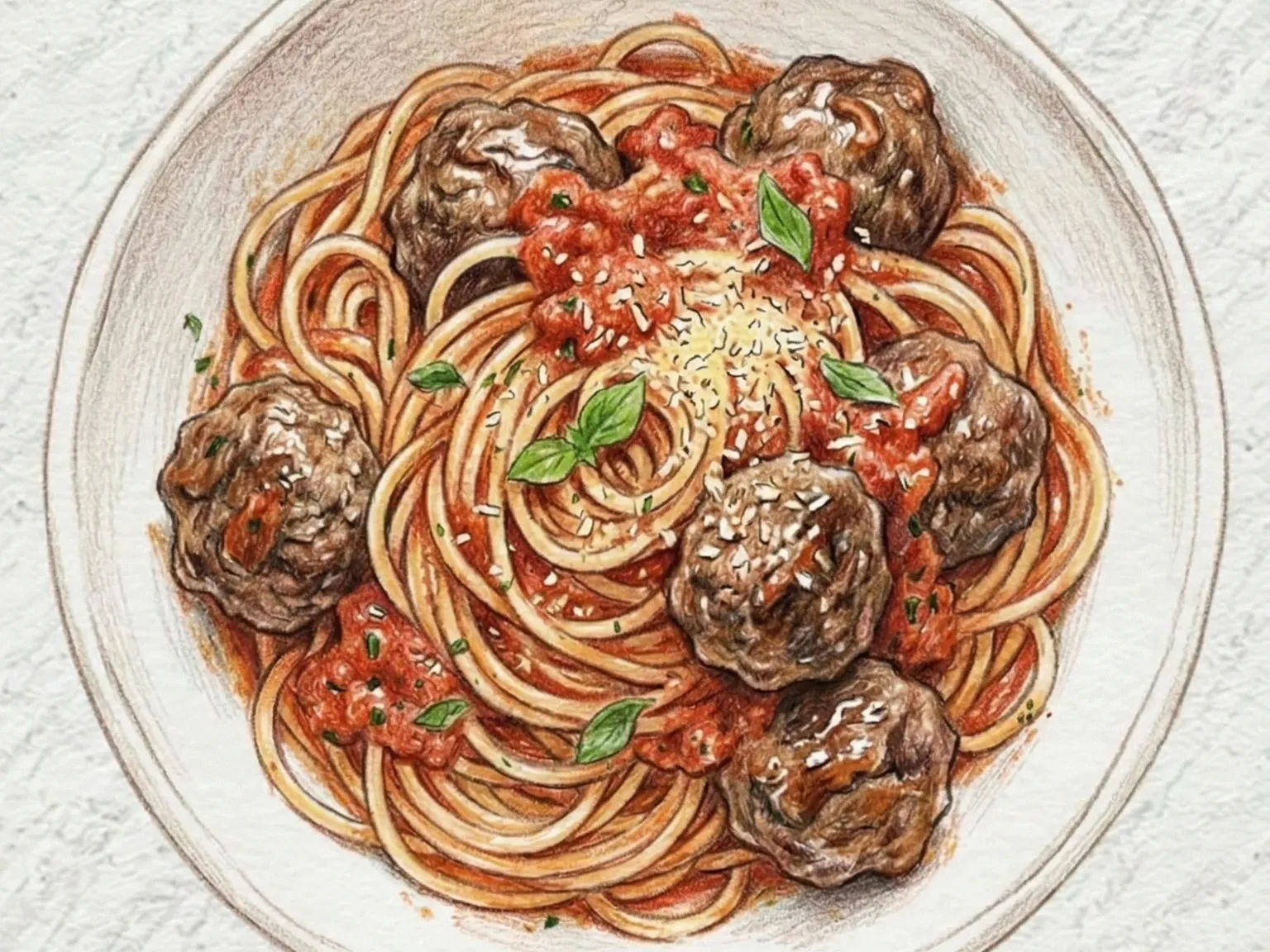
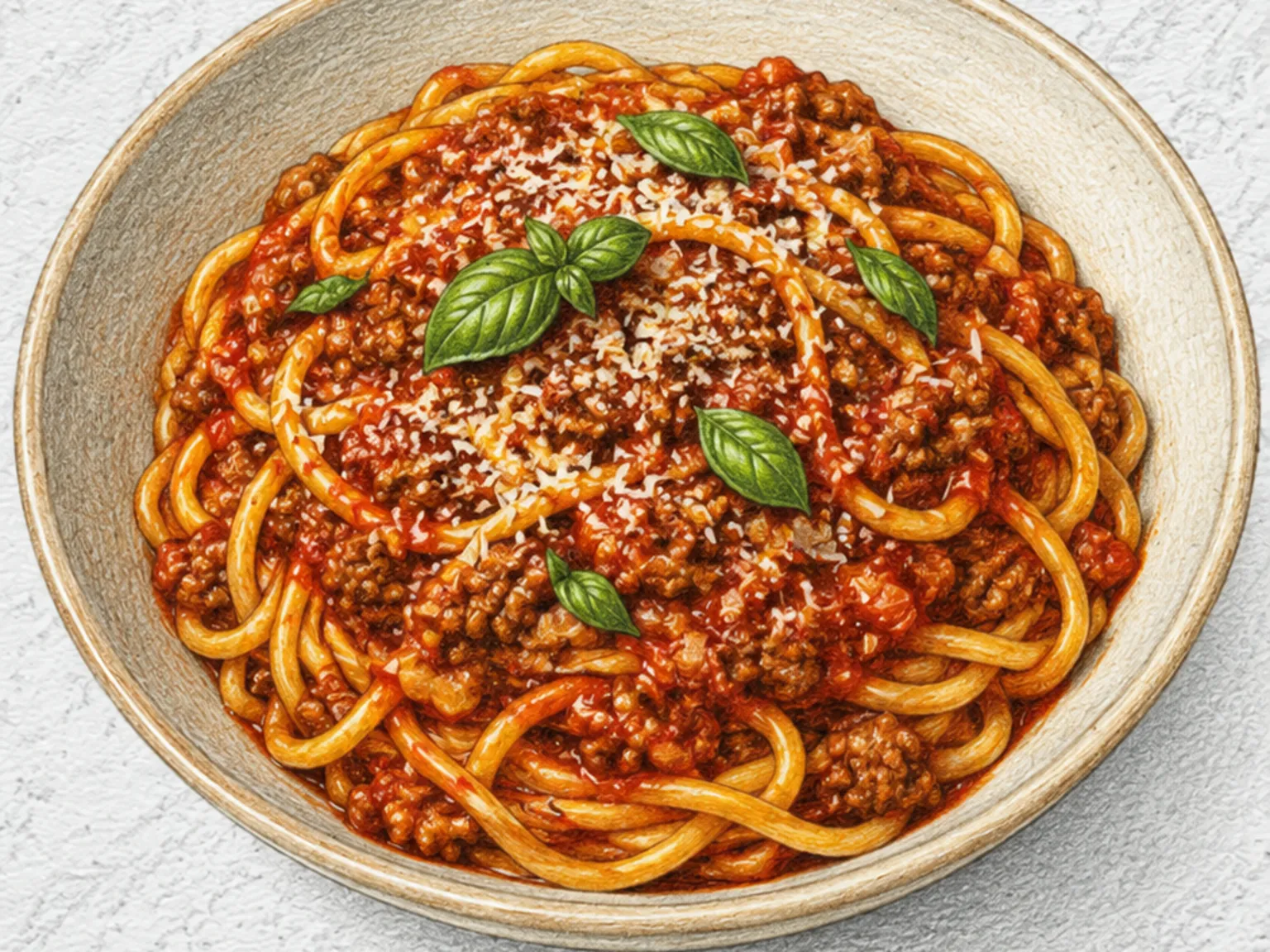
Meat sauce pasta cooks ground beef in olive oil until deeply browned for a strong Maillard reaction, then builds flavor with diced onion and garlic before adding tomato sauce and tomato paste. Simmering the sauce on low heat for at least 15 minutes allows the tomato acidity to mellow and the meat juices to concentrate. Salting the pasta water generously - as salty as the sea - seasons the noodles from the inside. Tossing the drained spaghetti directly into the sauce pan for a minute or two lets the surface starch bind with the sauce for better coating. A splash of red wine adds acidity and depth, while grated Parmesan and fresh basil at the end bring a savory-herbal finish. The dish is straightforward but rewards patience during the simmer.
Adjust Servings
Instructions
- 1
Boil water in a large pot, add salt, and cook pasta.
- 2
Heat olive oil and saute diced onion and garlic.
- 3
Add ground beef and cook until browned.
- 4
Add tomato sauce and paste, simmer on low heat for 15 minutes.
- 5
Season with salt and pepper.
- 6
Add cooked pasta to the sauce and toss well.
- 7
Plate and top with parmesan cheese and fresh basil.
As an Amazon Associate, we may earn from qualifying purchases.
Tips
Nutrition (per serving)
More Recipes

Pasta Bolognese
Pasta Bolognese is a slow-simmered meat ragu from Bologna, built on a soffritto of onion, carrot, and celery cooked with ground beef and pork. Red wine deglazes the browned meat, and whole milk is added to soften acidity and tenderize the proteins. The sauce requires at least one hour of low heat to meld the flavors into a cohesive, concentrated ragu. Tagliatelle is the traditional pairing in Emilia-Romagna, served with freshly grated Parmigiano-Reggiano.

Spaghetti alla Puttanesca
Spaghetti alla puttanesca melts anchovy fillets into olive oil with sliced garlic over low heat, creating a deeply savory base before any tomato is added. Hand-crushed whole tomatoes, halved black olives, capers, and red pepper flakes go in next and simmer for eight minutes, during which the sauce reduces and the briny, salty, and spicy elements fuse into a bold, cohesive flavor. The anchovies dissolve completely, leaving no trace of fish but contributing an intense umami backbone. Because capers and anchovies are already heavily salted, seasoning is adjusted only at the very end by taste. The spaghetti is pulled one minute short of al dente and finished in the sauce pan with a splash of pasta water, which allows the starch to bind the sauce tightly to each strand.

Spaghetti Aglio e Olio (Garlic and Olive Oil Pasta)
Spaghetti aglio e olio is among the oldest recipes in the Italian pasta canon, documented in cookbooks as early as the 19th century. The dish is a study in restraint - five core ingredients, no sauce in the traditional sense, and a total cooking time under twenty minutes. Extra virgin olive oil heated gently with sliced garlic and dried chili flakes becomes the medium that carries flavor to every strand of pasta. The critical step is adding starchy pasta water to the pan and tossing aggressively over high heat, which emulsifies the oil and water into a glossy, clinging coat. Parmesan - not strictly traditional but widely adopted - adds a salty, crystalline crunch when shaved on top. The finished plate should look barely dressed, each strand glistening with oil rather than drowning in sauce. It is the dish that separates cooks who understand heat control from those who do not.

Pesto Genovese Pasta
Pesto Genovese pasta originates from Genoa in the Ligurian coast of Italy, where fresh basil leaves are ground with pine nuts, garlic, Parmesan cheese, and extra virgin olive oil to create an uncooked sauce. Basil oxidizes and darkens quickly when exposed to heat, so the pesto must be prepared either in a mortar and pestle or pulsed briefly in a food processor to avoid raising the temperature. Toasting the pine nuts in a dry pan before grinding intensifies their nutty flavor, and the olive oil must be extra virgin to contribute the grassy, fruity notes that complement the basil. When tossing the pesto with hot pasta, a splash of starchy pasta water emulsifies the sauce and helps it coat every strand evenly. The sauce should be warmed only by the residual heat of the pasta - direct heat would dull the vivid green color and diminish the fresh herbal aroma.

Spicy Seafood Tomato Pasta
Spicy seafood tomato pasta starts by building a chili-infused oil base - garlic, onion, and red pepper flakes sauteed in olive oil until fragrant. Shrimp and squid are seared briefly until just opaque on the outside, then hand-crushed whole tomatoes are added and the sauce simmers for six to seven minutes, during which the tomato reduces and absorbs the juices released by the seafood. Cooking the seafood only until the surface turns white is critical, as the residual heat from the simmering sauce finishes them gently without making them rubbery. The spaghetti is boiled one minute short of al dente and tossed in the sauce pan with a splash of pasta water over high heat, which emulsifies the sauce and binds it to each strand. The chili heat cuts cleanly through the tomato's acidity and the seafood's brininess, and chopped parsley adds a final fresh herbal note.

Penne alla Vodka
Penne alla vodka combines tomato puree, heavy cream, and a splash of vodka into a smooth, coral-colored sauce. The vodka helps release flavor compounds in the tomato that are not soluble in water or fat alone, then cooks off to leave only a subtle warmth. Butter-softened onions and a pinch of chili flakes round out the base before cream is stirred in on low heat. The tubular shape of penne catches the thick sauce inside each piece.