Charim

2686 Korean & World Recipes

2686+ Korean recipes, clean and organized. Ingredients to instructions, all at a glance.

Mee Bandung (Malaysian Johor Shrimp Tomato Gravy Noodles)
Asian Medium

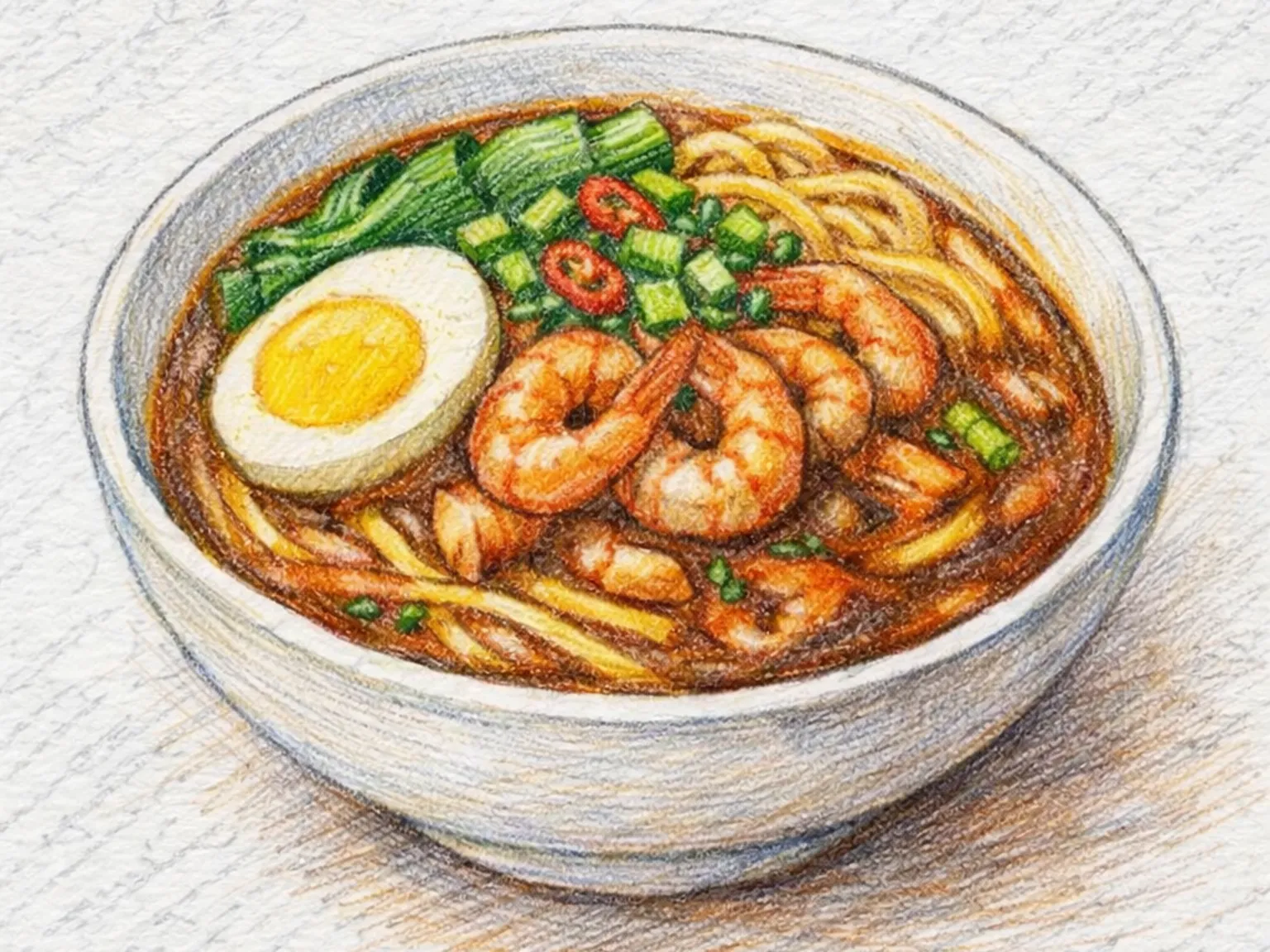
Mee Bandung (Malaysian Johor Shrimp Tomato Gravy Noodles)

Mee bandung is a noodle dish from Johor in southern Malaysia, built around a thick, rust-colored gravy made from shrimp, tomato paste, and chili paste. The sauce has a distinctive character - simultaneously sweet, spicy, and briny - that sets it apart from the brothier noodle soups common elsewhere in the country. Yellow wheat noodles sit in the gravy rather than float in it, and the topping of whole shrimp, hard-boiled egg, and sliced scallions rounds out the bowl. The gravy clings to each strand of noodle, landing somewhere between a soup and a stir-fry in consistency. It is a night market staple in Johor Bahru and across southern Malaysia, rarely found outside that region.

Prep 20min Cook 20min 2 servings

Adjust Servings

2servings
servings

Instructions

  1. 1

    Boil noodles until tender, then drain and set aside.

  2. 2

    Finely chop onion and garlic, then saute until fragrant.

  3. 3

    Add tomato paste and chili paste, cooking for 1 minute to deepen flavor.

  4. 4

    Add shrimp stock and soy sauce, bring to a boil, then cook shrimp in the broth.

  5. 5

    Stir in starch slurry to thicken slightly and ladle over noodles.

🛒Shop Ingredients on Amazon

As an Amazon Associate, we may earn from qualifying purchases.

Tips

A lightly thick gravy is key to authentic mee bandung texture.
Use shrimp heads for a richer stock.

Nutrition (per serving)

Calories
560
kcal
Protein
28
g
Carbs
70
g
Fat
16
g

More Recipes

Tamarind Fish Noodle Soup
AsianMedium

Tamarind Fish Noodle Soup

Asam laksa is Penang's signature noodle soup, recognized by UNESCO as one of Malaysia's cultural treasures. Unlike the coconut-rich curry laksa of Singapore, this version is built on a tamarind-soured fish broth - tart, briny, and intensely aromatic. Mackerel is poached whole, flaked, and returned to a broth infused with torch ginger flower, lemongrass, and galangal ground into a paste. The sourness from tamarind hits first, followed by a slow wave of chili heat and the ocean depth of fish sauce. Thick rice noodles sit in the bowl, their chewy resistance contrasting the thin, punchy broth. Shredded cucumber, mint, and a spoonful of sweet prawn paste stirred in at the table complete the balance.

🎉 Special Occasion
Prep 25minCook 35min4 servings
Mee Rebus (Noodles in Sweet Potato Curry Gravy)
NoodlesMedium

Mee Rebus (Noodles in Sweet Potato Curry Gravy)

Mee rebus is a Malaysian noodle dish where springy yellow noodles are topped with a thick gravy built from mashed sweet potato, curry powder, peanut butter, and chicken stock. The sweet potato dissolves into the stock to form a naturally thick base, and the curry powder and peanut butter contribute layers of spice and nuttiness that make the sauce unlike any other noodle topping. Soy sauce adds fermented depth and ties the sweetness and spice together. If the gravy becomes too thick during cooking, extra stock loosens it without diluting the flavor. A halved boiled egg and a squeeze of fresh lime just before eating cut through the richness, bringing the bright acidity that is a hallmark of Southeast Asian noodle dishes.

🎉 Special Occasion
Prep 20minCook 35min2 servings
Char Kway Teow (Penang Wok-Fried Flat Rice Noodles with Prawns)
AsianMedium

Char Kway Teow (Penang Wok-Fried Flat Rice Noodles with Prawns)

Char kway teow originated in Penang as a cheap, filling meal for Chinese laborers - flat rice noodles fried fast over high heat with whatever protein was affordable that day. Wide rice noodles hit a scorching wok with prawns, cockles, egg, bean sprouts, Chinese chives, and slices of lap cheong sausage, while dark soy sauce and oyster sauce stain the noodles a deep caramel brown. The dish lives or dies by wok hei - the elusive smoky breath of the wok that only comes from cooking at extreme temperatures, tossing the noodles through open flame. Traditionally fried in pork lard rather than vegetable oil, the rendered fat coats every strand with a richness that lighter oils cannot replicate. Penang's hawker stalls cook one plate at a time, refusing to batch, because cramming the wok would steam the noodles instead of searing them. The result, when done right, carries a charred, slightly bitter edge beneath the salty-sweet sauce that makes it one of Southeast Asia's most celebrated street dishes.

🏠 Everyday🌙 Late Night
Prep 15minCook 12min2 servings
Coconut Shrimp Laksa (Spiced Coconut Broth Noodle Soup with Shrimp)
AsianMedium

Coconut Shrimp Laksa (Spiced Coconut Broth Noodle Soup with Shrimp)

Coconut shrimp laksa is a Southeast Asian noodle soup built on a broth of coconut milk, spice paste, and chicken stock that manages to be simultaneously rich, spicy, and aromatic. The laksa paste - a pounded blend of lemongrass, galangal, turmeric, dried shrimp, dried chilies, and shrimp paste - is fried in oil until deeply fragrant before coconut milk and stock are poured in. The resulting broth is thick and creamy with visible pools of chili oil floating on the surface. Shrimp are cooked shell-on in the broth to extract maximum flavor, then peeled and placed back on top. Rice noodles form the base of each bowl, topped with bean sprouts, halved hard-boiled egg, and cubes of fried tofu puff that soak up the broth like sponges. A squeeze of lime and a drizzle of fish sauce finish the bowl, adding acid and salt that sharpen the richness of the coconut. In Singapore and Malaysia, laksa is eaten from early morning through late night, served at hawker stalls that often specialize in this single dish.

🎉 Special Occasion
Prep 20minCook 18min2 servings
Nasi Lemak (Malaysian Coconut Pandan Rice with Anchovy Sambal)
AsianMedium

Nasi Lemak (Malaysian Coconut Pandan Rice with Anchovy Sambal)

Nasi lemak is Malaysia's definitive national dish, built on a foundation of rice cooked in coconut milk with pandan leaves. The rice alone carries a subtle richness and a faint vanilla-like fragrance from the pandan, making it flavorful even before any accompaniment. The essential sambal is a cooked chili paste built on shrimp paste and tamarind, delivering sweetness and slow-building heat in equal measure. Crispy fried anchovies and roasted peanuts contribute crunch, while a halved boiled egg and fresh cucumber slices balance the richness. In its simplest form, nasi lemak is wrapped in a banana leaf for a quick breakfast.

🎉 Special Occasion
Prep 20minCook 30min4 servings
Singaporean Spicy Noodle Soup
NoodlesMedium

Singaporean Spicy Noodle Soup

Laksa is a spicy coconut noodle soup from Singapore and Malaysia. The dish starts with a laksa paste - typically containing lemongrass, galangal, shrimp paste, and chili - stir-fried in oil until intensely fragrant. Coconut milk and shrimp stock are added to build a thick, aromatic broth, which is then seasoned with fish sauce. Shrimp and fried tofu puffs simmer briefly in the broth, providing protein without overcooking. Rice vermicelli is soaked in hot water until pliable and placed in the bowl before the broth is ladled over. Bean sprouts, halved boiled eggs, and a wedge of lime are arranged on top. Store-bought laksa paste works well for convenience, though homemade paste yields a more layered, complex flavor. Full-fat coconut milk is recommended over light versions for the proper creamy body.

🎉 Special Occasion
Prep 20minCook 25min2 servings
More Asian →