Japanese Melon Bread (Crispy Cookie-Crusted Sweet Bun)
Quick answer
A Japanese sweet bun that wraps a soft, yeasted bread dough in a layer of cookie dough, then bakes both together so the exterior crisps into a shell while the interior stays fluffy.
What makes this special
- Japanese Melon Pan wraps soft, yeasted bread in a crisp, sugar-dusted cookie exterior.
- Crisp cookie shell over soft yeast bread creates a dual-texture bite
- Scored lattice plus granulated sugar crystallizes the surface
Key ingredients
Core cooking flow
- 1 Mix 200 g bread flour, 30 g sugar, and 4 g instant yeast, then add 110 ml mi...
- 2 For the cookie dough, mix 50 g unsalted butter with 70 g sugar until even, t...
- 3 Cover the bread dough and proof it in a warm place for about 1 hour, until i...
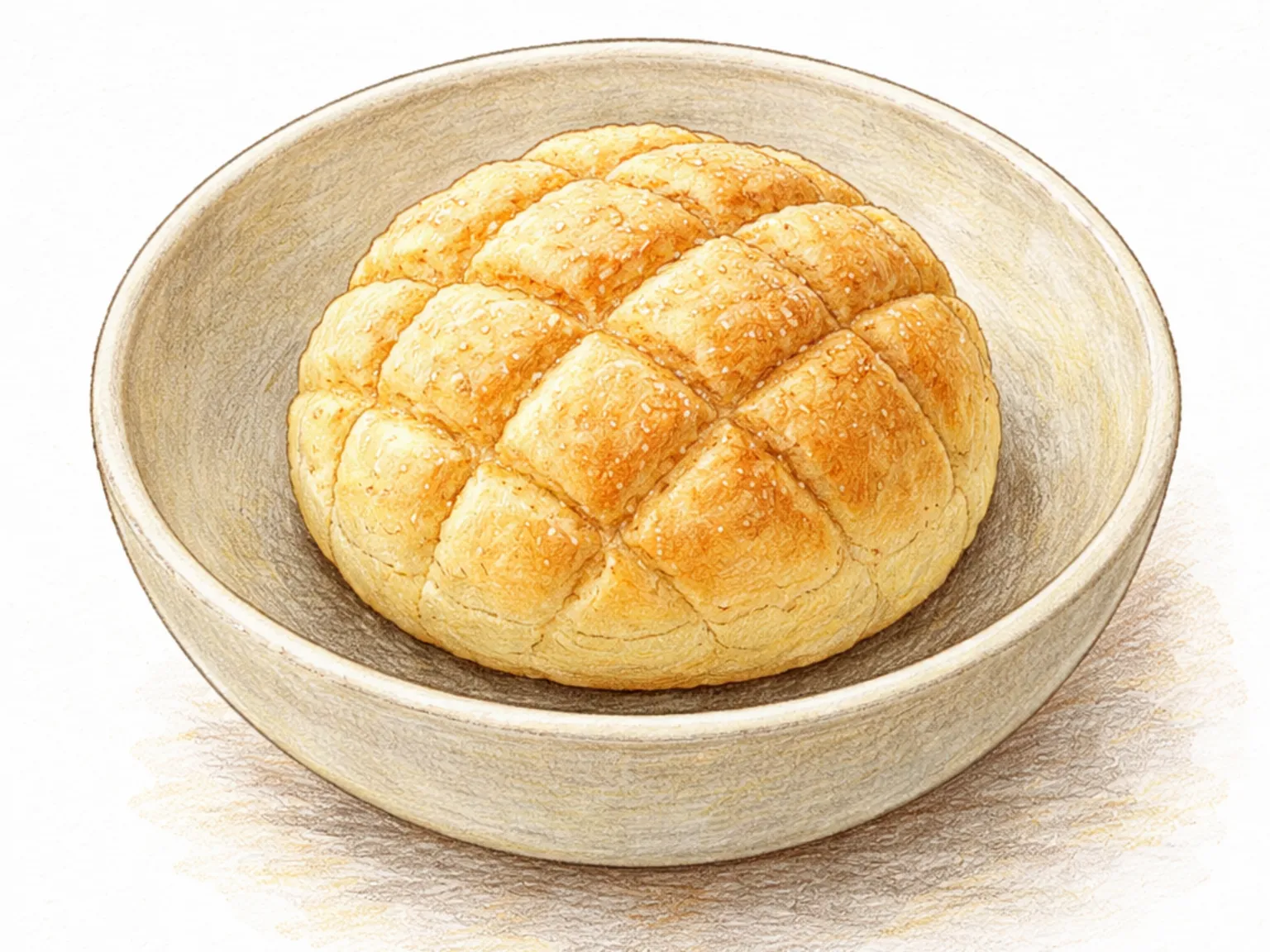
A Japanese sweet bun that wraps a soft, yeasted bread dough in a layer of cookie dough, then bakes both together so the exterior crisps into a shell while the interior stays fluffy. The bread dough, made with bread flour, milk, and butter, is kneaded and proofed until pillowy; the cookie dough, a simple blend of cake flour, sugar, butter, and egg, is chilled until firm enough to drape over the risen bread rounds. The contrast between the shattering cookie crust and the cloud-soft bread beneath is what defines melon pan. Scoring a crosshatch pattern on the cookie layer with a bench scraper mimics the rind of a melon and gives the bun its name and iconic look. Rolling the tops in granulated sugar before proofing adds sparkle and an extra layer of crunch. Baking at 170 degrees Celsius for 13 to 15 minutes sets the cookie shell without over-browning it; the bread inside continues to steam and rise, pushing against the firming crust and creating the characteristic dome shape. Best eaten within hours of baking, while the crust still audibly cracks.
Instructions
Read the steps as a cooking flow: prep, heat, seasoning, doneness control, and finish.
- 1Season
Mix 200 g bread flour, 30 g sugar, and 4 g instant yeast, then add 110 ml milk and bring the dough together.
Knead in 25 g unsalted butter until the dough turns smooth, elastic, and less sticky.
- 2Season
For the cookie dough, mix 50 g unsalted butter with 70 g sugar until even, then add 1 egg in portions so it does not separate.
Fold in 150 g cake flour and chill for at least 30 minutes until firm enough to handle.
- 3Control
Cover the bread dough and proof it in a warm place for about 1 hour, until it is nearly doubled and feels airy.
Press out excess gas, divide into 8 pieces, and round each piece by pulling the surface taut.
- 4Heat
Divide the chilled cookie dough into 8 pieces and roll each one slightly wider than a bread round.
Drape it over the bread dough and tuck the edges gently, pressing just enough to attach without tearing the cookie layer.
- 5Season
Use a bench scraper or knife to press a shallow crosshatch pattern into the surface, without cutting through the cookie dough.
Coat the tops with 2 tablespoons granulated sugar, then proof for 30 minutes until slightly puffed.
- 6Heat
Bake at 170°C for 13 to 15 minutes, removing the buns when the edges are pale golden and the cookie crust is set.
Cool them on a rack so steam escapes and the cookie layer stays crisp instead of softening.
After the steps
Pick a recipe that fits this dish.
Continue with shared ingredients, meal pairings, or a similar method.
Recipes That Go Well With This
More Baking →Based on shared ingredients and meal pairing
Anpan (Japanese Sweet Red Bean Filled Soft Milk Bun)
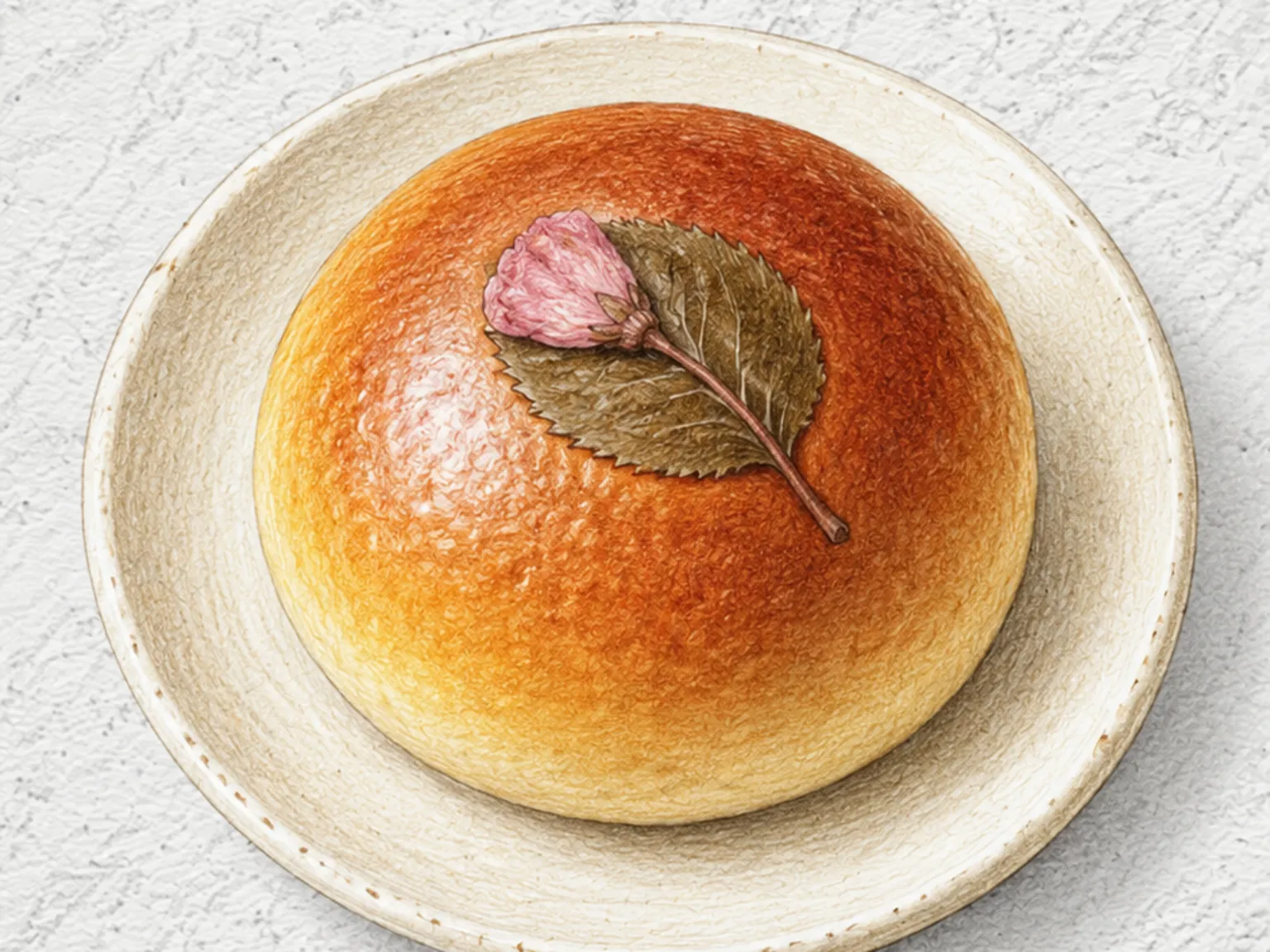
Anpan was created in 1874 at Kimuraya bakery in Tokyo's Ginza district, making it one of Japan's first truly successful fusion foods - a meeting of Western bread technique and the Japanese tradition of sweet bean-paste confection. Kimuraya's founders solved the challenge of making bread palatable to Japanese tastes by replacing commercial yeast with sakadane, a fermented starter made from Japanese sake lees, which gave the dough a subtle rice-fermentation fragrance that yeast-risen bread cannot replicate. The enriched dough - made with milk, butter, and egg - produces a crumb that is cottony soft and tears apart in loose, pillowy layers. Inside, a generous portion of anko provides concentrated sweetness backed by the earthy, slightly mineral depth that azuki beans carry even after long cooking. Anko itself comes in two forms: koshian, strained to a smooth paste with the skins removed, and tsubuan, which retains the whole beans for a more textured bite; Kimuraya's original style uses the finer koshian. A single salted cherry blossom petal pressed into the top before baking is the bakery's signature touch, contributing a faint floral saltiness that sits against the sweetness without overpowering it. The bun was presented to Emperor Meiji in 1875, which established its reputation as a national snack almost overnight. More than 150 years later, it remains essentially unchanged in concept and is found in every Japanese convenience store and artisan bakery alike.
Katsu Sando (Japanese Crispy Pork Cutlet Sandwich)
Katsu sando is a Japanese sandwich built around a thick, crispy pork cutlet pressed between slices of soft milk bread. The pork loin is sliced at least two centimeters thick, pounded lightly to tenderize, seasoned with salt and pepper, then coated in flour, beaten egg, and coarse panko breadcrumbs before being lowered into oil at 180 degrees Celsius. The result is a deep golden crust that shatters on the first bite while the interior stays moist and tender. Tonkatsu sauce, a thick condiment with a fruity, sweet-savory profile similar to Worcestershire, is spread generously on one side of the bread, while a thin layer of Japanese mayonnaise goes on the other. Finely shredded cabbage is layered beneath the cutlet, providing a fresh, watery crunch that cuts through the richness of the fried meat. The crusts are trimmed from the bread, the sandwich is pressed firmly and sliced cleanly in half, and the cross-section of pale bread, pale cabbage, and dark golden cutlet becomes the defining visual of the dish. Katsu sando works as a packed lunch, a picnic item, a late-night snack, or a quick meal at the counter of a butcher shop in Tokyo.
Roasted Kabocha Miso Nut Salad
Kabocha squash is sliced into half-moons and roasted in a hot oven until the cut surfaces caramelize and the flesh turns chestnut-soft and dry in the best possible way. The dressing combines white miso, rice vinegar, and maple syrup into a mixture where salt, acid, and a restrained sweetness reinforce each other and amplify the roasted squash underneath. Arugula provides the peppery, slightly bitter base that keeps the salad from tipping too sweet. Chickpeas add lean protein and a firm, satisfying chew that holds up against the tender squash. Walnuts, crushed roughly rather than chopped fine, contribute crunch and a deep, roasted nuttiness that layers well with the soft squash in each forkful. The contrast between textures, tender squash against resistant walnut, is what makes this salad interesting across every bite. Autumn kabocha, at the peak of its natural sugar content, delivers the most pronounced sweetness, and the dish is filling enough to stand as a vegetarian main course with nothing else alongside it. If using refrigerated squash, adjust oven time and temperature to ensure even caramelization.
Yakisoba Pan (Noodle Bread)
A staple of Japanese street food culture, Yakisoba-pan combines a toasted, buttered hot dog bun with a filling of stir-fried egg noodles seasoned with yakisoba and soy sauce. Shredded cabbage, onions, and carrots start in the pan over high heat for exactly two minutes before the noodles are added. This timing ensures the vegetables remain crisp and provide a textural contrast to the soft noodles rather than becoming limp during the cooking process. As the yakisoba sauce hits the hot metal, it caramelizes quickly to wrap every noodle strand in a glossy, sweet-savory glaze. The act of spreading butter on the interior of the bun and giving it a quick toast serves a functional purpose beyond flavor. This butter layer acts as a moisture barrier, preventing the sauce from soaking into the bread and keeping the bun from turning soggy as it sits. The subtle richness of the butter bridges the gap between the savory noodle filling and the soft crumb of the bun. Sprinkling dried parsley over the top introduces a mild herbal scent that balances the heavy, concentrated sauce. For a burst of acidity, a small amount of beni shoga pickled ginger is tucked into the noodles to cleanse the palate. Spreading a layer of Japanese mayonnaise inside the bun alongside the butter creates an additional creamy texture. Softening the noodles in hot water before they hit the pan prevents clumping and allows for easier separation during the stir-frying stage.
Serve with this
Walnut Cakes (Korean Bite-Sized Red Bean Walnut Pastries)
Hodu-gwaja are bite-sized Korean walnut cakes baked in a dedicated walnut-shaped cast iron mold, made from a batter of cake flour, baking powder, eggs, milk, and melted butter. Each cavity is half-filled with batter, then topped with sweet red bean paste and a toasted walnut half, sealed with a second pour of batter, and cooked over medium-low heat for six to eight minutes per side. The result is a thin, lightly browned shell encasing a moist, soft interior. Toasting the walnut halves at 160 degrees Celsius for five minutes beforehand makes a noticeable difference: the finished cakes carry a deeper, more fragrant nut aroma compared to those made with untoasted walnuts. Resting the batter for ten minutes before using it relaxes the gluten, which reduces air pockets during pouring and produces a smoother exterior surface. The cake originated as a regional specialty of Cheonan in South Chungcheong Province and has since become one of the most recognized snacks sold at highway rest stops and traditional markets across the country.
Buffalo Wings
Buffalo wings coat chicken wings in baking powder and roast them at high heat for forty-five minutes, producing a crisp skin without deep-frying. The baking powder raises the skin's pH to accelerate the Maillard reaction and drives out moisture faster, yielding a crunch that rivals the fryer. Straight from the oven, the wings are tossed in a sauce of melted butter and hot sauce - the butter tempers the vinegar-based heat into something that coats the tongue rather than burning it, and a touch of white vinegar at the end sharpens the finish. Blue cheese dipping sauce and celery sticks served alongside provide a cooling, creamy contrast and a crisp palate cleanser between bites.
Korean Banana Milk
Banana milk is a homemade version of one of Korea's most consistently popular packaged beverages, sold in its distinctive small barrel-shaped bottle since 1974. Fresh ripe bananas are blended with cold milk, a spoonful of condensed milk, and a drizzle of honey to hit the characteristic level of sweetness. A small amount of vanilla extract bridges the fruit flavor and the dairy base, smoothing out any sharpness. Blending with ice produces a thick, smoothie-like consistency, while leaving out the ice gives a thinner, pourable drink closer to the original product. Unlike the commercial version, the homemade result contains no artificial flavoring or coloring, so the color stays a natural pale yellow rather than the vivid shade of the packaged drink. The sweetness varies with banana ripeness, and honey can be adjusted accordingly. Using frozen bananas in place of fresh ones plus ice delivers a cold, creamy texture without dilution. The whole preparation takes under five minutes, making it a practical option for a quick snack or light breakfast.
Similar recipes
Mitarashi Dango (Grilled Rice Dumplings in Sweet Soy Glaze)
Glutinous rice flour is kneaded with water, shaped into small balls, boiled until they float, then skewered and grilled until the surface develops charred spots and a light crust. The contrast between the toasty exterior and the dense, springy interior is the defining texture of mitarashi dango. A thick glaze made from soy sauce, sugar, mirin, and starch is spooned over the hot skewers, coating each ball in a glossy, sweet-savory film. The sauce should be viscous enough to cling but fluid enough to drip slowly - too thin and the flavor washes off, too thick and it overwhelms the delicate chew of the rice. Eaten warm, the dango is at its most pliable and the glaze at its most aromatic, with the soy caramel scent rising visibly in the steam. Street vendors across Japan sell these at temple fairs and festivals, but they are simple enough to replicate at home in under thirty minutes.
Warabi Mochi (Japanese Bracken Starch Jelly with Kinako)
Warabi starch is dissolved in water with sugar and cooked in a saucepan, stirred constantly, until the mixture turns translucent and pulls away from the sides in a glossy, elastic mass. Once poured into a mold and chilled, it sets into a wobbly, jelly-like confection that is soft and springy on the tongue. Cut into bite-sized pieces and rolled generously in kinako - roasted soybean powder - each piece gains a toasty, nutty coating that contrasts with the clean sweetness inside. A drizzle of dark brown sugar syrup over the top adds a deep, molasses-like sweetness that layers with the kinako. Continuous stirring during cooking is non-negotiable, as the starch scorches quickly on the bottom of the pan. The mixture must reach full translucency; stopping too early leaves a raw starch taste. Pressing plastic wrap directly onto the surface while cooling prevents a dry skin from forming. Warabi mochi is at its most supple and appealing within hours of being made.
Anmitsu (Japanese Agar Jelly Red Bean Fruit Dessert)
Anmitsu is a Japanese dessert with roots in the Meiji era, developed from mitsumame - a simpler preparation of agar cubes and boiled peas - when sweet azuki bean paste was added to create a more fully composed treat. The structural foundation is kanten jelly: agar-agar dissolved in water, set into a firm translucent block, and cut into cubes that have a clean, rigid snap distinct from the soft wobble of gelatin. Around the jelly, the bowl holds seasonal fruits - mandarin segments, peach slices, cherries - alongside a mound of tsubuan, which is coarsely mashed sweet red beans that retain some grain and texture, and small balls of shiratama mochi whose sticky, glutinous chew contrasts with everything else in the bowl. A small ceramic pitcher of kuromitsu - dark sugar syrup made from Okinawan black sugar - arrives separately and is poured over at the table, its molasses-deep sweetness acting as a unifying sauce across the disparate elements. No single spoonful of this dessert tastes the same as the last: the ratio of crisp jelly, soft fruit, sticky mochi, and grainy bean paste shifts with every bite.