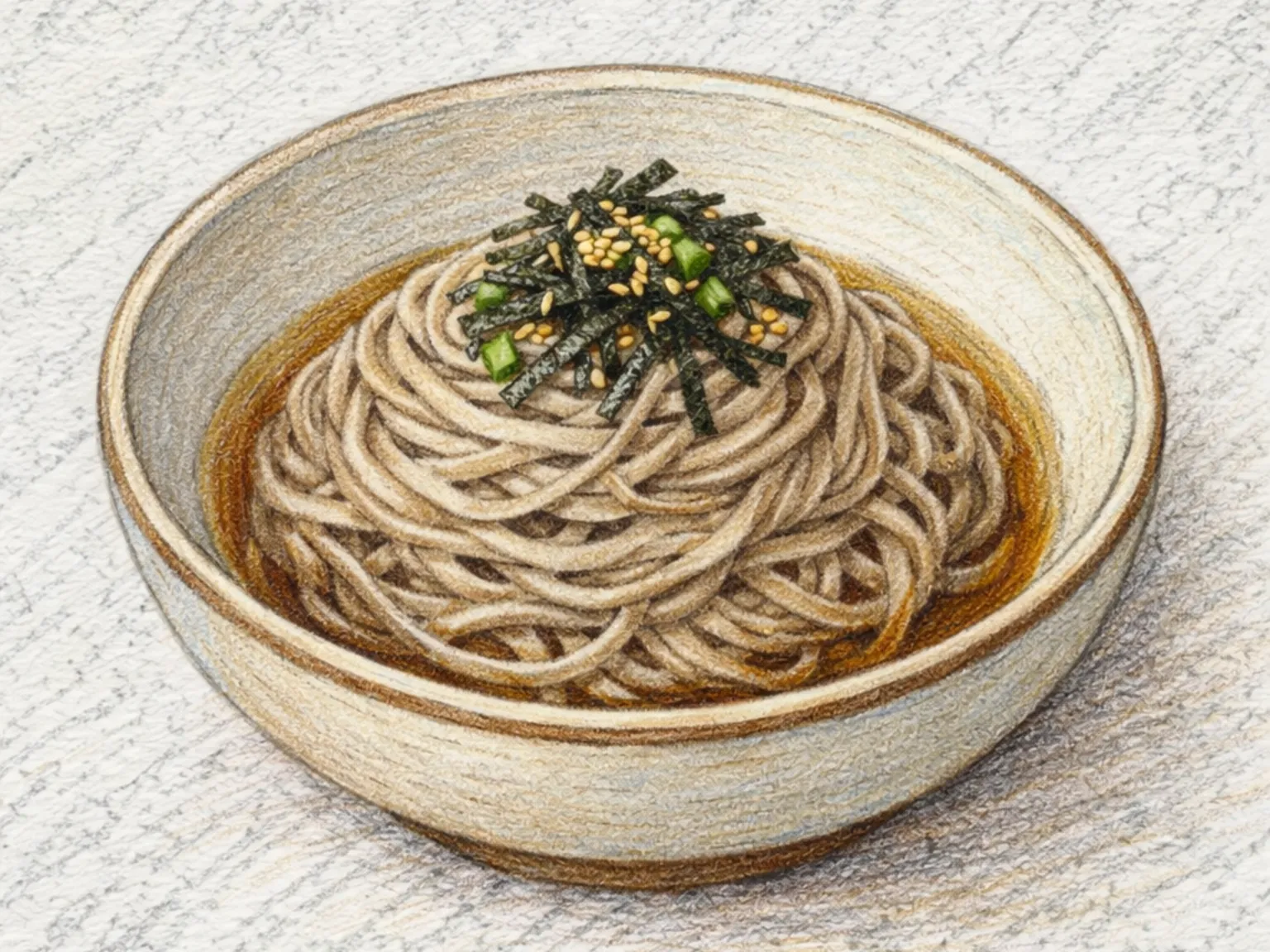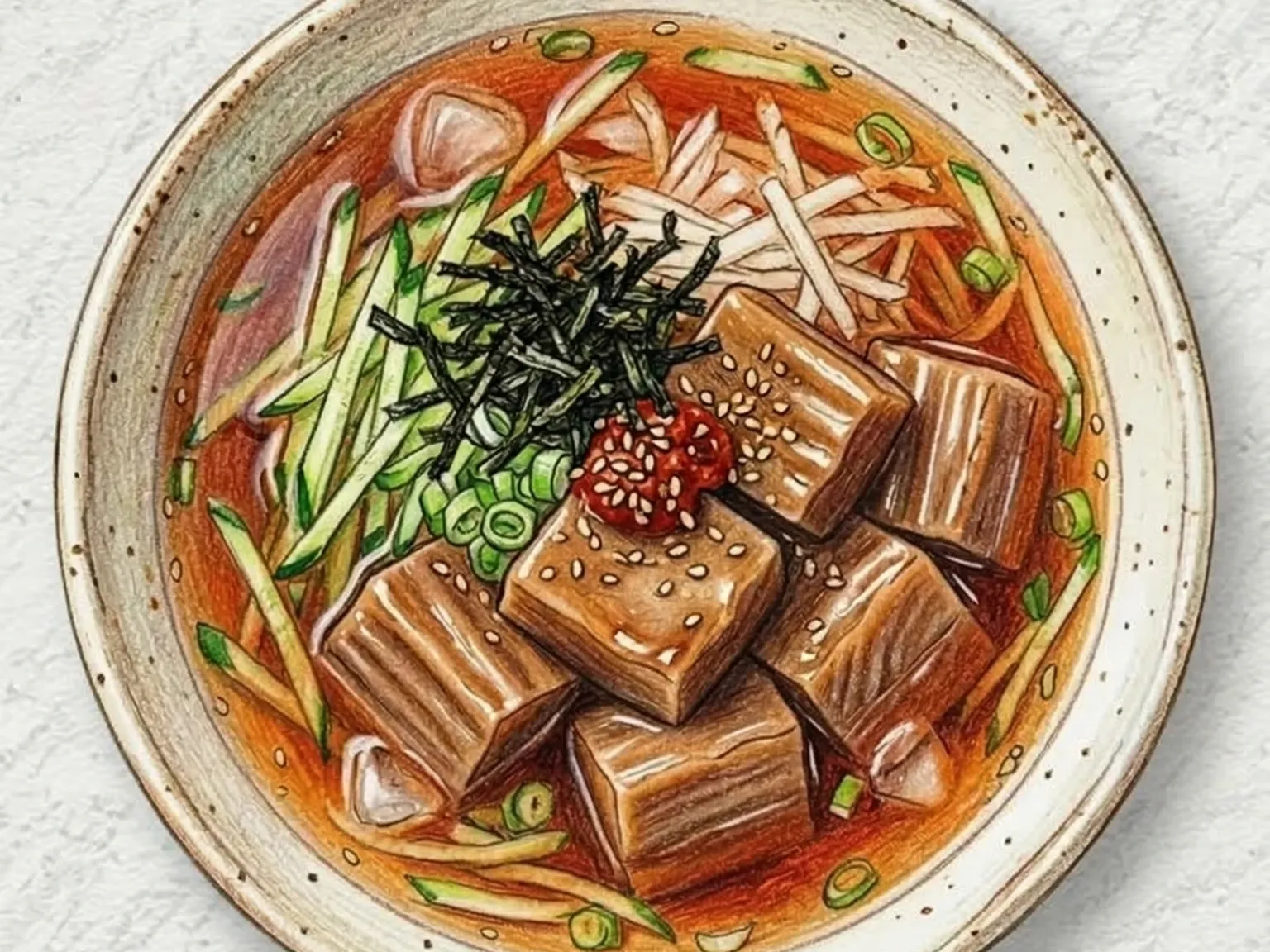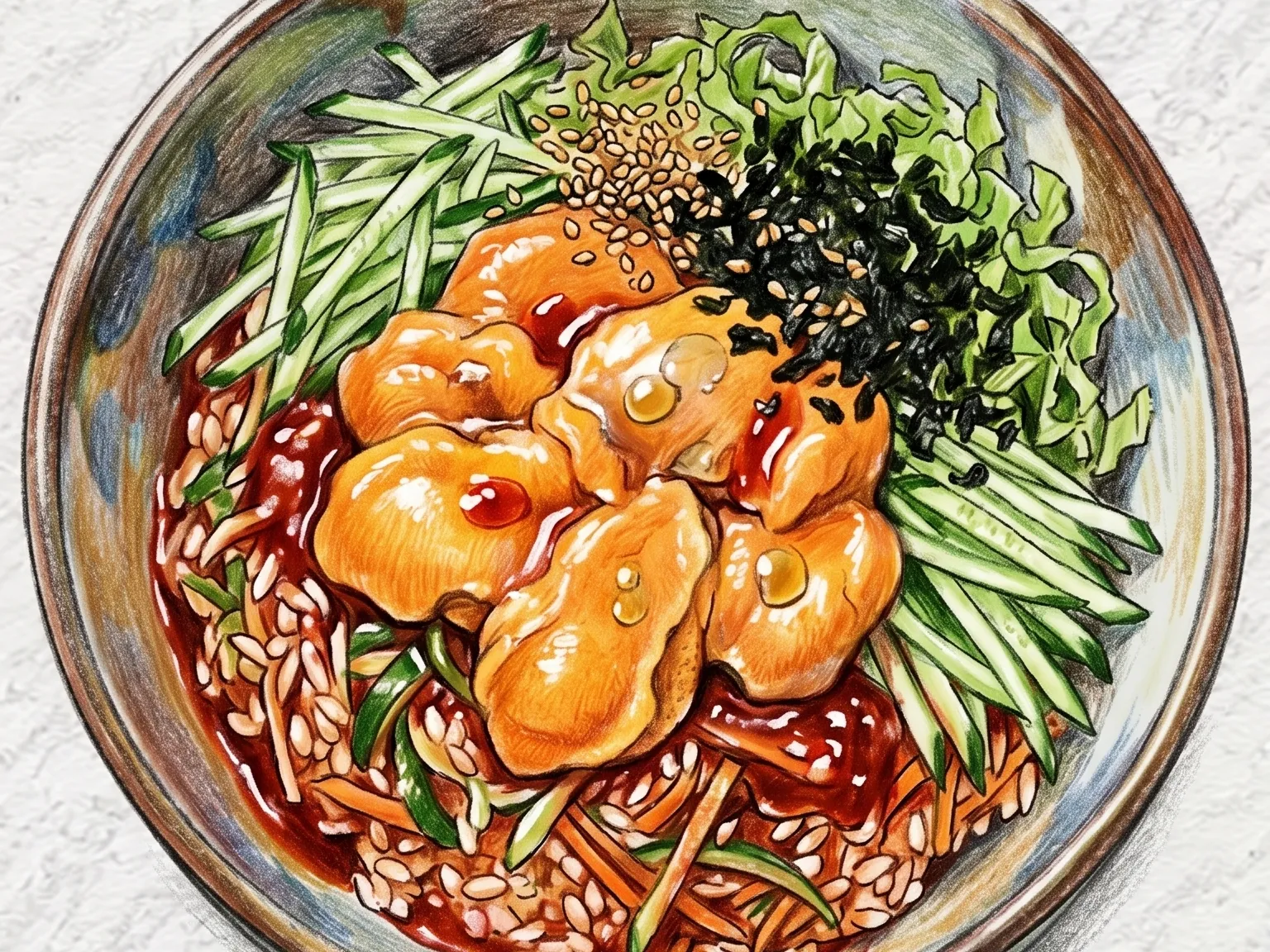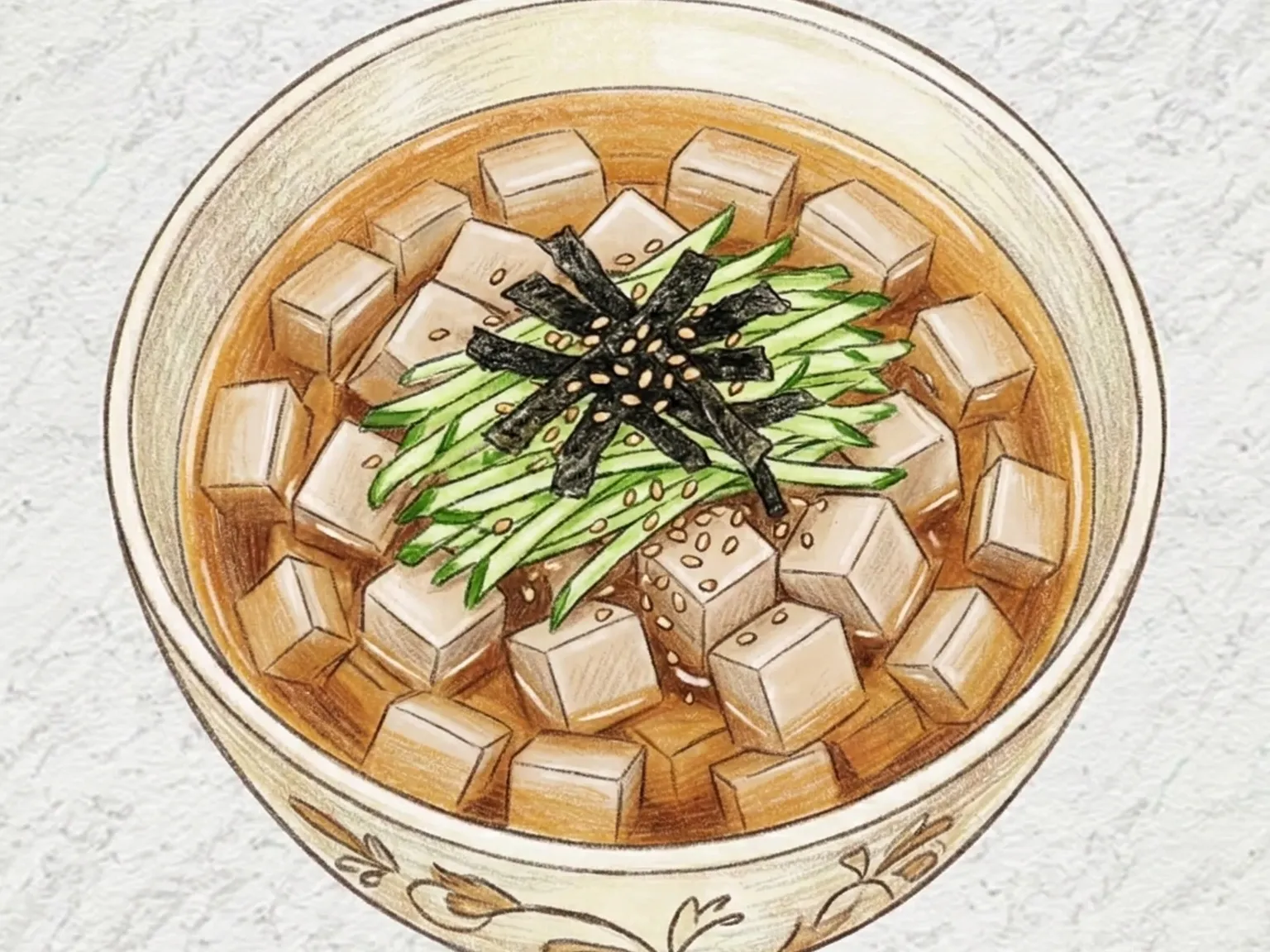
Korean Buckwheat Jelly Cold Broth Bowl
Soups Easy

Korean Buckwheat Jelly Cold Broth Bowl

Quick answer

Memil-muksabal is a chilled Korean dish in which firm blocks of buckwheat jelly sit submerged in cold, seasoned broth.

What makes this special

  • Memil-muksabal places firm buckwheat jelly in a chilled, soy-seasoned broth for summer.
  • Rinsing removes surface starch, leaving the jelly silkier
  • Bland buckwheat jelly absorbs soy-vinegar broth completely
Total time
30 min
Level
Easy
Servings
2 servings
Ingredients
7
Calories
180 kcal
Protein
5 g

Key ingredients

buckwheat jellychilled brothseaweed flakescucumbersoy sauce

Core cooking flow

  1. 1 Rinse 350 g of buckwheat jelly briefly under cold water to remove surface starch.
  2. 2 Slice the jelly into long strips, slightly thinner than a finger.
  3. 3 Julienne 80 g of cucumber finely, scraping out the watery center first if it has many seeds.

Memil-muksabal is a chilled Korean dish in which firm blocks of buckwheat jelly sit submerged in cold, seasoned broth. The broth is typically made from anchovy or beef stock, cooled to refrigerator temperature, and sharpened with soy sauce, rice vinegar, and a touch of sugar that balances the acidity. Buckwheat jelly has a neutral, slightly earthy flavor and a slippery, springy texture that absorbs the surrounding seasonings with each bite. Julienned cucumber adds crunch, crushed roasted sesame seeds contribute nuttiness, and shredded dried seaweed brings a gentle oceanic accent. The dish is almost calorie-free compared to noodle soups and digests easily, which is why it appears on Korean tables most frequently during the hottest weeks of summer. Making the jelly from scratch involves boiling buckwheat starch until thick and letting it set, but store-bought blocks simplify the process to little more than slicing and assembling. The cold broth hits the palate first, followed by the yielding texture of the jelly - a sequence that feels instantly cooling.

Prep 20min Cook 10min 2 servings

Instructions

Read the steps as a cooking flow: prep, heat, seasoning, doneness control, and finish.

6 steps
  1. 1
    Step

    Rinse 350 g of buckwheat jelly briefly under cold water to remove surface starch.

    Drain it in a sieve for about 2 minutes, and set aside any broken pieces so the bowl looks clean.

  2. 2
    Prep

    Slice the jelly into long strips, slightly thinner than a finger.

    Avoid cutting it too thin because it breaks easily, and wet the knife with cold water if the jelly sticks.

  3. 3
    Step

    Julienne 80 g of cucumber finely, scraping out the watery center first if it has many seeds.

    Keep 2 tablespoons of seaweed flakes separate until the end so they stay crisp.

  4. 4
    Season

    Mix 800 ml of chilled broth with 1 tablespoon soy sauce and 1 tablespoon vinegar.

    Taste it cold: the saltiness and acidity should be clear because the plain jelly will soften the seasoning.

  5. 5
    Step

    Keep the broth very cold, with a few icy bits if possible.

    If it warms up, the jelly tastes flat, so leave the broth in the refrigerator until just before assembling.

  6. 6
    Finish

    Place the jelly in cold bowls, add cucumber on top, and pour the broth around the edge to avoid breaking the strips.

    Finish with seaweed flakes and 1 teaspoon sesame oil, then serve immediately.

After the steps

Pick a recipe that fits this dish.

Continue with shared ingredients, meal pairings, or a similar method.

Recipes That Go Well With This

More Soups →

Based on shared ingredients and meal pairing

Korean Acorn Jelly Cold Broth Bowl
Shared ingredient: chilled broth Soups

Korean Acorn Jelly Cold Broth Bowl

Dotori-muksabal is a chilled Korean acorn jelly broth bowl where thinly sliced acorn jelly sits in a cold, tangy-sweet seasoned broth. Acorn jelly carries a distinctly earthy, mildly astringent aftertaste and a firm, bouncy texture that becomes noticeably more pronounced once it has chilled thoroughly. The broth, a mixture of stock seasoned with soy sauce, vinegar, and sugar, must be cold before pouring over the jelly to keep that cool snap alive from the first bite to the last. Chopped kimchi adds fermented heat and a pungent sourness, while julienned cucumber contributes a clean crunch, and both ingredients cut through the jelly's neutral flavor with sharp contrasts that make the bowl far more lively than its simple appearance suggests. A spoonful of gochugaru-spiked seasoning ties the components together. The dish is notably low in calories and rich in dietary fiber, making it an appealing light meal on hot days.

Korean Cold Vinegar Mustard Chicken Soup
Shared ingredient: cucumber Soups

Korean Cold Vinegar Mustard Chicken Soup

Chogye-tang is a chilled Korean chicken soup where boiled, shredded breast meat sits in an ice-cold broth sharpened with rice vinegar and hot mustard paste. The broth must be thoroughly refrigerated before seasoning and serving - at a warm temperature the mustard loses its sharp bite and the vinegar's acidity becomes dull, collapsing the defining tang that makes the dish what it is. Shredding the chicken along its grain rather than chopping it allows the cold, pungent broth to soak into every fiber rather than sitting on the surface of the meat. Julienned cucumber layered on top provides a crisp, cooling contrast to the shredded meat. The flavor logic mirrors that of Pyongyang-style cold noodles - sour, spicy, and bracingly cold - but replaces starch with lean protein, making it a lighter and more protein-forward meal. Historically associated with royal court cuisine as a restorative summer dish, it continues to be eaten in the same cold format during the hottest months.

Korean Mushroom Porridge (Silky Shiitake Sesame Porridge)
Serve together Rice

Korean Mushroom Porridge (Silky Shiitake Sesame Porridge)

Shiitake mushrooms and onion are sauteed in sesame oil to build a deep aromatic base, then simmered with soaked rice and water for 35 minutes until the grains break down into a silky porridge. Despite containing no meat, the natural glutamates in shiitake produce a full-bodied broth, sharpened with a finish of soy sauce and black pepper. Using rehydrated dried shiitake instead of fresh intensifies the woodsy fragrance further, and adding the soaking liquid to the pot deepens the broth even more. A few drops of sesame oil stirred in just before serving leave a nutty note in each spoonful. Mild and settling, it works as a morning meal or as something to eat when the stomach needs rest.

Korean Kimchi Acorn Jelly Rice Bowl
Similar recipe Rice

Korean Kimchi Acorn Jelly Rice Bowl

Acorn jelly (dotorimuk) is sliced into strips, placed over rice, and drenched in a chilled broth made from kimchi juice, cold water, and a touch of sugar. The jelly's slippery, bouncy texture contrasts with the crunch of chopped kimchi, while the tangy broth refreshes the palate with every spoonful. A light toss of sesame oil on the rice provides a nutty base, and roasted seaweed flakes add an ocean-like finish. Adding ice cubes makes it even more bracing, a distinctly Korean way to beat summer heat with a cold, brothy rice bowl. If the kimchi is too tart, a small addition of sugar rounds the flavor into balance.

Serve with this

Korean Seasoned Radish Greens Namul
Side dishes Medium

Korean Seasoned Radish Greens Namul

Dried radish greens are soaked, boiled until pliable, and dressed in a seasoning anchored by doenjang and ground perilla seeds. The drying process concentrates the fiber in the greens, giving them a satisfying chew that persists even after boiling: the outer layer turns silky while the inner stem retains a springy resistance. Doenjang supplies the salty, fermented backbone, and ground perilla seeds melt into a creamy coating that softens the roughness of the greens on the palate. A generous pour of perilla oil ties the dressing together, adding a glossy sheen and a rich, nutty fragrance. Minced garlic and chopped green onion introduce a sharp aromatic layer that cuts through the heaviness. Each bite releases more of the siraegi's own deep, vegetal flavor, a taste that builds rather than fades. Paired with steamed rice, the doenjang's salinity and the perilla's richness draw out the natural sweetness of the grain.

🏠 Everyday 🍱 Lunchbox
Prep 20min Cook 20min 4 servings
Korean Sweet Potato Stem Kimchi
Kimchi Medium

Korean Sweet Potato Stem Kimchi

Goguma julgi kimchi is made from sweet potato stems, prepared by carefully peeling their tough, stringy outer skin to expose the elastic inner fiber, blanching briefly, then seasoning with gochugaru, anchovy fish sauce, minced garlic, and glutinous rice paste before being left to ferment. Once stripped of the outer skin, the stems retain only their springy, chewy core, which gives every bite a bouncy, almost springy resistance that sets this kimchi apart from leafy varieties. As the fermentation progresses, the seasoning works its way deep into the fibrous channels of each stem, building a well-balanced spicy-salty flavor throughout. Scallions bring a fresh herbal note, and onion rounds the sharp edges of the chili seasoning with natural sweetness. The peeling is time-consuming, but the distinctive texture rewards the effort. Made in peak summer when sweet potato stems are freshest, this kimchi is considered a seasonal treat.

🍱 Lunchbox 🏠 Everyday
Prep 35min Cook 10min 4 servings
Korean Zucchini Corn Jeon
Pancakes Easy

Korean Zucchini Corn Jeon

Shredded zucchini and sweet corn kernels are folded into a pancake-mix batter and pan-fried until golden. Julienning the zucchini to a uniform thickness ensures even cooking throughout, while the corn kernels pop with sweetness in each bite. Egg enriches the batter and improves cohesion, and black pepper adds a light seasoning. Using cold water keeps the batter thin and airy, which helps the vegetables maintain their distinct textures after frying. The pan and oil must be fully heated before the batter goes in to achieve a crisp exterior, and spreading the batter wide makes the edges thin enough to turn properly crunchy. Let one side set completely over medium heat before flipping to keep the pancake intact.

🍺 Bar Snacks 🍱 Lunchbox
Prep 15min Cook 12min 2 servings

Similar recipes

Korean Chilled Cucumber Soup
Side dishes Easy

Korean Chilled Cucumber Soup

Oi-naengguk is a Korean chilled cucumber soup served in summer as a cold alternative to the hot soups (guk) that normally accompany Korean meals. When midsummer heat makes a steaming bowl of doenjang-guk unappealing, this icy broth takes its place at the table. Cucumber is sliced paper-thin and submerged in a broth of water seasoned with rice vinegar, soup soy sauce, salt, and sugar - a higher vinegar ratio intensifies the refreshing, palate-clearing sharpness. Ice cubes floated on top or at least thirty minutes of refrigeration are essential to achieve the chilling effect that defines the dish. Thinly sliced garlic infuses a mild pungency into the broth, and sesame seeds sprinkled on top add a nutty accent. Some versions include rehydrated dried seaweed, whose slippery texture contrasts with the cucumber's crisp snap. Alongside bibimbap or spicy banchan, oi-naengguk serves as a cooling counterbalance that tempers chili heat between bites.

🏠 Everyday 🍱 Lunchbox
Prep 10min Cook 2min 4 servings
Korean Cold Buckwheat Noodles
Noodles Medium

Korean Cold Buckwheat Noodles

Mul naengmyeon is a Korean cold noodle dish in which firm buckwheat noodles are served in a clear broth chilled to a near-slushy, half-frozen state. Placing the broth in the freezer for about an hour until thin ice crystals form at the surface maximizes the cold shock on the first sip, which is central to the dish's appeal. The noodles are boiled briefly and then rubbed under cold running water to strip away excess buckwheat starch and its distinct raw odor, with a final rinse in ice water to firm the strands and restore their spring. Julienned cucumber and thinly sliced pickled radish add recurring crunch that offsets the smooth, icy broth, while a halved hard-boiled egg provides a rich, creamy yolk that anchors the otherwise lean liquid. Vinegar stirred in at the table sharpens the overall flavor with bright, clean acidity, and Korean mustard dissolved in a small spoonful of broth adds a penetrating sinus heat that cuts through the cold. The dish traces its origins to Pyongyang-style cold noodles, but regional variations using beef, chicken, or dongchimi radish kimchi broth as the base produce noticeably different flavor profiles, all bound by the same insistence on extreme coldness and a long, chewy noodle.

🏠 Everyday 🌙 Late Night
Prep 25min Cook 10min 2 servings
Chogye Guksu (Korean Cold Chicken Noodles)
Noodles Medium

Chogye Guksu (Korean Cold Chicken Noodles)

Shredded poached chicken and julienned cucumber top thin wheat noodles served in an icy mustard-vinegar chicken broth. The broth starts as a clear, clean chicken stock, then gains its defining sharpness from dissolved mustard powder and rice vinegar, delivering a nasal tingle and bright acidity that revive the appetite on sweltering days. The chicken, torn along the grain into thin strips, adds lean protein without weight, while sliced Korean pear contributes a crisp, mildly sweet counterpoint that keeps the bowl from feeling heavy. Mustard heat flares briefly on the palate and fades quickly, leaving behind the savory clarity of well-made stock. Keeping the broth thoroughly chilled through service is essential: it prevents the noodles from softening and preserves the contrast that defines this dish. Floating a few ice cubes in the bowl ensures the temperature holds from the first chopstickful to the last.

🎉 Special Occasion 🏠 Everyday
Prep 20min Cook 25min 2 servings

Tips

Rinse jelly briefly in cold water for a cleaner finish.
Serve broth very cold, even slightly icy.

Nutrition (per serving)

Calories
180
kcal
Protein
5
g
Carbs
23
g
Fat
8
g