Mentaiko Cream Pasta
Quick answer
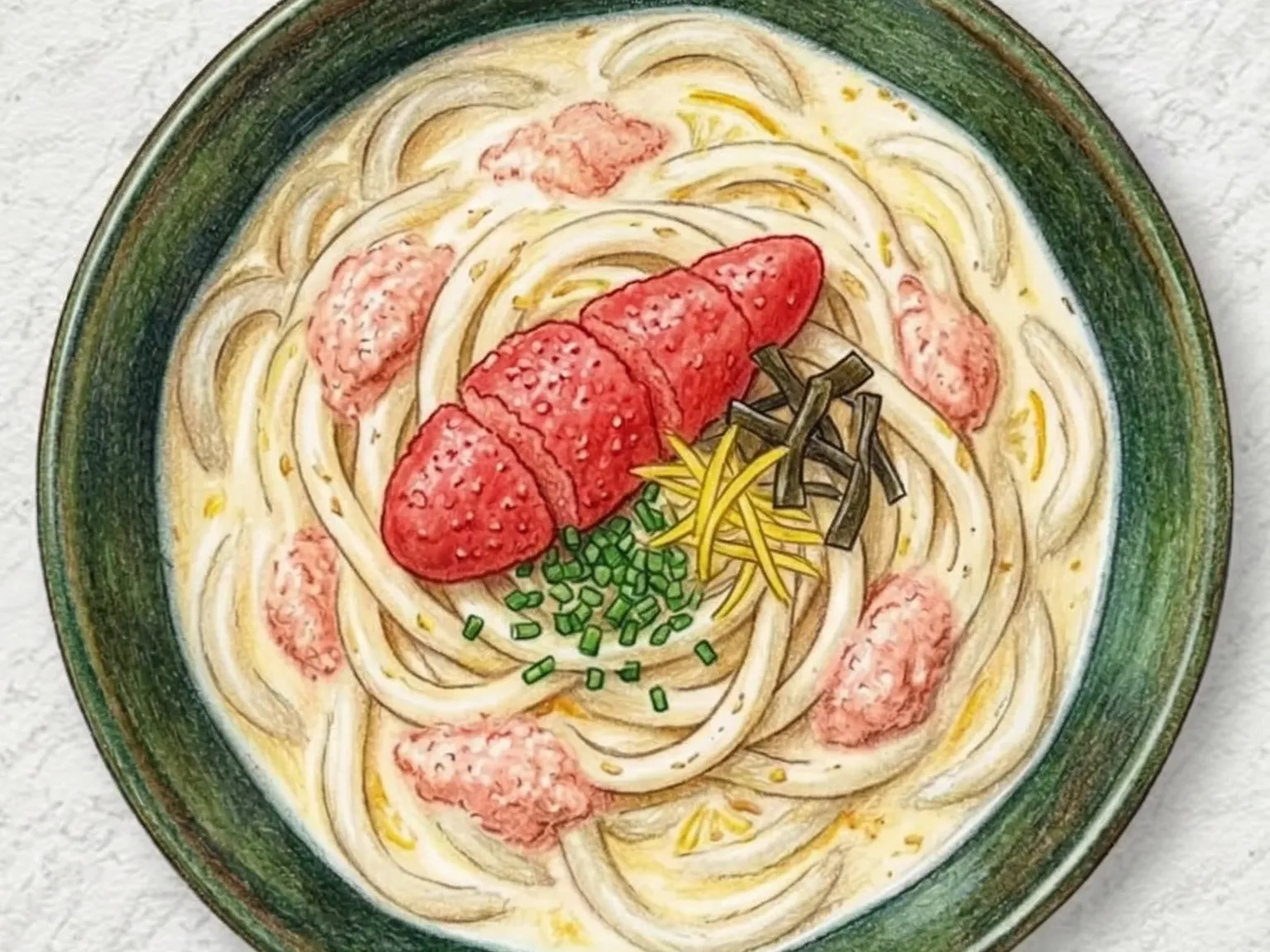
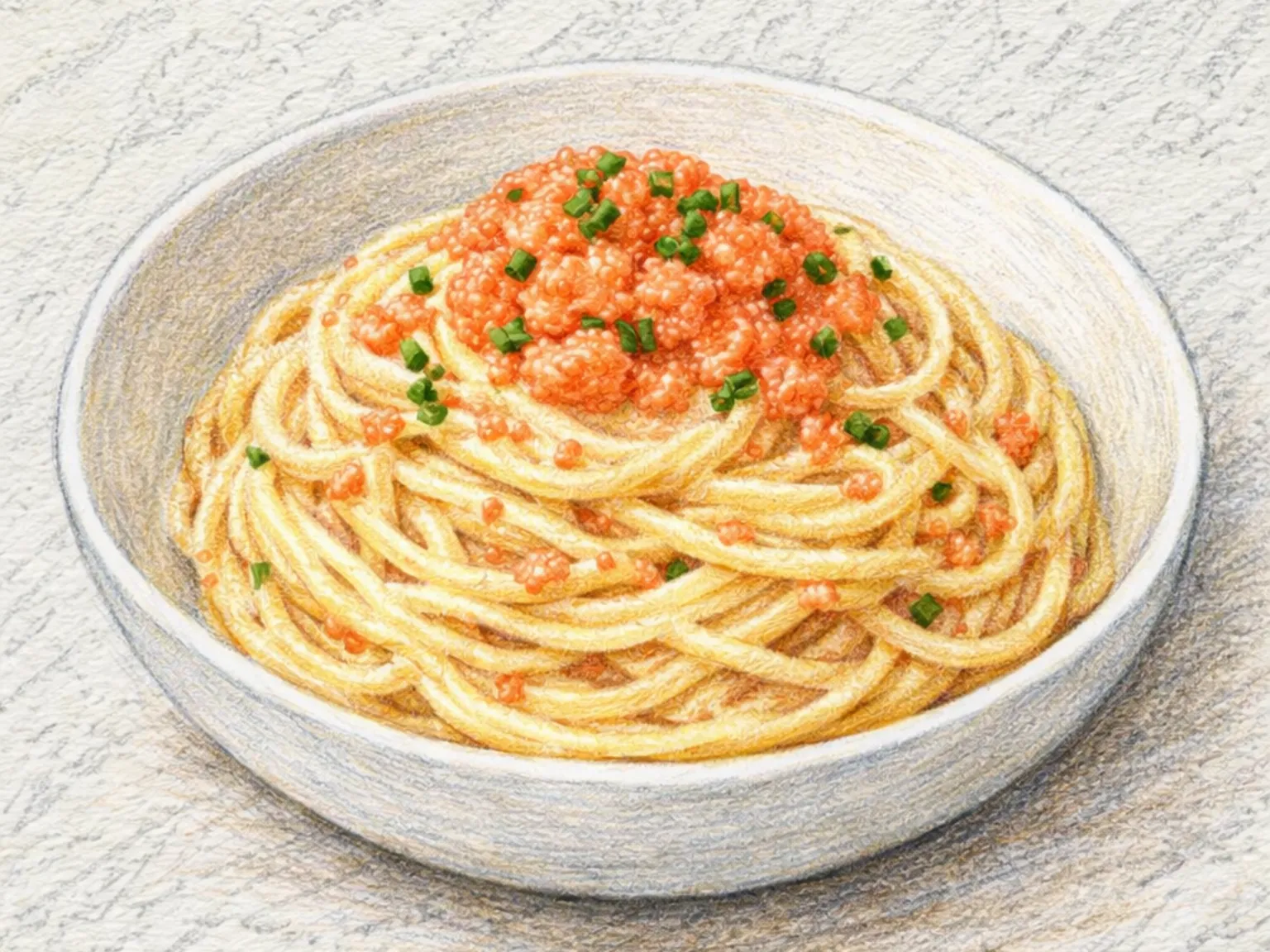
Mentaiko cream pasta is a Japanese-style cream pasta in which salted pollock roe is stirred into a warm butter, heavy cream, and milk base until the sauce turns silky and...
What makes this special
- Salted pollock roe stirs into a warm heavy cream base for this Japanese-style cream pasta.
- Mentaiko cooked only in residual heat to keep each roe pop without fishiness
- Heavy cream heated just below boiling to stay emulsified and creamy
Key ingredients
Core cooking flow
- 1 Split the 80 g mentaiko sacs and scrape out only the roe.
- 2 Cook 180 g spaghetti in boiling salted water until 1 minute short of the package time.
- 3 Melt 15 g butter in a pan over low heat, then cook the garlic for 1 to 2 minutes until sweet and fragrant.
Mentaiko cream pasta is a Japanese-style cream pasta in which salted pollock roe is stirred into a warm butter, heavy cream, and milk base until the sauce turns silky and coats the spaghetti in a fine layer studded with tiny bursts of roe. Minced garlic is sauteed gently in butter over low heat until just fragrant and sweet, then the cream and milk are poured in and brought only to the point before a full boil, as a rolling boil causes the sauce to break and separate. Once the temperature is controlled, two-thirds of the roe goes into the sauce along with the drained spaghetti, everything tossed quickly so the roe cooks only through the residual heat of the pasta and sauce rather than direct flame, which would make it taste fishy. Reserved pasta water, added a spoonful at a time, adjusts the consistency without diluting the richness. Finely grated Parmesan adds another tier of umami and salt, while a few drops of fresh lemon juice cut through the cream and leave a clean, bright finish that keeps the dish from feeling too heavy. The remaining raw roe and crumbled roasted seaweed are arranged on top before serving, creating a contrast of red and black that signals the flavors inside, and folding them in at the table releases a fresh, briny aroma.
Instructions
Read the steps as a cooking flow: prep, heat, seasoning, doneness control, and finish.
- 1Season
Split the 80 g mentaiko sacs and scrape out only the roe.
Set aside one-third for topping, keep the rest for the sauce, finely mince the garlic, and have the Parmesan ready to add later.
- 2Finish
Cook 180 g spaghetti in boiling salted water until 1 minute short of the package time.
Reserve 120 ml of starchy pasta water, then drain the pasta without rinsing so the sauce clings well.
- 3Control
Melt 15 g butter in a pan over low heat, then cook the garlic for 1 to 2 minutes until sweet and fragrant.
Keep it pale rather than browned, since dark garlic can make the cream taste bitter.
- 4Control
Pour in 160 ml heavy cream and 60 ml milk, then warm over medium-low heat only until steam rises.
When small bubbles appear around the edge, lower the heat immediately to prevent the dairy from separating.
- 5Season
Add the spaghetti, then turn the heat very low or briefly off.
Add two-thirds of the roe and toss quickly for 1 minute, adding pasta water one spoonful at a time until the sauce looks glossy.
- 6Finish
Turn off the heat and stir in 20 g Parmesan and 1 tsp lemon juice, then check the thickness and saltiness.
Plate the pasta, top with the remaining roe and roasted seaweed flakes, and mix lightly before eating.
After the steps
Pick a recipe that fits this dish.
Continue with shared ingredients, meal pairings, or a similar method.
Recipes That Go Well With This
More Noodles →Based on shared ingredients and meal pairing
Cream Pasta
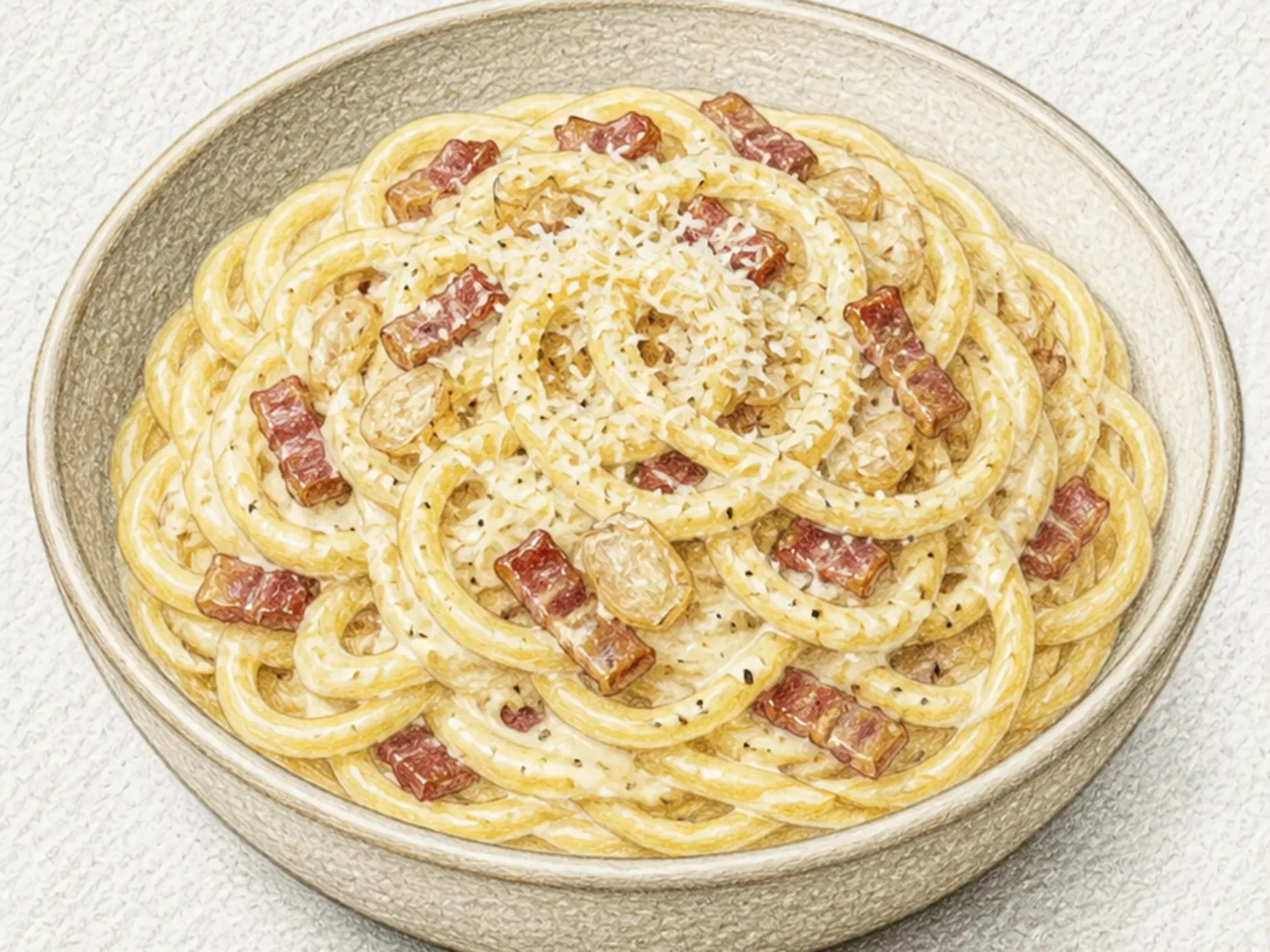
Cream pasta begins with bacon rendered crisp in butter, building a fat base that carries the flavor of everything that follows. Diced onion and minced garlic cook in the rendered fat until soft and fragrant before the heavy cream and milk go in, which is the combination that gives the sauce body without making it too dense. Heavy cream alone would weigh the pasta down, so the milk lightens the mixture to a consistency that clings to each strand without pooling at the bottom of the bowl. The cooked pasta is transferred directly into the sauce pan while still hot, and two to three tablespoons of starchy pasta water are stirred in to help the sauce emulsify and adhere evenly to the noodles. Freshly grated Parmesan is added off the heat so it melts smoothly rather than clumping, contributing a salty edge and a fermented depth that rounds out the simple cream base. The finished dish layers the smoky, cured saltiness of bacon against the mild richness of cream and the aged sharpness of Parmesan for a well-balanced, satisfying bowl.
Gochujang Cream Pasta (Spicy Fermented Chili Cream Sauce)
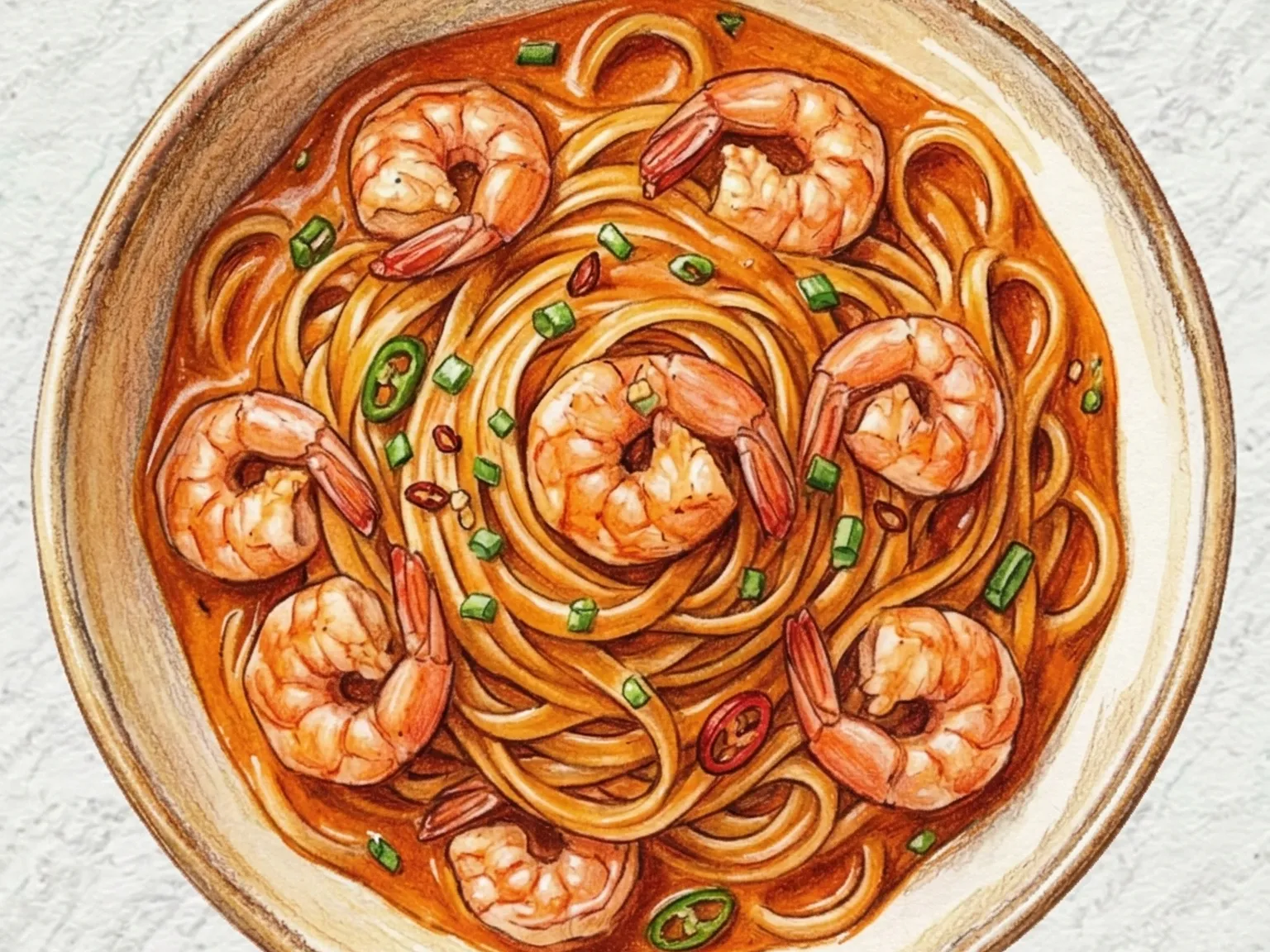
Gochujang cream pasta is a fusion dish that incorporates the fermented heat of Korean red chili paste into an Italian-style cream sauce. Heavy cream forms the base and parmesan provides the sharp, aged umami, while gochujang contributes a slow-building spice and the complex fermented sweetness that sets it apart from using raw chili pepper. Bacon is rendered first to extract enough fat for sauteing the onion and garlic, and that combination of cured pork fat, aromatic vegetables, and fermented paste forms the flavor core of the sauce before any liquid is added. Gochujang should be added at a reduced heat and stirred in gradually rather than dropped in all at once, since the paste can scorch quickly when exposed to a high-temperature pan. A ladleful of starchy pasta water adjusts the consistency and acts as an emulsifier, helping the fat from the cream and bacon stay bound with the aqueous components rather than separating. The result is a glossy, clinging sauce that coats each strand of pasta evenly. The balance between the richness of the cream and the acidity and heat of the fermented paste is what has made this combination popular in Korean home kitchens and casual restaurants alike.
Herbed Orzo Salad
Herbed orzo salad cooks rice-shaped orzo pasta to al dente in salted water, cools it, then tosses it with diced cucumber, halved cherry tomatoes, chopped parsley and mint, and crumbled feta cheese in a lemon and olive oil dressing. Pulling the orzo from the water one minute before the package time is essential - the pasta continues to cook as it sits and absorbs dressing, so even slight overcooking results in a mushy texture by the time the salad is served. A small amount of olive oil stirred into the drained orzo while still warm prevents the pieces from clumping into a mass. The two-ingredient dressing of lemon juice and olive oil is deliberately bare, designed to let the bright herbal aroma of the parsley and mint come forward while cutting through the starchy weight of the pasta. Crumbling feta by hand rather than slicing it scatters uneven pockets of salty, creamy fat throughout the salad, so the flavor shifts slightly from one forkful to the next. The salad holds its texture and flavor when stored cold, making it well suited for packed lunches and advance preparation several hours ahead of serving.
Spaghetti Carbonara
Carbonara is a Roman pasta built on four core ingredients: guanciale, egg yolks, Pecorino Romano, and black pepper. The guanciale is rendered until crisp, and its fat becomes the base of the sauce. Off the heat, a mixture of yolks and grated cheese is tossed with the hot pasta and starchy cooking water to form a glossy emulsion - no cream involved. The dish takes under 25 minutes from start to finish, though temperature control at the sauce stage is critical to avoid scrambling the eggs. The main ingredients are Spaghetti, Guanciale (or pancetta), Egg yolks, and Whole egg, and the recipe depends on careful handling of noodle cooking time and sauce thickness.
Serve with this
Korean Quick Pickled Daikon
Mu-pickle is the yellow pickled daikon that accompanies every order of Korean fried chicken, completing the inseparable trio of chicken, cola, and pickled radish that defines the Korean fried chicken experience. Radish is cut into cubes or half-moons and submerged in a boiled brine of vinegar, sugar, salt, and water. The pickles are edible after thirty minutes, but refrigerating them overnight allows the sweet-sour brine to work its way fully into the core of each piece rather than sitting only on the surface. Commercial chicken-mu gets its vivid yellow color from gardenia extract or turmeric; home versions skip the coloring entirely without any effect on flavor. The vinegar-to-sugar ratio is the single most important variable in the recipe. Too much vinegar and the acidity dominates every bite; too much sugar and the result tastes more like candied fruit than a palate-cleansing pickle. A 1-to-1 ratio is the reliable starting point that most home cooks stick with. When eaten alongside greasy fried chicken or pork cutlet, a single piece of mu-pickle deploys its vinegar sharpness to cut through the oil coating the palate, resetting the mouth for the next bite. Kept refrigerated in a sealed container, the pickles hold their crunch for more than two weeks.
Korean Shepherd's Purse & Napa Pancake
Naengi Baechu Jeon is a seasonal Korean pancake that features wild shepherd's purse and sweet napa cabbage. To prepare this dish, the roots of the shepherd's purse are thoroughly scrubbed to remove soil and chopped into short lengths, while the cabbage is sliced, lightly salted to draw out moisture, and squeezed. The batter consists of Korean pancake mix, rice flour, an egg, cold water, and soup soy sauce, which provides a clean base that allows the flavors of the vegetables to stand out. Mixing rice flour into the batter ensures that the edges of the pancake turn crispy and remain tender even after cooling. The prepared greens are gently folded into the mixture, then pan-fried in oil over medium heat until both sides are golden brown. It is sliced on a board and served warm.
Korean Mustard Greens Pickle
Paeju mustard pickle is a quick vinegar preserve where mustard greens are cut into roughly four-centimeter pieces, packed into jars with sliced garlic, and submerged in a hot brine of vinegar, water, sugar, salt, and lemon juice. Mustard greens hold on to their peppery, nasal bite even after pickling, layering that natural heat against the sharp acidity of the brine. Lemon juice is added only after the heat is turned off, preserving the citrus aroma that would otherwise evaporate during boiling. Thicker stems absorb the brine more slowly than the leaves, so separating them and salting the stems first gives a more uniform texture throughout. The pickles are ready after twelve hours of refrigeration, but a full day of resting allows the brine to penetrate to the center of each piece and the flavors to settle into a rounder balance. Served alongside fatty meats, their peppery acidity cleans the palate effectively; tucked into a sandwich, they stand in for mustard with more complexity.
Similar recipes
Beef Brisket Perilla Cream Fettuccine
Chadol perilla cream fettuccine pairs Italian cream sauce with thinly sliced Korean beef brisket and the resinous fragrance of perilla leaves. The brisket is seared in a dry, hot pan without added oil, since its own fat content is sufficient and extra oil prevents proper caramelization on the edges. After searing and draining the rendered fat, the crisped brisket is folded back into a sauce of heavy cream and milk so its savory depth permeates every drop. Perilla leaves must be added only when the heat is turned off, because their volatile aromatic oils evaporate quickly; adding them too early leaves only a faint bitterness. The perilla's herbal note lifts the heaviness of the cream and introduces a register absent from any European herb. Fettuccine's broad, flat surface catches sauce generously, ensuring each bite is fully coated without the sauce pooling at the bottom of the bowl. Grated Parmigiano-Reggiano adds sharpness and salt, while cracked black pepper gives a punctuating finish. The dish works because the rich fat of the brisket and the clean herbal top note of perilla occupy different flavor registers and strengthen rather than compete with each other.
Pasta al Limone (Italian Lemon Butter Cream Pasta)
Pasta al limone is a pasta from southern Italy that relies entirely on lemon zest, lemon juice, butter, cream, and Parmesan for its sauce, with no tomato and no meat to complicate the flavor. The citrus oils drawn from the zest dissolve into warm butter and spread their aroma evenly through the fat before any liquid is added, which is what gives the finished sauce its rounded, lingering lemon character rather than a sharp acidic bite. A ladleful of starchy pasta water is then added to emulsify everything into a glossy, clingy coating that holds to each strand of linguine without pooling at the bottom of the plate. Cooking the sauce over low heat throughout is critical: cream added to high heat separates and loses its silky texture. Linguine cooked al dente provides enough resistance to stand up to the light sauce without the combination feeling heavy or cloying. Total preparation from filling a pot with water to plating takes roughly twenty minutes, making it a realistic weeknight option despite its refined result.
Truffle Cream Pasta
Truffle cream pasta cooks fettuccine al dente, reserves pasta water, then tosses the noodles in a sauce built by sweating garlic in butter, simmering heavy cream, and melting in Parmesan cheese before finishing with truffle oil off the heat. Adding truffle oil only after the burner is off preserves its volatile earthy and mushroom-like aroma - even brief exposure to direct heat dulls the fragrance significantly. The cream needs just two minutes of simmering to thicken to the right consistency; reducing it further makes the sauce too heavy to coat the pasta evenly. Stirring in Parmesan creates body, and splashes of starchy pasta water emulsify the fat and cheese into a smooth, clinging sauce. The dish should be plated and eaten immediately - truffle aroma fades quickly once it leaves the pan, and the sauce continues to tighten as it cools.