Vietnamese Mi Quang (Turmeric Noodles with Pork and Shrimp)
Noodles Medium

Vietnamese Mi Quang (Turmeric Noodles with Pork and Shrimp)

Quick answer

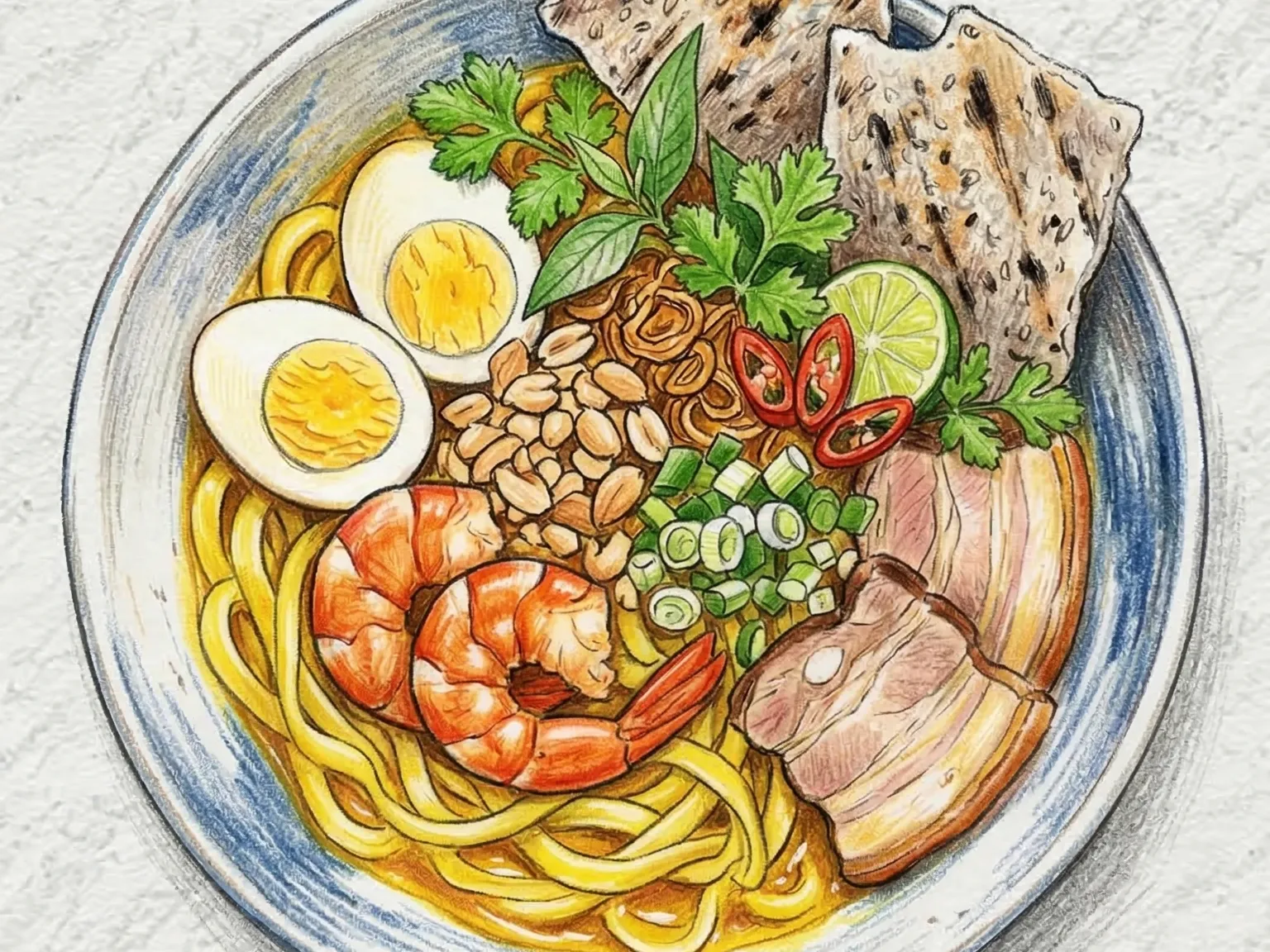
Mi quang is a noodle dish from the Quang Nam province in central Vietnam, built on wide, turmeric-tinted rice noodles dressed with pork, shrimp, and a deliberately small...

What makes this special

  • Vietnamese turmeric rice noodles served with a concentrated pork and shrimp broth.
  • Only enough broth to moisten the noodles; a dipping style, not a soup
  • Pork marinated in turmeric and fish sauce turns yellow and absorbs fermented umami
Total time
40 min
Level
Medium
Servings
2 servings
Ingredients
8
Calories
560 kcal
Protein
33 g

Key ingredients

mi quang noodlespork shouldershrimpturmeric powderfish sauce

Core cooking flow

  1. 1 Slice 180 g pork shoulder thinly, then coat it with 1.5 tbsp fish sauce and 1 tsp turmeric powder.
  2. 2 Heat a pan over medium heat and spread the pork in a single layer.
  3. 3 Cook 100 g shrimp briefly in an empty part of the pan or in a separate pan.

Mi quang is a noodle dish from the Quang Nam province in central Vietnam, built on wide, turmeric-tinted rice noodles dressed with pork, shrimp, and a deliberately small amount of intensely concentrated broth. The defining characteristic of the dish is that ratio. Where most noodle soups are meant to be submerged, mi quang uses just enough broth to moisten the noodles, making it closer to a dressed noodle than a soup bowl. Pork is marinated in fish sauce and turmeric before cooking, which simultaneously tints the meat yellow and saturates it with fermented savory depth. Simmering it briefly with chicken stock draws out a small volume of broth with a concentrated, meaty intensity that would taste overwhelmingly strong on its own but calibrates perfectly when distributed across a full serving of noodles. Shrimp are kept separate and cooked quickly by sautéing or grilling rather than simmering, which keeps them springy rather than soft. The noodles are cooked, rinsed under cold water so they do not stick, and placed in a bowl before the meat, shrimp, and broth go on top. Bean sprouts add a raw crunch that contrasts directly with the soft noodles, while crushed roasted peanuts contribute a dry, nutty texture that absorbs some of the broth. A squeeze of lime at the end sharpens the entire flavor profile and balances the richness.

Prep 20min Cook 20min 2 servings
Recipes by ingredient → shrimp fish sauce

Instructions

Read the steps as a cooking flow: prep, heat, seasoning, doneness control, and finish.

6 steps
  1. 1
    Season

    Slice 180 g pork shoulder thinly, then coat it with 1.5 tbsp fish sauce and 1 tsp turmeric powder.

    Let it stand for about 10 minutes so the color and seasoning can soak into the meat.

  2. 2
    Control

    Heat a pan over medium heat and spread the pork in a single layer.

    Stir often until the surface turns opaque and a little yellow oil appears, preventing the marinade from scorching on the pan.

  3. 3
    Heat

    Cook 100 g shrimp briefly in an empty part of the pan or in a separate pan.

    Remove them as soon as they turn pink and firm so they stay springy instead of becoming tough.

  4. 4
    Control

    Pour 350 ml chicken stock into the pan with the pork and simmer over medium-low heat for 5 minutes.

    The broth should become concentrated, not dry out, so lower the heat if it reduces too fast.

  5. 5
    Heat

    Cook 280 g mi quang noodles separately until tender but not breaking apart.

    Rinse under cold water, then drain well so the noodles stop cooking and do not clump before they go into the bowls.

  6. 6
    Finish

    Place the noodles in bowls, then add pork, shrimp, and only enough broth to moisten the noodles.

    Finish just before serving with 80 g bean sprouts and 2 tbsp crushed roasted peanuts for crunch.

After the steps

Pick a recipe that fits this dish.

Continue with shared ingredients, meal pairings, or a similar method.

Recipes That Go Well With This

More Noodles →

Based on shared ingredients and meal pairing

Vietnamese Grilled Pork Vermicelli
Shared ingredient: pork shoulder Noodles

Vietnamese Grilled Pork Vermicelli

Charcoal-grilled pork is placed over cold rice vermicelli and eaten mixed with nuoc cham in this southern Vietnamese noodle bowl. The pork marinates in fish sauce, sugar, and garlic before grilling, so direct heat caramelizes the surface sugars into a deep brown crust while the interior holds its moisture. Fresh mint, cilantro, and coarsely crushed roasted peanuts are scattered on top, layering herbal fragrance with crunch. Nuoc cham, built from lime juice, sugar, fish sauce, and chili, is the sweet-sour-salty binding agent that pulls together the warm meat, cool noodles, and raw herbs into a single coherent bowl. The temperature contrast between hot pork and chilled vermicelli is central to the eating experience. Pickled daikon and carrot add a final note of acidity that keeps each bite clean. No broth is needed; the bowl is filling and bright.

Beef Brisket Pho Guksu (Charred Ginger Beef Rice Noodle Soup)
Shared ingredient: fish sauce Noodles

Beef Brisket Pho Guksu (Charred Ginger Beef Rice Noodle Soup)

Beef pho guksu is a Vietnamese-style rice noodle soup that pairs the clean, sweet depth of charred-onion-and-ginger broth with thin slices of Korean chadolbaegi brisket. The broth starts with dry-charring whole onion and ginger directly in a pan until the surfaces blacken. This step burns off the raw pungency and draws out a caramelized sweetness that defines the soup's aroma. Fish sauce and a measured amount of sugar season the strained broth, producing a full-flavored liquid that finishes clean. To cook the brisket, the boiling broth is poured directly over the thinly sliced meat in the bowl, allowing gentle heat to set the beef while leaving it tender and slightly pink. Bean sprouts, cilantro, and lime wedges arrive on the side so each person adjusts freshness and acidity to taste, following Vietnamese table tradition. The marbled fat in Korean brisket adds a richer body to the broth than standard pho, making this a distinct take that sits between Korean gomtang and Vietnamese pho.

Vietnamese Lotus Stem Shrimp Salad
Serve together Salads

Vietnamese Lotus Stem Shrimp Salad

Goi ngo sen is a traditional Vietnamese salad of thinly sliced lotus stem, blanched shrimp halved lengthwise, julienned carrot, and cilantro dressed in a fish sauce and lime vinaigrette. Soaking the lotus stem in diluted vinegar water for ten minutes is not optional: it removes the astringent edge while keeping the crisp, snapping texture that defines the dish, and skipping this step leaves a rough, bitter aftertaste no amount of good dressing can fix. Blanching the shrimp for two to three minutes and splitting them open lengthwise exposes more cut surface for the dressing to penetrate. The dressing combines fish sauce, lime juice, and sugar in a ratio that hits salty, sour, and sweet simultaneously, making the natural umami of the seafood stand out rather than recede. Letting the salad rest for at least five minutes after tossing gives the dressing time to soak into each ingredient and allows the flavors to settle into one another.

Cao Lau (Hoi An Chewy Rice Noodles with Braised Pork)
Similar recipe Asian

Cao Lau (Hoi An Chewy Rice Noodles with Braised Pork)

Cao lau is a dish with a single origin: Hoi An, a UNESCO-designated port town on Vietnam's central coast. Its defining characteristic is the noodle, which was traditionally prepared using water drawn from a specific ancient Cham well and lye derived from the ash of trees grown on the nearby Cham Islands. The combination of that mineral-rich water and alkaline lye gives the noodles a firm, dense chew and a distinctive amber color that no other Vietnamese noodle shares. Sliced pork braised in soy sauce, five-spice, and sugar until the exterior deepens and caramelizes is the main protein, placed on top of the noodles along with a handful of fresh herbs, crunchy bean sprouts, and torn pieces of fried wonton skin that have been crisped separately. Only a small amount of the pork braising liquid is spooned over the bowl - cao lau is a dry noodle dish, not a soup, and the absence of broth is essential to how the textures work together, each component staying distinct rather than softening in liquid. The flavors encoded in the dish are a record of the trading cultures that moved through Hoi An over several centuries: the soy-based braising sauce reflects Japanese culinary influence, the five-spice points to Chinese cooking traditions, and the abundant fresh herb garnish is unmistakably Vietnamese. The result is a dish whose full identity cannot be separated from its place of origin, making it one of the most geographically specific preparations in Southeast Asian cuisine.

Serve with this

Korean Seasoned Bracken Fern
Side dishes Easy

Korean Seasoned Bracken Fern

Gosari, the Korean name for bracken fern, is one of the oldest foraged vegetables in Korean cooking, with consumption records tracing back to the Three Kingdoms period. It is a mandatory component of bibimbap and a required dish on jesa, the ancestral rite table set for ceremonies honoring the dead. Dried gosari must soak overnight in cold water and then boil until the tough, wiry fibers relax into a distinctively springy, almost elastic chew that no fresh vegetable can replicate. The rehydrated fern is stir-fried in perilla oil with minced garlic until fragrant, then a small amount of soup soy sauce and water goes in and the pan is covered to let the liquid absorb and the fern braise briefly. This short braising step is what rounds the flavor and ensures the seasoning penetrates the fibrous strands rather than sitting only on the surface. Perilla oil is the traditional fat of choice rather than sesame oil because its green, herbal quality pairs more naturally with the woodsy, forest-floor flavor of gosari, amplifying rather than competing with it. Large batches are typically made during Chuseok or Seollal and eaten over several days, as the flavor improves and deepens as the dish sits.

🏠 Everyday 🎉 Special Occasion
Prep 15min Cook 15min 4 servings
Korean Stuffed Perilla Leaf Pancakes
Pancakes Medium

Korean Stuffed Perilla Leaf Pancakes

Kkae-ip-jeon are pan-fried perilla leaf parcels stuffed with a filling of ground pork and firm tofu, coated in flour and egg. The tofu must be squeezed dry in a cloth before mixing; excess moisture causes the filling to spread and stick to the pan. Garlic chives and onion add crunch and fragrance to the mix, and the filling seasoned with soy sauce and black pepper pairs cleanly with the perilla's strong herbal character. Dusting with flour first, then dipping in egg, produces an even coating, and frying covered over medium-low heat for two minutes per side ensures the filling is cooked through to the center. The bite-sized pieces work well as a packed lunch side or as bar food.

🍺 Bar Snacks 🎉 Special Occasion
Prep 22min Cook 12min 2 servings
Korean Soy Pickled Radish Cubes
Kimchi Easy

Korean Soy Pickled Radish Cubes

Mu jangajji is a fundamental Korean soy-pickled radish made by cutting radish into 1.5 cm cubes, packing them in a sterilized jar with dried chili, and pouring over a boiled brine of soy sauce, vinegar, and sugar. The radish's firm flesh absorbs the sweet-salty brine gradually while maintaining its crisp bite, and the dried chili adds a gentle warmth and aroma to the liquid. Pouring the brine while still hot is important because the heat briefly opens the cell walls of the radish, allowing the seasoning to penetrate more evenly throughout. Vinegar balances the soy's saltiness with a clean tang, and using dense winter radish yields the best texture. This is one of the most versatile Korean pickles, appearing alongside gimbap, bibimbap, and gukbap as a reliable everyday table companion.

🍱 Lunchbox 🏠 Everyday
Prep 20min Cook 10min 4 servings

Similar recipes

Vietnamese Spicy Beef Noodle Soup
Noodles Hard

Vietnamese Spicy Beef Noodle Soup

Bun bo Hue is a spicy beef rice noodle soup from the central Vietnamese city of Hue, distinguished from northern-style pho by the defining combination of lemongrass and fermented shrimp paste that gives the broth its assertive, layered character. Beef shank simmers for hours at low heat to yield a rich, collagen-heavy stock, and it is into this base that dried chilies, lemongrass stalks, and a measured quantity of mam ruoc, the fermented shrimp paste specific to central Vietnam, are introduced, building a spiciness that is complex rather than simply hot. A bright-red slick of chili oil floating on the surface signals the heat level before the first sip, and that first spoonful delivers the deep umami of the shrimp paste layered beneath the citrusy, grassy brightness of lemongrass, a combination unlike anything in other Vietnamese noodle soups. The noodles, called bun, are thick, round rice noodles chewier and more substantial than the flat strands in pho, with enough body to stand up to the heavy, assertive broth without becoming waterlogged. Bean sprouts, shredded raw banana flower, and a squeeze of lime are served alongside and added at the table, where their crisp textures and sharp acidity cut directly through the richness and temper the heat. Sliced pork blood sausage and braised pig's knuckle are the traditional additions that bring the bowl into full alignment with what is served in the street stalls of Hue itself.

🎉 Special Occasion 🌙 Late Night
Prep 30min Cook 120min 4 servings
Pancit Palabok (Filipino Rice Noodles with Annatto Shrimp Sauce)
Noodles Medium

Pancit Palabok (Filipino Rice Noodles with Annatto Shrimp Sauce)

Pancit palabok is a Filipino celebratory noodle dish built on thin rice noodles blanketed in an orange-hued shrimp sauce. The sauce draws its color from annatto powder, which also contributes a faint earthy sweetness, and its savory backbone from shrimp-shell stock simmered with fish sauce. Boiled egg halves and a squeeze of lime are the traditional garnish, cutting through the richness with acidity. Fried garlic, sliced scallions, and crushed chicharron scattered on top add texture contrast and bring multiple layers of flavor to a single serving. At Filipino birthday parties and holiday gatherings, palabok is presented on a large platter and shared family-style, making it one of the most recognizable celebration dishes in the cuisine.

🎉 Special Occasion 🏠 Everyday
Prep 20min Cook 25min 2 servings
Banh Canh Cua (Vietnamese Thick Crab and Pork Noodle Soup)
Asian Medium

Banh Canh Cua (Vietnamese Thick Crab and Pork Noodle Soup)

Banh canh cua is a southern Vietnamese noodle soup built for maximum richness - both the broth and noodles are thick, a deliberate contrast to the clear, refined soups of Hanoi. The base is drawn from crab shells and pork bones simmered together for hours, then strained and thickened with tapioca starch until it coats the back of a spoon. Hand-formed tapioca-rice noodles have a quality unlike any wheat or standard rice noodle: slippery on the surface and densely chewy at the core. Chunks of crab meat and a crab-paste egg custard float in the milky broth, making each spoonful intensely oceanic. Street vendors in Ho Chi Minh City and Can Tho ladle it from giant pots at dawn, serving it as a morning meal alongside fried shallots and fresh herbs that cut through the fat. The soup has no equivalent in northern Vietnamese cooking - it is distinctly southern, a bowl that prioritizes depth and substance over delicacy.

🎉 Special Occasion 🌙 Late Night
Prep 20min Cook 30min 2 servings

Tips

Mi Quang should have minimal broth, not a full soup.
Add peanuts at the end to keep them crunchy.

Nutrition (per serving)

Calories
560
kcal
Protein
33
g
Carbs
62
g
Fat
19
g