Korean Sea Squirt Soybean Paste Soup
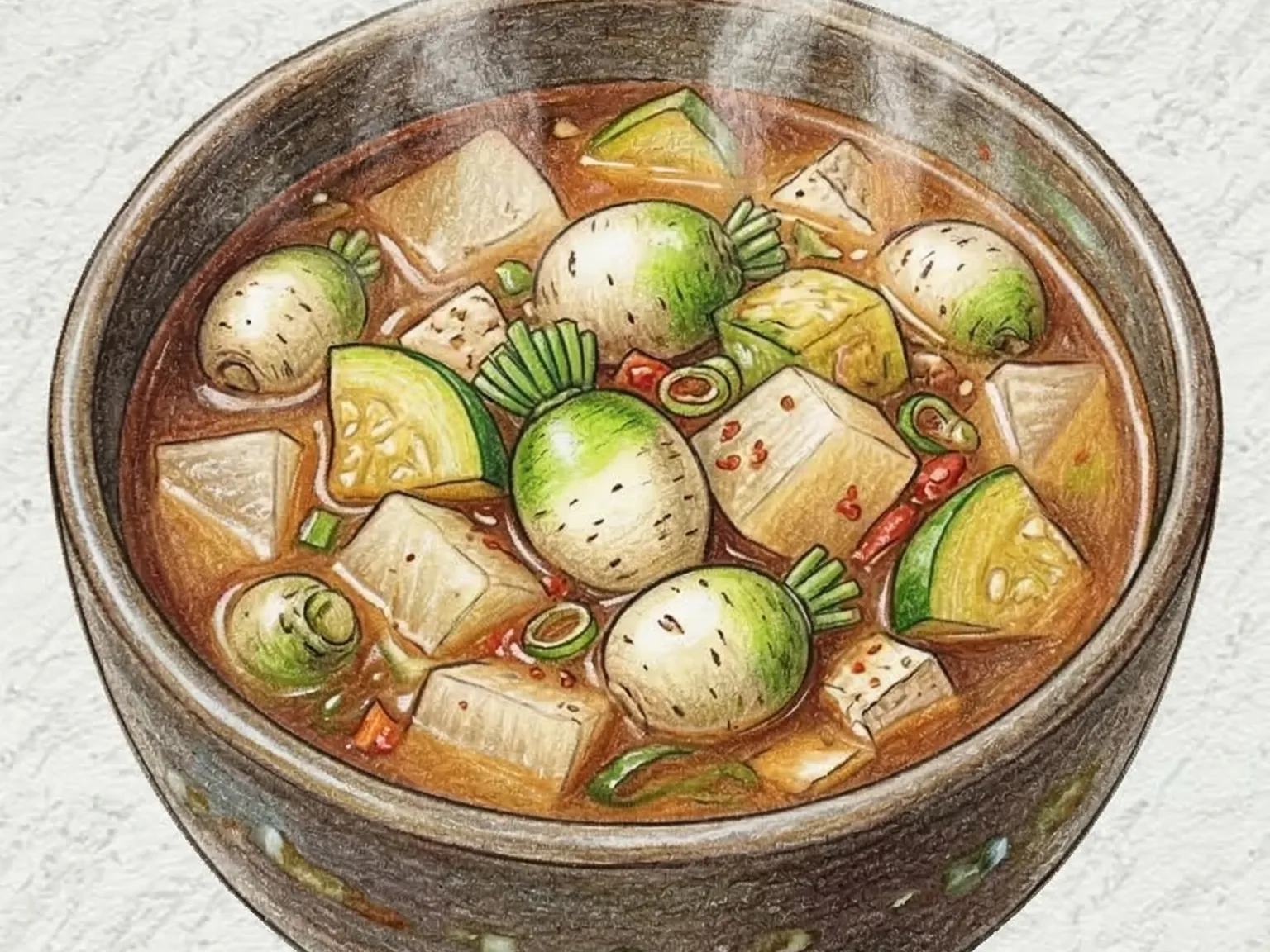
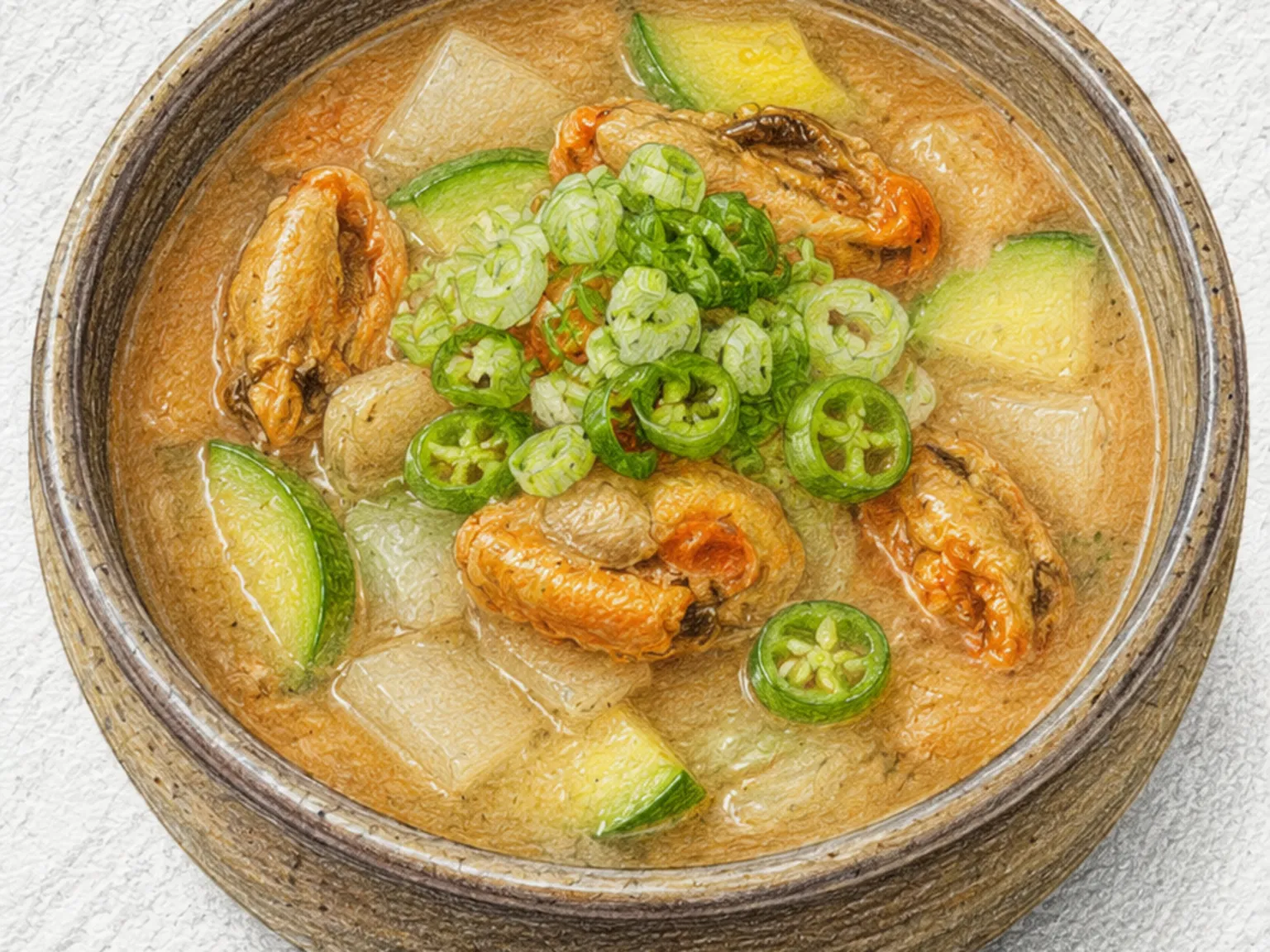
Mideodeok-doenjang-guk is a Korean soybean paste soup made with sea squirt, one of the more unusual and intensely flavored combinations in everyday Korean cooking. Sea squirt, called mideodeok in Korean, belongs to the same class of sea creatures as the better-known meongge. What sets it apart is the small pocket of brine inside its leathery outer skin. When bitten, the skin pops and releases a burst of concentrated ocean liquid that spreads through the surrounding broth. Combined with the fermented earthiness of doenjang, this creates a double layer of umami that lingers well past the last spoonful. The soup is built on anchovy-kelp stock, which reinforces the seafood character and keeps the base clean. Doenjang is stirred in once the stock is fully boiling so it dissolves evenly without losing its fermented depth. Radish and zucchini are added to balance the intensity: both vegetables absorb the strong flavors of the broth while contributing a quiet sweetness. One or two Cheongyang chili peppers provide a clean, building heat that cuts through any richness. Generous sliced green onion added just before serving keeps the finish bright and aromatic. Sea squirt should not be scored or cut before the soup is finished, as breaking the skin early causes the inner liquid to drain away into the pot rather than releasing inside the mouth. Along the southern coast of South Korea, particularly in Tongyeong and Geoje where mideodeok is harvested in large quantities, this soup is ordinary home cooking. Elsewhere it is a deliberate seasonal choice, best in late spring and early summer.
Adjust Servings
Instructions
- 1
Slice radish into thin squares, zucchini into half-moons, and chop chili and green onion.
- 2
Rinse sea squirt lightly in salted water and drain.
- 3
Pour rice-rinse water into a pot and dissolve doenjang through a strainer as it heats.
- 4
Add radish first and cook 6 minutes, then add zucchini and garlic.
- 5
Add sea squirt and simmer only 3 minutes to preserve its ocean aroma.
- 6
Adjust seasoning with soup soy sauce, then add chili and green onion for 1 more minute.
As an Amazon Associate, we may earn from qualifying purchases.
Tips
Nutrition (per serving)
Goes Well With

Korean Ginger Pumpkin Porridge
Kabocha pumpkin is steamed for 15 minutes and pureed until velvety, then thickened with sweet rice flour dissolved in cold water to prevent lumps. A teaspoon of fresh ginger juice adds a warm, peppery undercurrent beneath the pumpkin's natural sweetness, sharpening the finish without overpowering the squash. The porridge is stirred continuously over medium-low heat as the rice flour gradually builds body, and pine nuts scattered on top contribute an oily, resinous richness that complements the sweetness. This recipe yields four servings, making it well suited for sharing.

Korean Stir-fried Potato and Shrimp
Gamja-saeu-bokkeum pairs julienned potatoes with shell-on medium shrimp in a clean, garlic-forward stir-fry. The potatoes are soaked in cold water first to remove surface starch, as skipping this step leads to clumping in the pan and a starchy, heavy texture. Garlic sizzles in oil to build an aromatic base before the shrimp go in, cooking until half-done so their natural sweetness transfers to the potato strips when the two are combined. Seasoned with nothing more than salt, pepper, and a finish of sesame oil, this banchan lets the contrast between the potato's floury bite and the shrimp's springy snap carry the dish. Thin slices of Cheongyang chili pepper can be added for a clean, sharp heat that makes the stir-fry even more compatible as a rice side dish. The combination of orange shrimp, pale yellow potato, and green chili also gives the finished plate a natural visual balance.

Korean Pickled Shishito Peppers
Kkwarigochu jangajji is a Korean pickled shishito pepper side dish made by pricking each pepper all over with a toothpick, blanching briefly in salted boiling water for thirty to sixty seconds, and submerging them with sliced garlic and optional cheongyang chili in a brine of soy sauce, vinegar, and sugar brought to a boil. Pricking the peppers before blanching ensures the brine penetrates evenly through the hollow interior, eliminating any difference in seasoning between the skin and the flesh inside. Blanching for only thirty seconds to one minute wilts the peppers just enough to make them pliable while keeping a firm, springy bite and their natural mild heat. Pouring the brine hot, then letting the jar cool before refrigerating, helps the peppers hold their green color rather than browning. Vinegar cuts through the saltiness of the soy sauce and prevents the pickle from tasting heavy, while sugar smooths the sharpness into a balanced, clean finish. Ready after at least one day of refrigeration and keeps well for over a week, making it a reliable banchan to have on hand when the weeknight table needs one more dish.

Korean Shiitake Tofu Pancake
Shiitake-tofu jeon is a savory Korean pancake made by finely chopping fresh shiitake mushrooms and firm tofu, then mixing them into a batter of pancake mix, egg, and a touch of sesame oil before pan-frying. The shiitakes contribute a meaty chew and pronounced umami depth, while the tofu lightens the texture and keeps the interior moist. Carrot and chives are added for color contrast and a fresh, slightly pungent bite. The egg binds everything together, and the sesame oil in the batter gives a nutty fragrance. Cooked uncovered over medium-low heat until both sides are golden, the exterior crisps up while the inside stays tender. When using dried shiitakes, soaking them in water first is worthwhile because the soaking liquid can be reserved for use in soups or braising liquid. Served with a dipping sauce of soy sauce and vinegar, the salty acidity sharpens the overall savory flavor.
More Recipes

Korean Spring Cabbage Soybean Paste Soup
Bomdong doenjang-guk is a seasonal Korean home soup made by simmering spring cabbage and doenjang in rice-rinsing water, which adds a subtle starchy body to the broth and softens the saltiness of the paste. The thicker cabbage stems go in first to soften properly while retaining some bite, and the tender leaves are added at the end to hold their natural sweetness and color. Tofu, a pinch of red chili flakes, and green onion round out the bowl with depth and mild heat. A drop of sesame oil just before serving adds a nutty finishing aroma. Spring cabbage has a high water content and turns mushy quickly, so the leaves should be added less than two minutes before turning off the heat.

Korean Wild Chive Soybean Paste Soup
Dallae doenjang-guk is a springtime Korean soybean paste soup that showcases wild chives, a seasonal ingredient valued for its sharp, garlicky bite and short availability window. The anchovy-kelp stock is first simmered with potato and onion to build body and sweetness, then doenjang is dissolved in and tofu added for a soft, tender contrast against the broth. Wild chives go in only during the final minute of cooking, because their pungent aroma dissipates rapidly under sustained heat; cooking them too long makes them indistinguishable from ordinary green onion in both flavor and appearance. The bulb end of each chive stalk carries a stronger bite than the leaves, so mincing the bulbs finely distributes their flavor more evenly through the broth. A half teaspoon of gochugaru tints the soup a faint red that visually matches the chive's natural heat. Because dallae is in season for only a brief window, setting a few raw stalks aside to place at the table as a garnish amplifies the fresh spring character of the dish.

Korean Napa Outer Leaf Soybean Soup
Ugeoji doenjang-guk is a deeply comforting soybean paste soup made with the tough outer leaves of napa cabbage that might otherwise be discarded. The leaves are first massaged with doenjang, perilla oil, and garlic, a step that drives the fermented paste deep into the cabbage's thick veins so that when the soup simmers, the flavor releases gradually into the broth. Rice-rinsing water replaces plain stock as the cooking liquid, adding a gentle starchiness that rounds the doenjang's salt into something softer and more enveloping. As the ugeoji cooks down, it turns from a leathery sheet into a silky, almost melting tangle that drapes over the spoon and floods the mouth with concentrated vegetable-and-miso flavor. The broth itself becomes a murky, golden-brown pool of umami, tasting of earth, fermentation, and the quiet bitterness that only well-cooked greens provide. Cubed tofu gives textural relief, and thin rings of cheongyang chili pepper, if added, introduce a sharp heat that cuts the richness. It is a soup that transforms humble ingredients into something far greater than their parts.

Korean Aralia Shoot Soybean Paste Stew
Dureup, the young shoots of the aralia tree, appear for only a few weeks in spring. Their pleasant bitterness and firm bite translate well into the savoury heat of doenjang broth. Anchovy stock forms the base, and both doenjang and gochujang are stirred in together to give the soup an earthy depth with a steady background heat. Zucchini and onion round out the bitterness with sweetness. Tofu fills the bowl with a soft contrast. The shoots go in late in the cooking so their crunch survives the heat of the broth.

Korean Sea Mustard Soybean Soup
Miyeok-doenjang-guk merges two foundations of Korean home cooking, seaweed soup and fermented soybean paste soup, into a single bowl that is earthier and more savory than either alone. Dried sea mustard is soaked, drained, and stir-fried briefly in sesame oil to develop a silky texture, then doenjang is dissolved directly into the pot rather than added at the end, which gives the fermented paste time to mellow and integrate with the seaweed's oceanic character. The result is something deeper and more complex than standard beef miyeok-guk, with a slightly funky, umami-saturated broth that reads as distinctly Korean even without meat. Anchovy-kelp stock used as the base amplifies the depth of the umami even further, while garlic and soup soy sauce keep the seasoning anchored. Because the protein and richness come from doenjang rather than beef, the soup leans naturally toward vegetarian territory and pairs well with a cube of soft tofu for added body. The broth thickens slightly from dissolved paste, which makes it cling to rice in a way that clear broths cannot match. Doenjang varies significantly in saltiness from brand to brand, so the final seasoning with soy sauce should be added gradually and tasted throughout.

Korean Wild Chive Soybean Paste Stew
This doenjang jjigae features dalrae (wild chives), a prized spring ingredient in Korean cooking. Anchovy-kelp stock is simmered with soybean paste, tofu, zucchini, and onion to build a full-bodied, savory base, then wild chives are added just before turning off the heat to preserve their sharp, garlicky aroma. A single Cheongyang chili adds measured heat that underscores the earthiness of the doenjang without overwhelming it. Adding the chives root-end included intensifies the fragrance noticeably compared to using leaves alone. At its best between February and April when freshly harvested dalrae is available, this is a seasonal jjigae that restores appetite when nothing else seems appetizing.