Javanese Chicken Mie Goreng
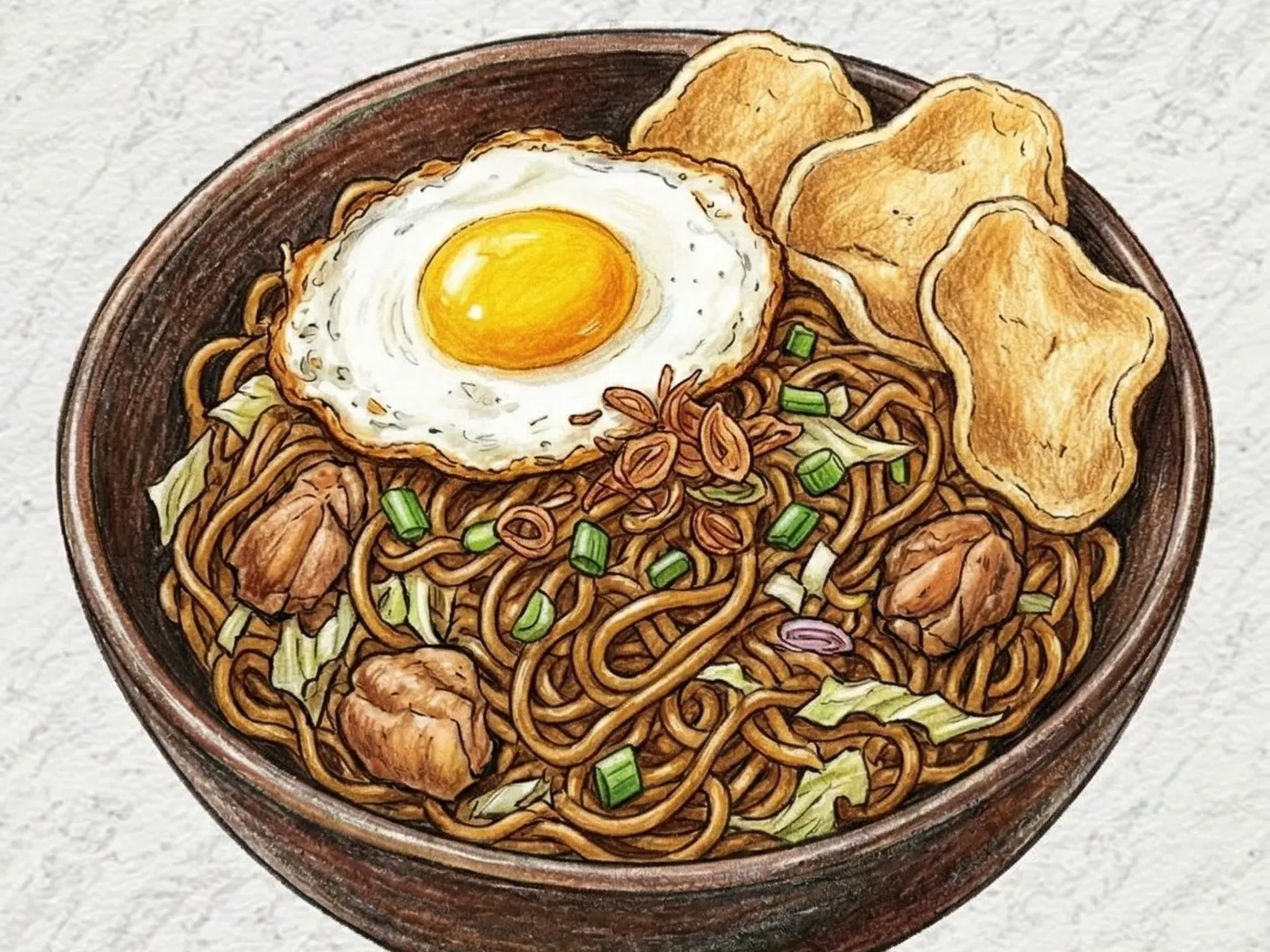
Javanese chicken mie goreng is an Indonesian stir-fried noodle dish distinguished by its use of kecap manis - a thick, sweet soy sauce that caramelizes in the wok and gives the noodles a glossy, dark coating. Egg noodles are tossed over high heat with sliced chicken thigh, shredded cabbage, and scallions, picking up smoky wok char along the way. A base of fried shallots and garlic provides aromatic depth beneath the sweet-salty sauce. Topped with a fried egg and served with prawn crackers and a wedge of lime, it is a complete one-plate meal found at street stalls across Java and beyond. The sweetness of kecap manis sets it apart from Chinese-style fried noodles and makes it immediately recognizable.
Adjust Servings
Instructions
- 1
Boil noodles 2-3 minutes, rinse briefly, and drain well.
- 2
Slice chicken thigh thinly; finely chop shallot and garlic.
- 3
Heat oil in a wok and sauté shallot and garlic until fragrant.
- 4
Add chicken and cook on high heat, then stir-fry cabbage for 1 minute.
- 5
Add noodles, sweet soy, soy sauce, and sambal; toss quickly over high heat.
- 6
Serve once noodles are evenly coated and glossy.
As an Amazon Associate, we may earn from qualifying purchases.
Tips
Nutrition (per serving)
More Recipes

Bihun Goreng (Indonesian Stir-Fried Rice Vermicelli with Sweet Soy)
Bihun goreng - fried rice vermicelli - is a street-food staple across Indonesia and Malaysia, sold from pushcarts and warung stalls from early morning through midnight. Thin rice noodles, soaked briefly until pliable, hit a scorching-hot wok with garlic, shallots, and a spoonful of sambal or chili paste that sizzles instantly. Kecap manis - Indonesia's thick sweet soy sauce - caramelizes against the wok's surface, coating each strand in a dark, sticky glaze. Cabbage, bean sprouts, and sliced carrot are tossed in rapidly, keeping their crunch against the soft noodles. The technique demands constant movement - the noodles must be lifted and turned without breaking, absorbing the sauce without clumping. A fried egg on top, its edges lacy from high-heat oil, is the standard finishing touch. The flavor profile is distinctly Indonesian: sweet from the kecap manis, smoky from the wok, spicy from the sambal, and salty from a splash of fish sauce stirred in at the end.

Ayam Goreng (Indonesian Spiced Fried Chicken Without Coating)
Ayam goreng is Indonesia's answer to fried chicken, but the technique diverges sharply from Western versions - there is no flour coating. Instead, chicken pieces are simmered in a paste of garlic, ginger, coriander, turmeric, and coconut milk until the liquid reduces to almost nothing and the spices have permeated the meat to the bone. Only then does the chicken hit hot oil, where the coconut-milk residue on the skin fries into a thin, uneven crust with a deep golden hue. The flavor is aromatic rather than salty, with turmeric's earthiness and coriander's citrus notes layered into every bite. Street stalls across Jakarta and Yogyakarta serve it with sambal, lalapan (raw vegetables), and steamed rice.

Ayam Penyet (Javanese Smashed Fried Chicken with Sambal)
Ayam penyet - meaning 'smashed chicken' in Javanese - is an East Javanese street dish where the chicken is deliberately flattened with a pestle after frying. First braised in turmeric-galangal water until cooked through, then deep-fried until the skin blisters and turns mahogany. The final smash on a stone mortar cracks the crust open, exposing the moist interior and creating irregular surfaces that catch the sambal. That sambal - pounded fresh from bird's eye chili, shallot, tomato, and shrimp paste - is the true centerpiece, fiercely hot and funky. Served on a banana leaf with steamed rice, fried tofu, and raw vegetables, it is a full meal assembled in street-stall speed.

Ayam Bakar (Indonesian Grilled Chicken in Sweet Soy Marinade)
Ayam bakar - literally 'roasted chicken' in Malay-Indonesian - is a staple at warungs and open-air grills across Java, Sumatra, and Bali, where the smoke of coconut-shell charcoal becomes part of the seasoning. The chicken is first simmered in a marinade of sweet soy sauce (kecap manis), garlic, coriander, turmeric, and lime juice until partially cooked and deeply stained. Then it moves to a hot grill where the sugar-heavy glaze caramelizes into dark, lacquered patches with a faint char. The result is sticky-sweet on the surface with a persistent spice warmth underneath, and the meat stays moist because of the pre-cooking step. Often served alongside steamed rice, raw cucumber, and a sambal that brings sharp chili heat to cut through the sweetness.

Korean Glass Noodle Stir-fry
Japchae is a signature Korean noodle dish made by stir-frying glass noodles with beef, spinach, carrots, and onions in soy sauce and sesame oil. The sweet potato starch noodles turn translucent as they cook, absorbing the seasoning to become glossy and springy. Traditionally, each ingredient is stir-fried separately before being combined, which lets every vegetable keep its own texture while the flavors merge into a cohesive whole. Japchae is a fixture at celebrations including holidays, birthdays, and feasts.

Spicy Fried Chicken Stir-fry
Rajogi is a Korean-Chinese dish of chicken thigh pieces coated in potato starch and deep-fried at 170 degrees Celsius until golden, then tossed in a sauce built from gochujang, ketchup, and vinegar. Onion and bell pepper are stir-fried separately to form the sauce base before the crispy chicken is folded in. The coating absorbs just enough glaze to deliver sweetness, tanginess, and chili heat simultaneously while retaining crunch underneath. Timing is critical -- the chicken must be tossed in sauce moments before serving to preserve its texture.