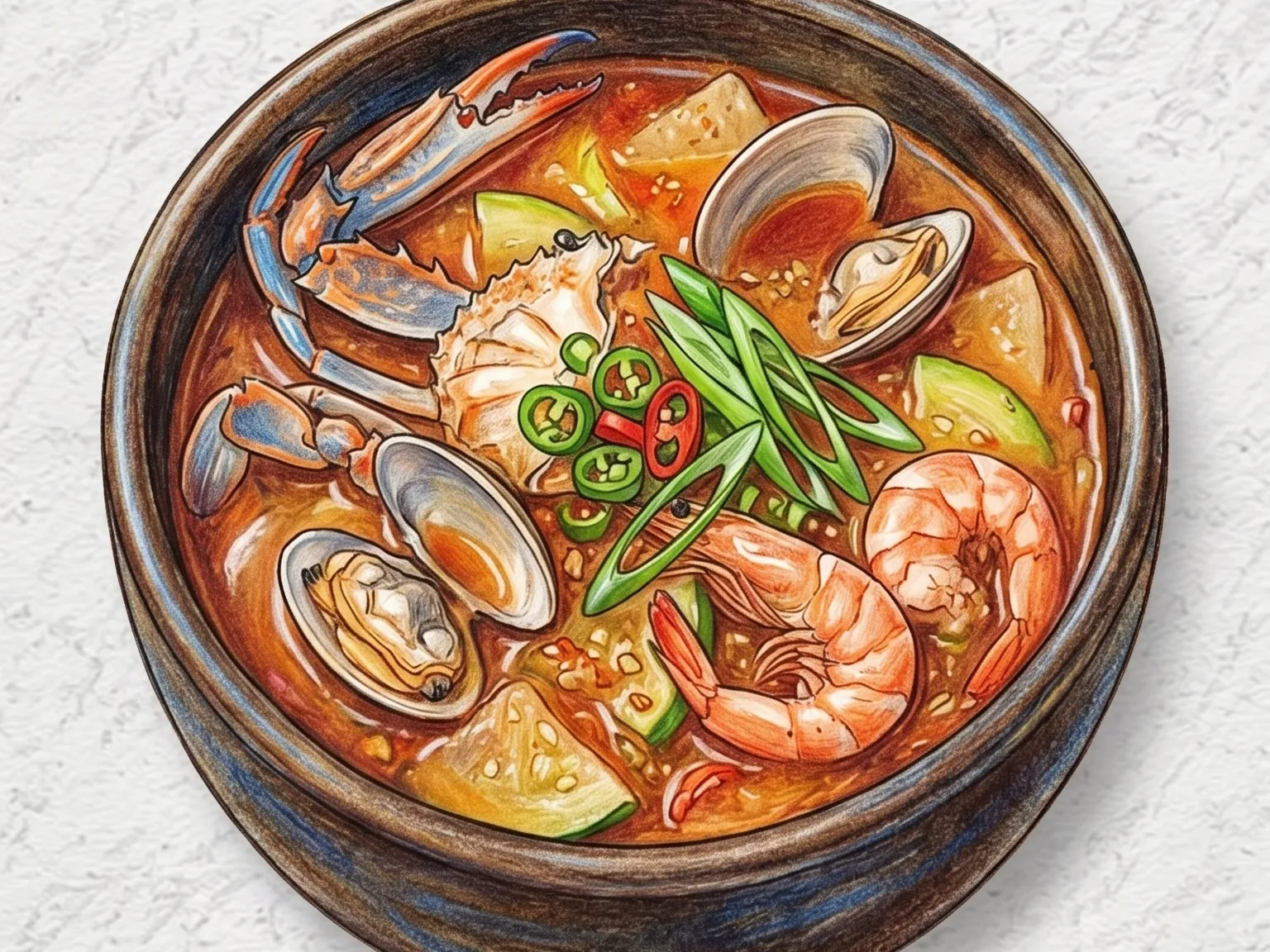
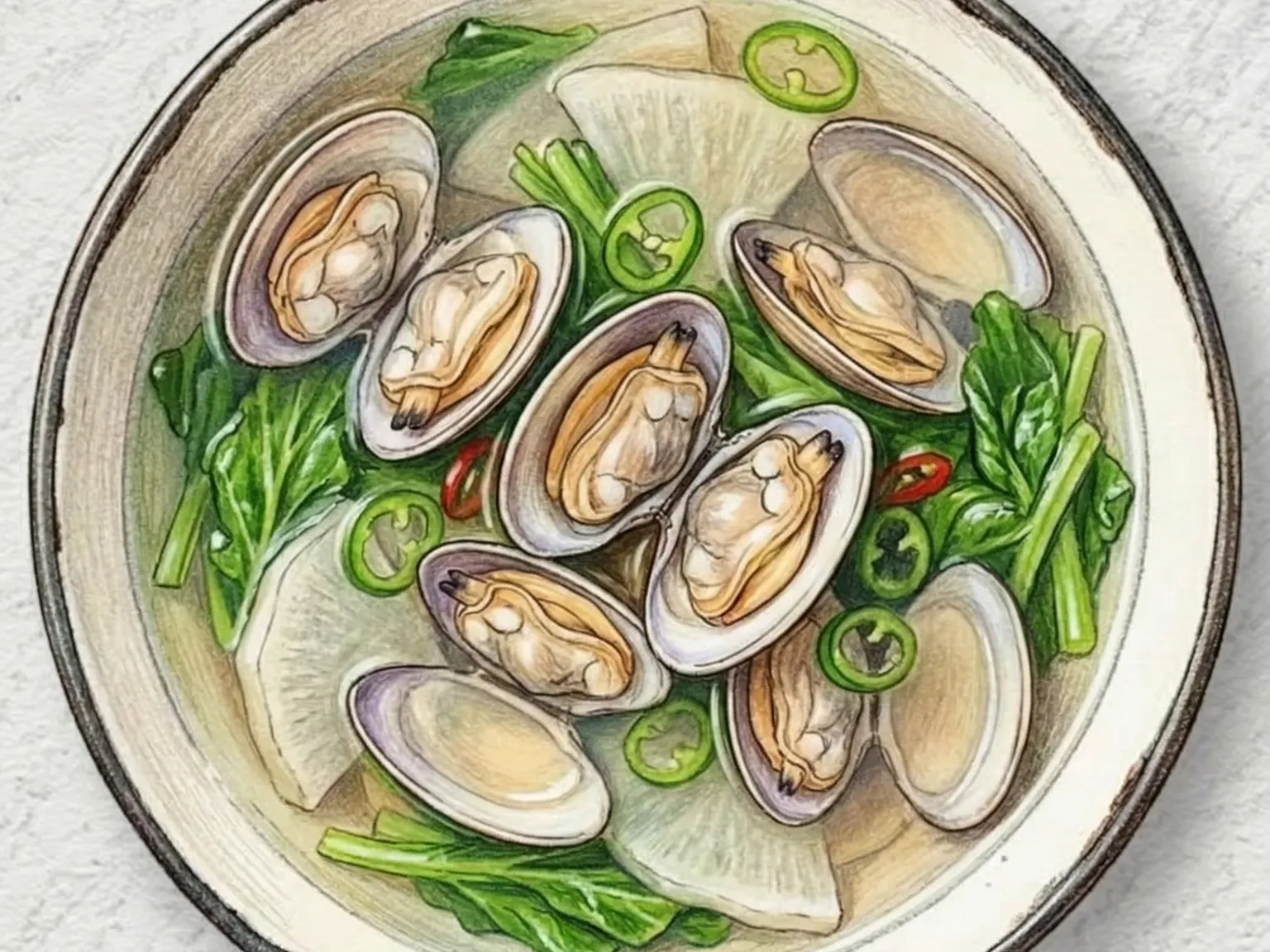
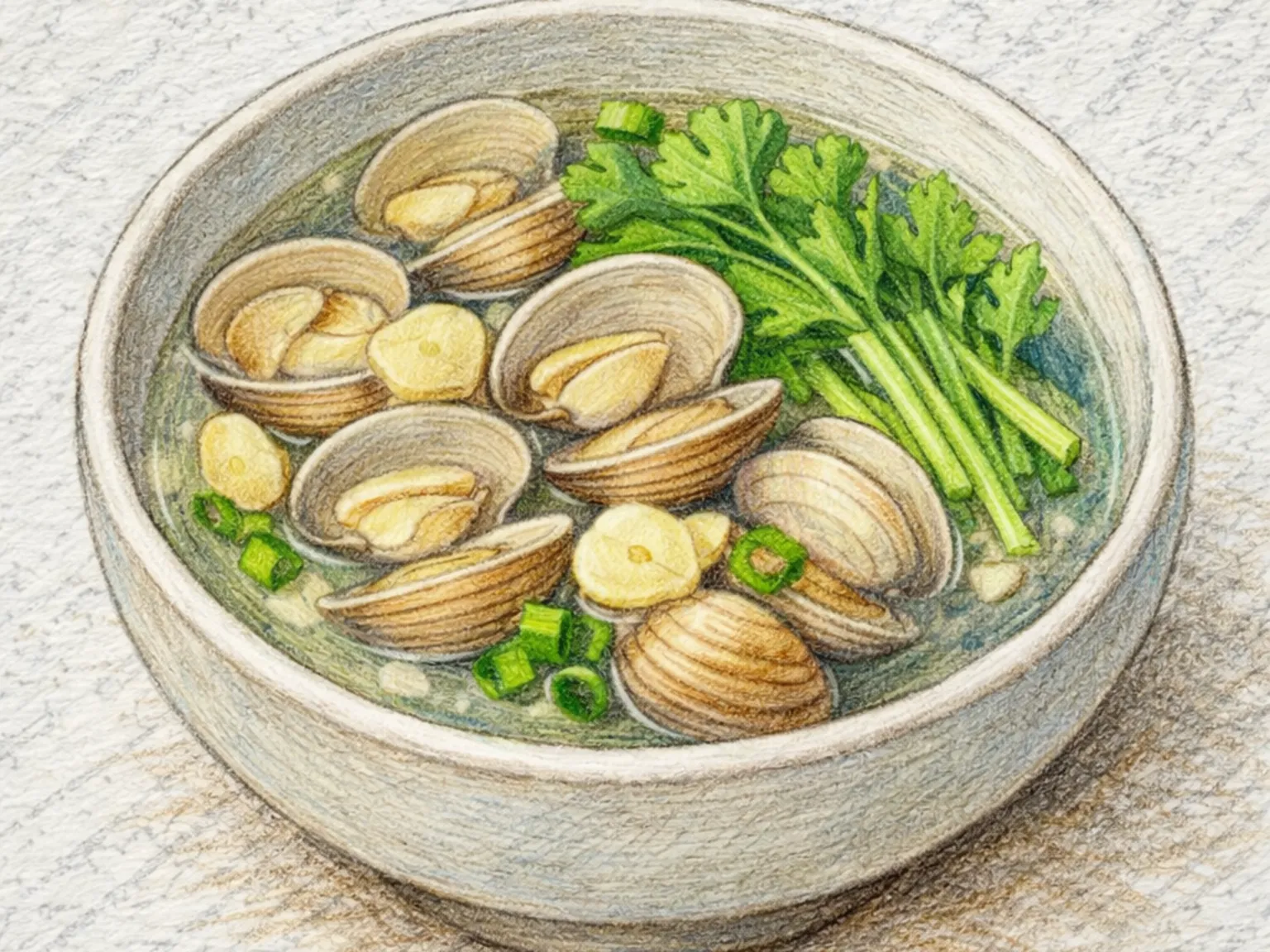
Korean Water Parsley Clam Stew
Quick answer
Minari-bajirak-jjigae pairs the clean, briny broth of littleneck clams with the sharp, herbal fragrance of Korean water parsley.
What makes this special
- Minari-bajirak-jjigae balances a light touch of chili with clear, briny clam broth and the cooling fragrance of late-added water parsley.
- Minimal gochujang powder keeps the clear clam broth at the front
- Minari added just before the flame off preserves its sharp herbal note
Key ingredients
Core cooking flow
- 1 Purge 400g of clams thoroughly in salted water, then scrub and rinse the shells well.
- 2 Slice 150g of Korean radish and 100g of zucchini into thin 3cm squares so they cook quickly.
- 3 Put 800ml of water and the radish in a pot and bring it to a boil over high heat.
Minari-bajirak-jjigae pairs the clean, briny broth of littleneck clams with the sharp, herbal fragrance of Korean water parsley. Korean radish and zucchini simmer in the base and contribute a gentle natural sweetness, while a whole cheongyang chili and a small measure of gochugaru add a crisp heat that does not overpower the delicate shellfish. The restrained use of chili powder keeps the broth clear and allows the clams' distinct umami to come through without interference. Clams must be thoroughly purged of sand before cooking - any residual grit will ruin the broth. Once the shells open, the clams should be eaten promptly as continued heat toughens the meat. Minari goes in only at the very end, just before the heat is turned off, to preserve its bright green color and volatile fragrance. With prep time dominated by clam purging, the active cooking takes under ten minutes.
Instructions
Read the steps as a cooking flow: prep, heat, seasoning, doneness control, and finish.
- 1Season
Purge 400g of clams thoroughly in salted water, then scrub and rinse the shells well.
This step matters because any remaining sand will cloud the broth and leave grit in each spoonful.
- 2Heat
Slice 150g of Korean radish and 100g of zucchini into thin 3cm squares so they cook quickly.
Cut the water parsley into 5cm lengths and prepare the green chili before the pot comes to a boil.
- 3Control
Put 800ml of water and the radish in a pot and bring it to a boil over high heat.
Lower to medium and simmer for 5 to 6 minutes, until the radish looks partly translucent.
- 4Control
Add the clams and 1 tablespoon of minced garlic, then cook over medium-high heat.
As soon as the shells start opening, avoid a hard boil and lower the heat so the clam meat stays tender.
- 5Control
Add the zucchini, 1 tablespoon of soup soy sauce, and 0.5 tablespoon of gochugaru.
Simmer over medium heat for 3 to 4 minutes, just until the zucchini softens and the broth stays clear.
- 6Finish
Reduce to low heat and add the water parsley and green chili.
Cook for only 1 minute, then turn off the heat while the water parsley is still bright and fragrant, and serve immediately.
After the steps
Pick a recipe that fits this dish.
Continue with shared ingredients, meal pairings, or a similar method.
Recipes That Go Well With This
More Stews →Based on shared ingredients and meal pairing
Korean White Chili Clam Stew
Baekgochu bajirak jjigae is a clear Korean clam stew where manila clams and daikon radish supply all the broth depth without any additional stock. Starting from cold water is essential: the gradual temperature rise draws the clams open slowly, pulling their briny, mineral-rich juices into the liquid and producing a more fully flavored broth than a quick boil would allow. The clams are purged first in salted water to remove all traces of sand, then placed in the cold pot together with cut daikon. As the water reaches a boil, the clams open and release their liquor into the surrounding liquid; any that remain closed after full boiling are discarded. Seasoning stays measured with minced garlic and guk-ganjang, while diagonally sliced red chili and cheongyang chili add both visual warmth and layered heat to the otherwise clear broth. Scallion is added only at the final moment to preserve its freshness and fragrance. The daikon contributes a cool, gentle sweetness that balances the clams natural salinity and fuses with the shellfish stock to build a broth of surprising complexity. The stew requires no anchovy, no kelp, and no premade stock: clams and radish alone generate the kind of depth that usually takes considerably more effort to achieve.
Korean Chive Clam Soup (Briny Clam Broth with Garlic Chives)
Purged clams cook with Korean radish to produce a refreshing, clean broth, then garlic chives and cheongyang chili go in near the end for fragrance and heat. Simmering the radish alone for five minutes first establishes a mild sweetness in the base that balances the natural salinity of the clam liquor. The chives are added only after the heat is cut, preserving their vivid color and grassy scent. Any clam that does not open during cooking is removed before serving. Because the clam broth itself carries substantial umami, seasoning should be kept light with just a pinch of salt or a small measure of gukganjang.
Korean Soy Pulp Porridge (High-Protein Okara Anchovy Stock Porridge)
Soy pulp (okara) and soaked rice simmer together in anchovy stock, creating a thick, protein-rich porridge with a hearty body. Onion and garlic are first sauteed in sesame oil to build an aromatic base, then the rice goes in for a brief toast before the stock is added. Once the rice is half-cooked, soy pulp and diced zucchini join the pot, and constant stirring over low heat is essential since okara scorches quickly if left unattended. Seasoned with just salt and black pepper, this juk has a nutty, beany depth from the soy pulp paired with the clean umami of anchovy stock, making it filling yet light on the palate. Making the okara at home by blending soaked soybeans in a blender yields a noticeably fresher, more pronounced soy aroma than the packaged version and elevates the overall flavor of the finished porridge.
Korean Mallow & Clam Stew
Auk-bajirak-jjigae is a thick, meal-weight stew that takes the logic of the milder auk-bajirak-guk and pushes it further: more doenjang, a denser ingredient list, and cheongyang chili for heat. The clams go in first while the water is still cold, then the pot comes to a boil so the shells open slowly and release their concentrated sea juice into the base. Doenjang and gochugaru dissolve into the liquid together, creating a foundation that is simultaneously earthy, saline, and warm with chili. Cubed tofu and sliced zucchini fill out the pot and convert what might have been a soup into something substantial enough to anchor a meal with rice. Mallow leaves added at the end bring their natural mucilage, which thickens the broth and gives it a cling that plain stews lack. Sliced cheongyang chili on top cuts through the richness with a sharp, direct heat. On a cold evening eaten alongside steamed rice, this jjigae sits at the dense, deeply layered end of the Korean stew spectrum.
Serve with this
Korean Seasoned Mung Bean Jelly Salad
Cheongpo muk - mung bean jelly - is made by dissolving starch in water, boiling it until thick, then leaving it to set into a translucent, firm block. It has appeared in Joseon-era palace banquet records as a traditional food. The jelly is blanched briefly, cut into matchstick strips, and tossed with julienned cucumber and carrot. A dressing of soy sauce, vinegar, and sugar gives a clean, sharp edge. The jelly itself is nearly flavorless, functioning as a cool, slippery carrier for the seasoning. The crunch of the vegetables contrasts with the smooth jelly, and the vinegar keeps the whole dish light. Gentle tossing is essential to avoid breaking the blocks apart. Served well-chilled, this is a classic Korean summer banchan.
Korean Wild Chive Pickle (Spring Chive Soy Brine)
Dallae jangajji is a seasonal Korean pickle made by submerging spring wild chives in a brine of soy sauce, vinegar, and sugar alongside sliced Cheongyang chili and sesame seeds. Cleaning the soil from the bulb-like roots and cutting the chives to five-centimeter lengths prepares the main ingredient; the brine must then be cooled fully before pouring, because residual heat drives off the chives' volatile, peppery aroma rapidly. Pouring while still hot can strip much of the sharp fragrance in seconds. After one day of refrigeration the pickle is ready to eat, but by day three the brine penetrates the stalks fully and the flavor deepens. Served alongside grilled meat, the sharp garlicky bite of the chives and the tangy acidity of the brine cut through the fat cleanly -- a pairing that makes this a prized springtime side dish.
Korean Chive Clam Jeon (Garlic Chive and Clam Seafood Pancake)
Buchu-bajirak-jeon is a seafood pancake of garlic chives and clam meat, pan-fried in a batter made with a mix of all-purpose pancake flour and rice flour. The rice flour addition increases the chew and gives the finished jeon a slightly more resilient texture than plain flour batters. Clam meat releases a briny, oceanic liquid as it cooks that seeps into the batter and flavors it throughout, while the chives add a sharp, grassy counterpoint. Minced garlic and diagonally sliced cheongyang chili worked into the batter suppress any fishiness and build a layered fragrance. A generous amount of oil in the pan over medium heat produces edges that crisp and brown like the outside of a fritter. Waiting until the bottom is fully set before flipping prevents the pancake from tearing. Served with soy dipping sauce or a seasoned soy mixture, the clean salinity of the clams comes through clearly.
Similar recipes
Korean Bajirak Miyeok Jjigae (Clam Seaweed Stew)
Bajirak miyeok jjigae is a Korean stew combining manila clams and soaked seaweed, layering shellfish umami with the mineral depth of sea vegetables. Clams start in cold water with radish, which adds a cool sweetness to the broth that balances the clams' natural saltiness as the temperature climbs. Once the shells open, rice wine removes any briny off-notes, and the stew is seasoned with soup soy sauce and minced garlic. The seaweed, soaked and cut into bite-sized pieces, must enter the pot only in the last five minutes; longer cooking turns it tough and unpleasantly slippery. Diagonally sliced scallion added at the end releases a fresh aroma across the surface of the stew. The iodine-rich character of the seaweed and the briny depth of the clams belong to the same marine category yet occupy different flavor registers, producing a broth with compound depth. Any clams that remain closed after cooking must be removed to prevent grit from contaminating the finished stew.
Korean Dried Pollock & Water Parsley Soup
This soup begins with dried pollock strips - stir-fried in sesame oil until golden and deeply fragrant - then simmered in water to draw out a clear, nutty broth that carries the unmistakable aroma of toasted sesame and cured fish. Water dropwort goes in at the very end, contributing a fresh green lift that counterbalances the richness of the pollock. A beaten egg is swirled into the simmering liquid, forming delicate ribbons that soften the broth's texture. Radish slices, added early, sweeten the stock gently in the background. The seasoning stays simple: soup soy sauce, garlic, and salt if needed, keeping the flavor profile clean and digestible. In Korea, this style of pollock soup is regarded as one of the best remedies for a hangover because the amino acids in dried pollock and the hydrating broth are believed to support liver recovery. Morning vendors near traditional markets sell bowls of it to customers who arrive before the sun is fully up. The addition of minari elevates what is already a restorative soup into something that smells and tastes distinctly of spring.
Korean Clam Sujebi Stew (Hand-Torn Dough in Clam Broth)
This stew combines hand-torn flour dumplings with clams, potato, and zucchini simmered in an anchovy-kelp stock. Adding clams to the base broth builds a clean, briny depth that anchovy stock alone cannot achieve. The dough is torn directly into the pot in uneven, thick pieces that cook into chewy, irregular shapes, each one slightly different in texture depending on thickness. As the potato softens it partially dissolves into the broth, thickening the liquid naturally without any starch addition. Zucchini and onion release gentle sweetness that rounds out the savory base. Soup soy sauce keeps the broth clear and properly seasoned, and sliced green onion finishes the bowl with fresh aroma. Because the sujebi itself serves as the starch, this one-bowl dish covers both soup and carbohydrate in a single serving, making it a satisfying, complete meal on its own.