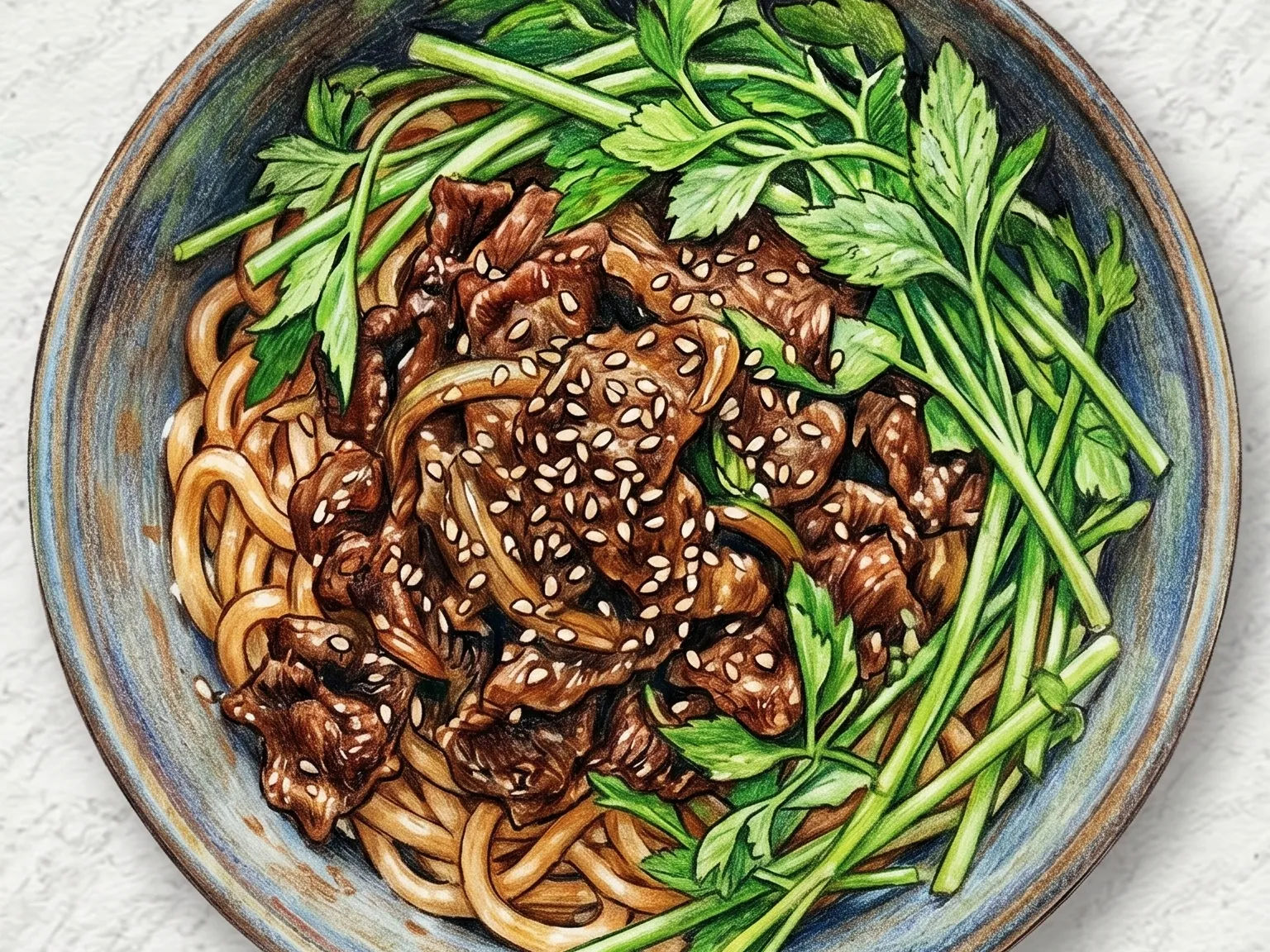
Korean Minari Bulgogi Bibim Udon
Minari bulgogi bibim udon is a Korean mixed noodle dish combining soy-marinated beef bulgogi with fragrant water dropwort over chewy udon noodles. The beef is marinated for ten minutes in soy sauce, garlic, and syrup, then stir-fried quickly with onion over high heat to develop caramelized edges while keeping the interior moist. Udon is blanched for two minutes and rinsed in cold water to restore its springy chew. A gochujang, soy sauce, and sesame oil dressing coats the noodles first, then the bulgogi and minari are folded in gently at the end so the herb's distinctive aroma stays intact rather than wilting away. Sesame seeds scattered on top add a final nutty accent that bridges the savory meat and the fresh, grassy minari.
Adjust Servings
Instructions
- 1
Marinate the beef with 1 tbsp soy sauce, garlic, and syrup for 10 minutes.
- 2
Cut minari into 5 cm lengths and slice the onion thinly.
- 3
Stir-fry the marinated beef and onion over high heat until moisture reduces.
- 4
Blanch the udon for 2 minutes, then rinse in cold water for better chew.
- 5
Mix gochujang, 1 tbsp soy sauce, and sesame oil in a bowl for the sauce.
- 6
Toss noodles with sauce first, then add bulgogi and minari and mix gently.
- 7
Top with sesame seeds and serve right away.
As an Amazon Associate, we may earn from qualifying purchases.
Tips
Nutrition (per serving)
More Recipes

Korean Kimchi Bulgogi Udon
Kimchi bulgogi udon is a Korean stir-fried noodle dish that combines fermented kimchi's sharp tang with thinly sliced beef marinated in a sweet soy-based bulgogi seasoning. The beef is seared quickly over high heat, then onion and kimchi join the pan and cook until their moisture evaporates, concentrating flavor. A sauce of soy sauce, gochujang, and sugar goes in next, followed by briefly blanched udon noodles that get tossed on high heat for one to two minutes until every strand is coated. The thick, round udon holds the bold sauce well, and a final burst of heat gives the dish a hint of smoky wok char. If the kimchi runs very sour, an extra half-teaspoon of sugar brings the flavor back into balance.

Korean Spicy Noodles with Beef Pancake
Yukjeon bibim guksu pairs pan-fried beef pancakes with spicy-tangy dressed wheat noodles. Thin slices of lean beef round are patted dry, dusted with flour, dipped in beaten egg, and fried until golden on both sides. Removing moisture before coating is what gives the yukjeon its crisp exterior and keeps the egg layer from sliding off. The dressing combines gochujang, soy sauce, vinegar, sugar, and sesame oil into a sauce that balances heat with sweet-sour brightness. Somyeon noodles are boiled and rinsed multiple times in cold water to wash off excess starch, which keeps them springy and helps the dressing cling evenly. Shredded cucumber and lettuce add freshness and crunch against the warm, savory beef.

Korean Spicy Beef Soup Noodles
Yukgaejang guksu starts with a deep broth made by simmering beef brisket until the liquid turns rich and full-bodied. The meat is shredded along the grain and returned to the pot alongside fernbrake, bean sprouts, and green onion that have been seasoned with gochugaru, sesame oil, and garlic before a brief stir-fry. This pre-seasoning step lets the chili heat dissolve into the oil, producing a rounded spiciness rather than raw powder burn. Korean soup soy sauce adjusts the salt level without clouding the broth's color. Thin wheat somyeon noodles are boiled separately and added at the end so they absorb the broth without turning mushy. Swapping in glass noodles changes the texture to a chewier, more slippery bite that holds onto the soup longer.

Korean Bulgogi Jjolmyeon (Marinated Beef on Chewy Spicy Noodles)
Bulgogi jjolmyeon tops springy, chewy jjolmyeon noodles with thinly sliced beef that has been marinated in soy sauce, sugar, and sesame oil, then quickly stir-fried over high heat. The noodles' intense elasticity and the beef's sweet-savory glaze come together for a bowl that satisfies on both texture and flavor. A spicy-tangy sauce of gochujang, soy sauce, and vinegar coats the noodles, counterbalancing the sweetness of the bulgogi. Shredded cabbage and carrot add crisp contrast, while a halved boiled egg tempers the overall heat. Cooking the beef fast over high flame minimizes moisture loss and keeps the slices from toughening.

Korean Gochujang Bibim Udon Cup (Spicy Mixed Udon Cup)
Gochujang bibim udon cup is a cold-tossed udon dish served in a cup, dressed with a sauce of gochujang, soy sauce, oligosaccharide syrup, vinegar, and sesame oil. The fermented heat of gochujang meets the vinegar's acidity to create a tangy-spicy profile without harshness, while the syrup adds body that helps the sauce coat the thick udon strands evenly. Raw julienned cabbage and carrot are mixed in for textural crunch against the soft noodles. Cooling the noodles completely before tossing prevents the sauce from clumping, ensuring every strand is evenly seasoned.

Korean Vegetable Bibim Mandu
Yachae-bibim-mandu combines pan-fried or air-fried dumplings with raw shredded cabbage, lettuce, and cucumber, all tossed in a tangy-spicy dressing of gochujang, vinegar, sugar, and sesame oil. Soaking the vegetables briefly in cold water and draining them well ensures maximum crispness, and tossing half the sauce with the greens first lets the seasoning penetrate evenly. The hot dumplings are placed on top just before serving so their fried shells stay intact against the moisture underneath. Drizzling the remaining sauce over everything ties the dish together with layers of crunch from the wrapper, snap from the vegetables, and a bright, vinegar-lifted heat from the dressing.