Korean Water Dropwort Tofu Soup
Quick answer
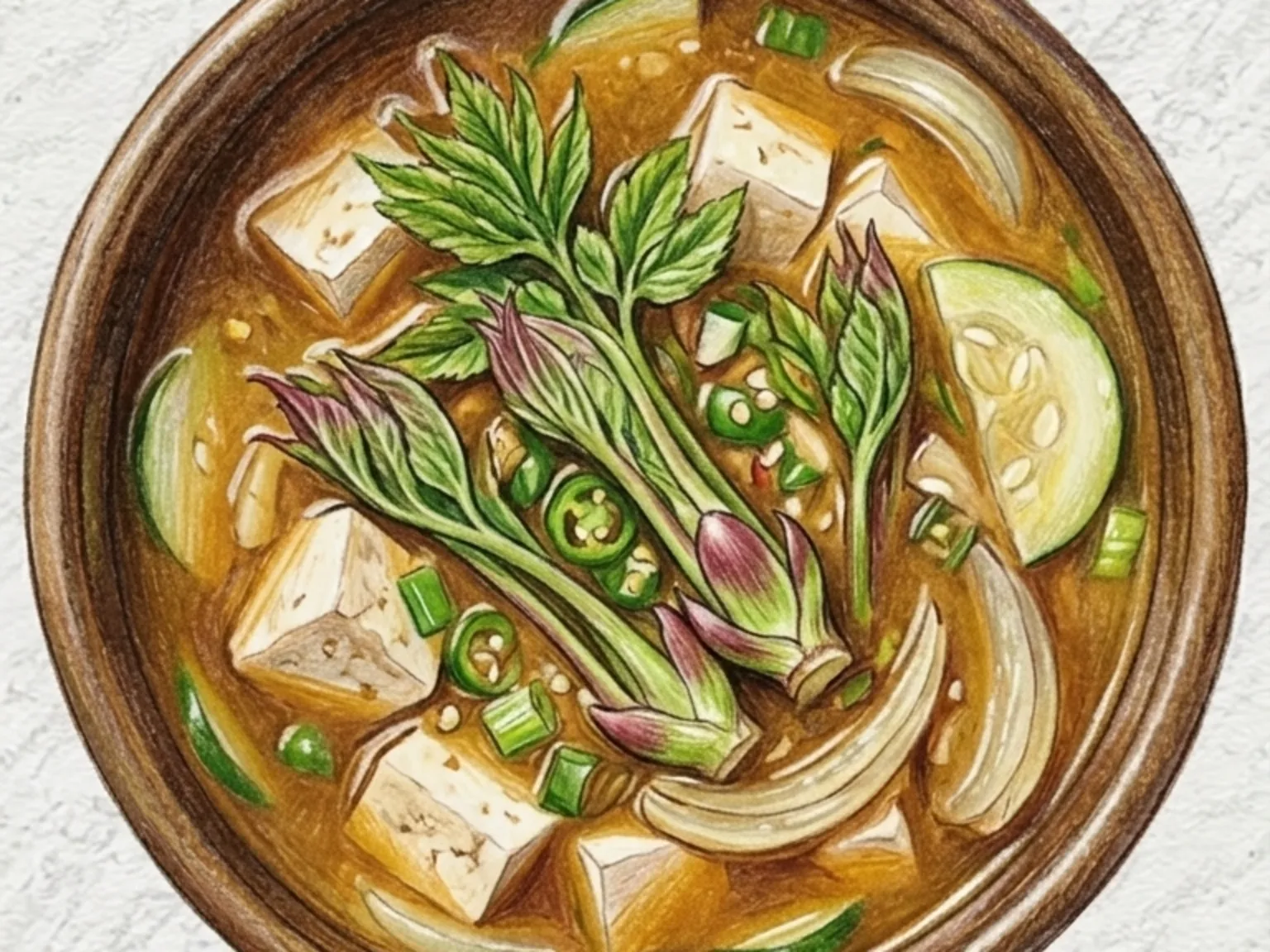
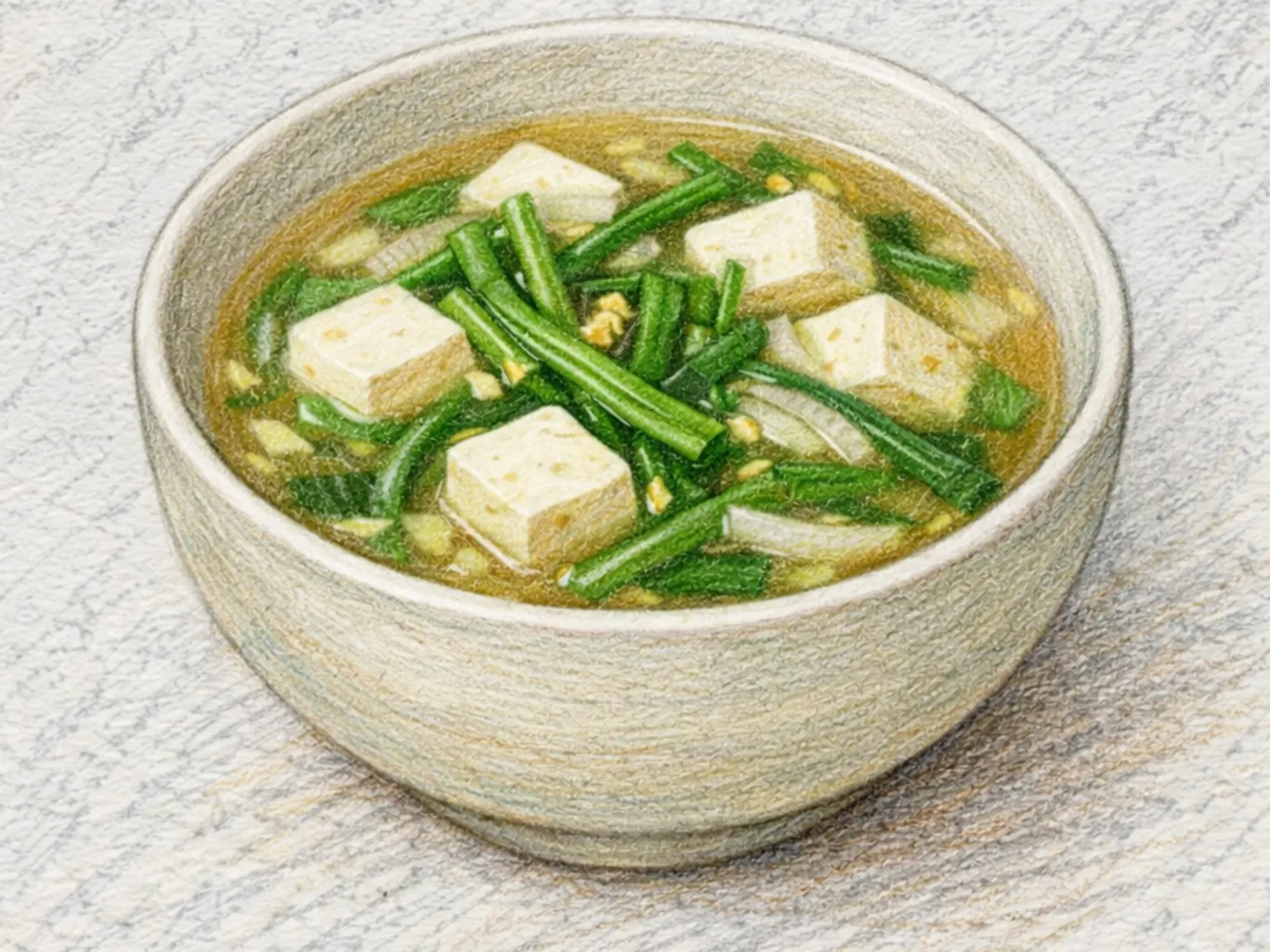
Minari-dubu-guk is a mild, clear Korean soup pairing soft tofu with water dropwort, an herb prized for its bright, celery-like fragrance.
What makes this special
- Soft tofu gently simmers while absorbing the savory anchovy-kelp stock.
- Water dropwort added in the final minute keeps herbal aroma intact
- Firm tofu holds its shape while absorbing the anchovy broth
Key ingredients
Core cooking flow
- 1 Trim any wilted leaves and tough stem ends from 90 g minari, then rinse under running water.
- 2 Cut 200 g firm tofu into bite-size cubes, and slice 60 g onion thinly so it...
- 3 Pour 900 ml anchovy broth into a pot and bring it to a boil over high heat.
Minari-dubu-guk is a mild, clear Korean soup pairing soft tofu with water dropwort, an herb prized for its bright, celery-like fragrance. The broth is built on a simple anchovy-kelp stock, into which the tofu goes first and simmers gently until warmed through. Water dropwort is added only in the final moments before the heat is turned off, a deliberate timing choice that preserves the herb's volatile aromatic compounds and keeps the hollow stems slightly crisp rather than wilted. Adding it too early strips away the fragrance that makes this soup worth making. Seasoning stays minimal, soup soy sauce, garlic, and perhaps a pinch of salt, because restraint is the entire point: the clean stock, the herb's green perfume, and the pillowy tofu are meant to carry the bowl quietly. Firm tofu holds its shape through simmering and absorbs the broth more evenly than silken varieties, making it the better choice here. Spring is the ideal season, when water dropwort grows most tender and aromatic. Korean cooks often place this soup alongside richer, heavier dishes because the light broth cuts through fat and resets the palate between bites. It rarely draws attention at the table yet is reliably missed when absent.
Instructions
Read the steps as a cooking flow: prep, heat, seasoning, doneness control, and finish.
- 1Heat
Trim any wilted leaves and tough stem ends from 90 g minari, then rinse under running water.
Shake off excess water and cut the stems into 5 cm lengths so they cook evenly at the end.
- 2Prep
Cut 200 g firm tofu into bite-size cubes, and slice 60 g onion thinly so it softens quickly in the clear broth.
Keep the tofu separate and handle it gently to prevent crumbling before it enters the pot.
- 3Control
Pour 900 ml anchovy broth into a pot and bring it to a boil over high heat.
When it bubbles steadily, lower to medium heat, then add the sliced onion and 0.5 tablespoon minced garlic.
- 4Control
Simmer for about 4 minutes, until the onion turns translucent and the garlic smell softens.
Skim excess foam if needed, and avoid vigorous stirring so the broth stays clear rather than cloudy.
- 5Control
Add the tofu cubes and 1 tablespoon soup soy sauce, then keep simmering over medium heat for about 4 minutes.
Spoon hot broth over the tofu until the cubes float slightly and warm through without breaking.
- 6Finish
Add the minari and cook for only 1 minute, just until the stems turn brighter and stay crisp.
Turn off the heat, adjust with 0.2 teaspoon salt and 0.1 teaspoon black pepper, and serve immediately.
After the steps
Pick a recipe that fits this dish.
Continue with shared ingredients, meal pairings, or a similar method.
Recipes That Go Well With This
More Soups →Based on shared ingredients and meal pairing
Korean Green Seaweed Tofu Soup
Cheonggak-dubu-guk is a light Korean seaweed soup made by soaking salted cheonggak sea staghorn in cold water to draw out excess salt, then simmering it with tofu and onion in a clean broth. Onion and garlic are sauteed in perilla oil first to build a nutty base, and the broth is seasoned with tuna extract and soup soy sauce, which together bring a deep oceanic savoriness to every spoonful. The cheonggak seaweed contributes a firm, satisfying crunch that contrasts directly with the soft, mild tofu cubes. At 140 calories per bowl, the soup sits at the lighter end of Korean everyday cooking while still delivering genuine depth. The combination of sea vegetable, perilla oil, and fermented soy seasoning makes a broth that tastes cleaner and more mineral than standard vegetable soups.
Korean Green Laver Soup (Seaweed Tofu Anchovy Broth)
Parae-guk is a Korean seaweed soup made with green laver and tofu simmered in a clear anchovy broth. The broth is brought to a gentle boil and seasoned with garlic and soup soy sauce before diced tofu is added and warmed through for three minutes. The green laver goes in at the very end, cooking for no more than 30 to 60 seconds, because extended heat strips away its vivid color and fresh ocean fragrance entirely. Since the recipe relies on so few ingredients, the quality of the anchovy stock determines the overall depth of flavor, so using dried anchovies with heads and innards removed, simmered for at least ten minutes, produces a noticeably cleaner and more savory base. The mineral-rich, briny character of the green laver contrasts well with the mild tofu, and the whole soup comes together in about fifteen minutes. Because green laver carries its own saltiness, it is best to add the soup soy sauce gradually and taste as the seasoning develops.
Korean Napa Cabbage Doenjang Porridge
Baechu doenjang juk is a Korean porridge where soaked rice is first toasted in sesame oil before any liquid is added, building a nutty foundation that plain boiled rice cannot provide. The doenjang is dissolved and strained through a fine-mesh sieve directly into anchovy stock so the finished porridge stays smooth without chalky bits of fermented paste. Finely chopped napa cabbage and onion go in with the strained stock: the onion melts quietly into the broth as it cooks, contributing a background sweetness, while the cabbage softens until it nearly disappears into the porridge's texture. Stirring frequently over medium-low heat for at least twenty minutes is what allows the rice grains to break down evenly and merge with the liquid rather than sitting as distinct kernels in thin broth. Skipping the initial oil-toasting step and adding raw soaked rice directly causes the starch to release unevenly, producing a porridge that sticks to the bottom of the pot and tastes flat. A drop of sesame oil and a final seasoning with guk-ganjang complete the dish. The result is a bowl that feels gentle on the stomach while carrying the full fermented complexity and depth of doenjang - suitable as a light meal or a restorative dish during recovery.
Korean Spinach Tofu Soup
Sigeumchi-dubu-guk is a clear, mild Korean soup in which spinach and tofu float in an anchovy-kelp broth seasoned only with soup soy sauce - no fermented paste, no chili. The result is a bowl of quiet transparency where each ingredient's natural flavor is audible: the green, slightly mineral taste of spinach, the neutral creaminess of tofu, and the clean savor of the stock. A small amount of minced garlic builds umami in the background, and a single drop of sesame oil on the surface adds a whisper of richness. This soup is intentionally gentle, which is exactly why Korean families rely on it so heavily - it suits every palate and every age group, from toddlers to grandparents. Cooks often serve it alongside bold, spicy dishes because the clear broth acts as a reset between intense bites. The technique is straightforward but timing matters: tofu should be cut into generous cubes so it holds its shape during simmering, and spinach should enter the pot only at the very end to preserve its color and a touch of texture. The entire preparation takes under fifteen minutes and requires only four or five ingredients, making it one of the most practical everyday soups in Korean cooking.
Serve with this
Korean Stir-Fried Seaweed Stems with Perilla
Deulkkae miyeokjulgi-bokkeum stir-fries salted seaweed stems with perilla oil and ground perilla seeds, diverging from the standard sesame-and-soy version by foregrounding the earthy nuttiness of perilla. Desalting the stems in cold water for at least fifteen minutes is the essential first step - too brief and the dish is unpalatably salty, too long and the oceanic character washes away entirely. Garlic is sauteed in perilla oil to build an aromatic foundation, then the drained stems join with soup soy sauce and a splash of water for three minutes of stir-frying. Ground perilla seeds go in at the end, where they bind with the residual moisture and coat each strand in a pale, creamy film. Julienned onion added alongside contributes sweetness that balances the seaweed's brininess. The perilla powder's starch partially gelatinizes on contact with heat, thickening the sauce - but overcooking past this point turns the coating chalky, so timing the final addition is critical. Sesame seeds scattered off heat complete the dish.
Korean Turnip Kimchi (Diced Gochugaru Water Fermented)
Sunmu kimchi is a brined kimchi made with diced turnips seasoned in chili flakes, fish sauce, garlic, and ginger juice, then submerged in water to ferment with its own liquid. Turnips have a naturally higher sweetness and denser flesh than Korean radish, so they stay firm and crunchy even after fermentation. Scallions woven through the batch add an aromatic layer that rounds out the spice. One day at room temperature followed by two days of refrigeration produces a cool, tangy brine that is refreshing to drink on its own. Adding turnip greens, if available, deepens both the color and the fragrance.
Korean Eggplant & Pork Pancake
Thick eggplant slices are topped with seasoned ground pork, coated in Korean pancake batter, dipped in beaten egg, and pan-fried until golden on both sides. As the eggplant absorbs oil over heat, it cooks through to a silky, yielding texture, and the pork filling stays juicy inside the batter crust. Minced garlic and onion season the pork mixture and mask any gaminess, while the egg coating forms a thin, evenly browned exterior. A soy-based dipping sauce sharpens the mild eggplant and savory pork into a balanced bite.
Similar recipes
Korean Sigeumchi Dubu Jjigae (Spinach Tofu Stew)
Sigeumchi-dubu-jjigae is a Korean stew built from fresh spinach and soft tofu simmered in anchovy-kelp stock, seasoned with soup soy sauce and perilla oil. The process starts by warming perilla oil in the pot and softening minced garlic until its sharpness mellows into a rounded fragrance that transfers into the oil, giving the broth a subtle depth that would be absent if the garlic were added raw. Zucchini and onion release their natural sweetness as they cook, rounding out the broth and preventing it from tasting flat or austere. Soft tofu, added mid-way, absorbs the seasoned liquid gradually as it heats through, holding its shape while taking on the flavor of the broth around it. Spinach goes in last, only long enough to wilt, because extended cooking destroys the color and reduces the leaves to a limp, dull mass that works against the dish. The iron-forward earthiness of spinach pairs naturally with the mild creaminess of tofu and the nutty undercurrent of perilla oil, producing a stew that reads as simple but carries enough layered flavor to satisfy. This is a standard of Korean home cooking that earns its place at the table for being genuinely easy on the stomach, particularly welcome when appetite is low or the body calls for something clean.
Korean Dried Pollock & Water Parsley Soup
This soup begins with dried pollock strips - stir-fried in sesame oil until golden and deeply fragrant - then simmered in water to draw out a clear, nutty broth that carries the unmistakable aroma of toasted sesame and cured fish. Water dropwort goes in at the very end, contributing a fresh green lift that counterbalances the richness of the pollock. A beaten egg is swirled into the simmering liquid, forming delicate ribbons that soften the broth's texture. Radish slices, added early, sweeten the stock gently in the background. The seasoning stays simple: soup soy sauce, garlic, and salt if needed, keeping the flavor profile clean and digestible. In Korea, this style of pollock soup is regarded as one of the best remedies for a hangover because the amino acids in dried pollock and the hydrating broth are believed to support liver recovery. Morning vendors near traditional markets sell bowls of it to customers who arrive before the sun is fully up. The addition of minari elevates what is already a restorative soup into something that smells and tastes distinctly of spring.
Korean Water Parsley Clam Stew
Minari-bajirak-jjigae pairs the clean, briny broth of littleneck clams with the sharp, herbal fragrance of Korean water parsley. Korean radish and zucchini simmer in the base and contribute a gentle natural sweetness, while a whole cheongyang chili and a small measure of gochugaru add a crisp heat that does not overpower the delicate shellfish. The restrained use of chili powder keeps the broth clear and allows the clams' distinct umami to come through without interference. Clams must be thoroughly purged of sand before cooking - any residual grit will ruin the broth. Once the shells open, the clams should be eaten promptly as continued heat toughens the meat. Minari goes in only at the very end, just before the heat is turned off, to preserve its bright green color and volatile fragrance. With prep time dominated by clam purging, the active cooking takes under ten minutes.