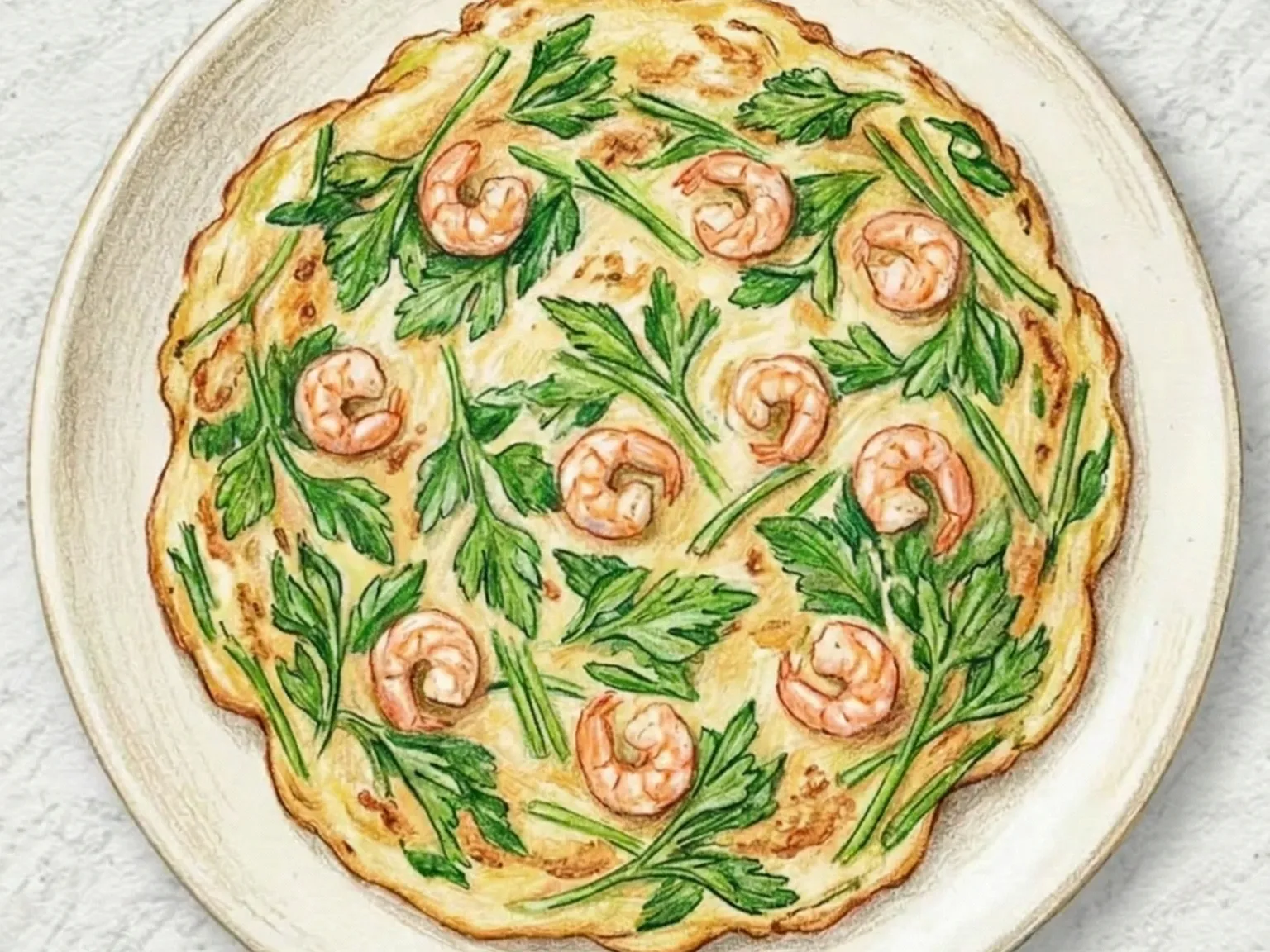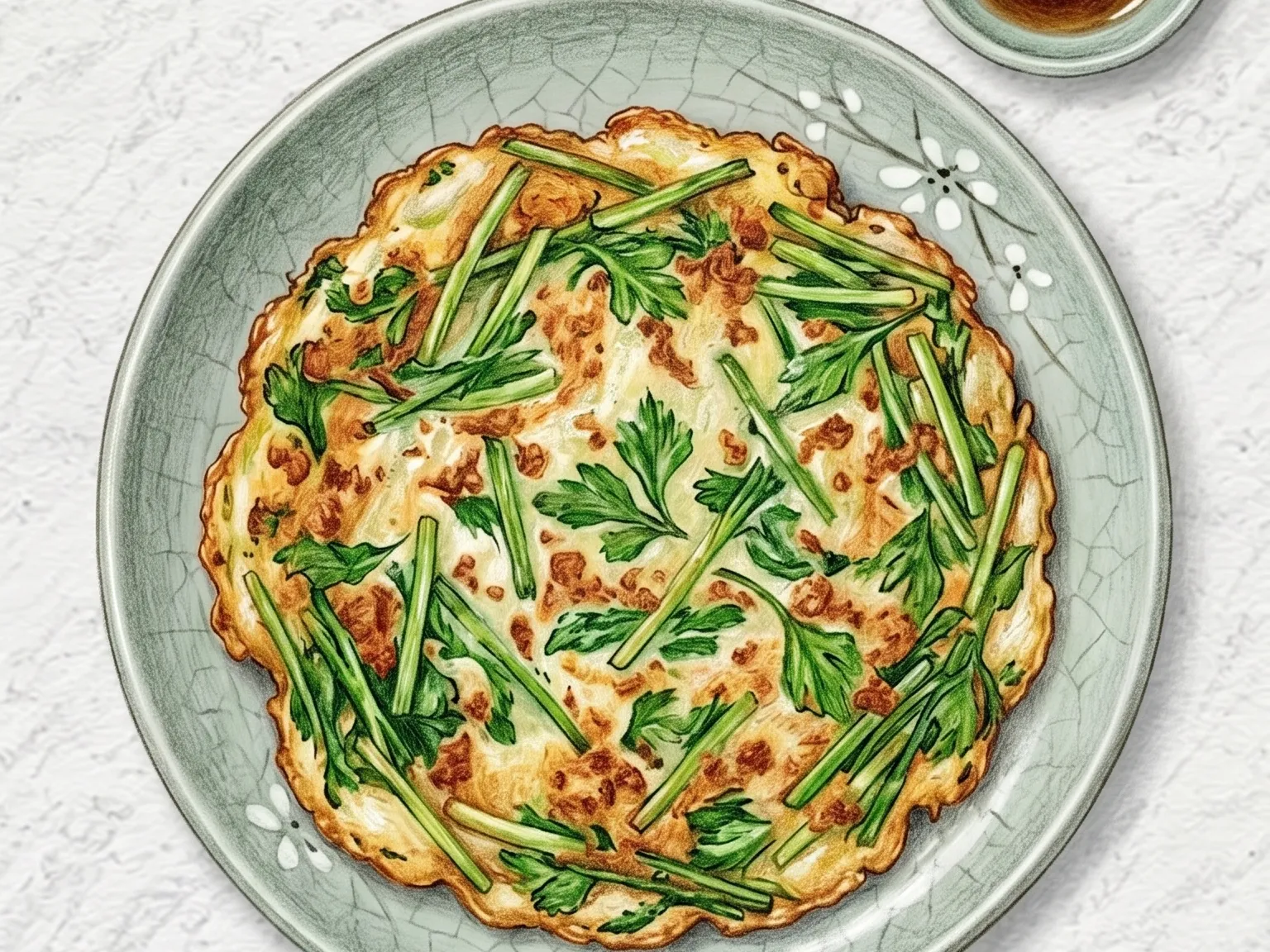
Korean Water Parsley Pancake
Minari-jeon is a Korean spring pancake made by cutting water parsley into five-centimeter lengths and mixing them into a batter of Korean pancake mix, water, egg, and salt, then pan-frying in oil until golden on both sides. Water parsley's cool, herbaceous fragrance permeates the entire pancake, and its stems provide a fresh, snappy bite against the soft batter. Spreading the mixture thin and cooking over medium heat for three to four minutes per side ensures crisp, almost fried edges, while overcooking quickly diminishes the herb's distinctive aroma. Dipping slices in cho-ganjang-soy sauce mixed with vinegar-balances the subtle bitterness of the parsley with sharp acidity.
Adjust Servings
Instructions
- 1
Cut water parsley into 5 cm pieces.
- 2
Combine pancake mix, water, egg, and salt.
- 3
Fold water parsley into batter.
- 4
Spread batter thinly in an oiled pan.
- 5
Cook both sides 3-4 minutes until crisp.
As an Amazon Associate, we may earn from qualifying purchases.
Tips
Nutrition (per serving)
More Recipes

Korean Water Parsley Salad
Minari-muchim is blanched water parsley (minari) dressed in a gochugaru-soy-vinegar sauce - a spring banchan built entirely around the herb's distinctive fragrance. Minari is a semi-aquatic plant that grows in clean-running paddies and wetlands across Korea, carrying an aroma in a different family from Western parsley or celery. The blanching window determines whether the dish succeeds: past twenty seconds, the volatile aromatic compounds escape with the steam and the entire point of using minari is lost. Trimming the tough lower stems and cutting to 5 cm lengths makes eating easier, and cold-water shocking after blanching locks in the chlorophyll for vivid green color. The vinegar in the dressing amplifies the herbal brightness while suppressing any aquatic mustiness that water-grown plants can carry. International awareness of this ingredient grew after the 2020 film 'Minari.' Dipping raw minari in cho-gochujang (vinegared chili paste) is another popular serving method.

Korean Water Parsley Kimchi
Minari kimchi is a quick Korean water parsley kimchi made by wilting the stems in salt for just ten minutes, then tossing them in a seasoning of gochugaru, anchovy fish sauce, and plum syrup with blended onion. The brief brining preserves the stem's crisp texture and cool herbal aroma, while the fish sauce grounds the light vegetable with a seafood umami foundation. Plum syrup's fruit acidity softens the chili heat, leaving a bright, clean finish. Paired with samgyeopsal or boiled pork, the water parsley's fresh fragrance cuts through the fat and resets the palate between bites.

Korean Cockle & Water Parsley Mixed Rice
Cockle meat is rinsed in light salt water, blanched for just thirty seconds to preserve its firm chew, then arranged over rice alongside julienned carrots, sautéed zucchini, and raw water parsley (minari). A gochujang-based sauce binds everything when mixed, and the briny sweetness of the cockles plays off minari's clean, herbaceous bite. Adding the parsley last preserves its volatile aroma, and over-blanching the cockles will turn them rubbery - brief heat exposure is critical. This seasonal bibimbap is at its best in early spring when cockles are plump and sweet, finished with sesame oil and toasted seeds.

Korean Aralia Shoot Jeon (Spring Herb Shoot Pancake)
Durup-jeon is a seasonal Korean pancake made during the brief spring window when aralia shoots are available, coated in a thin layer of flour and egg wash to showcase the vegetable's distinctive bitter-herbal fragrance. The shoots are blanched for just thirty seconds in vinegared boiling water to remove harshness while keeping the stems crisp, then thoroughly dried and lightly floured so the egg coating adheres evenly. Cooking over medium-low heat ensures the egg browns gently without scorching, allowing the interior stems to soften properly-high heat leaves them tough. Dipping in cho-ganjang, soy sauce mixed with vinegar, sharpens the wild mountain herb character of the aralia.

Korean Mugwort Pancake (Spring Herb Savory Thin Pancake)
Young mugwort leaves, harvested in early spring, are stripped of tough stems, washed, and folded into a batter of Korean pancake mix, water, and salt. Thinly sliced onion adds a mild sweetness that balances the herb's earthy bitterness. The batter is spread thin in an oiled pan and fried on both sides until crisp - thickness is the enemy here, as a thick pancake traps steam and mutes the mugwort's fragrance. Dipped in a vinegar-soy sauce, the acidity rounds out any lingering bitterness, making ssuk-jeon one of the most distinctive seasonal pancakes in Korean cuisine.

Korean Kimchi Pancake
Well-fermented kimchi is chopped fine and mixed into a batter of Korean pancake mix, kimchi brine, and chili flakes, then fried in oil until both sides turn golden. Adding the kimchi brine directly into the batter is the key step, as its lactic acid tang brings depth that plain water cannot. Cooking four minutes on the first side and three on the second produces a crisp exterior while the interior stays moist from the kimchi moisture.