Charim

2686 Korean & World Recipes

2686+ Korean recipes, clean and organized. Ingredients to instructions, all at a glance.

Korean Dandelion Root Tea

Korean Dandelion Root Tea

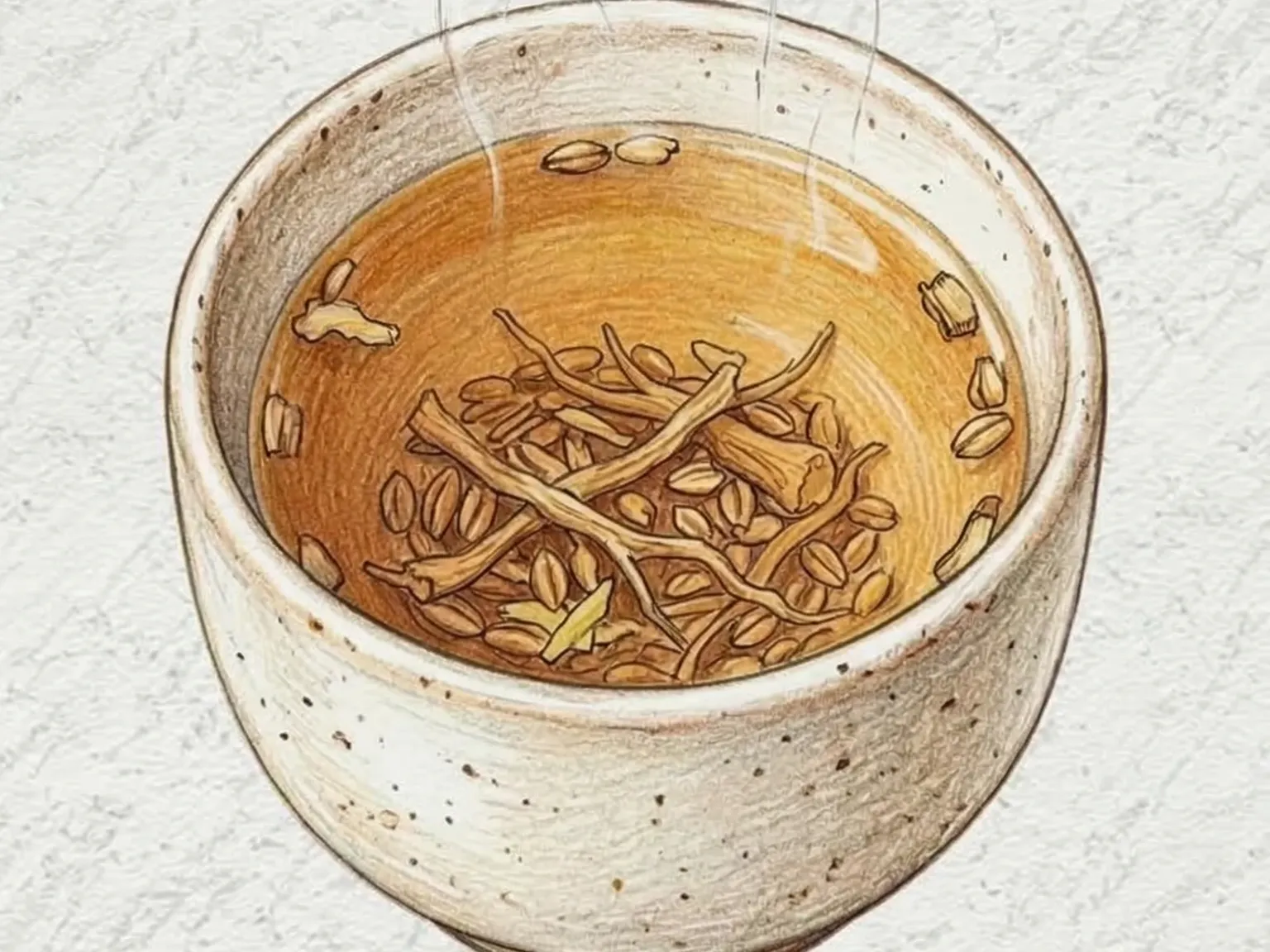
Mindeulle-cha is a Korean dandelion root tea made by dry-roasting dried dandelion root and barley in a pot before simmering them with water, sliced ginger, and licorice root for eighteen minutes. The initial roasting step transforms the earthy root into something toasty and grain-like, while licorice and ginger soften any remaining bitterness into a warm, smooth finish. Rice syrup stirred in at the end adds a malty sweetness that deepens the tea's body. Naturally caffeine-free, it can be enjoyed hot or chilled over ice at any hour.

Prep 10min Cook 22min 4 servings

Adjust Servings

2servings
servings

Instructions

  1. 1

    Rinse dried dandelion root and barley quickly, then shake off excess water.

  2. 2

    Preheat a pot and dry-roast the root and barley on low heat for 2 minutes.

  3. 3

    Add water, thinly sliced ginger, and licorice root, then bring to a boil.

  4. 4

    Lower to medium-low heat and simmer for 18 minutes to extract flavor.

  5. 5

    Strain the tea and stir in rice syrup for a gentle sweetness.

  6. 6

    Serve warm, or chill and serve over ice.

🛒Shop Ingredients on Amazon

As an Amazon Associate, we may earn from qualifying purchases.

Tips

Dry-roasting first reduces earthy notes and adds a toasty aroma.
Keep licorice near 3 g; too much can make the tea overly sweet.

Nutrition (per serving)

Calories
26
kcal
Protein
1
g
Carbs
6
g
Fat
0
g

More Recipes

Korean Lotus Root Tea (Warm Herbal Root Brew)
DrinksEasy

Korean Lotus Root Tea (Warm Herbal Root Brew)

Yeongeun-cha is a Korean lotus root tea made by simmering peeled, sliced lotus root with jujube, ginger, and a cinnamon stick on low heat for 25 minutes. The root's natural starch dissolves into the water, giving the tea a clear yet slightly viscous body, while cinnamon and ginger leave a warm undertone in the finish. Jujubes supply the primary sweetness, supplemented by honey and a tiny pinch of salt to deepen the flavor. A brief soak of the lotus root slices in vinegar water before cooking prevents browning and keeps the tea's color pale and clean. It tastes equally smooth served hot or chilled.

🍺 Bar Snacks
Prep 10minCook 30min2 servings
Korean Pear Bellflower Root Tea
DrinksEasy

Korean Pear Bellflower Root Tea

Baedoraji cha is a traditional Korean tea made by slowly simmering pear and bellflower root (doraji) together in water. The bellflower root is peeled and kneaded with salt two to three times to draw out its inherent bitterness, a step that cannot be skipped without the tea turning unpleasantly sharp. The pear is cored, cut into large chunks, and added to the pot where its juice gradually dissolves into the liquid, providing a natural sweetness. Ginger and dried jujubes join the pot: ginger contributes a warm, slightly peppery note that complements the herbal quality of the bellflower root, while jujubes add a subtle fruity depth. The mixture simmers on low heat for thirty to forty minutes so the active compounds in each ingredient fully infuse the water. Sweetness is adjusted with jogcheong (grain syrup) rather than refined sugar. The tea is traditionally served warm during dry or cold weather, when the saponins from the bellflower root are valued for soothing the throat.

🍺 Bar Snacks
Prep 10minCook 25min2 servings
Korean Bitter Melon Jujube Tea
DrinksMedium

Korean Bitter Melon Jujube Tea

Yeoju-daechu-cha is a Korean herbal tea that steeps dried bitter melon, pitted jujubes, dried tangerine peel, and fresh ginger together for 25 minutes. The bitter melon provides a gentle, lingering bitterness that the jujubes counter with their natural sweetness, while the tangerine peel adds a citrus top note and ginger delivers a warm, peppery finish. Honey is dissolved after the heat is turned off to preserve its delicate fragrance, and a few pine nuts floated on the surface contribute a mild nuttiness. The tea is caffeine-free, and the bitter melon quantity can be reduced for those sensitive to its flavor.

🍺 Bar Snacks
Prep 12minCook 28min4 servings
Korean Kudzu Root Tea (Earthy Herbal Root Brew)
DrinksEasy

Korean Kudzu Root Tea (Earthy Herbal Root Brew)

Chik-cha is a traditional Korean tea made by slowly simmering dried kudzu root with sliced ginger, scored jujubes, and a cinnamon stick for at least twenty-five minutes on low heat. The kudzu root releases an earthy, starchy depth that forms the tea's backbone, while ginger adds warm pungency and cinnamon contributes a sweet, woody spice layer. Honey is stirred in only after the heat is turned off to preserve its floral aroma, and the jujubes provide a subtle fruity sweetness that ties the flavors together.

🍺 Bar Snacks
Prep 10minCook 35min2 servings
Korean Lotus Root Soup (Sliced Lotus Root in Anchovy Broth)
SoupsEasy

Korean Lotus Root Soup (Sliced Lotus Root in Anchovy Broth)

Yeongeun-guk is a clear soup built around thinly sliced lotus root simmered in anchovy broth. The lotus root is peeled and soaked in cold water immediately to prevent browning, then cooked for twelve minutes, which softens it slightly while preserving the characteristic crunch. As the starch leaches out, the broth takes on a subtle thickness. Garlic, soup soy sauce, salt, and a dusting of black pepper are the only seasonings, letting the lotus root's gentle sweetness remain the focal point. Low in calories and high in dietary fiber, this soup fits comfortably into a lighter meal.

🥗 Light & Healthy🏠 Everyday
Prep 15minCook 22min4 servings
Korean Braised Lotus Root
Side dishesEasy

Korean Braised Lotus Root

Lotus root rounds are simmered in soy sauce, sugar, and corn syrup until each slice glistens with a translucent, caramel-colored glaze. Cooking activates the starch in the lotus root, turning the exterior smooth and the interior pleasantly sticky, a texture unique to this root vegetable. As the soy sauce permeates the flesh, the ivory color deepens into a clear amber that signals the seasoning has reached the center. A splash of vinegar at the start prevents discoloration and introduces a faint tartness that prevents the sweetness from becoming cloying. The corn syrup reduces over low heat for fifteen to twenty minutes, forming a glass-like coating that catches the light on every surface. Because the liquid seeps through the root's hollow channels, every bite delivers consistent flavor regardless of angle. The finished jorim retains its crunch at the core while the outer layer yields with a gentle chew, and refrigerated in a sealed container the dish stays good for well over a week.

🏠 Everyday🍱 Lunchbox
Prep 10minCook 20min4 servings
More Drinks →