Korean Steamed Croaker (White Fish Radish Soy)
Steamed Medium

Korean Steamed Croaker (White Fish Radish Soy)

Quick answer

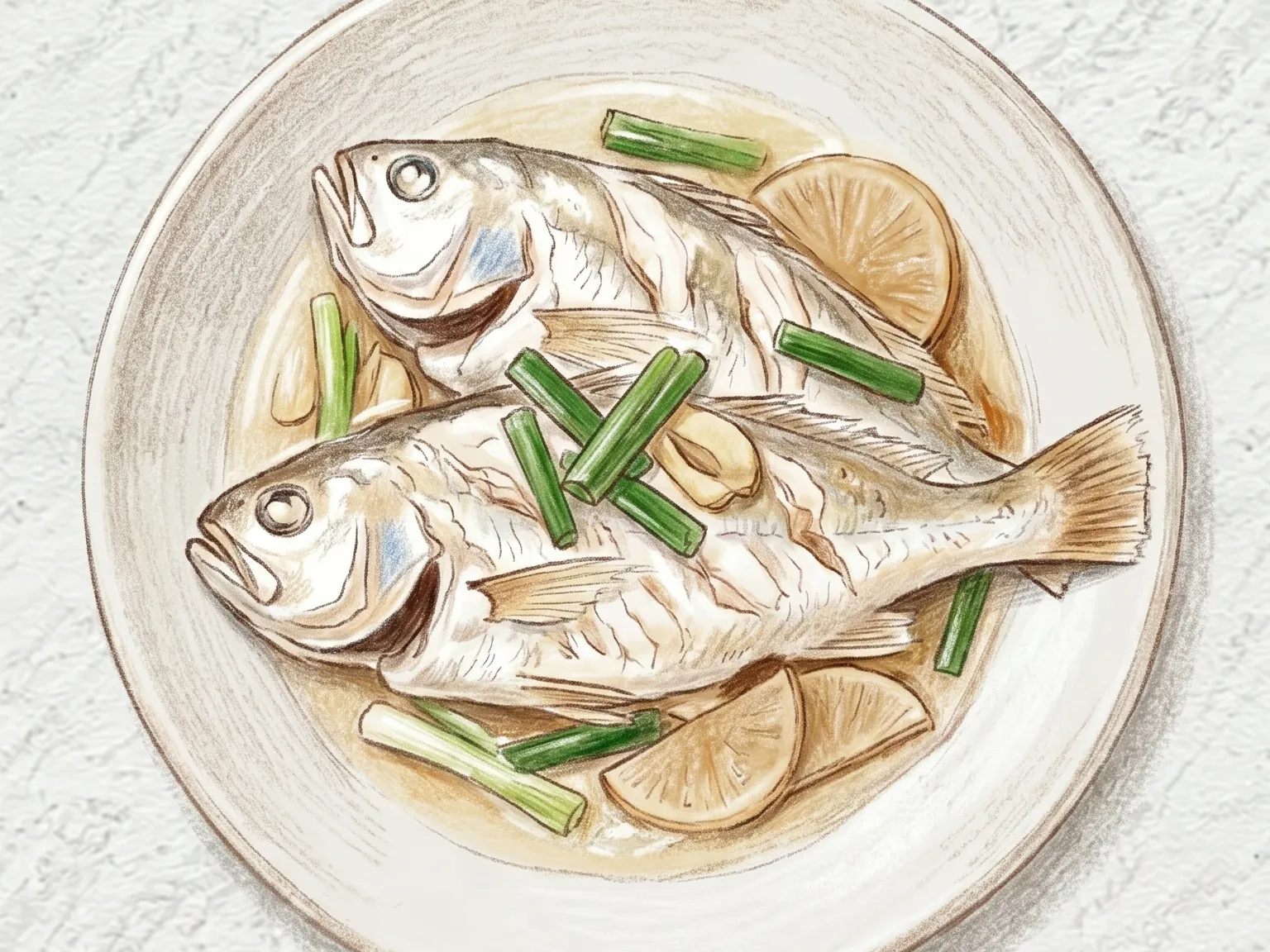
Mineo-jjim is a Korean steamed croaker prepared with Korean radish, green onion, ginger, and rice wine.

What makes this special

  • Mineo-jjim preserves the fine-grained croaker flesh through gentle steaming with ginger and rice wine.
  • Croaker's fine-grained white flesh maximizes moist, delicate texture when steamed
  • Rice wine and ginger fully neutralize any lingering fishiness while radish sweetens the broth
Total time
50 min
Level
Medium
Servings
4 servings
Ingredients
7
Calories
320 kcal
Protein
36 g

Key ingredients

croakerkorean radishgreen oniongingersoy sauce

Core cooking flow

  1. 1 Scale and gut 900 g croaker, then rinse it under running water.
  2. 2 Slice 300 g Korean radish about 1.5 cm thick, and cut 70 g green onion into large pieces.
  3. 3 Place the croaker over the radish, then add 350 ml water, 1 tablespoon rice...

Mineo-jjim is a Korean steamed croaker prepared with Korean radish, green onion, ginger, and rice wine. Croaker is prized among white fish for its fine-grained flesh and mild aroma, and steaming preserves its delicate, moist texture without drying it out. Ginger and rice wine work together to eliminate any trace of fishiness, while the radish releases a gentle sweetness into the broth as it cooks. Seasoned with just a touch of soy sauce at the end, this dish lets the natural flavor of the fish take center stage and is well suited for formal meals.

Prep 20min Cook 30min 4 servings

Instructions

Read the steps as a cooking flow: prep, heat, seasoning, doneness control, and finish.

6 steps
  1. 1
    Heat

    Scale and gut 900 g croaker, then rinse it under running water.

    Wipe away any blood inside the cavity and make shallow cuts in the thickest parts so the fish cooks evenly.

  2. 2
    Prep

    Slice 300 g Korean radish about 1.5 cm thick, and cut 70 g green onion into large pieces.

    Spread the radish in one even layer on the bottom of the pot to protect the fish from direct heat.

  3. 3
    Control

    Place the croaker over the radish, then add 350 ml water, 1 tablespoon rice wine, and 10 g thinly sliced ginger.

    Heat over medium-high heat just until the liquid starts to boil.

  4. 4
    Control

    When it comes to a boil, skim off foam and reduce the heat to medium.

    Cover and steam-braise for about 15 minutes, keeping the liquid at a gentle simmer so it does not reduce too quickly.

  5. 5
    Season

    When a chopstick slides into the radish easily, stir 2 tablespoons soy sauce into the broth.

    Spoon the broth over the fish and cook for 5 more minutes so the seasoning reaches the top.

  6. 6
    Finish

    Add the green onion and cook for just 1 more minute to keep its aroma fresh.

    Turn off the heat when the fish flakes white and the radish looks slightly translucent, then serve hot with the broth.

After the steps

Pick a recipe that fits this dish.

Continue with shared ingredients, meal pairings, or a similar method.

Recipes That Go Well With This

More Steamed →

Based on shared ingredients and meal pairing

Korean Steamed Pacific Saury
Shared ingredient: korean radish Steamed

Korean Steamed Pacific Saury

Kkongchi-jjim braises Pacific saury with Korean radish, onion, and green onion in a gochugaru and soy sauce broth until the liquid reduces to a concentrated, deeply spiced glaze. The saury's naturally oily flesh absorbs the bold seasoning without drying out, while the radish softens in the braising liquid and draws out any fishiness that would otherwise distract from the sauce. Garlic and ginger scrub the broth clean, and the chili's penetrating heat opens the appetite in a way that milder seasonings cannot. The remaining sauce, ladled over rice, is what most people eat last and remember longest - a humble fish dish that punches well above its price.

Korean Steamed Rockfish (Spicy Gochugaru Radish Braise)
Shared ingredient: korean radish Steamed

Korean Steamed Rockfish (Spicy Gochugaru Radish Braise)

Ureok-jjim is a Korean spicy steamed rockfish cooked with Korean radish, onion, and green onion in a gochugaru and soy sauce broth. Rockfish has firm, well-defined flesh that holds its shape through the cooking process, and scoring the skin lets the bold seasoning reach deep into the meat. Radish softens in the braising liquid and absorbs the chili heat while contributing natural sweetness, and ginger keeps the fish tasting clean. The remaining sauce is concentrated enough to spoon over rice, delivering a hit of spicy, salty flavor with every bite.

Eomuk-guk (Fish Cake Radish Clear Soup)
Serve together Soups

Eomuk-guk (Fish Cake Radish Clear Soup)

Eomuk-guk is a straightforward Korean soup centered around fish cakes and a base liquid prepared by simmering sliced radish. The initial step involves boiling the radish in water for a sufficient duration so that it releases a mild, natural sweetness into the broth while the liquid itself takes on a slightly translucent appearance. Depending on individual preference, the radish can be taken out of the pot or left in as part of the final dish. Once the base is ready, pieces of fish cake are added to the boiling liquid along with soup soy sauce and minced garlic. The mixture then simmers for approximately six minutes, a period during which the fish cakes soften and absorb the saltiness of the soy sauce while simultaneously contributing their own flavor back into the soup base. To finish the preparation, thinly sliced green onions and a sprinkle of black pepper are stirred in. These final additions provide a sharp fragrance and a gentle heat that helps recreate the specific taste found at traditional Korean snack bars and street food carts. The entire cooking procedure is completed in about twenty minutes. Because the required ingredients are minimal and often staples, this recipe serves as a practical option for times when there are few groceries available in the kitchen. This makes the dish accessible even when the refrigerator is nearly empty and only basic pantry items remain.

Korean Steamed Yellow Croaker
Similar recipe Steamed

Korean Steamed Yellow Croaker

Jogi-jjim is a steamed Korean yellow croaker banchan built around a two-stage cooking method that drives soy sauce, cooking wine, garlic, and ginger deep into the flesh. Scoring the fish on both sides before cooking is essential: the cuts open channels so the marinade reaches the interior rather than sitting on the surface. Half the sauce goes in first, and the fish steams until nearly done; then the remaining sauce and sliced green onion are added for a second round. Cooking wine and ginger together strip away fishiness, leaving the croaker clean and mild on the palate. The flesh is fine-grained and firm enough to pull apart in neat flakes with chopsticks without falling apart. Any sauce that collects in the pan spooned over rice makes the dish a complete meal without needing a separate soup.

Serve with this

Korean Beef & Shiitake Japchae
Side dishes Medium

Korean Beef & Shiitake Japchae

Japchae originated as a Joseon royal court dish of stir-fried vegetables before sweet potato glass noodles were added to create the form recognized today. This version pairs glass noodles with soy-marinated beef and sliced shiitake mushrooms. Each component cooks separately: beef and mushrooms stir-fried with garlic, spinach blanched and squeezed dry, carrots and onions sauteed until just tender. A final toss with sesame oil brings everything together. The noodles should be translucent and springy, carrying a sweet-salty soy glaze into each forkful. A standard presence on every Korean holiday table at Chuseok, Seollal, and birthday celebrations alike.

🏠 Everyday 🎉 Special Occasion
Prep 20min Cook 18min 4 servings
Korean Seaweed Roe Pot Rice
Rice Medium

Korean Seaweed Roe Pot Rice

The preparation starts by layering finely diced radish at the bottom of a heavy pot before adding soaked rice. A specific technique defines this dish: warming the salted pollock roe and butter using only the residual heat of the vessel after the flame is extinguished. Avoiding direct heat prevents the roe's proteins from tightening into a dry or crumbly texture. Instead, the indirect warmth maintains a soft consistency where individual eggs pop and release their salty essence into the grains. As the butter melts, it coats each piece of rice, acting as a bridge between the sharp saltiness of the fish roe and the mild nature of the rice. Throughout the cooking process, the radish pieces release moisture upward, ensuring the rice remains hydrated while contributing a subtle sweetness and a clean finish. Before the meal begins, crumbling gamtae over the surface introduces a distinct oceanic scent that sits above the savory layers of butter and roe. Sliced scallions provide a sharp, crisp contrast to the overall richness. Pouring hot water into the pot at the end creates a toasted rice water that clears the palate. It is important to place the roe and butter within four minutes of turning off the heat to ensure the remaining warmth is sufficient to soften the ingredients.

🎉 Special Occasion 🏠 Everyday
Prep 15min Cook 25min 2 servings
Korean Stuffed Bossam Kimchi
Kimchi Hard

Korean Stuffed Bossam Kimchi

Bo-kimchi is a premium Korean stuffed kimchi where brined napa cabbage leaves are wrapped around a filling of julienned radish, water dropwort, chestnuts, jujubes, shrimp, and pine nuts, then tied into bundles and left to ferment. Each ingredient in the stuffing develops its own flavor during fermentation, building a complex, layered taste enclosed in a single neat package. Shrimp and pine nuts contribute richness and a roasted note, while chestnuts and jujubes add subtle sweetness that lifts this well above everyday kimchi. Originating in the Gaeseong region and tracing its lineage through Goryeo-era court cuisine, it is a kimchi reserved for holidays and formal occasions.

🎉 Special Occasion 🥗 Light & Healthy
Prep 70min Cook 15min 4 servings

Similar recipes

Korean Steamed Pomfret (Whole Fish with Soy Ginger Sauce)
Steamed Medium

Korean Steamed Pomfret (Whole Fish with Soy Ginger Sauce)

Korean steamed pomfret is a mild fish dish made by steaming a whole scored pomfret with ginger and green onions, then seasoning it with a warm soy sauce mixture. The thin, delicate flesh of the pomfret becomes tender after steaming, allowing the meat to separate easily from the bone. To manage the fish odor and build layers of aroma, sliced ginger and cut green onions are added in two separate stages: first during the main steaming process and again at the end. A heated sauce of soy sauce, rice wine, and water is poured over the cooked fish to ensure the seasoning penetrates evenly. A final touch of sesame oil adds a toasted scent to the non-spicy, low-fat preparation. This clean and mild dish is suitable for various diners.

🎉 Special Occasion 🍱 Lunchbox
Prep 15min Cook 18min 2 servings
Korean Braised Yellow Croaker
Stir-fry Medium

Korean Braised Yellow Croaker

Jogi-jorim is a Korean braised dish of yellow croaker simmered with radish and onion in a seasoning sauce of soy sauce, gochugaru, garlic, and a touch of sugar. Yellow croaker has white, tender flesh and a mild flavor with little fishiness, qualities that make it exceptionally well-suited for braising. The radish goes into the pot first, lining the bottom so the fish sits above the direct heat and does not stick or break apart during cooking. The seasoning sauce is poured over the fish and the pot comes to a boil before the heat is reduced to a steady simmer. Over time the sauce penetrates the flesh and the radish drinks in the braising liquid, turning sweet-savory and soft throughout. One or two Cheongyang chili peppers added to the pot provide a low, sustained heat that builds gradually rather than hitting all at once. The braise is finished when a moderate amount of glossy sauce remains in the pot. That concentrated sauce mixed into a bowl of plain rice is the reason Koreans reach for jogi-jorim as a go-to rice side dish. The dish also appears regularly on ancestral rite tables and holiday spreads, making it one of the more culturally familiar fish preparations in Korean cooking.

🏠 Everyday 🍱 Lunchbox
Prep 15min Cook 22min 2 servings
Korean Monkfish Spicy Stew
Stews Medium

Korean Monkfish Spicy Stew

Agwi tang jjigae is a monkfish-based dish that occupies the middle ground between a clear soup and a more concentrated, heavily seasoned stew. It features a broth that is noticeably cloudier and carries a more intense flavor profile than what is typically found in either of those two distinct categories. The cooking process starts by simmering sliced radish in plain water for about ten minutes to establish a sweet and clear liquid base. After this time has passed, Korean red chili flakes and a small amount of fermented soybean paste are mixed into the pot. The soybean paste serves a specific purpose in this recipe, as it helps to neutralize any fishy smells from the monkfish while adding a foundational fermented taste to the overall broth. The monkfish is prepared over medium heat, which allows its gelatinous flesh to stay together in large, firm pieces rather than separating into flakes. To add both texture and bulk, bean sprouts are stirred into the pot to provide a crunch that balances the soft consistency of the fish. Water dropwort, which is called minari in Korean, is the final ingredient to be added. It is left to wilt in the remaining heat of the pot after the heat is reduced so that its unique herbal fragrance is infused into the liquid. Although the monkfish has a somewhat strange appearance, its flesh is thick and very sturdy, meaning it does not disintegrate even when cooked for a long period. Furthermore, the substantial layer of gelatin found under the skin melts into the soup as it simmers, providing a natural thickness to the broth without the use of any starch. When served with a bowl of hot steamed rice on a cold evening, this dish functions as a complete and satisfying meal.

🏠 Everyday 🎉 Special Occasion
Prep 20min Cook 30min 4 servings

Tips

Use rice wine and ginger to reduce fishiness.
Cook radish until tender for deeper flavor.

Nutrition (per serving)

Calories
320
kcal
Protein
36
g
Carbs
9
g
Fat
15
g