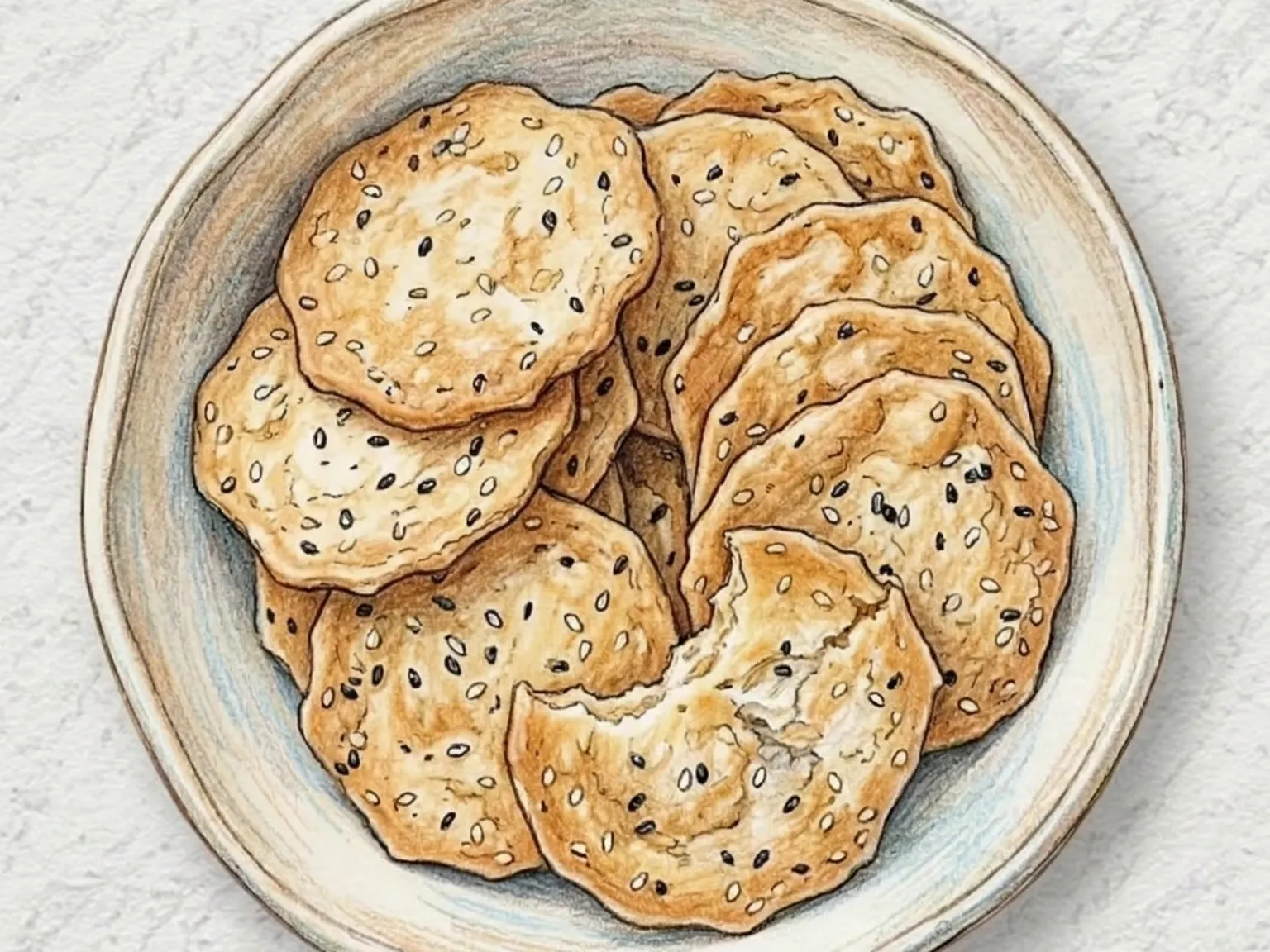
Miso Sesame Crackers (Savory Thin Crackers with Umami)

Miso Sesame Crackers (Savory Thin Crackers with Umami)

Quick answer

White miso and sesame oil are worked into a simple flour dough, rolled thin, and baked until each cracker snaps cleanly with an audible crack.

What makes this special

  • Miso Sesame Crackers offer a salty umami snap followed by a lingering nutty sesame aroma.
  • White miso umami hits first; sesame oil nuttiness lingers as aftertaste
  • Rolling as thin as possible is key to even, crisp baking
Total time
29 min
Level
Easy
Servings
4 servings
Ingredients
8
Calories
180 kcal
Protein
4 g

Key ingredients

all-purpose flourwhite misosesame oilwatersesame seeds

Core cooking flow

  1. 1 Preheat the oven to 175C and line a tray with parchment.
  2. 2 In a small bowl, loosen the 22 g white miso with the 18 ml sesame oil, then stir in the 55 ml water.
  3. 3 Pour the miso mixture into the dry ingredients and stir with a spatula until shaggy.

White miso and sesame oil are worked into a simple flour dough, rolled thin, and baked until each cracker snaps cleanly with an audible crack. The first flavor to register is the miso's salty umami depth, followed by the lingering nuttiness of toasted sesame seeds and sesame oil. Rolling the dough as thin as possible is essential for even crisping - any thick spots will stay chewy while the rest dries out. A final scatter of flaky salt or cracked pepper before baking sharpens the overall flavor. Because they contain no butter or oil beyond the sesame, the crackers stay remarkably light and keep well in an airtight tin for several days. They work as a standalone snack, a vehicle for cheese and charcuterie, or a crunchy accompaniment to soup.

Prep 15min Cook 14min 4 servings

Instructions

Read the steps as a cooking flow: prep, heat, seasoning, doneness control, and finish.

6 steps
  1. 1
    Season

    Preheat the oven to 175C and line a tray with parchment.

    In a bowl, whisk the 160 g flour with the sugar, baking soda, and salt so the small amounts are evenly distributed before any liquid goes in.

  2. 2
    Season

    In a small bowl, loosen the 22 g white miso with the 18 ml sesame oil, then stir in the 55 ml water.

    Smooth out visible lumps so the salty miso flavor spreads through the dough evenly.

  3. 3
    Prep

    Pour the miso mixture into the dry ingredients and stir with a spatula until shaggy.

    Press briefly by hand just until it holds together as one dough, stopping before it becomes elastic or tough.

  4. 4
    Heat

    Fold in the 18 g sesame seeds, then place the dough between two parchment sheets.

    Roll from the center outward to an even 2 mm or thinner, checking the edges because thick spots will bake chewy.

  5. 5
    Season

    Peel off the top parchment, cut the sheet into squares, and dock each piece closely with a fork so steam can escape.

    If desired, add a very light sprinkle of salt or cracked pepper just before baking.

  6. 6
    Heat

    Bake at 175C for 12 minutes, then check the edge color.

    Rotate the tray if the edges brown first and bake 1 to 2 minutes more, then cool completely on the tray until the crackers snap cleanly.

After the steps

Pick a recipe that fits this dish.

Continue with shared ingredients, meal pairings, or a similar method.

Recipes That Go Well With This

More Baking →

Based on shared ingredients and meal pairing

Black Sesame Miso Cornbread
Shared ingredient: all-purpose flour Baking

Black Sesame Miso Cornbread

This fusion cornbread combines roasted black sesame powder and doenjang with a classic American cornmeal batter. Adding ground heukimja tints the batter a deep charcoal grey and introduces a toasted-nut richness that ordinary cornbread simply does not have. A small amount of doenjang dissolved into the wet ingredients spreads a quiet, fermented savoriness throughout the crumb, not asserting itself as bean paste but registering as an unexplained depth and complexity that makes the bread more interesting with each bite. Coarse cornmeal preserves the grainy, slightly gritty chew that defines good cornbread, while butter and buttermilk keep the crumb moist rather than dry. The salt in the doenjang holds the sweetness of the sugar in check, landing the bread in an ambiguous zone between savory and sweet rather than firmly in either camp. A drizzle of honey or a pat of butter on a warm slice amplifies the nuttiness of the sesame. The bread also pairs naturally with soups and Korean jjigae, where its savoriness harmonizes with broth-based dishes in a way that plain cornbread would not.

Wafu Daikon Salad (Shredded Radish with Japanese Soy Dressing)
Serve together Salads

Wafu Daikon Salad (Shredded Radish with Japanese Soy Dressing)

Wafu daikon salad shreds daikon radish into very fine julienne strips and dresses them with a Japanese wafu dressing made from soy sauce, rice vinegar, and sesame oil, finished with bonito flakes and torn nori. Soaking the shredded daikon in cold water for five minutes draws out excess starch and maximizes its crisp, snappy texture - draining and drying thoroughly afterward prevents the dressing from becoming diluted. The dressing layers soy salt over the gentle acidity of rice vinegar and the nuttiness of sesame oil, giving depth to the otherwise neutral radish. Bonito flakes placed on top wave gently in the residual heat and release a smoky umami that permeates the salad. Shredded nori adds a briny crunch that creates textural contrast throughout the bowl.

Korean Dalgona Coffee (Whipped Instant Coffee Foam Milk)
Serve together Drinks

Korean Dalgona Coffee (Whipped Instant Coffee Foam Milk)

Dalgona coffee is made by whipping equal parts instant coffee, sugar, and hot water with a hand mixer for three to five minutes until stiff, caramel-colored peaks form, then spooning the foam over iced milk. The whipped layer carries a concentrated, bittersweet coffee flavor that gradually blends into the cold, neutral milk below as you stir. A light dusting of cocoa powder on top introduces a faint chocolate note, and increasing the sugar slightly helps the whipped cream hold its stiff structure longer.

Yaki Onigiri (Japanese Soy-Glazed Grilled Rice Balls)
Similar recipe Street food

Yaki Onigiri (Japanese Soy-Glazed Grilled Rice Balls)

Yaki onigiri are Japanese grilled rice balls prepared using freshly cooked rice that has been lightly seasoned with salt. The rice grains are shaped into triangles or rounds while they remain warm and pliable, as the grains lose their natural binding ability once they cool and lose their moisture. During the shaping process, pressure must be applied with even distribution across the rice to prevent the grains from becoming a dense and compacted mass. This careful handling ensures that the interior of the rice ball maintains a soft texture with each individual grain remaining distinct after the grilling process is complete. The cooking method involves pan-grilling the rice balls using a small amount of sesame oil over a medium-low flame. This specific heat level is necessary to allow the starch on the surface of the rice to caramelize at a slow pace, resulting in a thin and crackling crust while the center of the onigiri remains moist. It is important to let the rice balls sit undisturbed in the pan for three to four minutes on each side before they are turned. This waiting period allows the outer layer to set properly and prevents the rice from tearing or sticking to the pan when it is time to flip them. A glaze made from a combination of soy sauce, mirin, and sugar is applied to the surface in several thin coats. Brushing the glaze on in multiple light passes, rather than applying a large amount of the liquid at the start, prevents the sugar content from burning or charring. This technique creates a deep savory flavor and a lacquered sheen on the exterior of the rice. The finished onigiri have a savory and slightly sweet profile, with edges that become chewy where the glaze has concentrated during the cooking process. A narrow strip of nori seaweed is often wrapped around the base of the rice ball to provide a salty element that balances the glazed exterior. When served with miso soup and pickled radish, these grilled rice balls function as a light meal.

Serve with this

Korean Street Egg Bread (Sweet Batter Muffin with Whole Egg)
Desserts Easy

Korean Street Egg Bread (Sweet Batter Muffin with Whole Egg)

Winter streets in Seoul feature this warm handheld snack prepared by baking a whole egg atop a sweet batter. The base consists of cake flour, baking powder, milk, and melted butter poured into muffin molds. Adding a layer of finely diced ham beneath the egg creates a salty contrast against the sweetness of the dough. When baked at 180 degrees Celsius, sixteen minutes results in a soft and runny yolk, while eighteen minutes produces a firm center. Vanilla extract mixed into the batter helps neutralize the natural scent of the egg for a clean finish. A light dusting of dried parsley on the domed surface adds a subtle herbal scent as the bread turns golden in the oven. Small amounts of shredded cheese can be added to the batter to balance the sweetness. Serving the bread while it remains warm ensures the interior stays moist. This egg bread functions well as a quick breakfast option and can be made in paper muffin cups if metal molds are unavailable.

🧒 Kid-Friendly 🌙 Late Night
Prep 15min Cook 18min 4 servings
Classic Tiramisu
Western Medium

Classic Tiramisu

Classic tiramisu layers ladyfingers briefly soaked in a syrup of cooled espresso and Marsala wine with a cream made from egg yolks whipped with sugar over a bain-marie, then folded with mascarpone and softly whipped heavy cream. Dipping the ladyfingers for only about one second prevents them from absorbing too much liquid and collapsing. Whipping the cream to soft peaks and folding it gently keeps the filling light rather than dense. The bittersweet depth of espresso plays against the rich, buttery smoothness of mascarpone, creating a flavor contrast that develops further with chilling. A minimum of four hours in the refrigerator, ideally overnight, allows the layers to meld into a cohesive, melt-in-the-mouth texture. Cocoa powder dusted generously over the surface just before serving adds a final bitter note.

🎉 Special Occasion 🧒 Kid-Friendly
Prep 25min 4 servings

Similar recipes

Yuzu Karaage (Japanese Citrus-Marinated Fried Chicken)
Asian Medium

Yuzu Karaage (Japanese Citrus-Marinated Fried Chicken)

Yuzu karaage is a citrus-accented variation of Japanese fried chicken that incorporates yuzu into the traditional soy-ginger marinade. Boneless chicken thighs are marinated in soy sauce, cooking sake, garlic, ginger, and yuzu marmalade, which infuses the meat with a floral citrus fragrance distinct from lemon or lime. After marinating, the pieces are coated in potato starch and deep-fried until the exterior turns shatteringly crisp while the inside stays moist and well-seasoned. The yuzu adds a bright, aromatic acidity that lifts the richness of the fried coating and dark soy marinade, giving each bite a clean finish rather than a heavy aftertaste.

🍺 Bar Snacks 🎉 Special Occasion
Prep 20min Cook 18min 2 servings
Japanese Kani Salad
Salads Easy

Japanese Kani Salad

Kani salad is a Japanese-inspired dish centered on imitation crab meat that is prepared using a specific shredding technique. Instead of chopping the crab, the sticks are pulled apart along their natural grain to create a soft and fibrous texture. This particular structure allows the crab to absorb the dressing thoroughly while preventing the pieces from becoming saturated with excess liquid. These shreds are combined with cucumbers and carrots that have been julienned into thin strips to add a crisp and refreshing crunch to the overall composition. The dressing for the salad is a mixture of mayonnaise, rice vinegar, and fresh lemon juice. This specific blend results in a creamy coating that provides a smooth mouthfeel without leaving a heavy or oily sensation after eating. Toasted sesame seeds are incorporated into the mixture to provide a warm and nutty element that complements the gentle sweetness of the imitation crab. The most significant requirement for a successful salad is ensuring that the vegetables are patted completely dry before they are tossed with the other ingredients. If there is any moisture left on the cucumber or carrots, it will dilute the mayonnaise base and cause the salad to become thin and watery within a short amount of time. Because the recipe requires no cooking or heat, the entire bowl can be assembled in approximately ten minutes, which provides an efficient solution for a quick and refreshing lunch or dinner side. This salad is versatile in its application, serving as a popular topping for sushi rolls or as a light starter when paired with slices of fresh avocado.

🥗 Light & Healthy ⚡ Quick
Prep 15min 2 servings
Ebi Fry (Japanese Panko-Crusted Shrimp)
Asian Easy

Ebi Fry (Japanese Panko-Crusted Shrimp)

Ebi fry developed during Japan's Meiji era as Western cooking techniques arrived and were reinterpreted through a Japanese lens, becoming one of the defining dishes of yoshoku - the country's own adaptation of European cuisine. Preparation starts by cutting the tendons along the shrimp's belly at several points and pressing each piece flat against a cutting board so it holds a straight, elongated shape when lowered into hot oil rather than curling back on itself. The three-stage coating of flour, egg wash, and coarse panko breadcrumbs is central to the dish's character: panko's jagged, irregular flakes puff and expand in hot oil, producing a crust that is unmistakably lighter and more open-textured than anything made with fine Western breadcrumbs. Because the shrimp fries quickly at high temperature, the flesh stays fully moist and snaps with a satisfying springiness when bitten. Tartar sauce, with its creamy acidity and flecks of pickled vegetables, offsets the richness of the crust, while tonkatsu sauce takes the flavor in a sweeter, fruitier direction. The dish migrates easily across formats: tucked into bento boxes as a daily side, placed on top of curry rice for an ebi fry curry, or layered into soft milk bread as an ebi katsu sando. Its staying power in Japanese home cooking and restaurant menus alike reflects how thoroughly yoshoku dishes have become part of everyday Japanese food culture.

🍱 Lunchbox 🏠 Everyday
Prep 20min Cook 12min 2 servings
Katsu Curry
Asian Medium

Katsu Curry

Katsu curry is a Japanese single-plate meal of crisp deep-fried pork cutlet served beside a thick, glossy curry sauce over steamed rice. The pork loin is pounded to an even thickness, seasoned with salt and pepper, then coated in three layers: flour, beaten egg, and panko. Panko breadcrumbs have a coarser, more jagged texture than standard breadcrumbs, which creates more air pockets in the crust and produces a crunch that stays crisp longer after frying. The breaded cutlet is lowered into oil heated to 170 degrees Celsius and fried for four to five minutes until deep golden brown, then lifted onto a wire rack to rest for two minutes. The resting period allows the residual heat to finish cooking the center while the juices redistribute and the crust firms up. The curry sauce is built separately: onion and carrot are sauteed until their natural sweetness develops fully, then water is added and everything simmers until the vegetables are tender. The curry roux blocks are added and dissolved over low heat until the sauce reaches a thick, velvety consistency. Resting the curry overnight deepens its flavor as the vegetables continue to release sugars and the spices meld together. At the table, the curry fills one side of the plate and the sliced katsu occupies the other so the crust stays dry until deliberately pushed into the sauce, preserving the contrast between the two textures.

🎉 Special Occasion 🧒 Kid-Friendly
Prep 25min Cook 25min 2 servings

Tips

Thicker than 2 mm will reduce crispness.
Rotate the tray once if edges brown faster than the center.

Nutrition (per serving)

Calories
180
kcal
Protein
4
g
Carbs
24
g
Fat
7
g