Miso Soup
Asian Easy

Miso Soup

Quick answer

Miso soup, or miso shiru, is a staple of Japanese home cooking, traditionally served alongside daily meals.

What makes this special

  • Miso Shiru layers savory dashi broth with fermented soybean paste for a deep, comforting umami.
  • Katsuobushi and kombu dashi layered with miso for double umami
  • Miso dissolved off-boil to preserve its fermented aroma
Total time
15 min
Level
Easy
Servings
2 servings
Ingredients
5
Calories
80 kcal
Protein
7 g

Key ingredients

Dashi stockWhite misoSilken tofuDried wakame seaweedGreen onion

Core cooking flow

  1. 1 Soak 5g dried wakame in cold water for 5 minutes.
  2. 2 Cut 150g silken tofu into 1.5cm cubes and slice 2 green onion stalks thinly.
  3. 3 Pour 500ml dashi stock into a pot and heat it over medium heat.

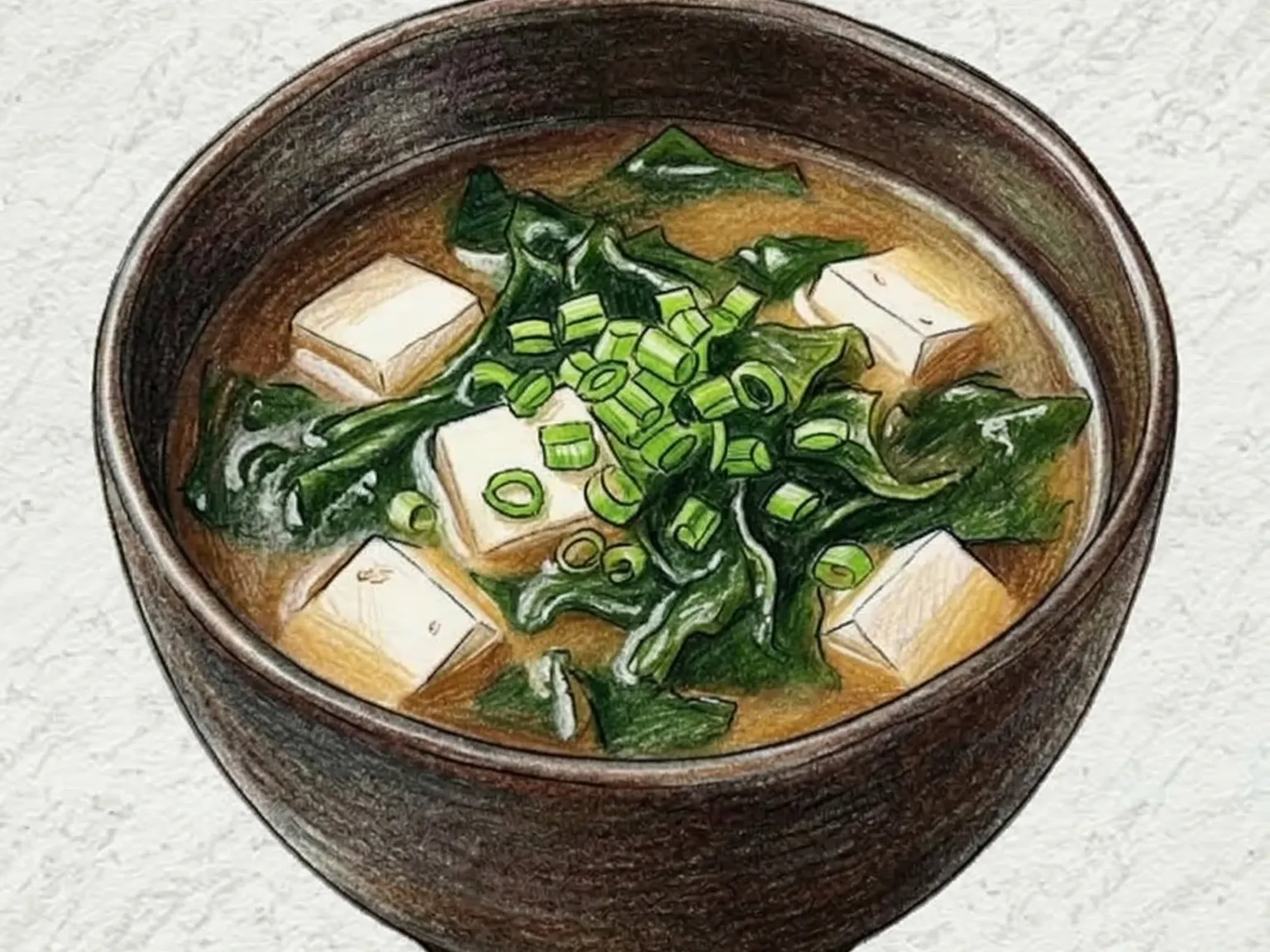
Miso soup, or miso shiru, is a staple of Japanese home cooking, traditionally served alongside daily meals. The soup features a base of dashi stock made from bonito flakes and kelp, which provides a savory umami foundation. Standard additions include cubed silken tofu and rehydrated wakame seaweed, finished with thinly sliced green onions. The preparation requires heating the dashi stock gently without letting it boil rapidly, then warming the tofu. To preserve the delicate aroma of the miso paste, it is dissolved in a ladle with a bit of hot broth before being stirred into the pot, and the heat is turned off immediately. Home cooks can choose between mild, slightly sweet white miso or a more savory, salty red miso to adjust the flavor. It is a light and comforting soup designed to complement other dishes.

Prep 5min Cook 10min 2 servings
Recipes by ingredient → firm tofu green onion

Instructions

Read the steps as a cooking flow: prep, heat, seasoning, doneness control, and finish.

6 steps
  1. 1
    Prep

    Soak 5g dried wakame in cold water for 5 minutes.

    When it swells to about 5 to 6 times its size, rinse lightly, squeeze out excess water firmly, and cut it into bite-size pieces.

  2. 2
    Prep

    Cut 150g silken tofu into 1.5cm cubes and slice 2 green onion stalks thinly.

    Press the knife straight down instead of dragging it through the tofu, so the cubes stay neat and do not crumble.

  3. 3
    Control

    Pour 500ml dashi stock into a pot and heat it over medium heat.

    When small bubbles appear around the edge, reduce to low heat so the stock stays hot without boiling hard.

  4. 4
    Control

    Add the tofu and avoid stirring with a spoon.

    Gently shake the pot to settle the cubes, then warm over low heat for about 2 minutes until the tofu is heated through.

  5. 5
    Step

    Place 2 tbsp miso in a ladle and loosen it first with a little hot broth.

    When no lumps remain, stir it back into the pot gently just once to keep the soup clear.

  6. 6
    Finish

    After adding the miso, turn off the heat and add the soaked wakame.

    Ladle the soup into bowls, top with sliced green onion, and serve immediately while the miso aroma is still fresh.

After the steps

Pick a recipe that fits this dish.

Continue with shared ingredients, meal pairings, or a similar method.

Recipes That Go Well With This

More Asian →

Based on shared ingredients and meal pairing

Curry Udon
Shared ingredient: dashi stock Asian

Curry Udon

Kare udon is a Japanese curry noodle dish built on dashi stock, which separates it from curry rice despite sharing the same roux. Thinly sliced pork and onion are stir-fried in oil first, then dashi made from katsuobushi and kombu is added and brought to a boil. Curry roux blocks are stirred in next, transforming the stock into a thick, clinging sauce that coats the pot and every strand of noodle. The heat must drop to low the moment the roux goes in, with constant stirring to prevent the starchy sauce from scorching. Katsuobushi and kombu contribute an umami depth that the curry spices intensify rather than mask, producing a broth more layered than either element alone. The fat, chewy udon strands absorb the sauce and carry it from pot to mouth with each lift of the chopsticks. Finishing with sliced scallions or shichimi adds fragrance and a mild bite. Though the same roux block appears in kare raisu, the presence of dashi and noodles makes this a distinctly different dish in taste, texture, and character.

Niku Udon (Japanese Thick Noodles in Dashi Broth with Braised Beef)
Shared ingredient: dashi stock Asian

Niku Udon (Japanese Thick Noodles in Dashi Broth with Braised Beef)

Niku udon is a Japanese noodle soup built on two distinct layers of flavor. The broth starts with a clear dashi made from kombu and bonito flakes, seasoned with soy sauce and mirin for a clean, umami-rich base. Separately, thinly sliced beef is simmered with onion in a concentrated mix of soy sauce, mirin, and sugar until each slice is glazed in a sweet, savory coating. The beef is placed atop thick, chewy udon noodles swimming in the hot broth, and the two seasoning profiles merge at the table. Chopped scallions add freshness to cut through the richness. It is a staple of both home kitchens and udon shops across Japan.

Young Radish Kimchi & Tofu Crumble Salad
Serve together Salads

Young Radish Kimchi & Tofu Crumble Salad

Young radish kimchi and tofu crumble salad uses firm tofu crumbled by hand and sauteed in olive oil for 5 to 7 minutes until the moisture has cooked off and the pieces turn dry and granular. Finely chopped chonggak kimchi introduces a spicy, tangy fermented punch, and the dressing mixes gochujang with plain yogurt so that chili heat and lactic acidity layer onto each other, with lemon juice cleaning up the finish. Romaine and red cabbage supply crunch beneath the crumble, and corn kernels add sweetness that contrasts directly with the kimchi's saltiness. Squeezing excess brine from the kimchi before adding it prevents the salad from turning soggy, and the tofu crumble should go on while still warm so its nuttiness stays prominent. The bowl balances fermented flavors, dairy, raw vegetables, and plant protein in a single serving.

Agedashi Tofu (Japanese Crispy Fried Tofu in Dashi Broth)
Similar recipe Asian

Agedashi Tofu (Japanese Crispy Fried Tofu in Dashi Broth)

The dish has been in Japanese izakaya cookbooks since the Edo period - essentially a method for turning a block of tofu into something worth drinking beside. Firm tofu is pressed under weight for at least half an hour to drive out moisture, then tapped lightly in potato starch. Any residual water causes violent spitting in the oil; too thick a starch coat turns gummy once the broth hits. Into oil held at 170C until a translucent golden shell forms, two to three minutes without touching it. From there, hot dashi-soy-mirin broth goes on immediately at the table. The edges of the crust absorb the liquid and turn to something between gel and noodle; the center stays dry and crisp for roughly thirty seconds. That window is the whole point. Eat past it and you have soft tofu in broth, which is fine but is a different dish entirely. Grated daikon on top cuts through any lingering oil.

Serve with this

Korean Ssukgat Perilla Bibim Somyeon
Noodles Easy

Korean Ssukgat Perilla Bibim Somyeon

Ground perilla seeds create a nutty foundation for this cold noodle dish, while crown daisy leaves contribute a distinctive herbal bitterness. Thin somyeon noodles serve as the base, tossed in a savory dressing made from soy sauce and freshly ground perilla seeds. Julienned cucumber adds a crisp texture and freshness that contrasts with the soft strands. Preparing the noodles involves boiling and rinsing them multiple times in cold water to build elasticity and remove surface starch. Ensuring the noodles are dry prevents the sauce from thinning out during mixing. Using seeds that are toasted and ground just before serving heightens the aromatic quality of the bowl. The entire preparation takes approximately twenty-five minutes, making it an efficient option for warm weather. It lacks the heat typically associated with spicy noodles, making it approachable for newcomers. Adding chili oil provides a spicy kick for variety, or the dressing can be paired with buckwheat noodles instead. Any remaining sauce functions effectively as a topping for tofu or fresh garden salads.

🥗 Light & Healthy ⚡ Quick
Prep 15min Cook 10min 2 servings
Japanese Rice Soup Porridge
Rice Easy

Japanese Rice Soup Porridge

Zosui is a Japanese rice porridge made by simmering leftover cooked rice in dashi broth and finishing with beaten egg. The broth soaks into the rice grains, giving the porridge a deep umami base, while the egg sets into soft ribbons throughout. Enoki mushrooms add thin, delicate strands of texture, and chopped scallions contribute a fresh finish. Seasoning is kept minimal with just soy sauce and salt to let the broth flavor come forward. It is often served as the closing dish after a nabe hot pot, using the remaining broth as the cooking liquid.

🥗 Light & Healthy 🏠 Everyday
Prep 10min Cook 15min 2 servings
Korean Scorched Rice Latte
Drinks Easy

Korean Scorched Rice Latte

Nurungji-latte is a Korean grain latte built from scorched rice that is dry-toasted an extra minute in a pan to intensify its roasted aroma before being simmered in water to extract a deeply nutty infusion, which is then blended with milk. The toasting step caramelizes residual starch on the rice crust, generating a toasty depth that persists even after milk is added. Rice syrup provides sweetness with a rounder, more subdued quality than refined sugar, and a pinch of salt sharpens the overall flavor profile and brings the grain notes into focus. A small measure of vanilla extract weaves a subtle fragrance that complements rather than competes with the base. A brief pass with an immersion blender leaves fine rice particles suspended in the drink, giving it a slightly grainy texture that sets it apart from a conventional latte; blending longer produces a smoother, creamier result. A dusting of ground cinnamon over each cup adds a warm aromatic layer on top. The latte works equally well served warm in a mug or poured over ice for a chilled version.

🍺 Bar Snacks ⚡ Quick
Prep 8min Cook 12min 2 servings

Similar recipes

Chashu Pork (Japanese Rolled Braised Pork Belly for Ramen)
Asian Medium

Chashu Pork (Japanese Rolled Braised Pork Belly for Ramen)

Chashu pork takes its name from Cantonese char siu but is an entirely distinct preparation that evolved within Japanese ramen culture. A thick slab of pork belly is rolled into a tight log, tied at intervals with kitchen twine to hold its shape, then braised low and slow in a mixture of soy sauce, mirin, sake, and sugar. Over one and a half to two hours the connective tissue dissolves into gelatin, transforming the meat from firm to yielding - a texture that barely resists the chopstick and melts against the palate. The braising liquid reduces during cooking and lacquers the exterior in a deep amber glaze that clings without being syrupy. Sliced thin, each piece reveals a cross-section of spiraling fat and lean that is as much a visual signature as a textural one. The fat layers have softened to the point of near-transparency while the lean holds just enough structure to stay in one piece. Although chashu is most associated with ramen, where a few slices crown the bowl, it is equally at home over steamed rice as chashu-don, or sliced cold and eaten alongside beer. The leftover braising liquid is never wasted - soft-boiled eggs soaked overnight in it become ajitamago, the marinated soy eggs that are chashu's natural companion.

🎉 Special Occasion 🍺 Bar Snacks
Prep 10min Cook 90min 4 servings
Korean Soft Tofu Soup (Mild Clear Broth with Silken Tofu)
Soups Easy

Korean Soft Tofu Soup (Mild Clear Broth with Silken Tofu)

Sundubu-guk is the gentler sibling of the more widely known sundubu-jjigae, trading the latter's fiery red broth for a clear, mild soup that puts silken tofu front and center. The base is a simple anchovy and kelp stock, seasoned with soup soy sauce and nothing more assertive, so the broth stays transparent and clean on the palate. Blocks of unpressed soft tofu are slipped into the simmering liquid and heated just until they are warmed through - overcooked sundubu loses the trembling, custard-like texture that defines the dish. Each spoonful collapses gently on the tongue, releasing a faint, sweet soybean flavor that pairs effortlessly with the umami-rich stock. A small addition of salted shrimp paste can be stirred in at the table to introduce a subtle marine depth without disrupting the soup's calm character. This is the soup Koreans turn to when appetite is low, digestion needs rest, or the body simply craves something warm and uncomplicated. It is equally suitable for young children and elderly diners, and its quiet simplicity is precisely its strength.

🏠 Everyday ⚡ Quick
Prep 5min Cook 15min 4 servings
Kake Udon (Plain Udon in Clear Dashi Broth)
Noodles Easy

Kake Udon (Plain Udon in Clear Dashi Broth)

Kake udon is the most elemental form of Japanese udon: thick, springy wheat noodles served in a clear dashi broth seasoned with soy sauce, mirin, and a small amount of salt. With so few components, the quality of the dashi determines everything about the dish. The broth is built on katsuobushi and dried kelp, producing a flavor that is restrained but unmistakably savory. The noodles must be thick enough to hold their chew and smooth enough to carry broth with each lift of the chopsticks. Toppings are deliberately kept to a minimum, typically sliced kamaboko fish cake and chopped green onion, so the stock and noodle texture remain the focus rather than any single garnish. The noodles should go directly from the pot into hot broth, as they soften quickly and lose their characteristic bounce if left to sit. In the Kansai region, pale usukuchi soy sauce is used to keep the broth nearly transparent, making the visual clarity of the soup another deliberate element of the dish.

🏠 Everyday ⚡ Quick
Prep 10min Cook 12min 2 servings

Tips

Never boil after adding miso - the heat destroys its delicate flavor.

Nutrition (per serving)

Calories
80
kcal
Protein
7
g
Carbs
6
g
Fat
3
g