Korean Misutgaru Latte (Roasted Multigrain Milk Drink)
Quick answer
Misutgaru latte is a Korean multigrain drink made by whisking roasted grain powder into cold milk and sweetening with honey.
What makes this special
- Roasted barley, rice, and beans combine for the deep grain depth of a Misutgaru latte.
- Mixed roasted grain powder gives depth no single grain can match
- A pinch of salt sharpens the outline of multiple grain flavors
Key ingredients
Core cooking flow
- 1 Loosen any packed clumps in the 6 tablespoons of misutgaru powder before adding it to the bowl.
- 2 Add the misutgaru powder and 100 ml of cold milk to the bowl first.
- 3 Pour in the remaining 300 ml milk in two or three additions.
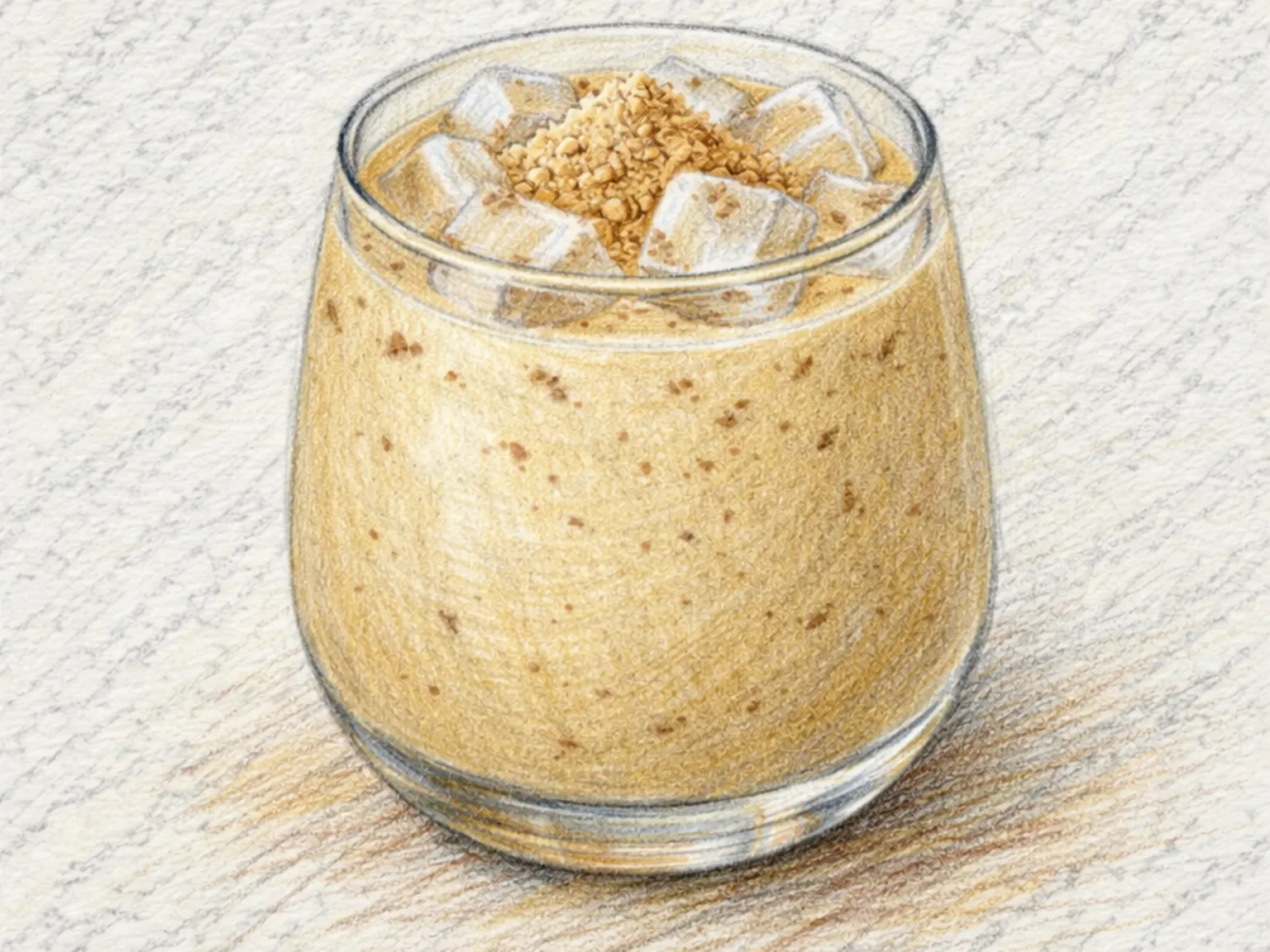
Misutgaru latte is a Korean multigrain drink made by whisking roasted grain powder into cold milk and sweetening with honey. The misutgaru powder -- roasted barley, rice, and other grains ground together -- brings a deep, toasty nuttiness that milk carries into a smooth, substantial beverage. A tiny pinch of salt sharpens the grain flavors, and a dusting of roasted soybean powder on top adds another aromatic layer. Substituting part of the milk with soy milk intensifies the nutty profile for a richer, more complex grain latte, and serving it over ice makes it a satisfying cool drink through summer.
Instructions
Read the steps as a cooking flow: prep, heat, seasoning, doneness control, and finish.
- 1Season
Loosen any packed clumps in the 6 tablespoons of misutgaru powder before adding it to the bowl.
Keep the 400 ml milk cold, and measure the honey and salt so they can be mixed in without delays.
- 2Prep
Add the misutgaru powder and 100 ml of cold milk to the bowl first.
Whisk for about 1 minute, scraping the sides, until no dry powder remains and the mixture looks like a thick, smooth paste.
- 3Step
Pour in the remaining 300 ml milk in two or three additions.
Whisk for about 20 seconds after each addition so the drink thins evenly and grain powder does not collect at the bottom.
- 4Season
Add 2 tablespoons honey and 0.1 teaspoon salt, then mix for 30 seconds more.
The honey streaks should disappear, and the drink should taste round and nutty without an obvious salty note.
- 5Prep
Let the mixed drink stand for about 2 minutes so the roasted grain powder hydrates in the milk.
If it looks separated, stir from the bottom again just before serving to restore an even texture.
- 6Finish
Fill a tall glass with 1 cup ice and slowly pour the drink over it.
Dust 1 tablespoon roasted soybean powder through a sieve on top, then serve immediately while the latte is cold and evenly mixed.
After the steps
Pick a recipe that fits this dish.
Continue with shared ingredients, meal pairings, or a similar method.
Recipes That Go Well With This
More Drinks →Based on shared ingredients and meal pairing
Korean Banana Misutgaru Smoothie
Banana misutgaru smoothie combines Korea's traditional roasted multigrain powder with banana for a filling, grain-forward drink. Misutgaru is made from roasted barley, glutinous rice, soybeans, and other grains ground into a fine powder; dissolved in liquid, it produces a toasty, earthy flavor that sets it apart from any standard smoothie base. Banana adds natural sweetness and body, while a spoonful of peanut butter deepens the nutty undertone. Honey fine-tunes the sweetness, and blending with ice makes the whole thing cold and thick. The grain fiber from the misutgaru and the potassium from the banana make this a substantial breakfast replacement in a single glass. Increasing the misutgaru proportion thickens the consistency toward something closer to porridge, and swapping in soy milk for regular milk intensifies the grain character.
Korean Job's Tears Walnut Latte
Yulmu-hodu latte is a traditional Korean grain-based beverage prepared by combining job's tears and walnuts with milk to create a thick and consistent texture. The preparation begins by soaking the job's tears in water for a minimum of two hours. This extended soaking period is necessary to soften the grains thoroughly, ensuring they pulverize completely during the blending process to avoid a gritty or sandy mouthfeel. Once softened, the job's tears are dry-toasted along with the walnuts in a pan. This heat application serves to caramelize the starches within the grains, which effectively removes the scent of raw grain and replaces it with a concentrated, roasted aroma. After the toasted ingredients are blended with milk, the liquid is passed through a fine strainer to achieve a smooth and silky finish. Sweetness is added using honey, accompanied by a small amount of salt to highlight the deep profile of the roasted nuts. A light sprinkle of ground cinnamon is applied to the surface to provide a subtle spice that balances the grounded flavor of the grain base. For cold servings, it is important to dissolve the honey while the liquid is still warm to ensure it distributes thoroughly throughout the drink instead of settling at the bottom of the container. The resulting beverage offers a depth of flavor and a rounded profile that is far more prominent than what is found in mass-produced, packaged versions of similar grain drinks.
Gotgam Cream Cheese Roll (Dried Persimmon Rolls)
Gotgam cream cheese roll is a no-cook Korean dessert that requires nothing more than a knife, a bowl, and a refrigerator. Dried persimmons are slit open and flattened into thin sheets, each one acting as the outer wrapper. The filling is cream cheese mixed with honey and fresh lemon juice to balance its natural richness with acidity, and finely chopped walnuts are folded in throughout to add a crunchy, nutty element to every bite. The filling is spread across the opened persimmon, which is then rolled tightly and wrapped in plastic wrap. Twenty minutes in the refrigerator firms the roll enough to slice cleanly. Dipping the knife in warm water and wiping it dry before each cut produces the smoothest cross-sections. The finished slices reveal clearly defined layers: the chewy, caramel-sweet dried persimmon on the outside, the tangy cream cheese in the middle, and flecks of walnut distributed throughout. The combination makes it a natural pairing with wine or a polished addition to a traditional holiday table.
Korean Perilla Seed Latte
Deulkkae latte is a Korean warm drink made by whisking ground perilla seed powder into water first to dissolve any lumps, then heating the mixture together with milk over medium-low heat until hot throughout. Sifting the perilla powder before mixing it into water is a small step that makes a measurable difference in texture: fine particles disperse evenly and the finished latte pours with a silky smoothness, with no gritty residue settling at the bottom of the cup. Honey and dark brown sugar are added together, building a layered sweetness that sits on top of the deep, nutty perilla base without overwhelming it. A pinch of salt stirred in alongside the sweeteners keeps the flavor from going flat by grounding the sweetness with a subtle mineral edge. Cinnamon dusted lightly over the surface at the end melds with the perilla aroma into a warm, spiced finish that lingers after each sip. To serve cold, the finished drink can be chilled and poured over ice.
Serve with this
Korean Spicy Rice Cakes (Gochujang Braised Chewy Tteok with Fish Cake)
Simmering cylindrical rice cakes and thin fish cake sheets in a spicy base of gochujang, red chili flakes, sugar, and soy sauce creates a sticky, glossy coating. The starch released from the rice cakes as the liquid reduces acts as a natural thickener, ensuring the sauce clings tightly to each ingredient. While the fish cakes soak up the heat from the surrounding liquid, they release a subtle seafood essence into the pan, and the addition of green onions at the final stage provides a crisp contrast to the underlying sweetness. Preparing a stock from dried anchovies and kelp rather than using plain water establishes a solid savory foundation for the entire dish. It helps to start with only half the seasoning paste, adding the remainder gradually to manage the final intensity and texture as the volume decreases. If the liquid evaporates too quickly, adding small amounts of water prevents the sugars in the sauce from scorching before the rice cakes reach the desired softness. For rice cakes that have been chilled or feel exceptionally firm, a short soak in cool water or a quick blanch in boiling water helps them cook through evenly. Serving the finished dish with boiled eggs, blood sausage, or assorted fried items replicates the setup found at traditional street stalls. This recipe scales easily into different versions by incorporating heavy cream or tomato-based sauces, resulting in the rose and cream variations often found in modern snack shops.
Korean Seasoned Kelp Strips
Kelp strips are soaked in cold water for ten minutes to draw out excess salt, then blanched for twenty seconds, just long enough to turn them pliable without losing their snap. The strips are dressed with gochugaru, vinegar, soy sauce, sugar, and garlic while julienned cucumber adds a cool, refreshing contrast. The seasoning sits over the mineral-dense ocean flavor of the kelp, layering a bright, acidic kick onto each bite. Sesame oil and whole sesame seeds finish the dish. The strips keep a satisfying resistance between the teeth that sets them apart from softer Korean seaweed preparations. Best served cold; the texture and flavor hold up well in packed lunches. Blanching beyond twenty seconds causes the kelp to soften and lose the chew that defines this banchan.
Dasik (Korean Honey-Pressed Roasted Grain Confection)
Dasik is a traditional Korean pressed confection made by kneading roasted grain or nut powders with honey and pressing the mixture into carved wooden molds. Unlike baked goods, dasik holds its shape entirely through the binding power of honey, with no heat applied during preparation. This technique produces a texture that is slightly resistant at first contact, then dissolves gently at body temperature in a way that releases the full aroma of the main ingredient. Roasted soybean powder yields a nutty version, black sesame produces a deeply aromatic one, and additions of pine nut powder or cinnamon develop the flavor in different directions. The wooden molds carve decorative patterns into the surface of each piece, giving dasik a visual refinement that matches its restrained sweetness. For centuries, dasik has been a standard offering at Korean tea gatherings, and its subtle flavor remains a natural match for the gentle bitterness of green tea.
Similar recipes
Korean Chestnut Latte
Bam latte is a Korean autumn drink made by blending boiled chestnuts into a smooth paste and warming it with milk. The chestnuts are pureed with water until the mixture is completely smooth, then combined with milk and heated gently on the stovetop over low heat. Maple syrup introduces a caramel sweetness over the mild, starchy flavor of the chestnuts. Ground cinnamon adds warmth, and a small amount of vanilla extract gives the overall aroma more depth. Blending the chestnuts longer yields a silkier drink; leaving some texture produces a thicker, more porridge-like consistency. The full preparation takes about twenty minutes, making it a practical homemade version of the seasonal chestnut lattes that appear in Korean cafes each autumn.
Sweet Rice Punch (Traditional Korean Malted Barley Grain Drink)
Sikhye is a traditional Korean sweet rice punch made by steeping malted barley powder in lukewarm water, straining the liquid, adding cooked rice, and holding the mixture at around 60 degrees Celsius for one hour until the rice grains float to the surface. The amylase enzymes in the malt break down the rice starch, producing a distinctly malty, clear sweetness with grain depth that no sugar alone can replicate. Only the clear top liquid is used after settling -- discarding the sediment keeps the punch from turning cloudy. Simmering with sugar and sliced ginger for 20 minutes rounds the sweetness and adds a gentle, spiced warmth to the finish. Served well chilled with the reserved floating rice grains and pine nuts on top, the cold temperature sharpens the malty aroma and makes each sip crisp. Temperature control during the steeping stage is critical: if the mixture exceeds 70 degrees Celsius, the amylase denatures and the grains will not float, so keeping a steady 60-degree hold determines whether the preparation succeeds.
Korean Sesame Porridge (Toasted Sesame Silky Rice Porridge)
Kkaejuk is a traditional Korean porridge made by grinding toasted sesame seeds to a fine powder and simmering them with soaked rice, water, and milk until the mixture reaches a silky, cream-soup consistency. Toasting the seeds before grinding is not optional -- raw sesame lacks the deep, roasted fragrance that defines the dish, and the heat of toasting develops oils and aroma compounds that grinding alone cannot produce. Constant stirring over low heat prevents the mixture from scorching and coaxes the rice grains into breaking down completely, merging with the sesame base so no distinct texture remains. Milk enriches the body beyond what water alone provides and gives the finished porridge a warm ivory color. The simplest version is seasoned with nothing but salt and served with a drizzle of honey or rice syrup, letting the roasted sesame flavor carry the bowl without distraction. Easily digestible and gentle on the stomach, kkaejuk has a long tradition as a morning meal, a recovery food for the sick, and a postpartum nourishment dish in Korean households.