Miyeok-guk (Seaweed Beef Sesame Soup)
Quick answer
Miyeok-guk is one of the most culturally meaningful soups in Korean cuisine.
What makes this special
- Miyeok-guk simmers seaweed and beef in sesame oil to create a glossy, iron-rich broth.
- Sautéing seaweed 3 minutes in sesame oil gives the broth its glossy viscosity
- Birthday soup tradition traces to postpartum recovery, honoring mothers
Key ingredients
Core cooking flow
- 1 Soak 20g dried seaweed in plenty of cold water for at least 30 minutes.
- 2 Cut 150g beef into bite-size pieces. Warm 1 tbsp sesame oil in a pot over me...
- 3 Add the soaked seaweed and keep the heat at medium.
Miyeok-guk is one of the most culturally meaningful soups in Korean cuisine. Dried sea mustard is first rehydrated, then stir-fried in sesame oil until the strands glisten and deepen in color, and finally simmered with thinly sliced beef and water until the broth turns savory and lightly viscous from the seaweed's released gelatin. Seasoning is deliberately sparse: soup soy sauce, minced garlic, and a final touch of sesame oil are almost always sufficient, because the seaweed and beef provide the foundational umami. The soup is traditionally prepared for new mothers during the postpartum recovery period, as miyeok is rich in iodine, calcium, and iron. It also appears on every Korean birthday table as an act of remembrance toward the mother who endured childbirth on that day, making the bowl carry a weight of gratitude that goes far beyond nutrition. Beyond its symbolism, miyeok-guk is practical everyday cooking: it calls for few ingredients, comes together in under thirty minutes, and produces a broth that nourishes without heaviness. Substituting the beef with mussels, clams, or dried shrimp creates a lighter, more oceanic version that is equally rooted in tradition. The soup reheats well and frequently tastes even better the next day, once the seaweed has softened further and the flavors have had time to merge fully.
Instructions
Read the steps as a cooking flow: prep, heat, seasoning, doneness control, and finish.
- 1Prep
Soak 20g dried seaweed in plenty of cold water for at least 30 minutes.
When the strands are fully softened, rinse several times, squeeze out excess water firmly, and cut the seaweed into bite-size pieces.
- 2Control
Cut 150g beef into bite-size pieces.
Warm 1 tbsp sesame oil in a pot over medium heat, add the beef, and stir-fry for about 2 minutes until the outside turns gray but does not brown hard.
- 3Heat
Add the soaked seaweed and keep the heat at medium.
Stir-fry for 3 more minutes, scraping the bottom often, until the seaweed darkens and looks glossy so the sesame oil coats it evenly.
- 4Control
Pour in 800ml water and raise the heat to high.
Once it boils, skim off foam from the surface, reduce to medium, leave the lid slightly open, and simmer for 20 minutes.
- 5Control
Add 1 tbsp soup soy sauce and 1 tsp minced garlic.
Simmer for 5 more minutes, until the seaweed is tender enough to lift easily with a spoon and the broth smells savory.
- 6Finish
Taste the broth and add the 0.5 tsp salt in small portions instead of all at once.
Turn off the heat, let the soup stand for 2 minutes, then serve it hot with rice.
After the steps
Pick a recipe that fits this dish.
Continue with shared ingredients, meal pairings, or a similar method.
Recipes That Go Well With This
More Soups →Based on shared ingredients and meal pairing
Korean Mushroom Seaweed Soup
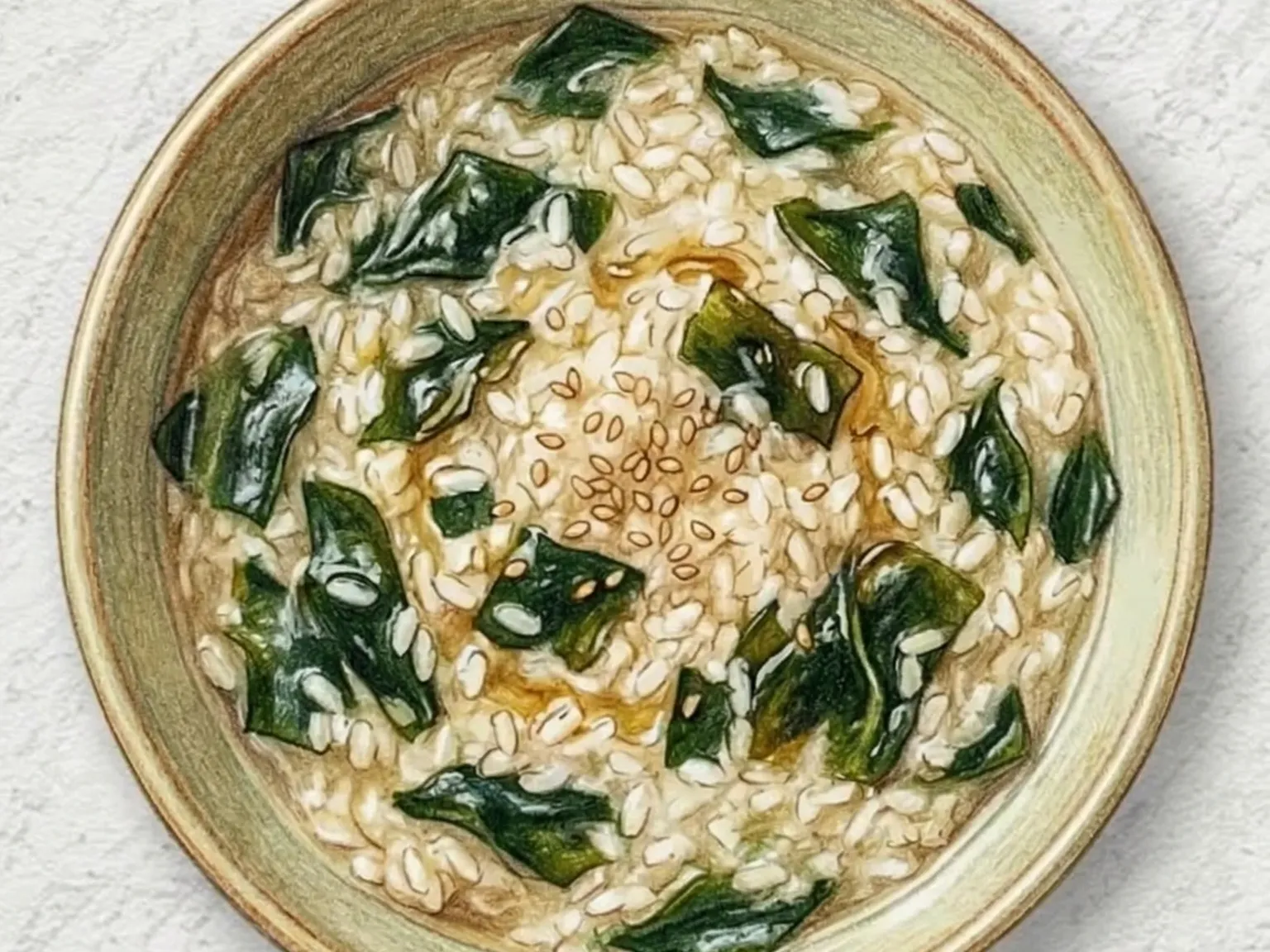
Rehydrated seaweed and two kinds of mushrooms - oyster and shiitake - are stir-fried in sesame oil first, before any water is added, so their flavors concentrate in the fat rather than leaching out into the broth. Water is added after that initial fry and the soup simmers for twenty minutes until the seaweed softens completely and releases a gentle oceanic character into the liquid. Without any meat-based stock, the umami comes entirely from the mushrooms and the natural glutamates in the seaweed, which is enough to give the broth genuine depth. The sesame oil blooms through the whole pot. Seasoned with soup soy sauce and salt at the end, the finished soup has a calm, layered flavor with soft seaweed and slightly chewy mushrooms providing contrasting textures in each bowl.
Korean Oyster Seaweed Soup
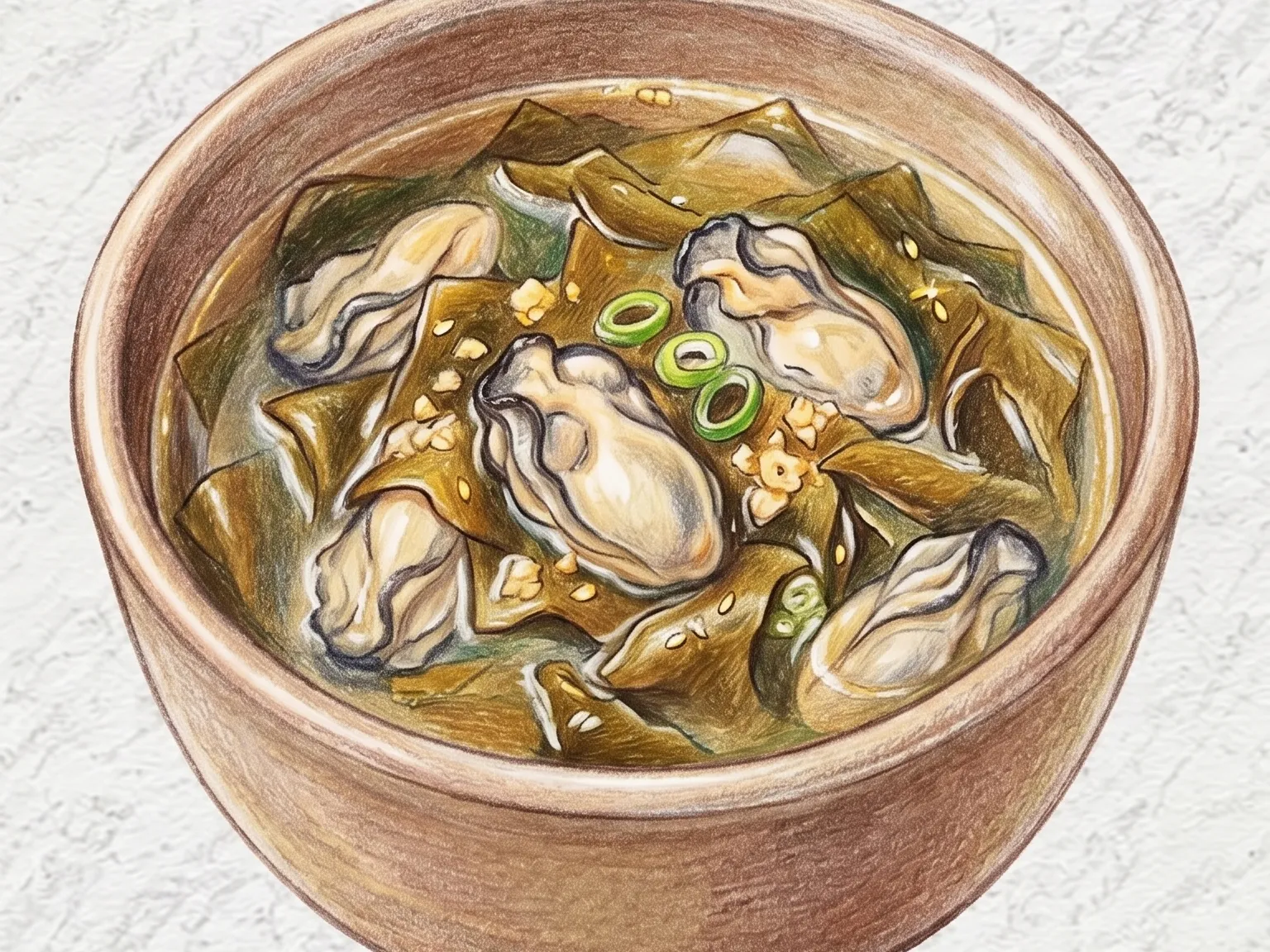
Gul-miyeok-guk is a Korean seaweed soup with fresh oysters, traditionally served for postpartum recovery and birthday meals. The dish begins by sauteing rehydrated seaweed and oysters together in sesame oil, which coats every strand and shell in a nutty fragrance before water is added. As the soup simmers, the seaweed releases minerals and a subtle brininess that merges with the deep ocean flavor the oysters contribute. Soup soy sauce and minced garlic keep the seasoning clean and grounded without masking the seafood. Oysters reach their peak fat and sweetness between November and January, and using them during this season noticeably enriches the broth with a creamy, briny depth. The seaweed should be sauteed for no more than one or two minutes with the oysters to keep it tender rather than chewy before the water goes in.
Korean Napa Cabbage Tofu Porridge
A gentle Korean rice porridge built from napa cabbage and soft tofu - mild enough for a recovering stomach, substantial enough to be a proper meal. The rice is first stir-fried in sesame oil, coating each grain in a thin film of fat that releases a quiet, nutty fragrance as the grains slowly swell and break down. Minced garlic is added at this stage and cooked through so its raw sharpness disappears into the base. Vegetable stock and finely chopped cabbage follow, and the pot simmers at medium heat, stirring occasionally, until the grains dissolve completely into a thick, uniform porridge. During this process, the cabbage sheds its moisture into the broth, gently sweetening it without any added sugar. Tofu crumbled by hand is stirred in during the last five minutes, dispersing evenly to create a smooth, soft protein layer throughout. Seasoning is deliberately light - just guk-ganjang and salt - to let the cabbage sweetness and the tofu's quiet richness carry the flavor. No heavy oils or pungent spices. This is porridge for days when the body needs something undemanding, or when plain, clean food is exactly what the moment calls for.
Kimchi Soegogi-guk (Fermented Kimchi Beef Soup)
Kimchi-soegogi-guk is a Korean soup that unites two powerhouse ingredients, well-fermented kimchi and beef, in a ruddy, aromatic broth. The beef is stir-fried in sesame oil first, building a savory foundation, then chopped kimchi joins the pan and cooks until its acidity mellows and merges with the rendered fat. Water is added, and as the pot simmers, the kimchi continues to break down, thickening the liquid and staining it a deep red. Soup soy sauce and garlic adjust the seasoning, while blocks of tofu absorb the surrounding flavors and provide a soft counterpoint to the chewy beef. The finished soup is hearty and warming, with the tangy complexity of aged kimchi meeting the clean savoriness of beef in every spoonful. It pairs inseparably with a bowl of steamed rice, which soaks up the broth and balances the heat.
Serve with this
Korean Crumbled Tofu Stir-fry
Dubu seoboro - crumbled tofu stir-fry - is a Korean banchan that transforms a block of tofu into something resembling a dry, granular scramble. The tofu is crumbled by hand into rough, irregular pieces rather than diced, creating a range of textures from large curds to fine crumbs that hold seasoning differently. Squeezed thoroughly in a cloth to remove as much moisture as possible, it then goes into a hot pan with diced carrot, onion, and zucchini. The key technique is cooking on high heat without stirring too often, allowing the tofu crumbles to develop lightly golden edges before soy sauce and sesame oil go in at the end. The result is a fluffy, granulated side dish that soaks into rice like a savory topping - satisfying without being rich. Popular in Korean daycare and school lunches because it delivers plant protein in a form that children eat willingly, and it travels cleanly in lunchboxes without leaking. The ingredient cost is low and the cooking time short, which makes it one of the first recipes to reach for when the refrigerator is running low on banchan.
Korean Soy Pickled Radish Cubes
Mu jangajji is a fundamental Korean soy-pickled radish made by cutting radish into 1.5 cm cubes, packing them in a sterilized jar with dried chili, and pouring over a boiled brine of soy sauce, vinegar, and sugar. The radish's firm flesh absorbs the sweet-salty brine gradually while maintaining its crisp bite, and the dried chili adds a gentle warmth and aroma to the liquid. Pouring the brine while still hot is important because the heat briefly opens the cell walls of the radish, allowing the seasoning to penetrate more evenly throughout. Vinegar balances the soy's saltiness with a clean tang, and using dense winter radish yields the best texture. This is one of the most versatile Korean pickles, appearing alongside gimbap, bibimbap, and gukbap as a reliable everyday table companion.
Korean Radish & Shrimp Pancake
Julienned Korean radish and small peeled shrimp are combined in a pancake batter fortified with a measured amount of potato starch for added crispiness. Egg is mixed into the batter to improve binding and keep the pancake intact when flipped. Scallions are distributed throughout for a mild, grassy fragrance. Radish releases notable moisture as it cooks, so frying over high heat is essential to drive off that liquid quickly and achieve a crisp outer surface. The sharp, slightly bitter edge of raw radish disappears with heat and gives way to a gentle natural sweetness that pairs cleanly with the mild, delicate flavor of the shrimp. Pressing the center of the pancake down with a spatula while frying encourages even browning all the way through.
Similar recipes
Yukgaejang (Fiery Shredded Beef and Vegetable Soup)
Yukgaejang is a fiery Korean beef soup that starts with brisket simmered until it can be pulled apart along the grain into long, thin shreds. The shredded meat is then hand-mixed with red pepper flakes, soup soy sauce, sesame oil, and minced garlic so the seasoning penetrates each strand before the final cook. Bracken fern, bean sprouts, and generous lengths of green onion join the pot, and everything boils together for thirty minutes in the brisket stock, which turns a deep red from the chili. The fern contributes an earthy chew, the sprouts add a clean crunch, and the green onion breaks down into the broth, lending natural sweetness that tempers the heat.
Korean Spicy Beef Soup Noodles
Yukgaejang guksu starts with a deep broth made by simmering beef brisket until the liquid turns rich and full-bodied. The meat is shredded along the grain and returned to the pot alongside fernbrake, bean sprouts, and green onion that have been seasoned with gochugaru, sesame oil, and garlic before a brief stir-fry. This pre-seasoning step lets the chili heat dissolve into the oil, producing a rounded spiciness rather than raw powder burn. Korean soup soy sauce adjusts the salt level without clouding the broth's color. Thin wheat somyeon noodles are boiled separately and added at the end so they absorb the broth without turning mushy. Swapping in glass noodles changes the texture to a chewier, more slippery bite that holds onto the soup longer.
Korean Beef and Daikon Stew
Soegogi muguk jjigae is a clear, soothing stew made by first sauteing beef brisket and daikon radish together in sesame oil to build a savory base, then adding water and simmering until the broth deepens in flavor. Soup soy sauce seasons the liquid while green onion and garlic round out the aroma. Despite a short ingredient list, the stew develops surprising depth as the brisket renders slowly into the broth and the radish turns translucent and sweet. Cutting the radish thick allows its natural sweetness to infuse gradually, enriching the broth over the full cooking time. It is a simple, grounding bowl most often eaten with rice stirred directly into the broth.