Korean Seaweed Salad (Tangy Chili-Vinegar Dressed Miyeok)
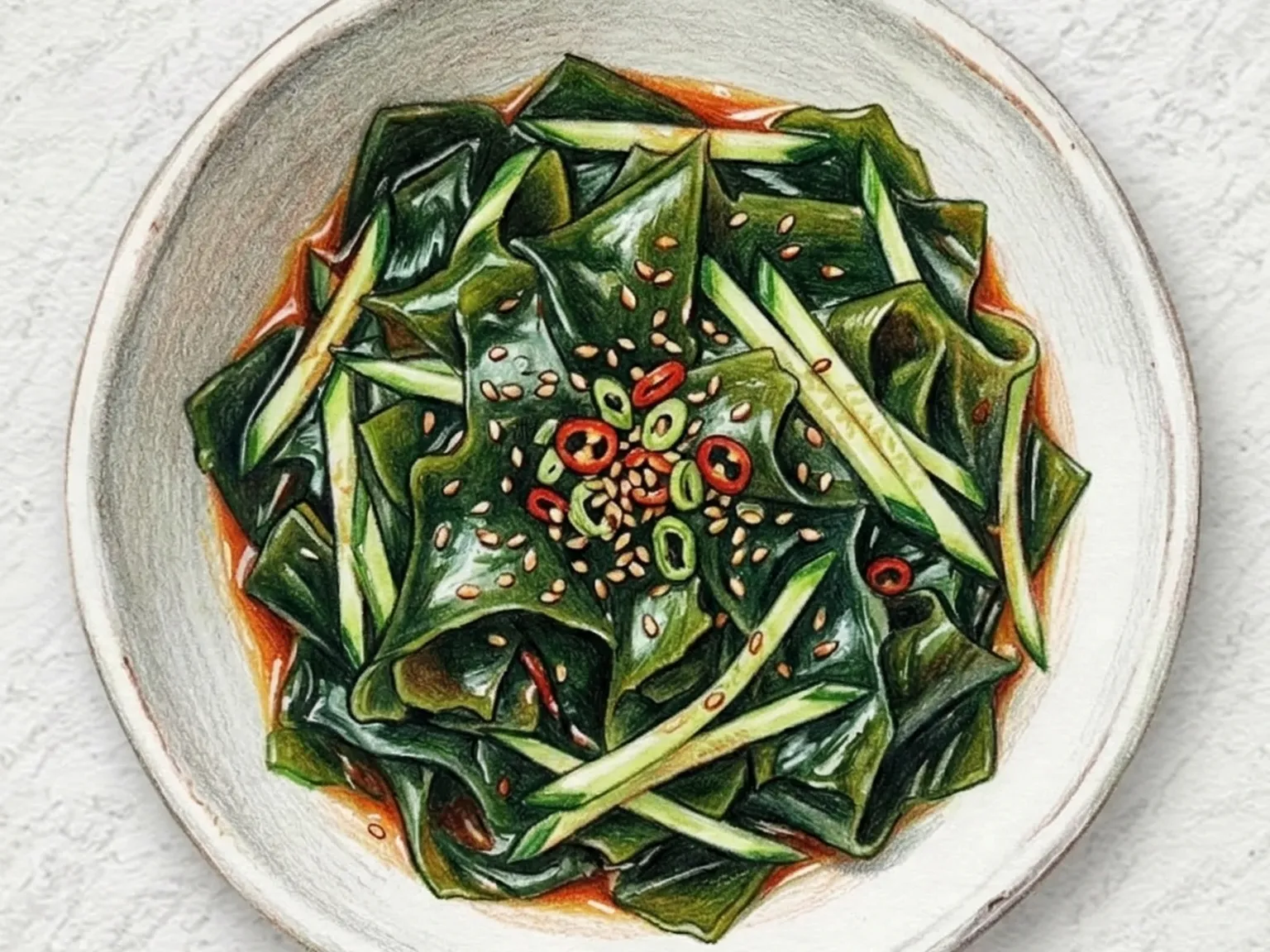
Miyeok-muchim is rehydrated seaweed dressed in cho-gochujang (vinegared chili paste) or cho-ganjang (vinegared soy sauce) - one of the most common ways Koreans consume miyeok outside of birthday soup. Thirty grams of dried miyeok expands eight to ten times its volume when soaked for twenty minutes, easily serving two - the most common beginner mistake is adding far too much dried seaweed. A brief blanch in boiling water deepens the color to a vivid green, reduces the marine odor, and a cold rinse afterward sets the slippery yet bouncy texture. Cho-gochujang dressing (gochujang mixed with vinegar and sugar) adds a sweet-sour-spicy layer that tempers the seaweed's natural brininess. Mixing in julienned cucumber creates a textural contrast between the silky seaweed and crunchy vegetable. At roughly fifty kilocalories per serving and rich in dietary fiber and iodine, this banchan is a mainstay of Korean health-conscious eating. Served chilled from the refrigerator, it is particularly refreshing in summer.
Adjust Servings
Instructions
- 1
Rehydrate seaweed for 20 minutes; cut into bite-sized pieces.
- 2
Blanch briefly in boiling water and rinse in cold water.
- 3
Mix gochujang, vinegar, sugar, and sesame oil for the dressing.
- 4
Toss seaweed with the dressing.
As an Amazon Associate, we may earn from qualifying purchases.
Tips
Nutrition (per serving)
More Recipes

Korean Green Onion Salad (Doenjang-Dressed Grilled Meat Side)
Jjokpa-muchim dresses thin Korean chives (jjokpa) in a blend of doenjang and gochujang - a supporting-role banchan that almost always accompanies grilled samgyeopsal or pan-roasted fish. Jjokpa is milder and sweeter than regular green onion, which is why it works raw: the gentle sharpness cuts through fatty meat without overpowering it. The fermented depth of doenjang and the spicy kick of gochujang layer onto the chive's natural pungency to build a complex flavor from three simple ingredients. The critical rule is to dress the chives immediately before serving - salt in the pastes wilts the jjokpa within minutes, collapsing the crisp snap that defines the dish. Cut to four-centimeter lengths and gently tumbled in the sauce, the entire preparation takes under five minutes. Spring jjokpa is the most tender and sweet, making it the peak season for this banchan.

Korean Lotus Root Salad (Sweet and Sour Vinegar Soy Dressing)
Thinly sliced lotus root is blanched in vinegar water to keep its bright white color, then tossed in a sweet-and-sour dressing of soy sauce, vinegar, and sugar. The honeycomb cross-section of each slice traps seasoning in its holes, distributing flavor evenly with every bite. A finishing sprinkle of sesame seeds adds a toasted aroma that complements the crisp, snappy texture. Because the dish stays dry rather than releasing liquid, it holds up well in packed lunches without turning soggy.

Korean Spicy Squid Salad (Gochujang Blanched Squid)
Ojingeo-muchim tosses blanched squid in a gochujang-vinegar dressing for a tangy, spicy seafood banchan that works equally well as a rice side dish or as anju with drinks. Squid, unlike vegetables, has an extremely narrow blanching window that determines the entire outcome: one minute to ninety seconds in boiling water is the limit. Beyond that, the proteins contract and the texture turns rubbery; under that, the interior stays translucent and fishy. Plunging into ice water immediately after blanching halts carryover cooking and locks in the ideal springy-bouncy texture. The dressing combines gochujang, gochugaru, vinegar, sugar, garlic, sesame oil, and sesame seeds, with vinegar playing the pivotal role - it introduces a sharp acidity over the squid's marine umami, forming a triangular balance with the chili heat. Julienned onion and cucumber mixed in add textural variety and stretch the portion. A popular variation stirs in one tablespoon of mayonnaise, whose emulsified fat wraps around the heat and produces a milder, creamier version.

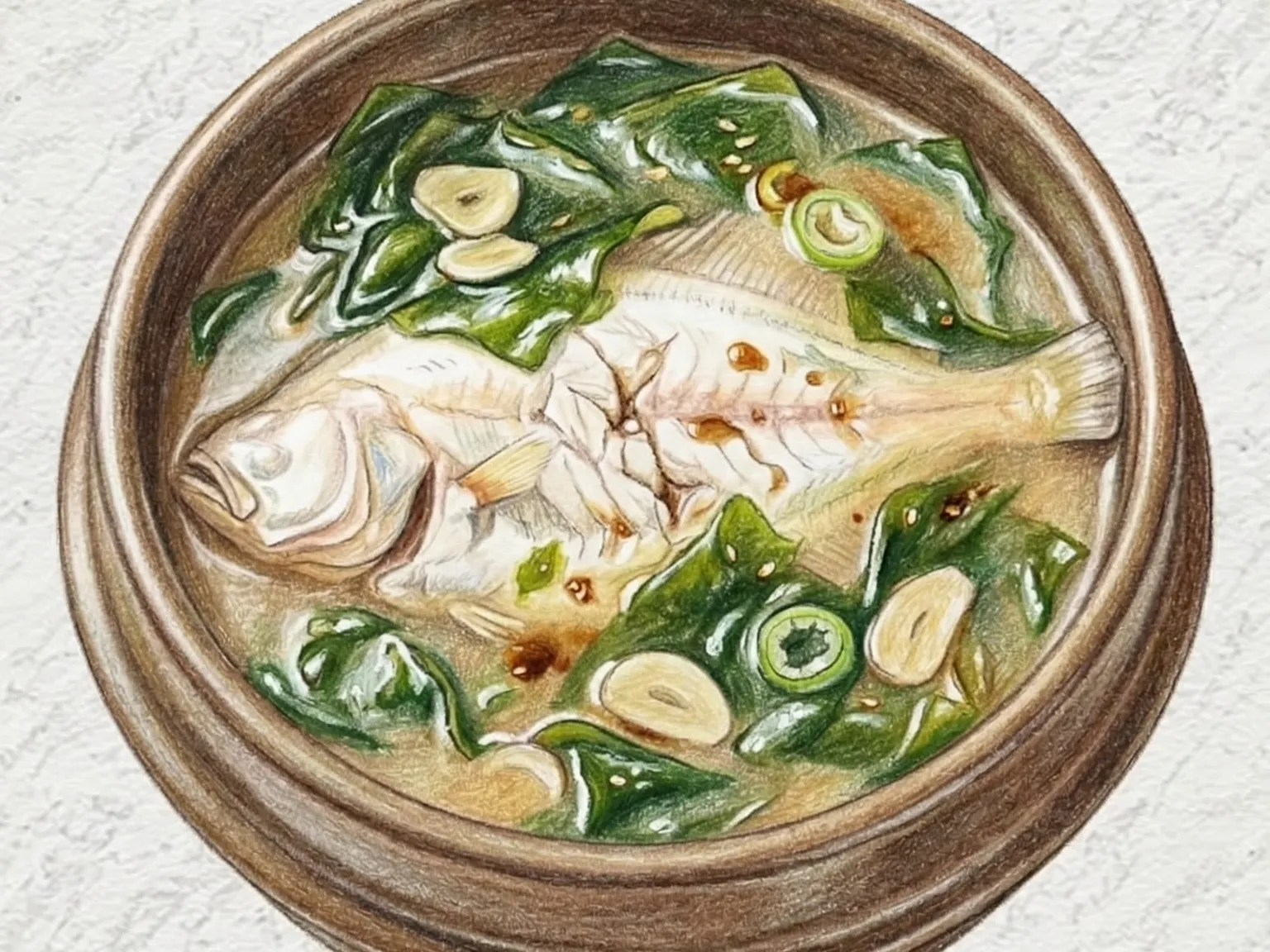
Korean Flounder Seaweed Soup
Gajami miyeok-guk is a seaweed soup centered on a whole flounder. Rehydrated seaweed is stir-fried in sesame oil first to deepen its fragrance, then the fish is added with water and simmered until the broth turns milky from the gelatin in the bones. Soy sauce and garlic are the only seasonings, keeping the focus on the flounder's mild sweetness and the mineral taste of the seaweed. Blanching the fish briefly before adding it to the pot removes any lingering fishiness, leaving a clean, nourishing bowl.

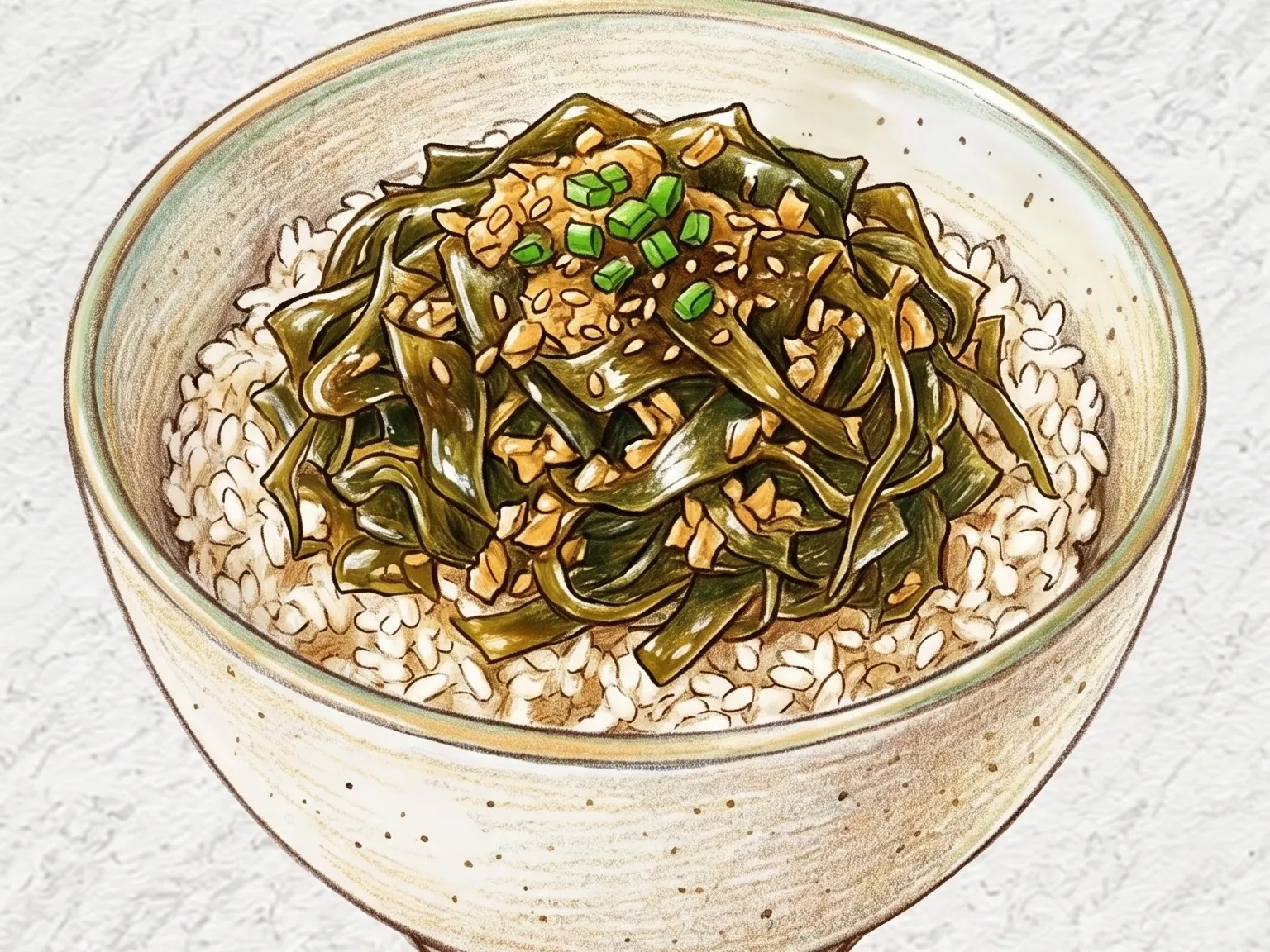
Korean Seasoned Seaweed Rice Bowl
This seasoned seaweed rice bowl stir-fries rehydrated wakame with garlic in sesame oil, seasons it with soy sauce, and serves it over steamed rice. Soaking the seaweed until fully softened gives it a slippery yet slightly chewy texture that glides across the palate when eaten with rice. Toasting the garlic and seaweed together in sesame oil layers a nutty warmth over the sea-mineral base flavor. Soy sauce adds a savory edge that makes the bowl satisfying without any additional side dishes. With only five ingredients and minimal cooking time, this is one of the quickest Korean rice bowls to prepare, yet the mineral-rich character of the seaweed gives it a depth that belies its simplicity.

Korean Mixed Seaweed Salad
Haecho-muchim gathers several types of ocean seaweed - often including miyeok julgi (seaweed stems), tot (sea mustard), parae (green laver), and kkosiraegi - into one bowl and dresses them in cho-gochujang, a tangy-sweet sauce made by blending gochujang with vinegar and sugar. Each strand and leaf brings a different texture: some chewy, some slippery, some with a gentle pop. The seaweed is blanched for no longer than twenty seconds to preserve that textural variety - longer cooking turns everything uniformly soft. Squeezing out all residual water before dressing is critical, otherwise the sauce dilutes into a watery puddle. Julienned cucumber threaded through the seaweed adds a crisp, garden-fresh counterpoint to the briny marine flavors. Served chilled, this low-calorie banchan is especially welcome in hot weather.