Korean Chilled Seaweed Soup
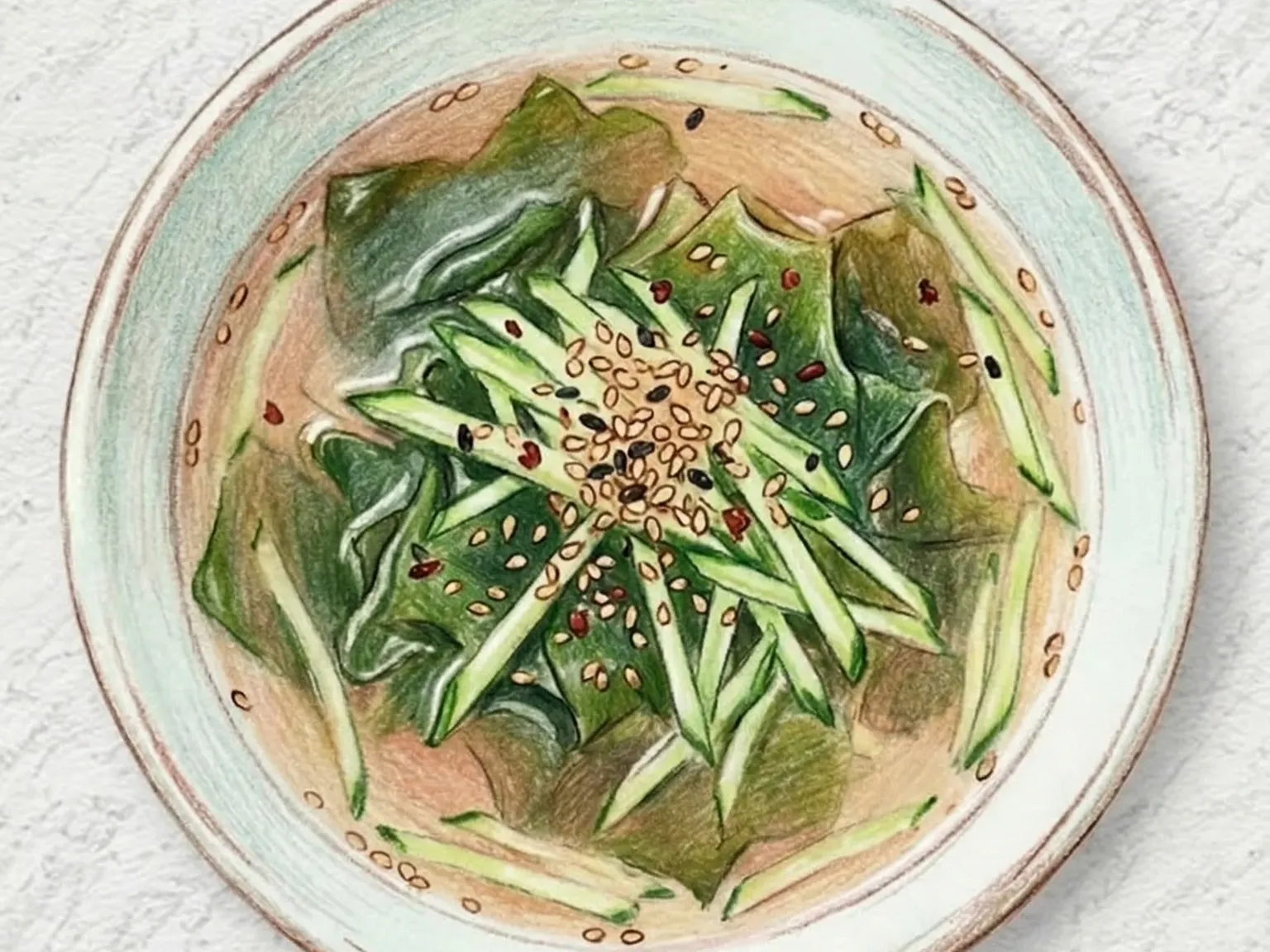
Miyeok-naengguk is a Korean chilled seaweed soup designed for the hottest days of summer, when the idea of a boiling pot feels intolerable. Rehydrated sea mustard and thinly sliced cucumber are bathed in a cold broth made from soy sauce, rice vinegar, sugar, and iced water, producing a tangy, lightly sweet liquid that hits the palate with immediate refreshment. The seaweed contributes a slippery, marine texture while the cucumber provides a sharp crunch, and together they give the soup a satisfying range of mouthfeel in each spoonful. Preparation requires no cooking at all - the ingredients are simply mixed, seasoned, and chilled - making it one of the fastest dishes in the Korean repertoire. A generous sprinkle of toasted sesame seeds adds nuttiness on top, and an optional pinch of gochugaru turns the broth a vivid red while contributing gentle heat. The soup pairs naturally with cold noodle dishes like naengmyeon or bibim-guksu, and it improves after an hour in the refrigerator as the seasoning penetrates the seaweed. In many Korean homes, a bowl of miyeok-naengguk is the unofficial signal that summer has arrived.
Adjust Servings
Instructions
- 1
Soak dried seaweed in cold water for 10 minutes, rinse thoroughly, squeeze out excess water, and cut into bite-size pieces.
- 2
Blanch the seaweed in boiling water for about 20 seconds, then rinse in cold water to keep its color and texture.
- 3
Julienne the cucumber and thinly slice the onion; soak onion slices in cold water for 5 minutes, then drain.
- 4
In a bowl, mix soup soy sauce, vinegar, sugar, salt, and minced garlic until dissolved, then add cold water.
- 5
Add seaweed, cucumber, and onion to the broth, chill for 10 minutes to blend flavors, then serve topped with sesame seeds.
As an Amazon Associate, we may earn from qualifying purchases.
Tips
Nutrition (per serving)
More Recipes

Korean Chilled Cucumber Soup
Oi-naengguk is a Korean chilled cucumber soup served in summer as a cold alternative to the hot soups (guk) that normally accompany Korean meals. When midsummer heat makes a steaming bowl of doenjang-guk unappealing, this icy broth takes its place at the table. Cucumber is sliced paper-thin and submerged in a broth of water seasoned with rice vinegar, soup soy sauce, salt, and sugar - a higher vinegar ratio intensifies the refreshing, palate-clearing sharpness. Ice cubes floated on top or at least thirty minutes of refrigeration are essential to achieve the chilling effect that defines the dish. Thinly sliced garlic infuses a mild pungency into the broth, and sesame seeds sprinkled on top add a nutty accent. Some versions include rehydrated dried seaweed, whose slippery texture contrasts with the cucumber's crisp snap. Alongside bibimbap or spicy banchan, oi-naengguk serves as a cooling counterbalance that tempers chili heat between bites.

Korean Cold Vinegar Mustard Chicken Soup
Chogye-tang is a chilled Korean chicken soup where boiled, shredded breast meat sits in an ice-cold broth sharpened with rice vinegar and hot mustard. The broth must be thoroughly refrigerated before seasoning - warmth dulls the mustard's bite and flattens the vinegar's acidity, collapsing the dish's defining tang. Shredding the chicken along its grain lets the cold, pungent broth soak into every fiber, and julienned cucumber layered on top provides a crisp, cooling crunch. The flavor logic mirrors that of Pyongyang-style cold noodles - sour, spicy, and bracingly cold - but replaces starch with lean protein.

Korean Oyster Seaweed Soup
Gul-miyeok-guk is a Korean seaweed soup enriched with fresh oysters, traditionally eaten for postpartum recovery and birthday celebrations. The cooking begins by sautéing rehydrated seaweed and oysters together in sesame oil, a step that coats every strand and shell in a nutty fragrance before water is added. As the soup simmers, the seaweed releases minerals and a subtle brininess that merges with the oysters' own ocean flavor. Soup soy sauce and garlic keep the seasoning grounded. The winter months, when oysters are at their fattest, are the prime season for this version, and the contrast between the slippery seaweed and the firm oyster gives each spoonful a shifting texture.

Chogye Guksu (Korean Cold Chicken Noodles)
Shredded poached chicken and julienned cucumber top thin wheat noodles served in an icy mustard-vinegar chicken broth. The broth starts as a clear chicken stock, then gains its signature punch from dissolved mustard powder and rice vinegar, delivering a sharp nasal tingle followed by bright acidity that revives the appetite on sweltering days. The chicken, torn along the grain into thin strips, provides lean protein without heaviness, while sliced Korean pear adds a crisp, subtly sweet counterpoint. Mustard heat flares briefly and fades, leaving behind the clean savory finish of well-made stock. Keeping the broth thoroughly chilled is essential: it prevents the noodles from going soft and preserves the refreshing temperature contrast. Floating a few ice cubes in the bowl ensures the dish stays cold through the last bite.

Korean Acorn Jelly Cold Broth Bowl
Dotori-muksabal is a chilled Korean acorn jelly broth bowl where sliced acorn jelly sits in a cold, tangy-sweet seasoned broth. Acorn jelly has a distinctly earthy, mildly astringent aftertaste and a firm, bouncy texture that becomes more pronounced when served cold. The broth - a mixture of chilled stock seasoned with soy sauce, vinegar, and sugar - must be thoroughly cold before pouring to keep the jelly's cool snap intact. Chopped kimchi adds fermented heat and julienned cucumber contributes crunch, both compensating for the jelly's neutral flavor with sharp contrasts. The dish is notably low in calories and high in fiber.

Korean Buckwheat Jelly Cold Broth Bowl
Memil-muksabal is a chilled Korean dish in which firm blocks of buckwheat jelly sit submerged in cold, seasoned broth. The broth is typically made from anchovy or beef stock, cooled to refrigerator temperature, and sharpened with soy sauce, rice vinegar, and a touch of sugar that balances the acidity. Buckwheat jelly has a neutral, slightly earthy flavor and a slippery, springy texture that absorbs the surrounding seasonings with each bite. Julienned cucumber adds crunch, crushed roasted sesame seeds contribute nuttiness, and shredded dried seaweed brings a gentle oceanic accent. The dish is almost calorie-free compared to noodle soups and digests easily, which is why it appears on Korean tables most frequently during the hottest weeks of summer. Making the jelly from scratch involves boiling buckwheat starch until thick and letting it set, but store-bought blocks simplify the process to little more than slicing and assembling. The cold broth hits the palate first, followed by the yielding texture of the jelly - a sequence that feels instantly cooling.