Charim

2686 Korean & World Recipes

2686+ Korean recipes, clean and organized. Ingredients to instructions, all at a glance.

Korean Seasoned Sea Mustard Sporophyll

Korean Seasoned Sea Mustard Sporophyll

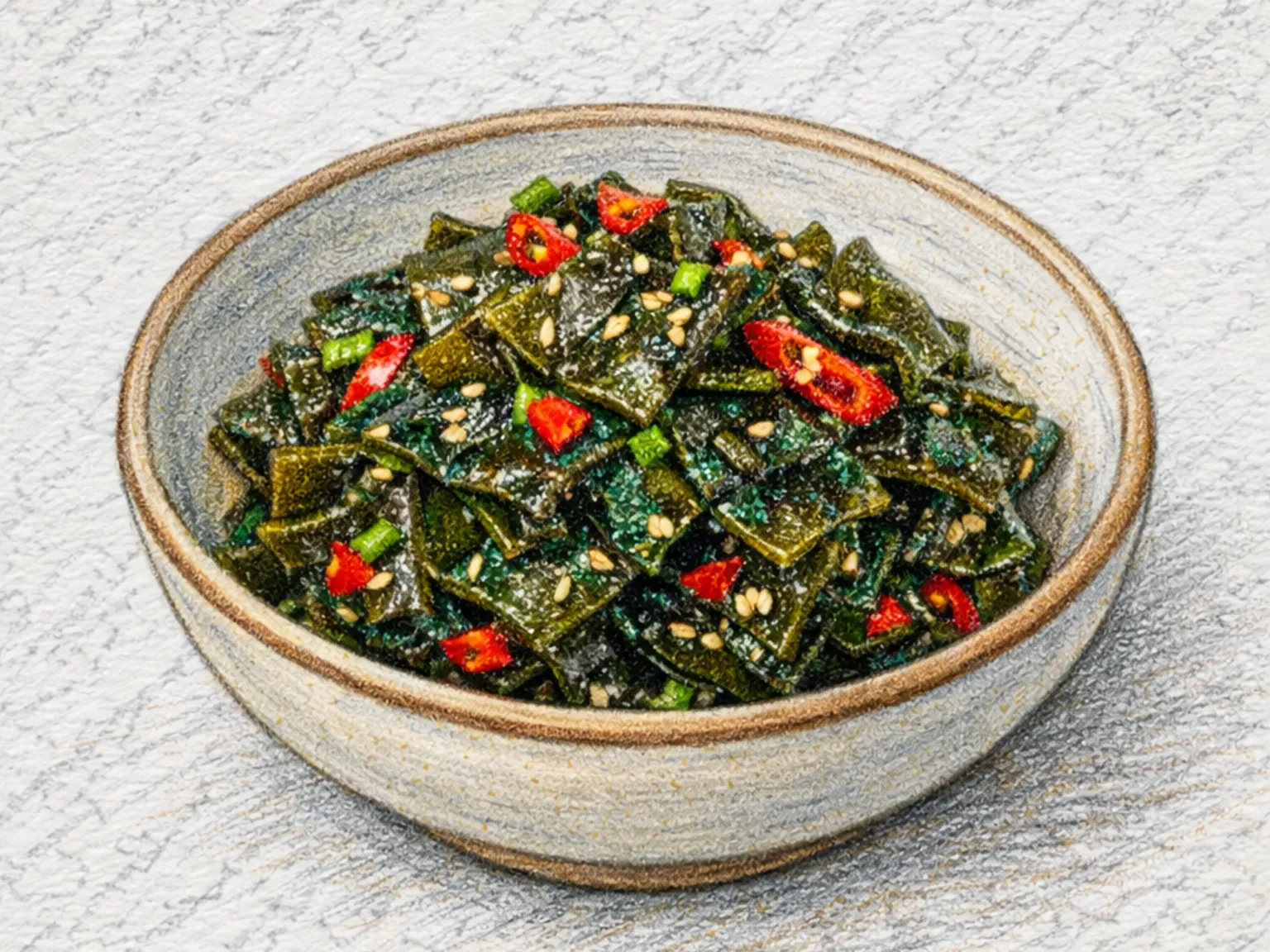
Miyeokgwi-muchim is seasoned sea mustard sporophyll - the ruffled, root-adjacent part of the miyeok plant - blanched and tossed in a sweet-sour-spicy dressing. Though it comes from the same seaweed as regular miyeok-muchim, the sporophyll is a distinctly different eating experience. Its thicker, corrugated surface gives a chewy, almost bouncy texture compared to the silky softness of seaweed leaves. This particular part of the plant contains higher concentrations of alginic acid and fucoidan than the leaf portions, which has drawn attention in Korean health-food circles. After rinsing in cold water, blanching for exactly thirty seconds is ideal - going longer turns the texture rubbery. The gochugaru-soy-vinegar-sugar dressing tames the marine saltiness and builds a bright sweet-sour-spicy flavor profile that stimulates appetite alongside rice. Chilling for ten minutes before serving lets the dressing adhere to the bumpy surfaces and leaves a cool finish. At around fifty-two kilocalories per serving, it is a go-to diet banchan. Pre-trimmed miyeokgwi is widely available at Korean markets and online.

Prep 12minCook 3min4 servings

Adjust Servings

2servings
servings

Instructions

  1. 1

    Rinse and blanch sporophyll in boiling water for 30 seconds.

  2. 2

    Cool in cold water, squeeze dry, and cut into bite-size pieces.

  3. 3

    Mix red pepper flakes, soy sauce, vinegar, sugar, and garlic.

  4. 4

    Toss the sporophyll evenly in the dressing.

  5. 5

    Finish with sesame oil and sesame seeds.

🛒Shop Ingredients on Amazon

As an Amazon Associate, we may earn from qualifying purchases.

Tips

Over-blanching can make it tough.
Resting 10 minutes in the fridge improves flavor.

Nutrition (per serving)

Calories
52
kcal
Protein
2
g
Carbs
7
g
Fat
2
g

More Recipes

Korean Seasoned Gamtae Seaweed
Side dishesEasy

Korean Seasoned Gamtae Seaweed

Gamtae is a green seaweed harvested from Korea's southern coast - primarily around Wando and Jangheung - during winter months. Thinner and more delicate than gim (roasted seaweed), it carries a deeper oceanic perfume. Dried gamtae sheets are torn into large pieces and tossed for no more than twenty seconds with soy sauce, vinegar, sesame oil, gochugaru, sugar, and garlic - over-handling causes the fragile fronds to disintegrate into mush. The vinegar's acidity lifts the seaweed's natural brininess into something bright and clean. Fresh gamtae appears only in winter markets, but the dried form works year-round as a quick banchan.

🥗 Light & Healthy🏠 Everyday
Prep 8minCook 1min2 servings
Korean Spicy Seasoned Deodeok
Side dishesMedium

Korean Spicy Seasoned Deodeok

Deodeok - Codonopsis lanceolata - is a mountain root used in Korean cooking and folk medicine for centuries. Its flesh is fibrous and sticky, with a ginseng-like bitterness. Peeled and pounded with a mallet to split fibers into ribbon-like shreds, then soaked in cold water to draw out bitterness. A gochujang-vinegar dressing with garlic, sugar, and gochugaru clings to each strand's rough surface. The finished dish is chewy and resinous, with a sweet-sour-spicy glaze.

🏠 Everyday🍱 Lunchbox
Prep 20min4 servings
Korean Seasoned Green Seaweed
Side dishesEasy

Korean Seasoned Green Seaweed

Cheonggak is a branching green seaweed from Korea's southern coast, prized for its oceanic perfume and cartilage-like crunch. A 10-second blanch brightens the color without destroying its snap. Squeezed and cut to finger lengths, it is dressed in a vinegar-forward sauce with soy, gochugaru, garlic, and sugar that cuts through the brininess. The seaweed must be served immediately - its texture collapses within hours. A specialty of Jeollanam-do coastal markets in winter and early spring.

🥗 Light & Healthy🏠 Everyday
Prep 10minCook 2min2 servings
Korean Seasoned Sea Grapes Salad
Side dishesEasy

Korean Seasoned Sea Grapes Salad

Kkosiraegi-muchim is a tangy, low-calorie banchan made from kkosiraegi, a red algae seaweed with thin, noodle-like strands and a distinctive snappy texture unlike any other seaweed. Blanching must not exceed twenty seconds - anything longer dissolves the characteristic pop - and immediate cold-water shocking is mandatory to set the texture. The dressing combines gochugaru, soup soy sauce, vinegar, maesil-cheong (green plum extract), garlic, and sesame oil; the plum extract adds a fruity acidity that lifts the dish beyond simple sour-spicy territory. Julienned cucumber threaded through the strands provides a fresh garden counterpoint to the ocean flavors. At roughly 72 kilocalories per serving with high dietary fiber, this banchan appears frequently in Korean diet meal plans. It is best served chilled, making it a natural fit for summer tables.

🥗 Light & Healthy🏠 Everyday
Prep 10minCook 2min4 servings
Korean Spicy Braised Tofu
Stir-fryEasy

Korean Spicy Braised Tofu

Spicy dubu-jorim pan-sears firm tofu slabs cut 1.5 centimeters thick until golden on both sides, then braises them in a sauce of soy sauce, gochugaru, garlic, and sugar. Searing first firms the tofu so it holds its shape through the eight-minute simmer, during which onion and green onion cook alongside in the reducing liquid. The chili flakes deliver a direct, persistent heat that penetrates the tofu as the sauce thickens, balanced by the sugar's sweetness. A final circle of sesame oil ties the flavors together with a roasted, nutty aroma.

🏠 Everyday🍱 Lunchbox
Prep 10minCook 15min2 servings
Seaweed Stem and Apple Mustard Salad
SaladsEasy

Seaweed Stem and Apple Mustard Salad

Salted seaweed stems are soaked to remove excess brine, then blanched briefly to achieve a firm, slightly chewy bite that defines this Korean salad's texture. Julienned apple adds crisp sweetness that contrasts with the seaweed's oceanic mineral flavor. Thinly sliced onion, soaked to mellow its sting, contributes a subtle sharpness. The dressing mixes Korean mustard paste with vinegar and oligosaccharide syrup - the mustard delivers a sharp nasal heat, while the syrup smooths the vinegar's acidity into something rounder. Tossing the apple with lemon juice first prevents browning, and a three-minute rest after dressing lets the flavors meld without overdressing the delicate stems.

🥗 Light & Healthy🍱 Lunchbox
Prep 14minCook 2min2 servings
More Side dishes