Charim

2686 Korean & World Recipes

2686+ Korean recipes, clean and organized. Ingredients to instructions, all at a glance.

Korean Stir-Fried Seaweed Stems with Perilla

Korean Stir-Fried Seaweed Stems with Perilla

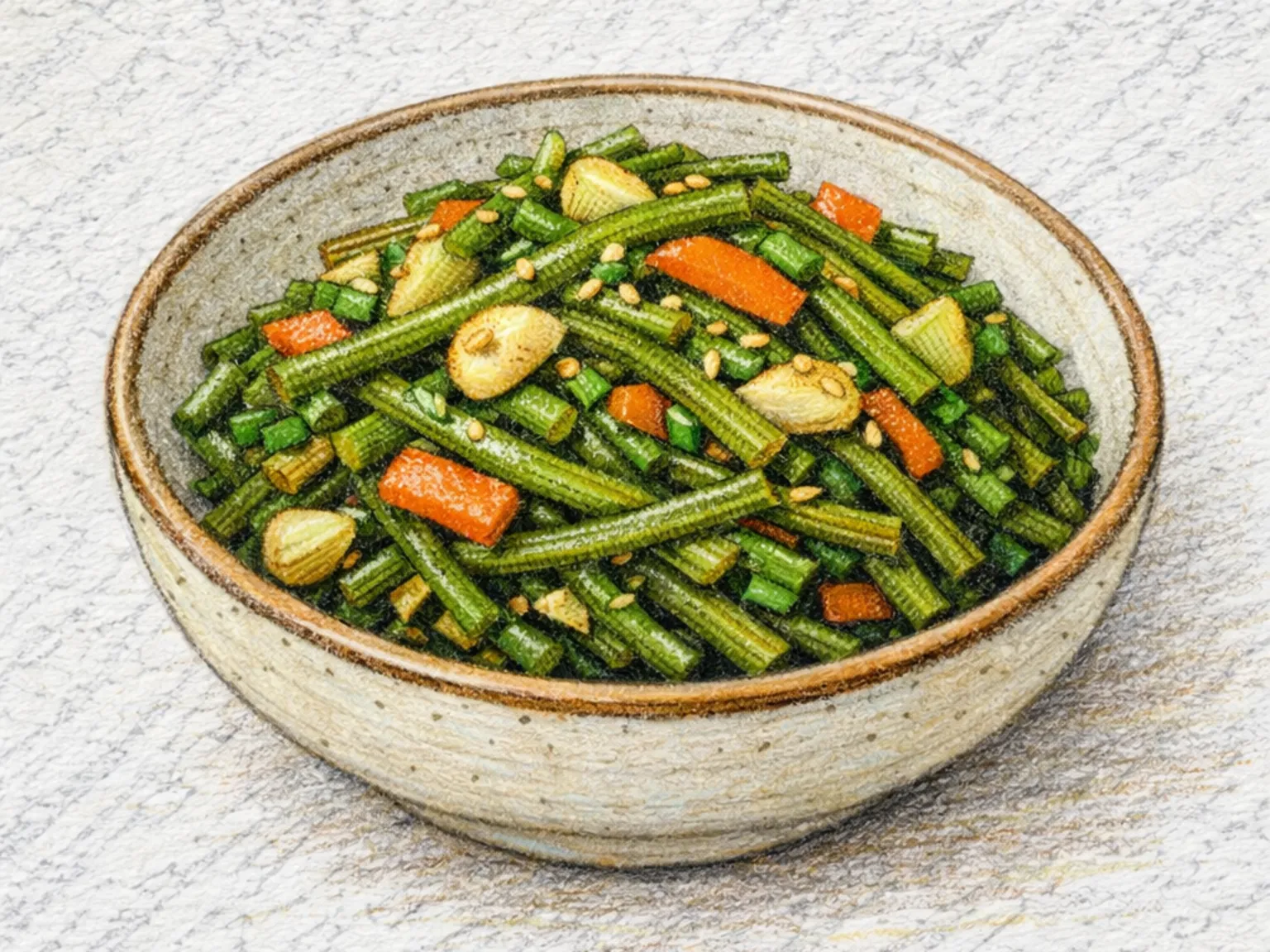
Deulkkae miyeokjulgi-bokkeum stir-fries salted seaweed stems with perilla oil and ground perilla seeds, diverging from the standard sesame-and-soy version by foregrounding the earthy nuttiness of perilla. Desalting the stems in cold water for at least fifteen minutes is the essential first step - too brief and the dish is unpalatably salty, too long and the oceanic character washes away entirely. Garlic is sauteed in perilla oil to build an aromatic foundation, then the drained stems join with soup soy sauce and a splash of water for three minutes of stir-frying. Ground perilla seeds go in at the end, where they bind with the residual moisture and coat each strand in a pale, creamy film. Julienned onion added alongside contributes sweetness that balances the seaweed's brininess. The perilla powder's starch partially gelatinizes on contact with heat, thickening the sauce - but overcooking past this point turns the coating chalky, so timing the final addition is critical. Sesame seeds scattered off heat complete the dish.

Prep 15minCook 8min2 servings

Adjust Servings

2servings
servings

Instructions

  1. 1

    Soak salted seaweed stems in cold water for 10 minutes, then cut into 5 cm pieces.

  2. 2

    Julienne onion and carrot.

  3. 3

    Heat perilla oil and sauté garlic for 20 seconds.

  4. 4

    Add seaweed stems, onion, and carrot; stir-fry 3 minutes over medium heat.

  5. 5

    Add soup soy sauce and water, cook 2 more minutes, then add perilla powder.

  6. 6

    Toss lightly, reduce moisture, then turn off heat and cool before serving.

🛒Shop Ingredients on Amazon

As an Amazon Associate, we may earn from qualifying purchases.

Tips

Taste for salt and rinse again if needed.
Overheating perilla powder can make the dish chalky.

Nutrition (per serving)

Calories
110
kcal
Protein
3
g
Carbs
9
g
Fat
7
g

More Recipes

Korean Stir-fried Seaweed Stems
Side dishesEasy

Korean Stir-fried Seaweed Stems

Miyeok-julgi-bokkeum is stir-fried seaweed stems - specifically the thick midrib portions of salted miyeok (wakame) - offering a textural experience entirely different from miyeok-muchim (seaweed salad) or miyeok-guk (seaweed soup). While seaweed leaves are soft and slippery, the stems are thick and resilient, producing a distinctive crunchy pop with each bite. Salt levels vary by brand, so soaking in cold water for ten minutes is the baseline desalting step, but tasting before cooking and rinsing again if needed is essential. Julienned onion and carrot stir-fried alongside break the monotony of seaweed alone, adding sweetness and color. Garlic sauteed in oil first establishes an aromatic foundation. A finishing drizzle of sesame oil and sesame seeds bridges the oceanic seaweed flavor with a toasty nuttiness. The extremely low calorie count makes this banchan a staple in diet-conscious Korean meal plans.

🥗 Light & Healthy🏠 Everyday
Prep 15minCook 8min4 servings
Korean Stir-fried Butterbur Stems
Side dishesMedium

Korean Stir-fried Butterbur Stems

Meowi-namul-bokkeum stir-fries boiled butterbur stems in perilla oil, adding a cooking step that distinguishes it from the cold-dressed muchim version. While the muchim blanches and seasons immediately, the bokkeum takes the boiled stems into a pan with soup soy sauce and water for five minutes or more, driving the seasoning deep into the plant fibers. This additional heat also volatilizes more of the butterbur's bitter compounds, producing a milder taste than the cold preparation. Perilla oil, though more oxidation-prone than sesame oil, is the traditional choice because its earthy aroma complements the herb's grassy character. Adding perilla seed powder in the last minute causes its starch to partially gelatinize, giving the sauce a thicker body - but leaving it on heat too long makes the dish chalky. This banchan appears on spring mountain-village tables alongside gondeure-namul and chwinamul as part of the seasonal wild greens trio.

🏠 Everyday🍱 Lunchbox
Prep 18minCook 12min4 servings
Korean Stir-Fried Taro Stems
Side dishesMedium

Korean Stir-Fried Taro Stems

Boiled taro stems are stir-fried in perilla oil with soy sauce and garlic to create a banchan prized for its uniquely chewy texture. Dried taro stems, once soaked and simmered, lose their rawness but retain a springy, almost rubbery bite along the center of each stalk, setting them apart from softer namul greens. Stir-frying in perilla oil first builds a nutty base note, and soy sauce with minced garlic layers savory depth onto the stems' neutral flavor. A splash of stock added mid-cook allows the seasoning to penetrate the fibrous interior during a brief simmer. Sliced green onion introduces a fresh aromatic accent, and a finishing spoonful of ground perilla seeds dissolves into the residual moisture, creating a creamy coating that clings to each piece. Mixed into a bowl of steamed rice, the chewy stems provide satisfying resistance with every bite, and their mild character lets them complement bolder dishes like doenjang jjigae without competing for attention.

🏠 Everyday🍱 Lunchbox
Prep 15minCook 12min4 servings
Korean Stir-Fried Sweet Potato Stems
Side dishesMedium

Korean Stir-Fried Sweet Potato Stems

Goguma julgi - sweet potato stems - are the above-ground vines of the sweet potato plant, a byproduct that Korean cooks transform into a summer namul rather than discarding. The most labor-intensive step is peeling each stem by hand, pinching the outer skin with a fingernail and pulling it away to reveal the tender core beneath. After blanching for two minutes and rinsing in cold water, the stems are stir-fried in perilla oil with garlic and seasoned with soup soy sauce. Perilla powder stirred in at the end thickens the remaining liquid into a nutty glaze. In season during summer, the stems are harvested from sweet potato fields before the tubers themselves are dug up.

🏠 Everyday🍱 Lunchbox
Prep 30minCook 10min4 servings
Korean Seaweed Stem & Shrimp Stir-fry
Stir-fryEasy

Korean Seaweed Stem & Shrimp Stir-fry

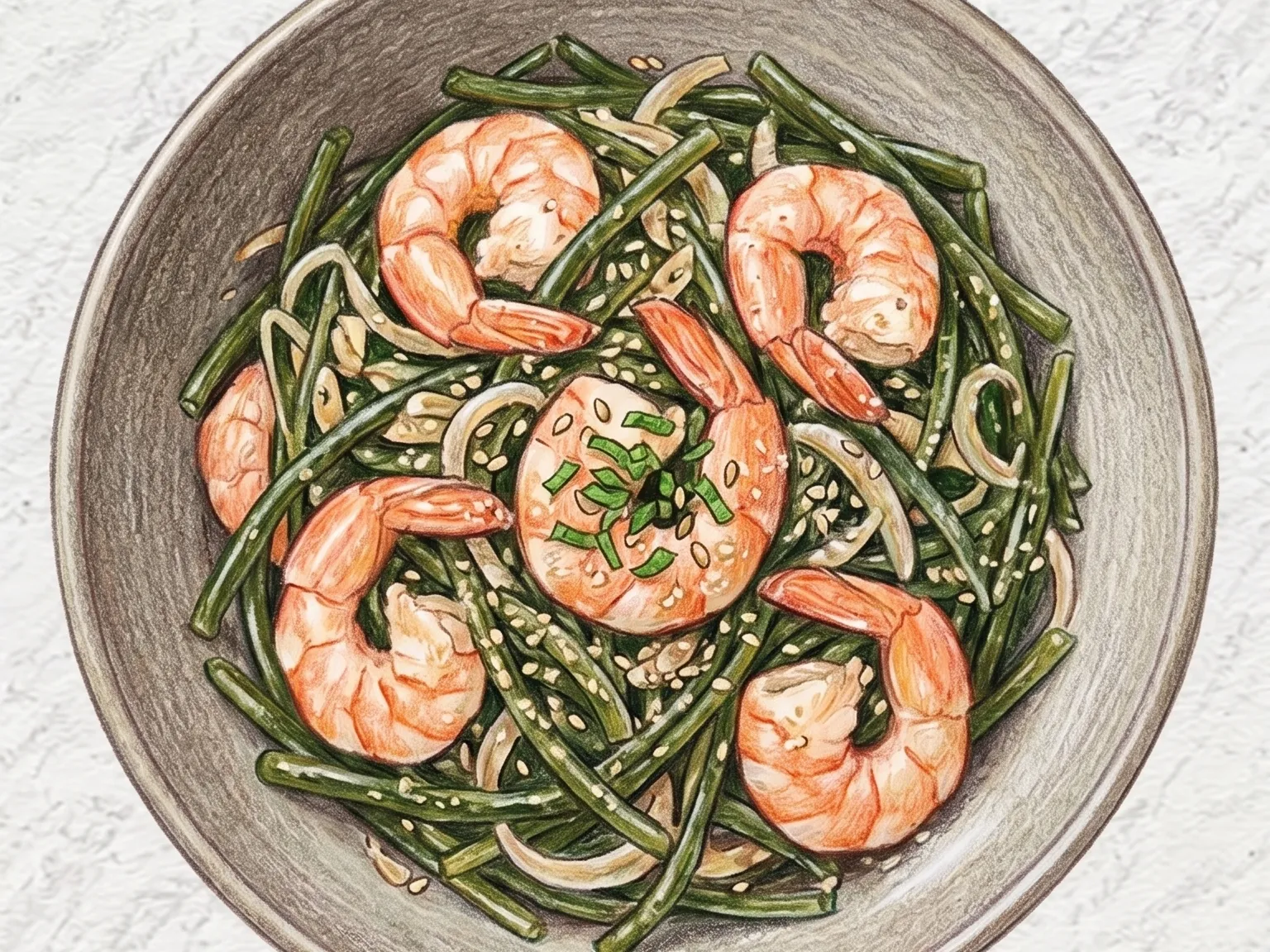
Miyeokjulgi-deulkkae-saeu-bokkeum combines desalted seaweed stems and medium shrimp, stir-fried in perilla oil and finished with a generous coating of perilla seed powder. The seaweed stems are soaked for ten minutes to reduce saltiness, then cut into 5 cm pieces that retain a distinctive chewy-crunchy bite - a textural contrast to the springy shrimp. Onion and garlic are sauteed first to establish a sweet base, and soup soy sauce provides the only salt. Perilla powder goes in at the very end so its nutty aroma stays intact through serving.

🥗 Light & Healthy🏠 Everyday
Prep 18minCook 10min4 servings
Korean Stir-fried Radish Greens with Perilla
Stir-fryEasy

Korean Stir-fried Radish Greens with Perilla

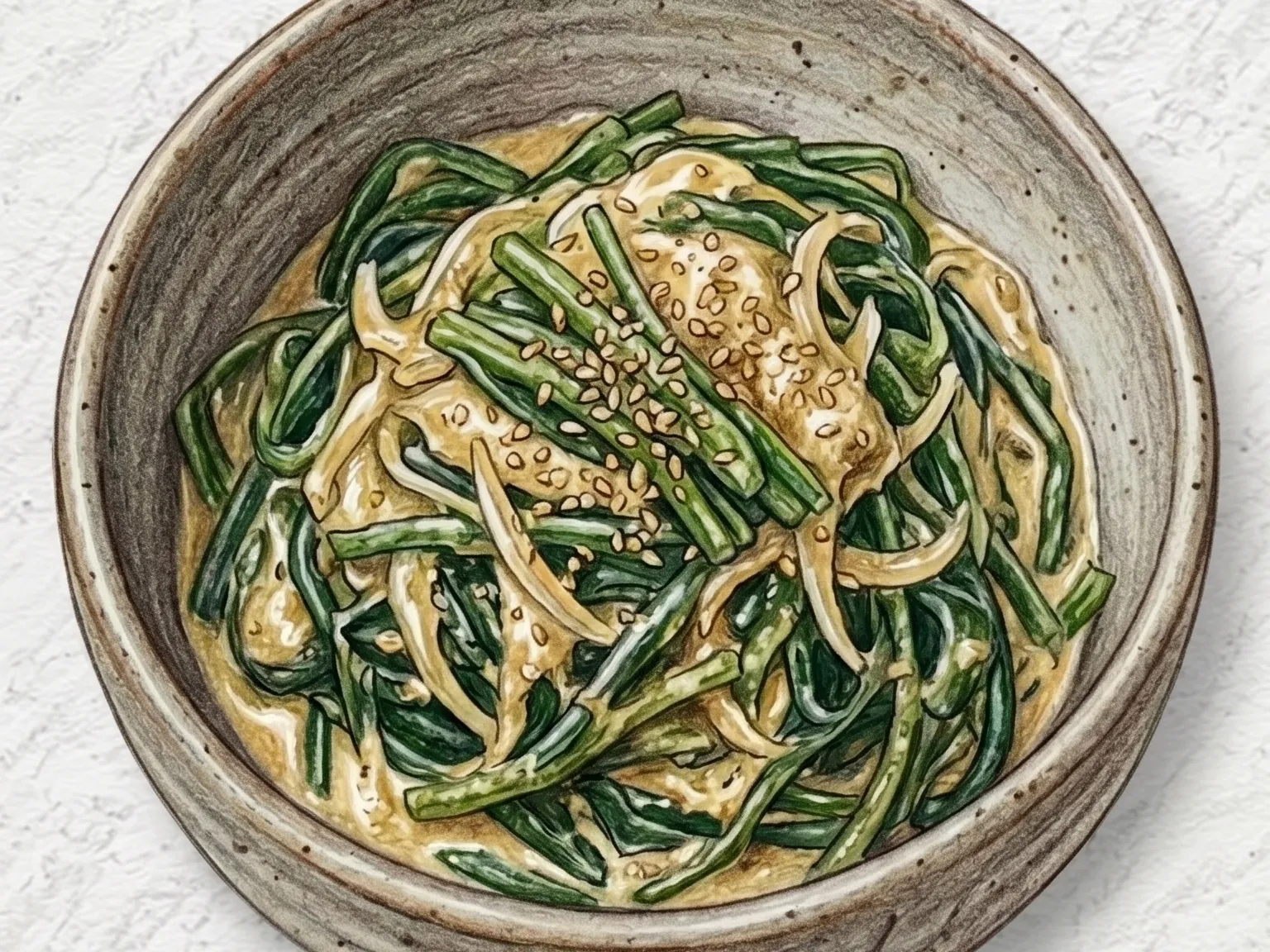
Siraegi deulkkae-bokkeum is a Korean stir-fry of pre-boiled dried radish greens seasoned with soup soy sauce and garlic, then cooked in perilla oil and finished with generous perilla powder. The greens are first tossed in the seasoning to let the flavors penetrate, stir-fried for three minutes, then simmered briefly with water and perilla powder until a thick, nutty sauce coats every strand. Green onion added at the end provides a fresh aromatic lift. Compared to the doenjang-based siraegi jorim, this version leans lighter and more distinctly nutty from the perilla.

🏠 Everyday🍱 Lunchbox
Prep 15minCook 20min4 servings
More Side dishes