Korean Seaweed Stem & Shrimp Stir-fry

Korean Seaweed Stem & Shrimp Stir-fry

Quick answer

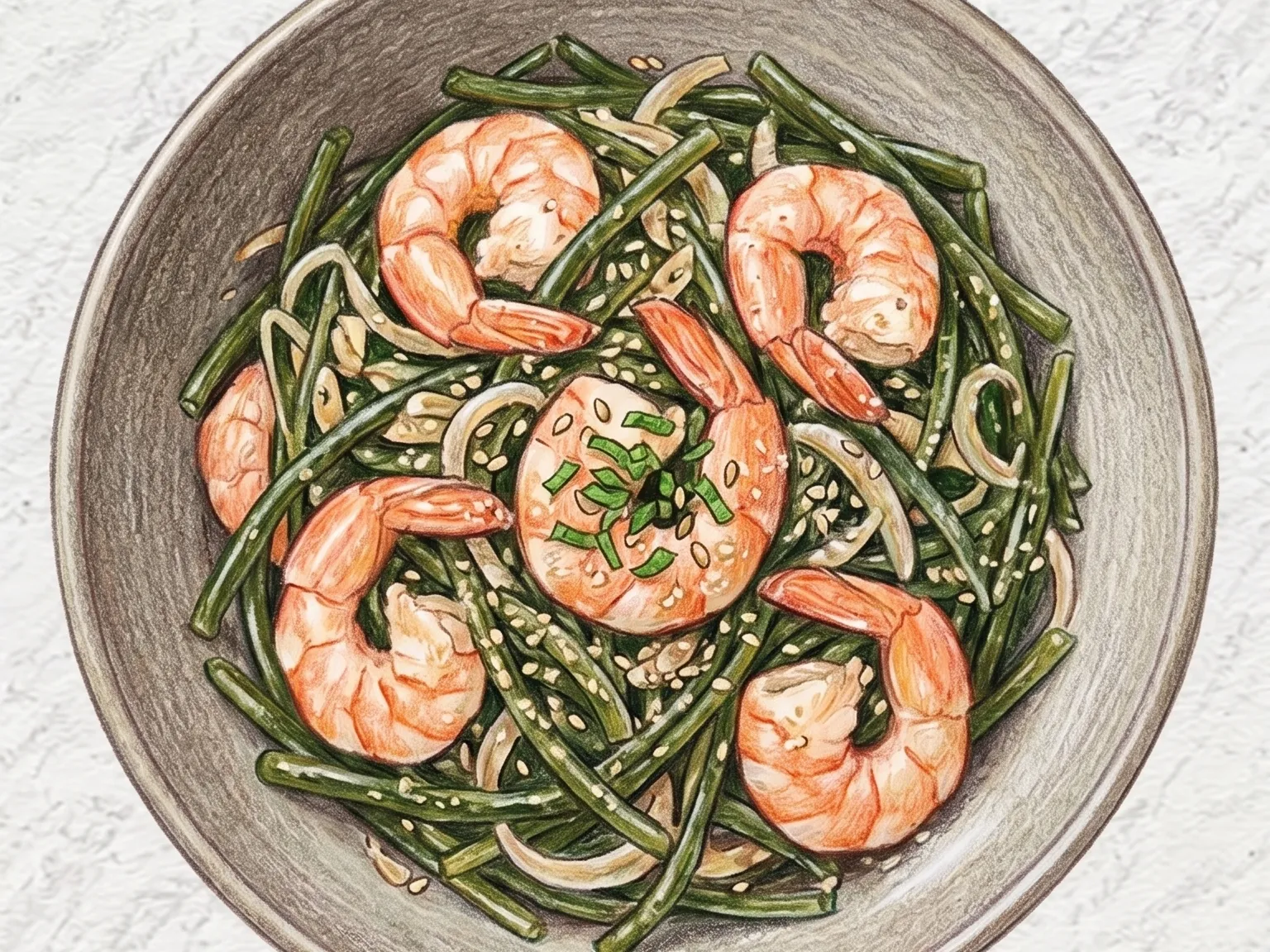
Miyeokjulgi-deulkkae-saeu-bokkeum combines desalted seaweed stems and medium shrimp, stir-fried in perilla oil and finished with a generous coating of perilla seed powder.

What makes this special

  • Chewy seaweed stems and shrimp toss with perilla oil and a heavy dusting of perilla seed powder.
  • 10-minute cold-water soak tames salted seaweed stem's briny snap
  • Perilla powder added right after heat off to lock in nutty aroma
Total time
28 min
Level
Easy
Servings
4 servings
Ingredients
8
Calories
210 kcal
Protein
19 g

Key ingredients

salted seaweed stemsmedium shrimponionminced garlicperilla oil

Core cooking flow

  1. 1 Rinse 260 g salted seaweed stems briefly under running water, then soak them...
  2. 2 Peel and devein 220 g medium shrimp, then press them dry with a kitchen towel.
  3. 3 Heat a pan over medium heat, add 1 tablespoon perilla oil, then add 1 tables...

Miyeokjulgi-deulkkae-saeu-bokkeum combines desalted seaweed stems and medium shrimp, stir-fried in perilla oil and finished with a generous coating of perilla seed powder. The seaweed stems are soaked in cold water for ten minutes to draw out excess salt, then cut into five-centimeter pieces that retain a distinctive chewy-crunchy bite throughout cooking - a textural contrast that keeps each forkful interesting against the springy shrimp. Onion and garlic are sauteed first to establish a sweet aromatic base, the shrimp are added until they turn pink, and then the seaweed stems join the pan for a quick toss over high heat. Soup soy sauce provides the only seasoning, keeping the flavor profile clean and allowing the two main ingredients to come forward. Perilla powder goes in immediately after the heat is off so its nutty, slightly grassy aroma stays fully intact through serving. The combination of perilla's earthy nuttiness and the seaweed's oceanic minerality gives this simple banchan a layered depth that reads distinctly Korean.

Prep 18min Cook 10min 4 servings

Instructions

Read the steps as a cooking flow: prep, heat, seasoning, doneness control, and finish.

6 steps
  1. 1
    Control

    Rinse 260 g salted seaweed stems briefly under running water, then soak them in cold water for only 10 minutes.

    Taste one strand for reduced salinity, drain well, and cut the stems into 5 cm lengths.

  2. 2
    Step

    Peel and devein 220 g medium shrimp, then press them dry with a kitchen towel.

    The surface should feel dry, because wet shrimp release liquid in the pan and slow browning.

  3. 3
    Control

    Heat a pan over medium heat, add 1 tablespoon perilla oil, then add 1 tablespoon minced garlic and 80 g onion.

    Stir for about 1 minute, keeping the garlic pale and fragrant instead of browned.

  4. 4
    Season

    Add the shrimp and raise the heat to medium-high.

    Stir-fry for 1 minute 30 seconds, until the shrimp turn pink and curl at the edges, then add the seaweed stems and 1 tablespoon soup soy sauce.

  5. 5
    Heat

    Once everything is evenly mixed, pour in 3 tablespoons water around the pan and stir-fry for 2 more minutes.

    The seaweed stems should soften slightly while keeping a chewy, crisp bite.

  6. 6
    Finish

    Turn off the heat, sprinkle in 1.5 tablespoons perilla seed powder, and toss quickly with the residual heat.

    Do not leave it in the hot pan too long; plate it while the nutty aroma is still clear.

After the steps

Pick a recipe that fits this dish.

Continue with shared ingredients, meal pairings, or a similar method.

Recipes That Go Well With This

More Stir-fry →

Based on shared ingredients and meal pairing

Korean Stir-Fried Seaweed Stems with Perilla
Shared ingredient: salted seaweed stems Side dishes

Korean Stir-Fried Seaweed Stems with Perilla

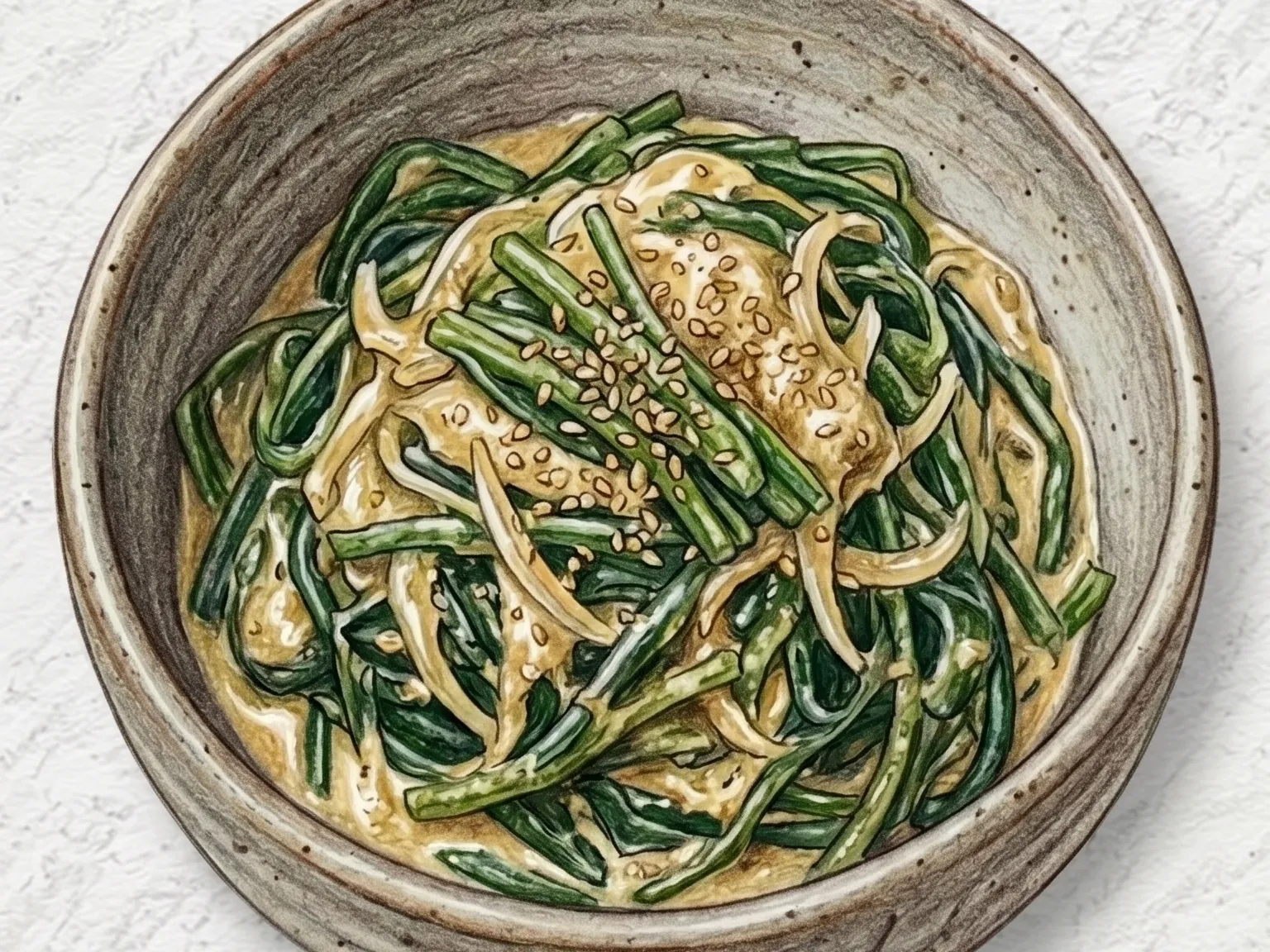
Deulkkae miyeokjulgi-bokkeum stir-fries salted seaweed stems with perilla oil and ground perilla seeds, diverging from the standard sesame-and-soy version by foregrounding the earthy nuttiness of perilla. Desalting the stems in cold water for at least fifteen minutes is the essential first step - too brief and the dish is unpalatably salty, too long and the oceanic character washes away entirely. Garlic is sauteed in perilla oil to build an aromatic foundation, then the drained stems join with soup soy sauce and a splash of water for three minutes of stir-frying. Ground perilla seeds go in at the end, where they bind with the residual moisture and coat each strand in a pale, creamy film. Julienned onion added alongside contributes sweetness that balances the seaweed's brininess. The perilla powder's starch partially gelatinizes on contact with heat, thickening the sauce - but overcooking past this point turns the coating chalky, so timing the final addition is critical. Sesame seeds scattered off heat complete the dish.

Korean Seaweed, Perilla & Shrimp Stir-fry
Shared ingredient: shrimp Stir-fry

Korean Seaweed, Perilla & Shrimp Stir-fry

Tot-deulkkae-saeu-bokkeum stir-fries briefly blanched tot seaweed and shrimp in perilla oil, finished with ground perilla seeds. The tot is blanched for only 30 seconds to preserve its distinctive pop-and-chew texture, and the shrimp are pre-seasoned with cooking wine to remove any fishiness before being cooked to a springy doneness. Perilla oil and ground perilla seeds merge with the oceanic salinity of the seaweed and shrimp, building a nutty-briny flavor. Seasoned lightly with soup soy sauce and green onion, it is a low-carbohydrate side dish anchored in seafood and sea vegetables.

Korean Braised Burdock Root
Serve together Side dishes

Korean Braised Burdock Root

Julienned burdock root is simmered in soy sauce, sugar, and corn syrup with enough water to submerge the strips, then reduced slowly until the liquid thickens into a concentrated glaze. Unlike stir-fried burdock, this braised version cooks under a lid at moderate heat, giving the tough fibers time to soften while retaining a pleasantly chewy core. Soy sauce penetrates deep into the root during the extended simmer, establishing a salty foundation that the corn syrup then balances with a mellow sweetness. As the braising liquid reduces, the sugars begin to caramelize, darkening the color and adding a layer of complexity to burdock's naturally earthy, woody flavor. The dish is done when nearly all the liquid has evaporated and each strip glistens with a thick, lacquered coating. Vinegar added at the start prevents the burdock from discoloring and contributes a faint tartness that keeps the sweetness in check. Stored in a sealed container, the jorim remains good in the refrigerator for close to ten days.

Korean Kollabi Saeu Bokkeum (Kohlrabi Shrimp Stir-fry)
Similar recipe Stir-fry

Korean Kollabi Saeu Bokkeum (Kohlrabi Shrimp Stir-fry)

Kolrabi saeu bokkeum is a quick stir-fry of shrimp marinated in cooking wine and julienned kohlrabi, cooked over high heat in garlic-infused oil and seasoned with soy sauce and oyster sauce. Spreading the shrimp in a single layer and letting one side sear properly before flipping is the key to a firm, bouncy texture rather than a steamed one. Kohlrabi, a cross between turnip and cabbage, brings a natural sweetness and firm crunch that pairs well with the shrimp, and keeping the cooking time short preserves that crisp bite. Red bell pepper adds a contrasting color to the dish, and the deep savory quality of oyster sauce amplifies the shrimp's natural sweetness. Preheating the pan thoroughly before adding ingredients prevents excess moisture from releasing, which keeps the stir-fry dry and the textures distinct. Scallion and a finish of sesame oil round out the dish. The calorie count is low relative to the protein content, making it a practical side dish for everyday meals.

Serve with this

Korean Spicy Pork Rice Bowl
Rice Easy

Korean Spicy Pork Rice Bowl

Pork shoulder is sliced into strips, marinated in gochujang, chili flakes, soy sauce, garlic, and sugar for ten minutes, then stir-fried over high heat until the edges caramelize. Onion goes in first to build sweetness, and green onion added at the end brings a sharp, fresh bite that cuts through the spicy-sweet glaze. A final drizzle of sesame oil rounds out the aroma. Served over steamed rice, the bold sauce coats every grain, making this a satisfying single-bowl meal that comes together in under thirty minutes.

🏠 Everyday 🍱 Lunchbox
Prep 20min Cook 15min 2 servings
Korean Spinach Soybean Paste Soup
Soups Easy

Korean Spinach Soybean Paste Soup

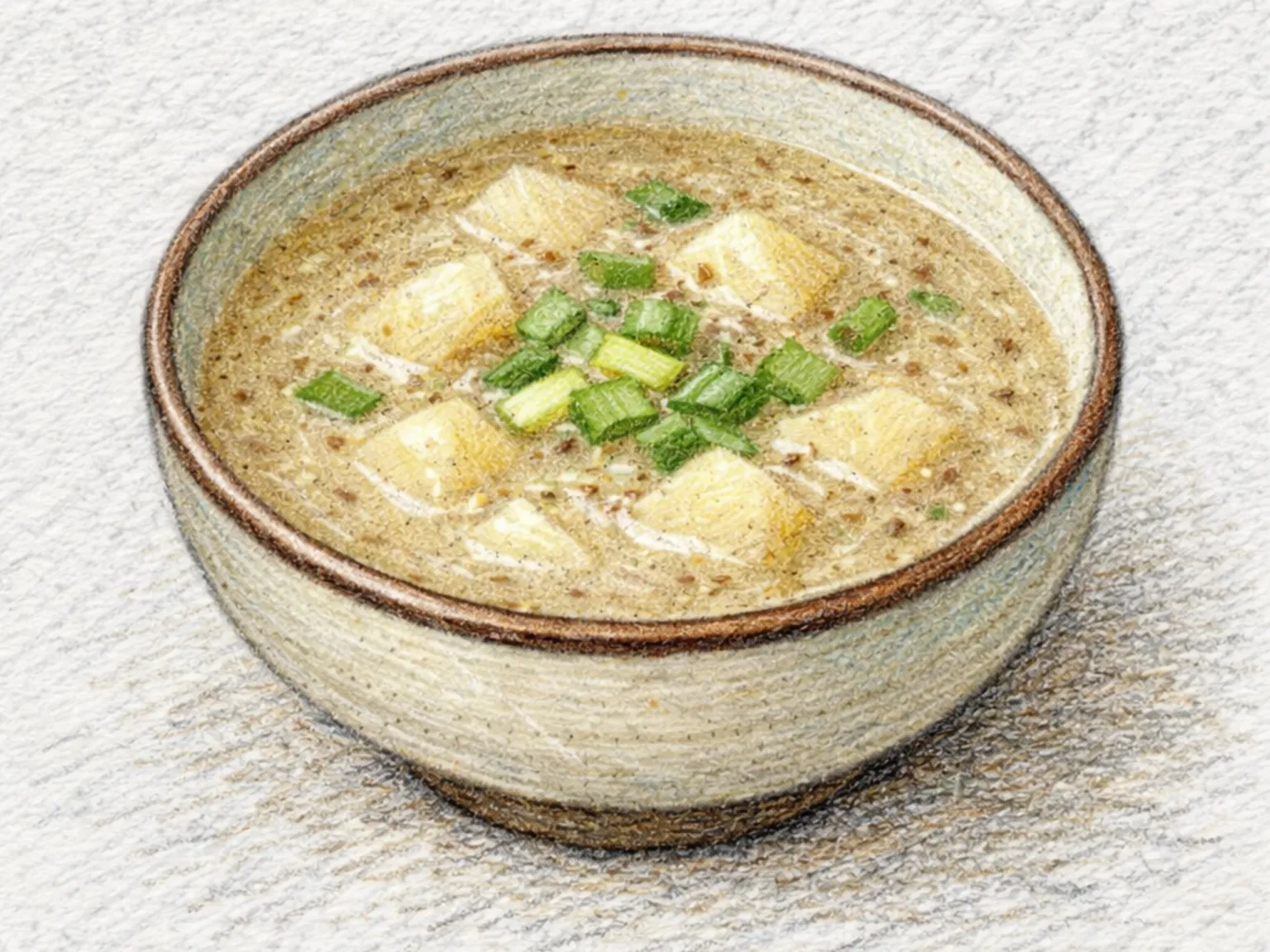
Sigeumchi-doenjang-guk is a foundational Korean soup that combines spinach with soybean paste in anchovy-kelp stock, producing a broth that is earthy, warm, and deeply familiar to anyone who grew up eating Korean home cooking. Doenjang is dissolved into the simmering stock first, establishing a savory, slightly funky baseline. Spinach is added near the end and wilts within seconds, contributing a soft green color and a faint bitterness that, rather than clashing with the fermented paste, amplifies its complexity. Tofu is a common addition that gives the soup more substance and a creamy counterpoint to the leafy greens. Garlic and green onion handle the aromatics, and no chili is used, keeping the soup on the gentle end of the Korean flavor spectrum. The key technical point is timing: spinach left in boiling liquid too long turns dull and mushy, so experienced cooks drop it in and turn off the heat almost immediately. This soup is one of the most frequently prepared versions of doenjang-guk in Korean kitchens precisely because spinach is available year-round, affordable, and cooks in moments. It pairs seamlessly with any banchan spread and never competes for attention on the table.

🏠 Everyday 🥗 Light & Healthy
Prep 10min Cook 15min 2 servings
Korean Seafood Stew (Shrimp, Squid & Clam Spicy Pot)
Stews Medium

Korean Seafood Stew (Shrimp, Squid & Clam Spicy Pot)

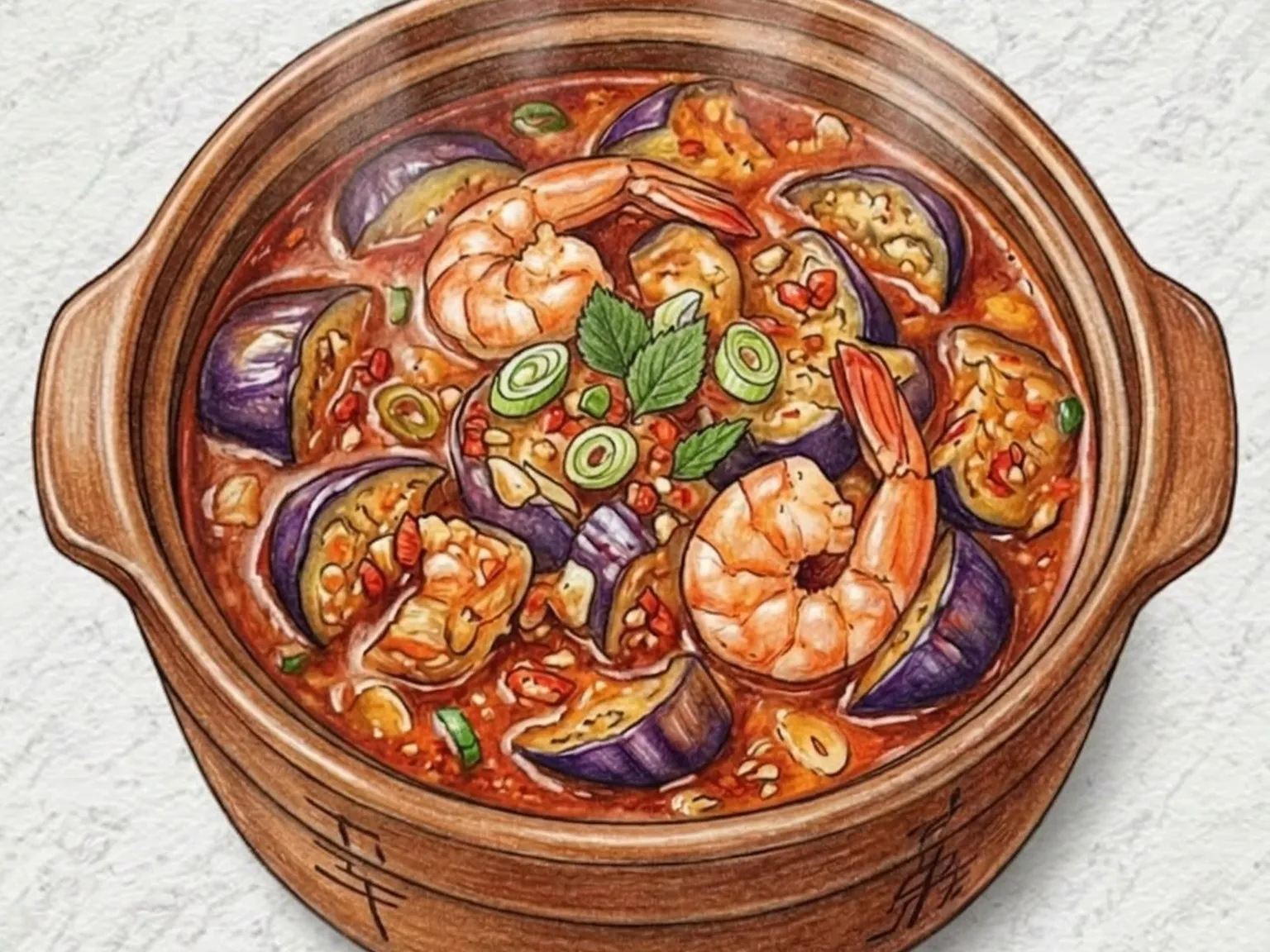
Haemul jjigae is a fiery Korean seafood stew that loads shrimp, squid, and clams into a broth fired with gochugaru and gochujang. As the clams open during cooking, they release a clean, saline sweetness that forms the backbone of the broth, and the chili paste and flakes layer in a deep red heat that amplifies rather than masks the flavor of the sea. Large pieces of tofu and sliced zucchini cook alongside the seafood, soaking up the spiced shellfish stock and adding substance to every spoonful. Green onion and cheongyang chili added at the end contribute color and a fresh aromatic sharpness. Serving directly in the stone pot keeps the stew bubbling at the table throughout the meal, and the steady heat means the last spoonful tastes as vivid as the first. A bowl of steamed white rice alongside absorbs the broth between bites and makes the meal complete.

🏠 Everyday 🥗 Light & Healthy
Prep 15min Cook 20min 2 servings

Similar recipes

Korean Stir-fried Pork with Seaweed Stems
Stir-fry Easy

Korean Stir-fried Pork with Seaweed Stems

Miyeokjulgi-dwaejigogi-bokkeum stir-fries thinly sliced pork shoulder - pre-marinated in soy sauce and cooking wine - together with desalted seaweed stems, onion, and garlic. The pork is seared quickly over high heat to stay soft, then the seaweed stems join with the remaining seasoning for a fast 2-3 minute finish. The core appeal lies in the textural contrast: yielding pork against the crunchy, slightly rubbery stems that absorb the salty-sweet sauce. A final drizzle of sesame oil and a sprinkle of toasted sesame seeds round out the dish.

🥗 Light & Healthy 🏠 Everyday
Prep 18min Cook 10min 2 servings
Korean Sea Breeze Herb Shrimp Stir-fry
Stir-fry Medium

Korean Sea Breeze Herb Shrimp Stir-fry

Bangpungnamul saeu bokkeum is a Korean stir-fry that pairs coastal hogfennel, a pungent spring herb, with medium-sized shrimp over sustained high heat. The shrimp are first splashed with cooking wine to eliminate off-flavors, then seared in oil and removed from the pan. Minced garlic is sweated in the residual oil before the hogfennel and sliced red chili are added and tossed rapidly - the herb loses its characteristic bitterness quickly if it lingers on heat. Soy sauce and sesame oil go in next for seasoning, and the shrimp are returned for a final toss to integrate everything without overcooking the proteins. The herb's slightly bitter, aromatic edge contrasts with the natural sweetness of the shrimp to produce a balanced flavor that needs no additional sauce. From start to finish the dish takes under nine minutes, and its low calorie count makes it a practical light banchan alongside rice.

🥗 Light & Healthy 🏠 Everyday
Prep 14min Cook 9min 2 servings
Korean King Oyster Mushroom Stir-fry with Perilla
Side dishes Easy

Korean King Oyster Mushroom Stir-fry with Perilla

This stir-fry combines 250 grams of julienned king oyster mushrooms with onion, cooked rapidly over high heat in perilla oil and cooking oil to prevent the mushrooms from releasing too much water. Garlic is sauteed for 20 seconds first to infuse the oil, followed by onion for one minute to draw out its natural sweetness. The mushrooms then go in for a quick two-minute toss before soup soy sauce and a splash of water are added to create a light braising liquid. One and a half tablespoons of ground perilla seeds are stirred in during the final minute, thickening the sauce into a creamy coating without becoming pasty. Scallion is added off heat for a finishing touch of color and freshness.

🏠 Everyday 🍱 Lunchbox
Prep 10min Cook 8min 2 servings

Tips

Over-soaking seaweed stems can make them too soft.
Add perilla powder at the end to keep its nutty aroma.

Nutrition (per serving)

Calories
210
kcal
Protein
19
g
Carbs
9
g
Fat
11
g