Korean Stir-fried Pork with Seaweed Stems
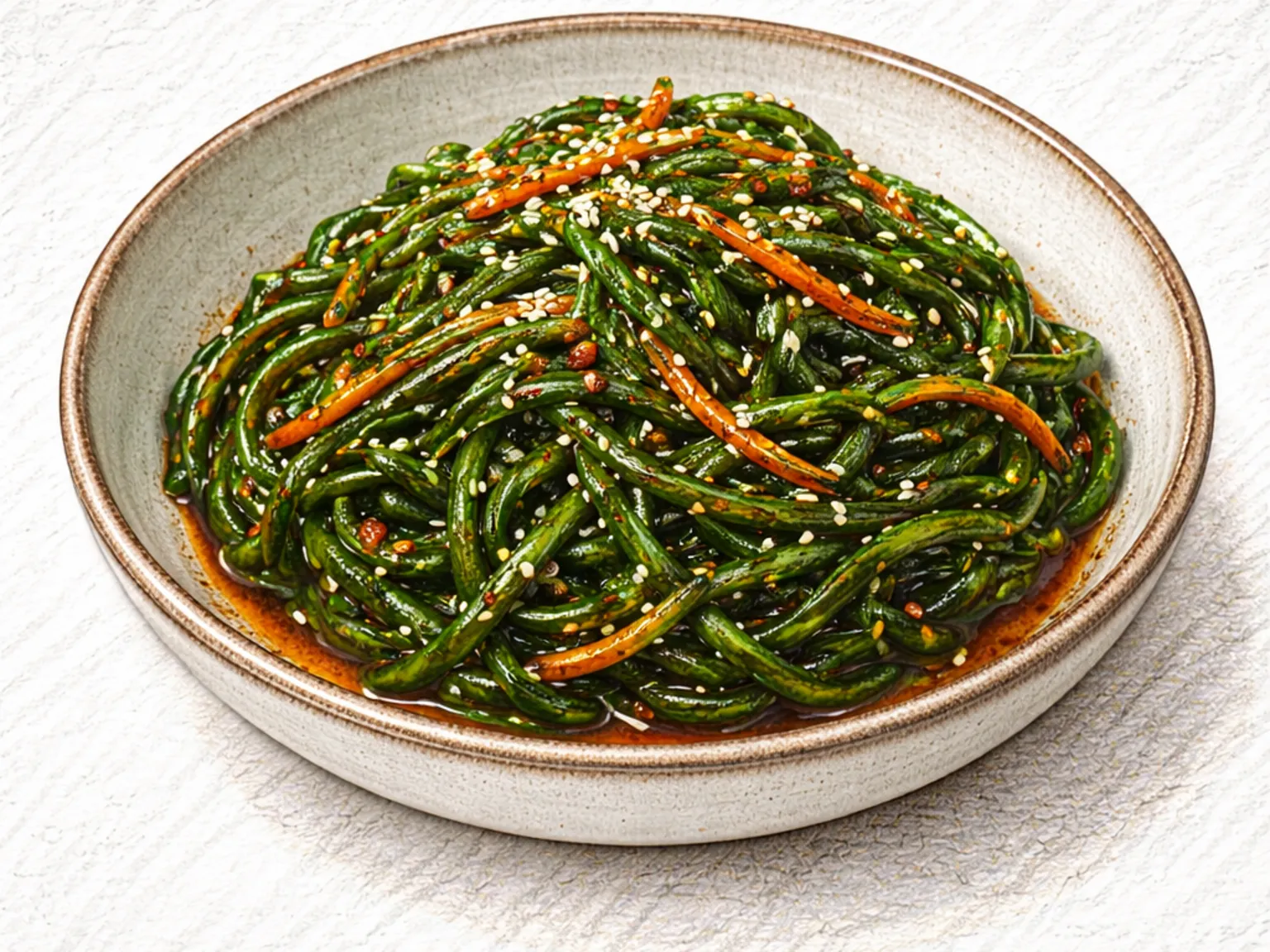
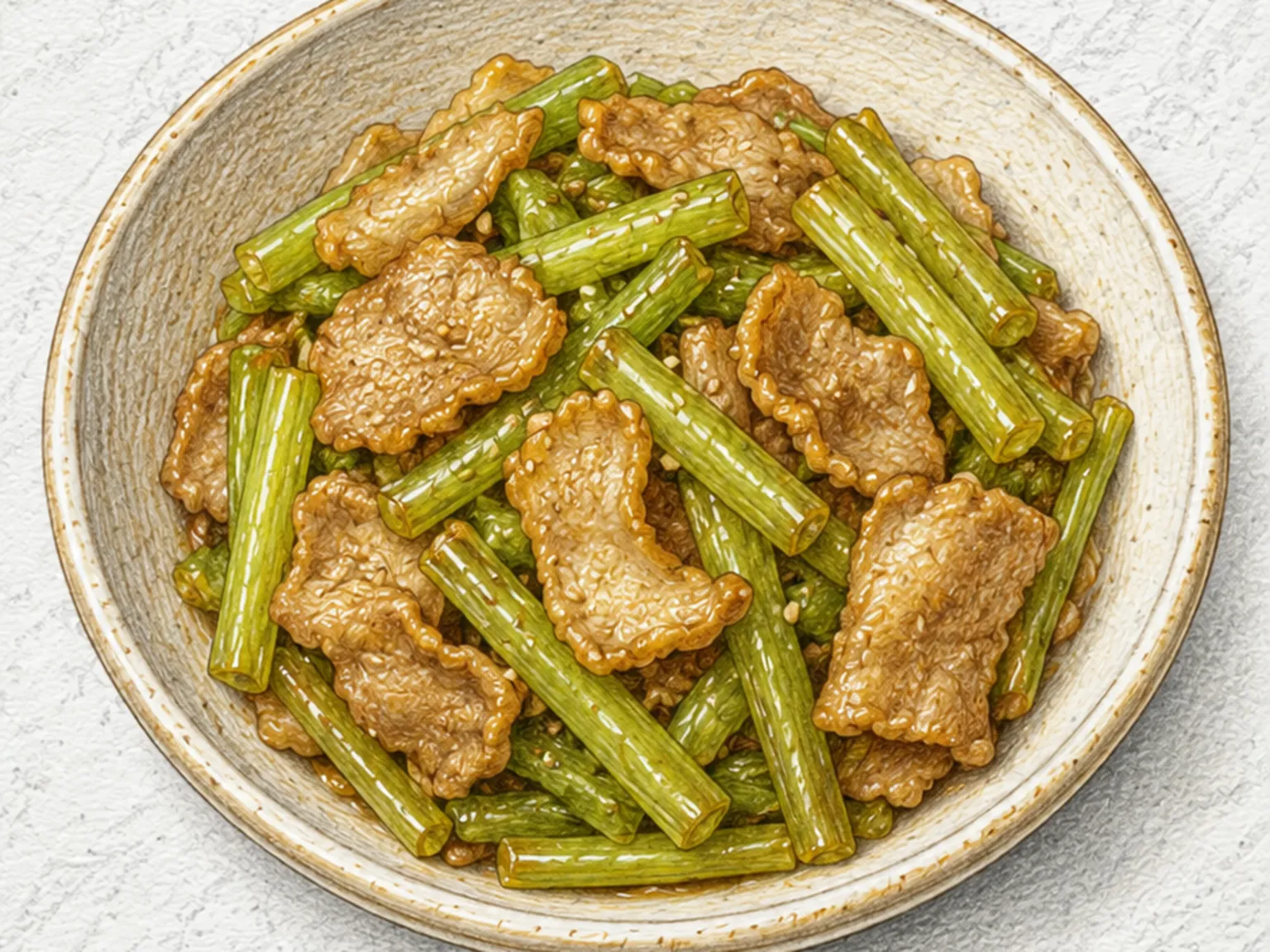
Miyeokjulgi-dwaejigogi-bokkeum stir-fries thinly sliced pork shoulder - pre-marinated in soy sauce and cooking wine - together with desalted seaweed stems, onion, and garlic. The pork is seared quickly over high heat to stay soft, then the seaweed stems join with the remaining seasoning for a fast 2-3 minute finish. The core appeal lies in the textural contrast: yielding pork against the crunchy, slightly rubbery stems that absorb the salty-sweet sauce. A final drizzle of sesame oil and a sprinkle of toasted sesame seeds round out the dish.
Adjust Servings
Instructions
- 1
Soak seaweed stems for 10 minutes to reduce saltiness, then cut into 5 cm pieces.
- 2
Slice pork thinly and marinate for 5 minutes with 0.5 tbsp soy sauce and 0.5 tbsp cooking wine.
- 3
Heat oil in a pan and stir-fry garlic and onion for 1 minute until fragrant.
- 4
Add pork and cook over high heat until the surface is no longer pink.
- 5
Add seaweed stems with the remaining soy sauce and cooking wine, then stir-fry for 2-3 minutes.
- 6
Turn off heat, add sesame oil and sesame seeds, and toss briefly to finish.
As an Amazon Associate, we may earn from qualifying purchases.
Tips
Nutrition (per serving)
More Recipes

Korean Pork & Wild Chive Stir-fry
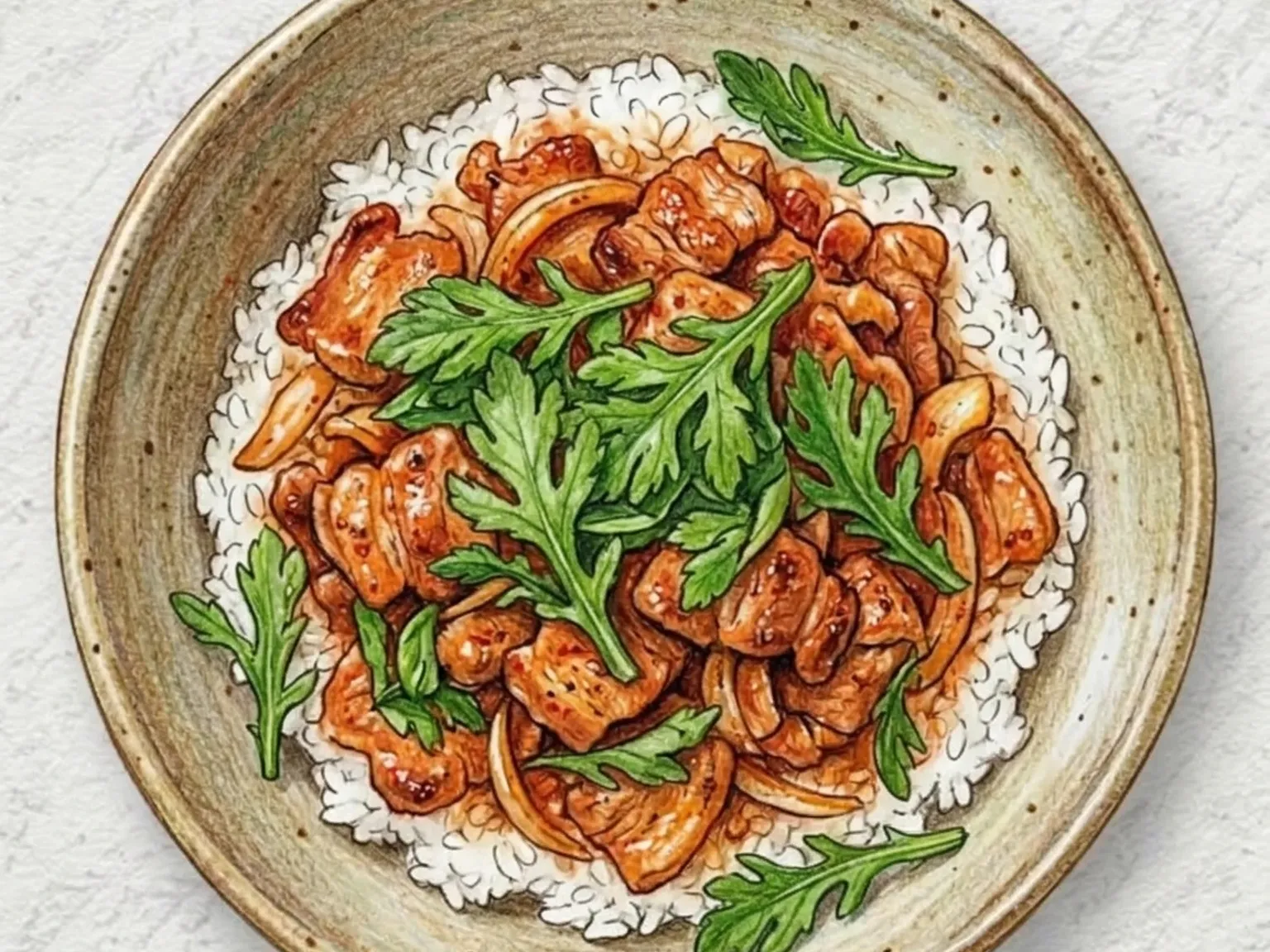
Dallae-dwaejigogi-bokkeum is a Korean springtime stir-fry of pork shoulder tossed in a gochujang and chili flake sauce, then topped generously with raw wild chives. The wild chives release a sharp, garlicky bite that cuts through the rich, spicy pork. Onions caramelize lightly during cooking, adding natural sweetness that rounds out the heat. The dish is cooked quickly over high heat to preserve the fresh aroma of the chives.

Korean Seaweed, Perilla & Shrimp Stir-fry
Tot-deulkkae-saeu-bokkeum stir-fries briefly blanched tot seaweed and shrimp in perilla oil, finished with ground perilla seeds. The tot is blanched for only 30 seconds to preserve its distinctive pop-and-chew texture, and the shrimp are pre-seasoned with cooking wine to remove any fishiness before being cooked to a springy doneness. Perilla oil and ground perilla seeds merge with the oceanic salinity of the seaweed and shrimp, building a nutty-briny flavor. Seasoned lightly with soup soy sauce and green onion, it is a low-carbohydrate side dish anchored in seafood and sea vegetables.

Korean Seaweed Stem & Shrimp Stir-fry
Miyeokjulgi-deulkkae-saeu-bokkeum combines desalted seaweed stems and medium shrimp, stir-fried in perilla oil and finished with a generous coating of perilla seed powder. The seaweed stems are soaked for ten minutes to reduce saltiness, then cut into 5 cm pieces that retain a distinctive chewy-crunchy bite - a textural contrast to the springy shrimp. Onion and garlic are sauteed first to establish a sweet base, and soup soy sauce provides the only salt. Perilla powder goes in at the very end so its nutty aroma stays intact through serving.

Korean Pork & Swiss Chard Stir-fry
This hearty stir-fry combines pork shoulder and Swiss chard in a doenjang-based sauce that delivers deep, earthy umami. Separating the chard stems from the leaves and adding them at different times preserves contrasting textures: the stems remain snappy while the leaves wilt into tender ribbons. Doenjang neutralizes any gamey pork notes and builds a robust savory backbone, finished with sesame oil for a nutty warmth. A touch of Korean chili flakes introduces mild heat that rounds out the dish. It pairs naturally with a bowl of steamed rice for a complete, nourishing meal.

Seaweed Stem and Apple Mustard Salad
Salted seaweed stems are soaked to remove excess brine, then blanched briefly to achieve a firm, slightly chewy bite that defines this Korean salad's texture. Julienned apple adds crisp sweetness that contrasts with the seaweed's oceanic mineral flavor. Thinly sliced onion, soaked to mellow its sting, contributes a subtle sharpness. The dressing mixes Korean mustard paste with vinegar and oligosaccharide syrup - the mustard delivers a sharp nasal heat, while the syrup smooths the vinegar's acidity into something rounder. Tossing the apple with lemon juice first prevents browning, and a three-minute rest after dressing lets the flavors meld without overdressing the delicate stems.

Korean Stir-Fried Kimchi (Caramelized Aged Kimchi Banchan)
Kimchi-bokkeum is the default way Korean households use up kimchi that has fermented past its fresh prime. Stir-frying tempers the sharp lactic acidity that over-ripe kimchi develops - the heat transforms the sourness into something mellower, sweeter, and more rounded. Onion goes in first and cooks until translucent, laying a sweet foundation before the kimchi and garlic join. Medium heat is essential: it drives off moisture gradually, yielding a thick, concentrated sauce rather than a watery stew. A small addition of gochugaru brightens the color, and a pinch of sugar balances the fermented tang. One tablespoon of kimchi brine amplifies the umami from the lactobacillus culture itself. The finished banchan is versatile enough to eat straight over rice, fold into fried rice, or pile on top of ramyeon.