Thai Five-Spice Braised Pork and Eggs
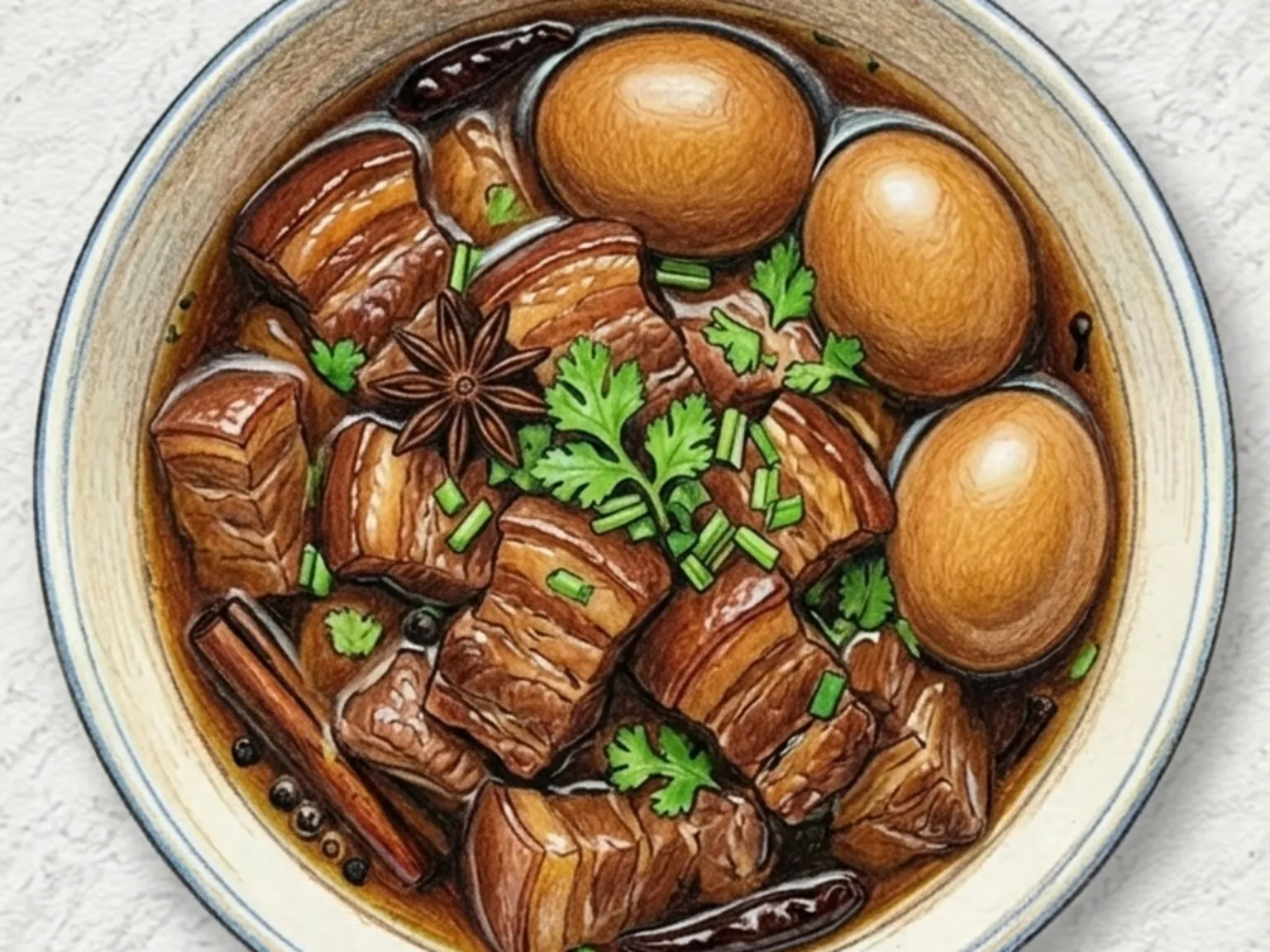
Moo palo is a Thai braised pork and egg dish simmered in a sauce of soy sauce, palm sugar, and five-spice powder. The palm sugar is caramelized first before the pork is seared in it, coating the meat in a dark, glossy finish. Five-spice powder weaves together the aromas of cinnamon, star anise, and clove throughout the broth. The boiled eggs absorb the braising liquid over the long cook, turning deep brown and picking up the seasoning all the way through. Ladled over steamed rice, this is a quintessential Thai comfort dish with a gentle interplay of sweetness and warm spice.
Adjust Servings
Instructions
- 1
Cut pork into large chunks and lightly crush garlic.
- 2
Melt sugar in a pot until light brown syrup forms.
- 3
Add pork and garlic, stirring to sear the surface.
- 4
Add soy sauce, five-spice, and water, then simmer 50 minutes.
- 5
Add boiled eggs and braise another 15 minutes.
As an Amazon Associate, we may earn from qualifying purchases.
Tips
Nutrition (per serving)
More Recipes

Khao Kha Moo (Thai Braised Pork Leg Rice Bowl)
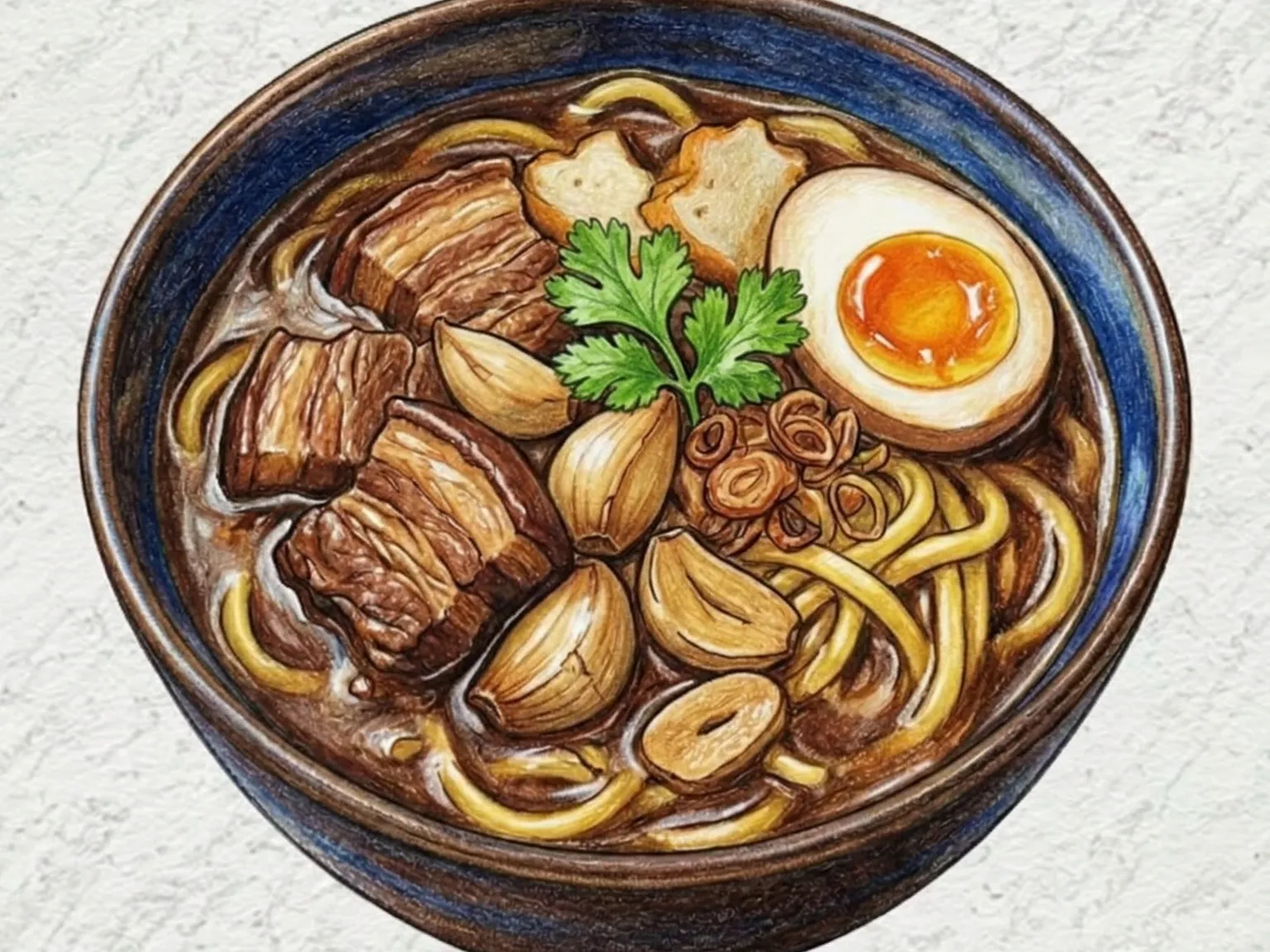
Khao kha moo is a Thai braised pork leg rice bowl that rewards patience with deeply satisfying flavor. A whole pork leg is simmered for upward of two hours in a dark soy and palm sugar broth perfumed with star anise, cinnamon, and whole garlic cloves. The prolonged cooking breaks down connective tissue until the meat yields to the lightest pull. The braising liquid reduces into a glossy, mahogany-colored sauce that is both salty and gently sweet. Thick slices of the pork are arranged over steamed jasmine rice, and the sauce is spooned over until the grains glisten. Traditional garnishes include a halved hard-boiled egg stained brown from the braising liquid, pickled mustard greens that cut through the richness, and a fiery chili-vinegar dipping sauce. It is one of the most beloved night-market dishes in Thailand.

Vietnamese Braised Pork and Eggs
Thit kho trung is a Vietnamese home-style braise of pork shoulder and hard-boiled eggs simmered in coconut water, fish sauce, and a caramel base. Sugar is caramelized in the pot first, then the pork is seared in the darkened sugar to build a deep amber glaze on the surface. Coconut water contributes a gentle, tropical sweetness while keeping the meat moist through the long cook. The eggs absorb the braising liquid over nearly an hour, turning brown all the way through and taking on the full spectrum of salty-sweet seasoning. Spooned over steamed rice, the sauce delivers the distinctive Vietnamese balance of caramel bitterness, fermented fish depth, and coconut softness.

Korean Braised Pork Ribs
Dwaeji galbi-jjim is a Korean braised pork rib dish simmered in a soy sauce base with Korean radish, carrots, and onion. The ribs cook low and slow until the meat practically falls off the bone, absorbing the ginger- and garlic-infused braising liquid along the way. The radish chunks turn translucent and soak up the seasoning, becoming as flavorful as the meat itself. Served with steamed rice, this dish is a hearty main course suited to cooler weather.

Korean Soy-Braised Pork and Potatoes
Dwaejigogi-gamja-jorim is a Korean braise of pork shoulder and potatoes simmered together in a soy sauce seasoning. The potatoes absorb the meat drippings and soy marinade, becoming fluffy inside with a salty-savory glaze on the surface. Onions added to the pot lend gentle sweetness that softens the overall saltiness. Combining protein and starch in a single pot, it is a practical one-dish meal for busy weeknights.

Moo Ping (Thai Grilled Pork Skewers)
Moo ping are Thai grilled pork skewers marinated in a mixture of coconut milk, palm sugar, soy sauce, garlic, and white pepper, then charred over glowing coals until the marinade caramelizes into a sticky, darkened glaze. The pork neck meat - chosen for its marbling - stays moist inside while the surface picks up an unmistakable smoky sweetness. Coconut milk in the marinade adds a rounded richness, and the palm sugar provides a deeper, less sharp sweetness than white sugar would. They are sold from morning onward at street carts across Thailand, almost always alongside small bags of sticky rice and a plastic bag of jaew dipping sauce. Wrapping a piece of charred pork in a pinch of sticky rice is the standard way to eat them, and few street foods match the simplicity and satisfaction of that combination.

Taiwanese Braised Pork (Five-Spice Belly Rice Bowl)
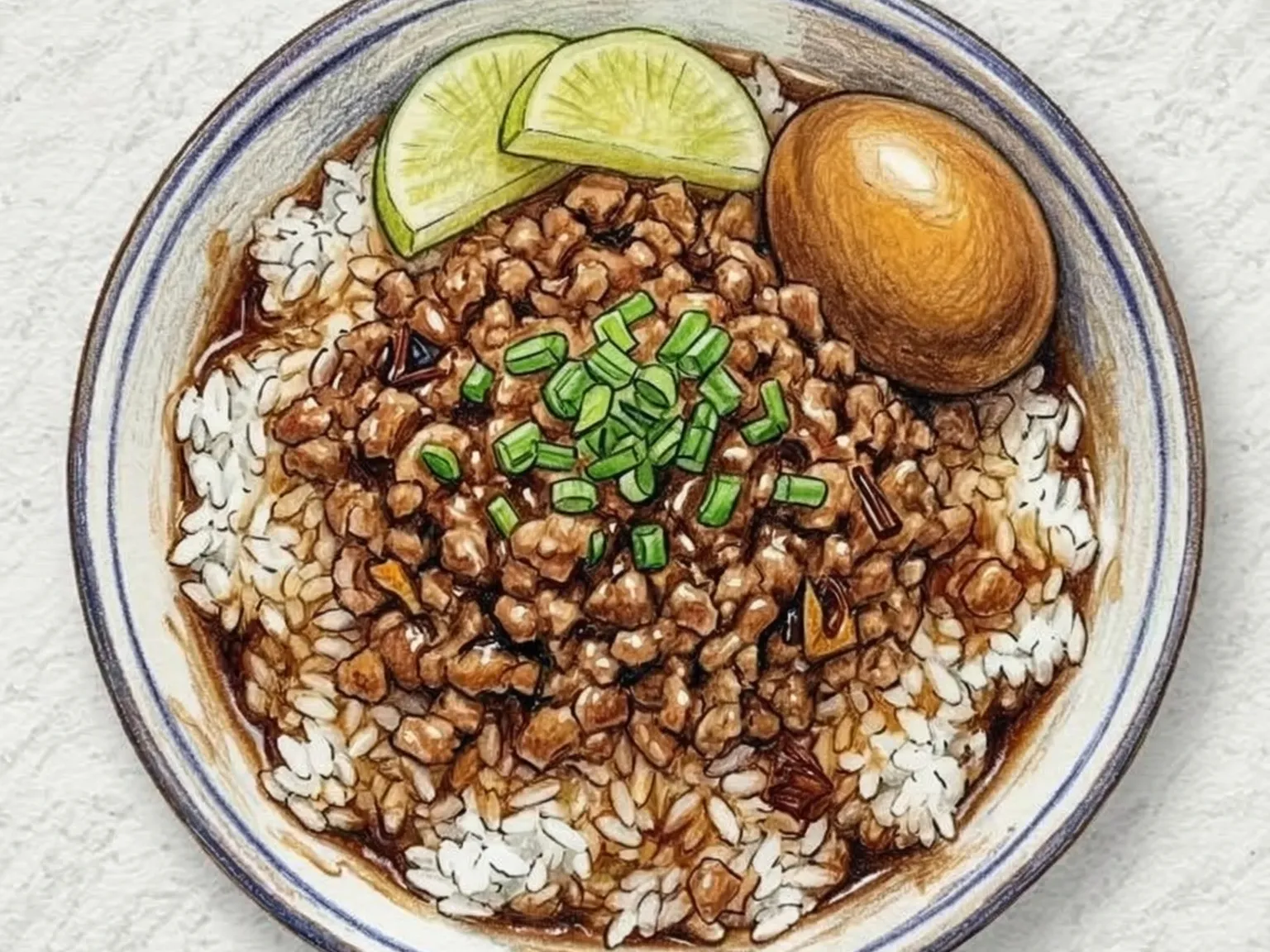
Lu rou fan is a Taiwanese braised pork dish where minced or diced pork belly is simmered in soy sauce with five-spice powder and rock sugar until the fat melts into a thick, glossy sauce. The five-spice blend - star anise, cinnamon, clove, Sichuan pepper, and fennel - gives the braise its signature aromatic complexity. Traditionally, hard-boiled eggs are added to the pot and braised alongside the pork until their whites absorb the dark sauce. Ladled generously over steaming rice so the sauce seeps between every grain, this is one of Taiwan's most iconic night market comfort foods.