Steamed Mussels Mariniere
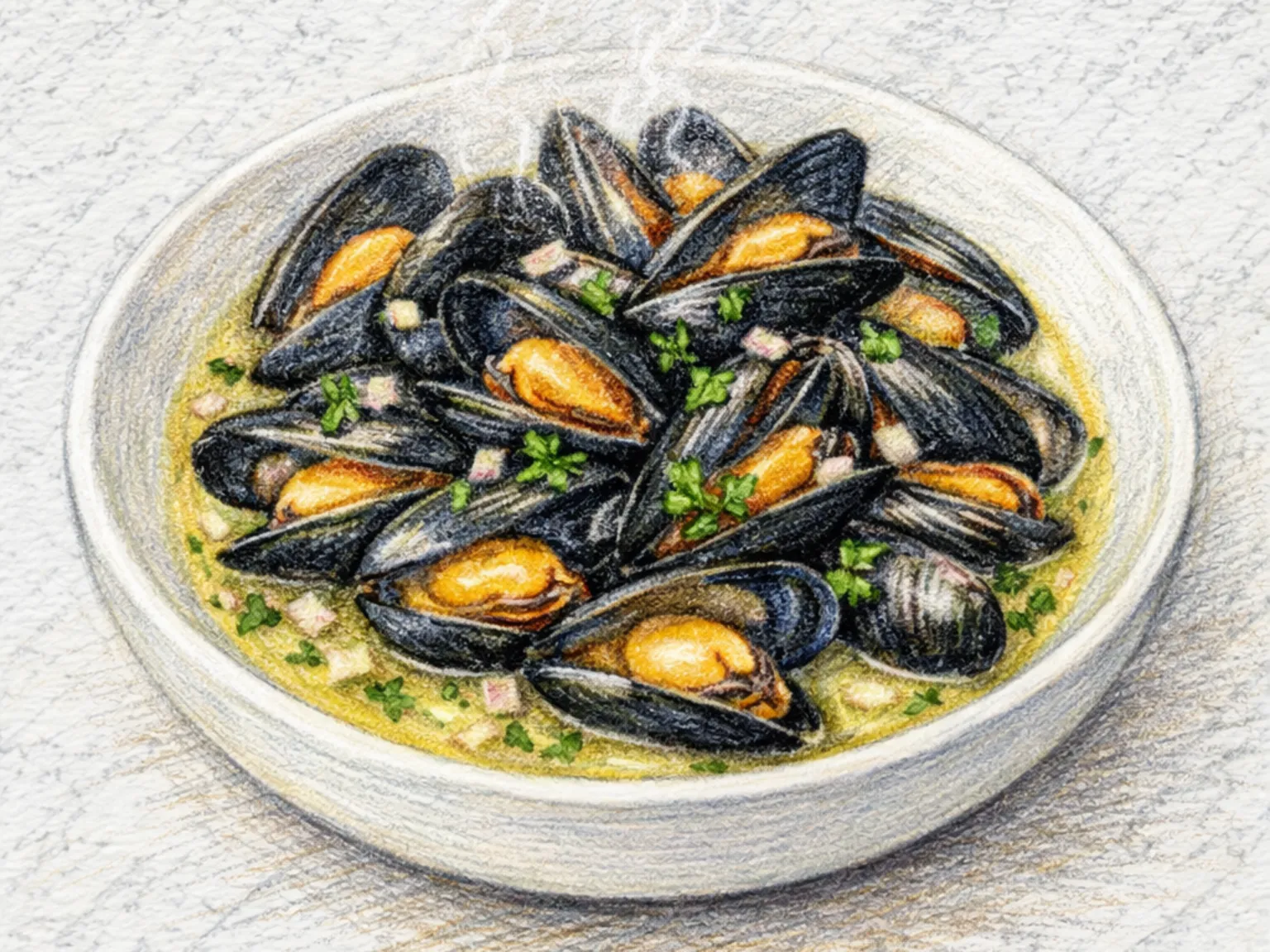
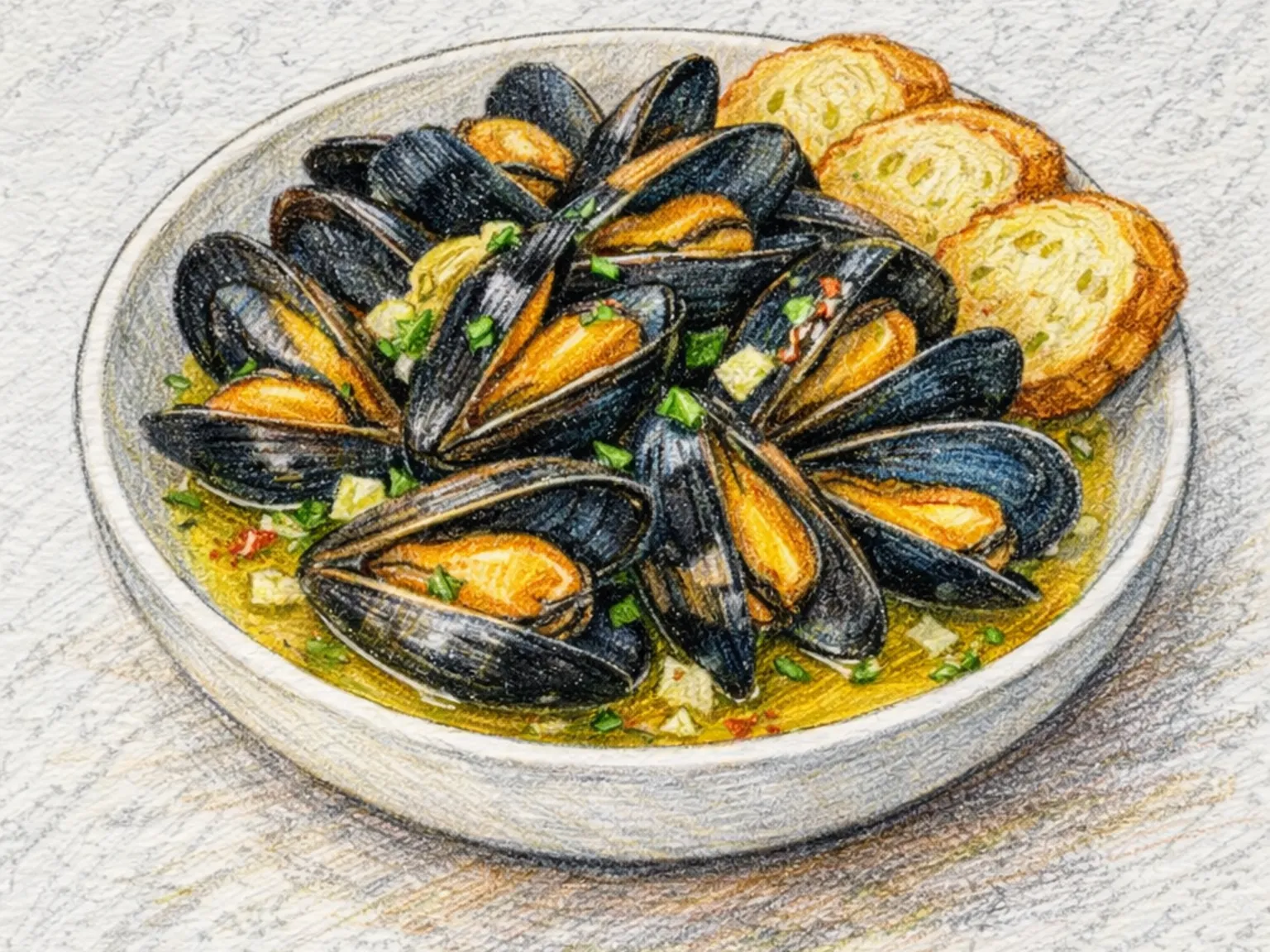
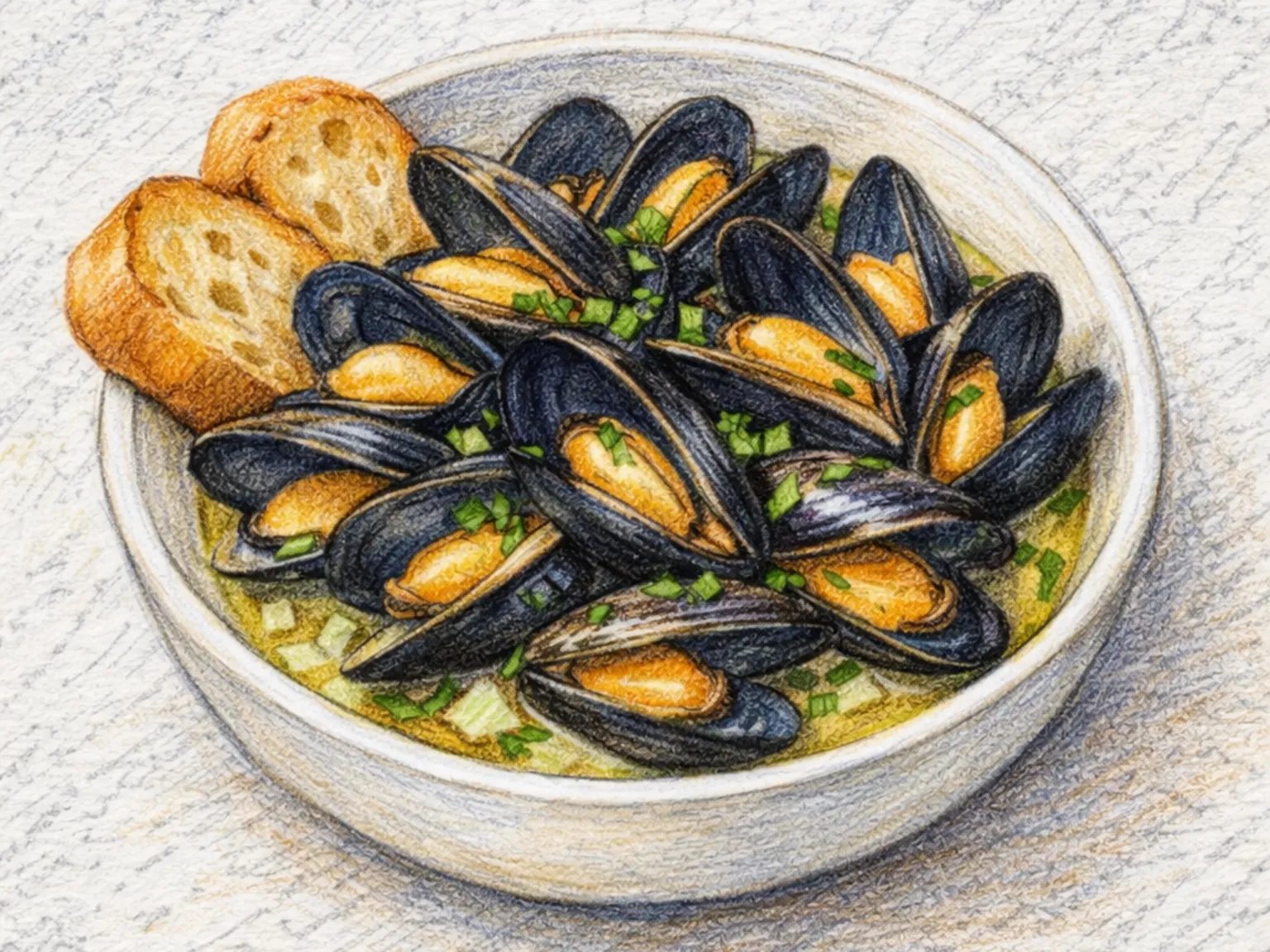
Moules mariniere is a French steamed mussel dish cooked quickly over high heat with white wine, butter, garlic, and shallot. As the mussels open, they release their briny liquor into the wine-butter base, creating a deeply flavored broth in under five minutes. The short cooking time keeps the mussel meat plump and firm rather than rubbery. Fresh parsley is scattered over the top just before serving, and the real draw is the aromatic broth at the bottom of the pot, traditionally soaked up with torn pieces of crusty baguette.
Adjust Servings
Instructions
- 1
Clean mussels thoroughly and remove beards.
- 2
Melt butter and saute shallot and garlic.
- 3
Add white wine and boil briefly to reduce alcohol.
- 4
Add mussels, cover, and steam on high heat for 4-5 minutes.
- 5
Toss with parsley and serve opened mussels.
As an Amazon Associate, we may earn from qualifying purchases.
Tips
Nutrition (per serving)
More Recipes

Moules Marinières (French White Wine Steamed Mussels)
Moules marinieres is a French seafood dish that steams scrubbed mussels over a base of shallots and garlic softened in butter, with white wine added and the pot covered for four to five minutes on high heat. Boiling the wine for a minute before adding the mussels burns off the alcohol and leaves behind only the bright acidity that pairs naturally with the briny shellfish. Once the shells open, a splash of heavy cream, chopped parsley, and black pepper turn the cooking liquid into a light, aromatic broth. The short cooking time keeps the mussel meat firm and springy rather than rubbery. Any mussels that stay closed after steaming should be discarded. Crusty bread served alongside is essential for soaking up the butter-wine broth to the last drop.

Garlic Butter Mussels
Garlic butter mussels are steamed in a fragrant broth of sauteed garlic, melted butter, and white wine. Onion and garlic are cooked in butter and olive oil until softened, then white wine is added and boiled briefly to drive off the alcohol while keeping the acidity and fruit notes intact. Once the mussels go in and the lid is sealed, the shells open within four to five minutes, releasing briny juices that meld with the butter-wine base into a rich, savory broth. Mussels that remain closed after cooking must be discarded. Finishing with chopped parsley and black pepper adds color and a mild sharpness, and tearing crusty baguette into the bowl to soak up the broth is the traditional way to enjoy every drop.

Korean Steamed Mussels (Mussels Steamed in Rice Wine Broth)
Honghap-jjim is Korean steamed mussels cooked in rice wine and garlic, with green onion and cheongyang chili added near the end. The mussels steam open in under five minutes over high heat, releasing their briny juices into the wine-garlic broth at the bottom of the pot. The cheongyang chili gives a gentle kick without overwhelming the mussels' clean ocean flavor. With total cooking time under ten minutes and almost no preparation beyond debearding, this is one of the quickest and most satisfying seafood dishes to pair with drinks.

Korean Steamed Octopus (Whole Salted Radish Broth)
Muneo-jjim is a Korean steamed whole octopus prepared by rubbing the octopus with coarse salt, then cooking it in water flavored with radish and green onion. Dipping the head end in and out of the boiling water two or three times curls the tentacles into an attractive shape before the full cook. Simmering for about fifteen minutes followed by a brief rest off the heat yields a texture that is springy and chewy without being tough. Sliced and served with a simple sesame oil and salt dipping sauce, the dish highlights the octopus's clean ocean flavor and works well as both a banchan and a drinking accompaniment.

Moules-Frites (Belgian Steamed Mussels with Fries)
Moules-frites steams mussels with shallots, garlic, white wine, and butter, then serves them alongside twice-fried potatoes for a Belgian classic. The mussels are scrubbed clean, debearded, and steamed covered on high heat for just three to four minutes - long enough for the shells to open while the flesh stays plump and tender. Any mussels that remain closed after cooking must be discarded. The fries are cut into thick sticks, soaked in cold water to remove surface starch, dried thoroughly, then fried first at 170 degrees Celsius to cook the interior and again at 190 degrees to crisp the exterior. Removing all moisture from the potatoes before frying reduces splatter and improves crunch. The mussel broth, rich with wine and butter, is traditionally sopped up with bread or poured over the fries.

Lobster Thermidor
Lobster thermidor is a French dish in which boiled lobster meat is cut into bite-size pieces, folded into a cream sauce made from shallots sauteed in butter, white wine reduced by half, Dijon mustard, and heavy cream, then packed back into the cleaned shell and topped with grated Parmesan for a brief gratin under high heat. Reducing the wine concentrates its acidity, and the mustard adds a sharp undercurrent that prevents the cream sauce from tasting flat. Baking at 220 degrees Celsius for only six to eight minutes gives the cheese a golden crust while keeping the lobster meat tender. Lemon juice stirred into the filling at the last moment lifts the richness. The dramatic presentation in the shell makes it a natural choice for entertaining.