Moussaka (Greek Eggplant Lamb Bechamel Bake)
Quick answer
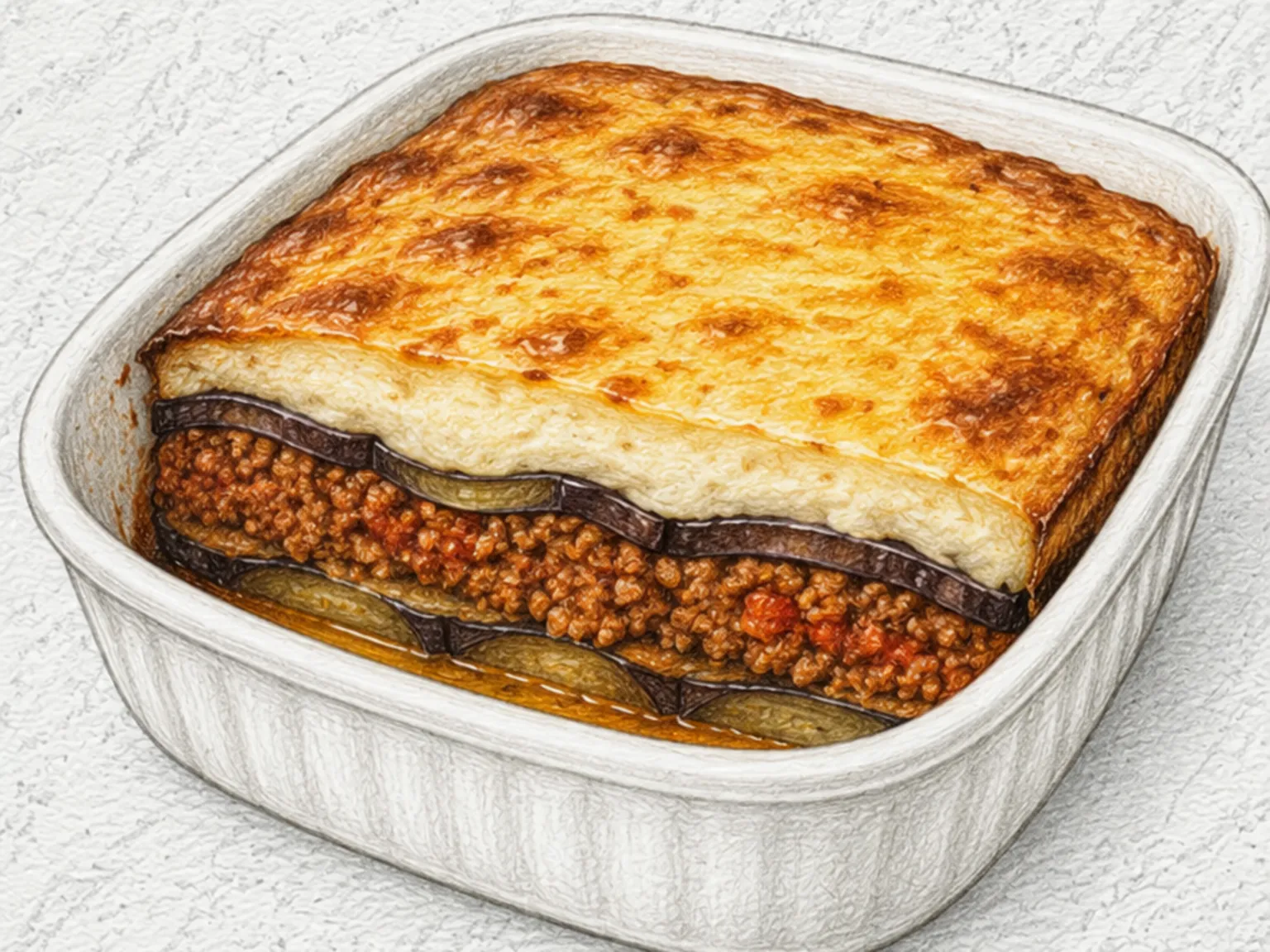
Layers of pan-fried eggplant, cinnamon-scented lamb sauce, and a thick bechamel topping define the structure of this Greek oven-baked casserole.
What makes this special
- Salting the eggplant slices for 30 minutes prevents bitterness in this layered Greek Moussaka.
- 30-minute salt draw removes bitterness and moisture so eggplant holds its shape
- A pinch of cinnamon in the lamb sauce gives this dish its Mediterranean warmth
Key ingredients
Core cooking flow
- 1 Slice the eggplants lengthwise, sprinkle them evenly with salt, and let them stand for 30 minutes.
- 2 Heat a pan over medium heat and cook the eggplant slices in a single layer u...
- 3 In the same pan, cook the onion over medium heat until translucent, then add 500 g ground lamb.
Layers of pan-fried eggplant, cinnamon-scented lamb sauce, and a thick bechamel topping define the structure of this Greek oven-baked casserole. The preparation begins by salting the eggplant slices for thirty minutes to draw out moisture and bitterness, which prevents the vegetable from absorbing excess oil and helps it retain its shape during baking. Inside the meat sauce, ground lamb is simmered with tomatoes and a touch of cinnamon, an addition that tempers the natural gamey scent of the lamb with warm Mediterranean aromatics. To complete the assembly, a layer of bechamel enriched with egg yolks and Parmesan cheese is spread over the top before the dish enters a 180-degree Celsius oven for 40 minutes. The inclusion of egg yolks allows the creamy sauce to set firmly, creating a golden crust that holds the internal components together when the dish is sliced. This structural stability results in clean, visible layers in each serving. Options for customization include replacing or mixing the eggplant with potatoes or zucchini, or substituting the lamb with ground beef. Allowing the moussaka to rest for 15 to 20 minutes after baking ensures the layers settle properly for ideal presentation. Since the flavors intensify when kept in the refrigerator for a day or two, this dish functions well as a make-ahead option for gatherings.
Instructions
Read the steps as a cooking flow: prep, heat, seasoning, doneness control, and finish.
- 1Season
Slice the eggplants lengthwise, sprinkle them evenly with salt, and let them stand for 30 minutes.
When beads of moisture appear on the surface, press them dry with paper towels to remove bitterness and excess water.
- 2Control
Heat a pan over medium heat and cook the eggplant slices in a single layer until both sides are lightly browned.
Add only a little extra oil as needed, since high heat can burn the edges before the centers soften.
- 3Control
In the same pan, cook the onion over medium heat until translucent, then add 500 g ground lamb.
When the meat turns brown and loses its raw smell, stir in 400 g tomato puree and 0.5 teaspoon cinnamon.
- 4Control
Reduce the meat sauce to low heat and simmer for about 15 minutes to thicken it.
Stir occasionally so the bottom does not catch, and stop when a spoon leaves a brief trail through the sauce.
- 5Control
Melt 3 tablespoons butter, stir in 4 tablespoons flour, and cook briefly over low heat.
Pour in 500 ml milk gradually while whisking, then remove from heat once thick and quickly mix in 2 egg yolks.
- 6Control
Layer eggplant, meat sauce, and more eggplant in a baking dish, then cover evenly with bechamel.
Sprinkle with 60 g Parmesan, bake at 180 degrees Celsius for 40 minutes, and rest 15 minutes before slicing cleanly.
After the steps
Pick a recipe that fits this dish.
Continue with shared ingredients, meal pairings, or a similar method.
Recipes That Go Well With This
More Western →Based on shared ingredients and meal pairing
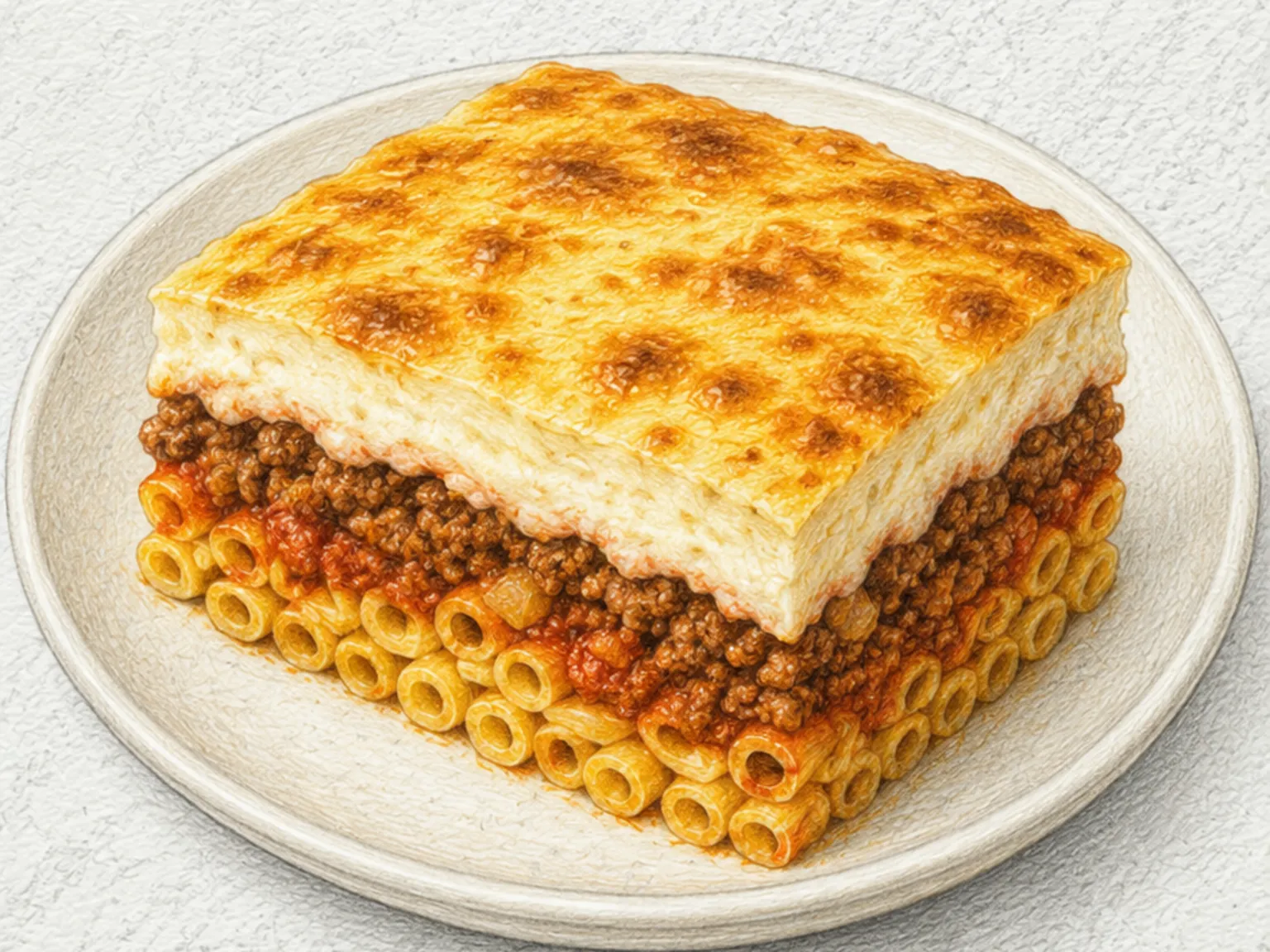
Pastitsio (Greek Cinnamon Beef Macaroni Bechamel Bake)
Pastitsio is a signature Greek oven-baked pasta composed of three distinct layers - macaroni on the bottom, spiced ground beef in the middle, and a thick bechamel on top. The beef is browned with onion and simmered in tomato sauce seasoned with ground cinnamon, which gives pastitsio its distinctive aroma that sets it apart from lasagna. Adding eggs to the bechamel allows it to set firmly in the oven, forming a custard-like cap that can be sliced cleanly with a knife. The macaroni should be slightly undercooked before assembly, as it continues to absorb liquid and soften during baking. Parmesan scattered between the pasta layers bridges the salty richness of the cheese with the meat sauce and creamy bechamel. After baking, a rest of at least fifteen minutes is essential for the layers to hold their structure when cut.
Spanakopita (Greek Spinach and Feta Phyllo Pie)
Spanakopita is a Greek savory pie where spinach is sauteed with onion to drive off moisture, then combined with crumbled feta cheese, beaten eggs, and fresh dill to make a filling that is layered between sheets of buttered phyllo dough and baked at 190 degrees Celsius for thirty-five to forty minutes. Removing as much water from the spinach as possible is the single most important step - any residual moisture soaks through the thin pastry and prevents it from crisping. Phyllo sheets dry out within minutes of being exposed to air, so they must be kept under a damp towel and worked one at a time, each brushed with melted butter before stacking. Four layers on the bottom and four on top provide enough structure and crunch. Scoring the surface before baking allows steam to escape and helps the layers puff and separate into distinct, flaky sheets.
Cretan Dakos Salad (Barley Rusk with Tomato & Feta)
Dakos is a traditional salad from the Greek island of Crete, built on a base of dried barley rusks - thick, twice-baked rounds of bread that have been air-dried to a deep crunch. Ripe tomatoes are grated directly onto the rusk surface rather than sliced, so their juice immediately begins to soften the bread from the inside while the outer rim retains its crunch, creating a textural contrast of crisp edges and a moistened, dense center. Crumbled feta cheese piled on top adds a salty, tangy richness that balances the tomato's acidity, and a generous pour of good olive oil ties the components together. Dried oregano and whole or halved olives complete the dish. Dakos functions simultaneously as a bread course and a salad, and has been part of Cretan summer eating for centuries - a light, satisfying meal that requires no cooking and uses ingredients that thrive in the Mediterranean climate.
Avgolemono Soup (Greek Egg-Lemon Chicken Rice Soup)
Avgolemono - from the Greek avgo (egg) and lemoni (lemon) - is a soup with roots reaching back to Sephardic Jewish communities of the Byzantine Empire who brought egg-lemon sauces to the eastern Mediterranean, where they were absorbed into Greek cooking and eventually became one of the country's most enduring culinary signatures. Chicken broth is simmered with short-grain rice until the grains swell and release enough starch to give the liquid a faint body before the egg mixture even goes in. The defining technique is tempering: beaten eggs and freshly squeezed lemon juice are whisked together until frothy and unified, then ladles of hot broth are drizzled in one by one while whisking constantly, gradually raising the temperature of the egg mixture without allowing it to set. This tempered liquid is then stirred back into the pot with the heat off, transforming the broth into a pale-yellow, velvet-smooth cream. Lemon acidity registers first on the palate, clean and forward, followed by the warmth and body of the chicken stock settling in behind it. The soup must never return to a boil after the eggs are incorporated - even a brief simmer will cause the proteins to seize and turn the broth grainy and opaque. Shredded poached chicken stirred in at the end makes it a complete, sustaining meal, and a final grating of lemon zest over each bowl sharpens the citrus note for those who want more brightness. In Greece, avgolemono is considered the default remedy for cold days and illness, made more often in home kitchens than ordered in restaurants.
Serve with this
Korean Crispy Potato Pancake
Gamja-jeon is a Korean potato pancake made by finely grating raw potatoes, letting the starch settle out of the liquid for at least ten minutes, discarding the water, and folding the settled starch back into the pulp to improve binding. Waiting long enough for full starch separation is what gives the batter enough cohesion to hold together when the pancake hits the hot pan. Spreading the batter as thinly as possible produces glass-crisp edges while the center retains a chewy, starchy bite characteristic of potato starch. The first side must cook all the way through and the underside must firm up completely before any attempt to flip, and using two spatulas simultaneously makes the turn fast enough to keep the pancake intact. Frying both sides over medium heat until evenly golden delivers a crust that is crisp on the outside while the center stays moist. A dipping sauce of soy sauce, vinegar, and minced cheongyang green chili cuts through the oily richness with sharpness and heat.
Gotgam Cream Cheese Roll (Dried Persimmon Rolls)
Gotgam cream cheese roll is a no-cook Korean dessert that requires nothing more than a knife, a bowl, and a refrigerator. Dried persimmons are slit open and flattened into thin sheets, each one acting as the outer wrapper. The filling is cream cheese mixed with honey and fresh lemon juice to balance its natural richness with acidity, and finely chopped walnuts are folded in throughout to add a crunchy, nutty element to every bite. The filling is spread across the opened persimmon, which is then rolled tightly and wrapped in plastic wrap. Twenty minutes in the refrigerator firms the roll enough to slice cleanly. Dipping the knife in warm water and wiping it dry before each cut produces the smoothest cross-sections. The finished slices reveal clearly defined layers: the chewy, caramel-sweet dried persimmon on the outside, the tangy cream cheese in the middle, and flecks of walnut distributed throughout. The combination makes it a natural pairing with wine or a polished addition to a traditional holiday table.
Blue Crab Lemon Garlic Pasta
Blue crab lemon garlic spaghetti starts by slowly warming thinly sliced garlic in olive oil over low heat until fragrant - pale gold, not browned. Crab meat and a splash of rice wine go in next to cook off any raw marine smell before butter is added and stirred until it melts into the oil. Starchy pasta water emulsifies the fat into a thin, glossy sauce that coats each strand of spaghetti evenly without heaviness, carrying a clean, oceanic flavor throughout. Lemon zest and juice are added only after the heat is turned off - adding them while the pan is still hot drives off the volatile citrus aroma before it reaches the plate. Keeping the garlic just short of golden, pale and softened rather than browned, is what separates a clean, nutty depth from an acrid bitterness that would overpower the crab. Fresh crab meat, picked directly from a live blue crab, delivers a noticeably sweeter flavor than thawed frozen product and is worth the extra effort when in season.
Similar recipes
Chicken Souvlaki (Greek Lemon Herb Grilled Chicken Skewer)
Chicken souvlaki consists of Greek grilled skewers prepared using pieces of chicken thigh that have been submerged in a marinade of lemon juice, olive oil, garlic, and dried oregano. This marination period is intended to give the citric acid sufficient time to interact with the meat. The lemon juice functions by breaking down surface proteins, which allows the various seasonings to move into the interior of the chicken instead of remaining only on the surface. Simultaneously, the olive oil establishes a physical boundary during the grilling stage that reduces the rate of moisture evaporation, ensuring that the inside of each piece remains moist. The addition of dried oregano contributes an earthy and slightly bitter herbal quality that balances the acidity of the lemon to produce the clean and straightforward flavor profile typical of Greek outdoor cooking. Using chicken thigh meat is a deliberate choice because its natural fat distribution protects the muscle fibers from becoming tough under the high heat of the grill, unlike leaner breast meat. This results in individual pieces that have a glossy exterior and a tender texture when they are removed from the heat. Serving the skewers with a portion of plain yogurt provides a temperature and texture contrast to the warm, smoky meat. When these components are combined inside warm pita bread with slices of fresh tomato and raw onion, the dish becomes a portable meal that provides satiety without creating a sensation of heaviness.
Greek Custard Phyllo Pie (Crispy Filo & Semolina Custard)
Galaktoboureko is a beloved Greek pastry in which sheets of butter-brushed phyllo dough are layered around a thick semolina custard, baked until golden, and then drenched in cold lemon syrup while still hot from the oven. Every sheet of phyllo must be brushed with melted butter before stacking, a labor-intensive process that creates dozens of paper-thin layers capable of shattering at the touch of a fork. The custard is cooked on the stovetop by whisking semolina into hot milk in a slow, steady stream until the mixture thickens into a smooth but faintly grainy cream. Unlike flour-based pastry creams, semolina custard retains a subtle granular texture that gives the filling a distinct character. Egg yolks and whole eggs are both incorporated, adding richness and a custardy softness, and vanilla deepens the flavor further. Pouring cold syrup over the pastry while it comes scorching from the oven causes rapid absorption: the liquid rushes between the phyllo layers and saturates the custard without turning the top surface soft and soggy. The temperature contrast between hot pastry and cold syrup is the exact mechanism that preserves the crisp exterior. Adding cinnamon or orange zest to the custard before filling introduces a fragrant complexity that offsets the sweetness of the syrup. The pastry tastes noticeably different eaten warm versus at room temperature, offering two distinct textural and aromatic experiences from the same preparation.