Charim

2686 Korean & World Recipes

2686+ Korean recipes, clean and organized. Ingredients to instructions, all at a glance.

Korean Pan-fried Radish Pancakes

Korean Pan-fried Radish Pancakes

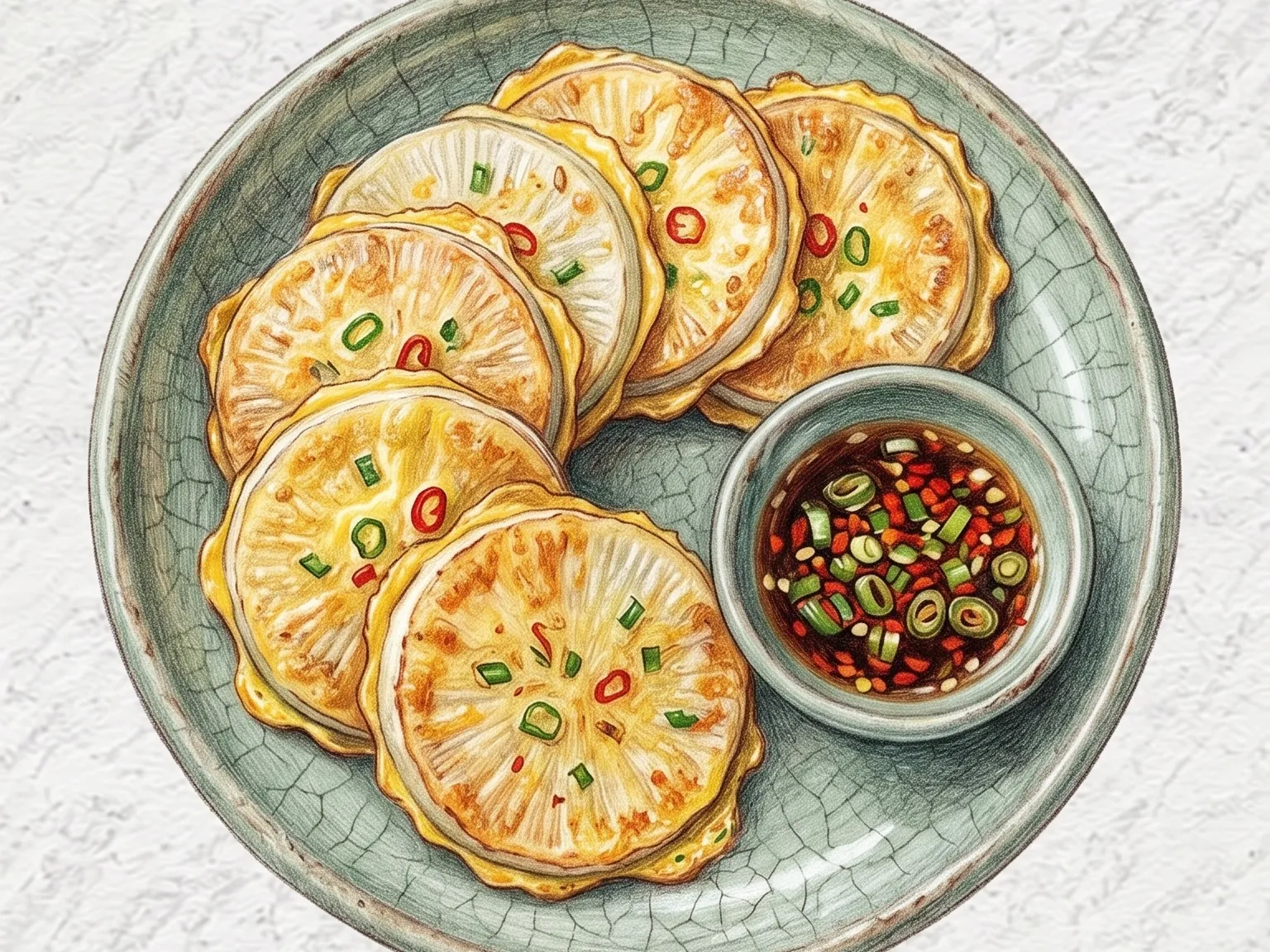
Mu-jeon is a Korean pan-fried radish pancake belonging to the same vegetable-jeon family as hobak-jeon and gaji-jeon, though daikon radish brings a textural character distinctly its own. Slicing to an even 3mm thickness is critical - the radish must cook through until soft and sweet inside while the egg coating crisps golden outside. Too thick and the raw center retains an acrid bite; too thin and the slices collapse. Five minutes of salting draws surface moisture so the flour adheres properly and the oil does not splatter during frying. Slow cooking over low heat is essential: the egg batter sets gradually into a golden shell while the heat converts the radish's starch into sugars, replacing the raw spiciness with a gentle sweetness completely unlike the uncooked root. Dipped in cho-ganjang (soy-vinegar sauce), the acidity cuts through the pan-fried richness. Mu-jeon appears on Korean holiday tables during Chuseok and Seollal alongside other vegetable jeon as part of the traditional jeon platter.

Prep 15minCook 12min2 servings

Adjust Servings

2servings
servings

Instructions

  1. 1

    Peel radish, slice to 0.3 cm thickness, and season with 1 g salt for 5 minutes.

  2. 2

    Mix pancake mix, rice flour, egg, and water into a thin batter, then season with remaining salt.

  3. 3

    Pat dry the salted radish slices and finely chop the scallion.

  4. 4

    Heat a pan over medium heat, add oil, dip radish in batter, and place on the pan.

  5. 5

    Top with scallion and pan-fry 2–3 minutes per side until golden.

  6. 6

    Drain briefly on paper towel and serve warm as a side dish.

🛒Shop Ingredients on Amazon

As an Amazon Associate, we may earn from qualifying purchases.

Tips

If radish releases too much moisture, add 1 tbsp rice flour to adjust batter thickness.
Cook quickly over medium heat rather than slowly on low heat for better texture.

Nutrition (per serving)

Calories
210
kcal
Protein
6
g
Carbs
30
g
Fat
8
g

More Recipes

Korean Eggplant Pancakes (Egg-Battered Pan-Fried Eggplant)
Side dishesEasy

Korean Eggplant Pancakes (Egg-Battered Pan-Fried Eggplant)

Gaji-jeon belongs to the Korean jeon family - vegetables dipped in egg wash and pan-fried in a thin layer of oil, a technique that appears at ancestral rites (jesa) and holiday tables. Eggplant rounds are sliced about 7mm thick - thin enough to cook through but thick enough to maintain a soft center. A light dusting of flour before the egg wash helps the batter adhere. The egg coating sets into a golden, lacy shell in the pan, while the eggplant inside steams in its own moisture. The result is a contrast between the crisp, slightly eggy exterior and the collapsing, custardy eggplant within. Dipped in a simple soy-vinegar sauce, each piece delivers a clean, understated flavor. Korean families often fry gaji-jeon alongside hobak-jeon and other vegetable jeon for Chuseok.

🏠 Everyday🍱 Lunchbox
Prep 12minCook 10min2 servings
Korean Stir-fried Julienne Potatoes
Side dishesEasy

Korean Stir-fried Julienne Potatoes

Gamja-chae-bokkeum - stir-fried julienned potatoes - is a deceptively simple banchan where the cutting technique determines the outcome. Potatoes are julienned into matchstick-thin strips, then soaked in cold water to wash away surface starch - this is the critical step that prevents the strips from clumping into a sticky mass in the pan. After draining completely, they hit a hot, lightly oiled pan and cook for just three to four minutes, tossed frequently. The goal is a strip that is cooked through but still has an audible crunch when bitten - not soft, not raw. Salt and a splash of vinegar are the only seasonings, keeping the focus on the potato's clean, starchy sweetness. This banchan has been a staple of Korean school lunches and company cafeterias for decades, valued for being vegetarian, cheap, and universally inoffensive.

🏠 Everyday🍱 Lunchbox
Prep 12minCook 8min4 servings
Korean Tofu Jeon (Golden Egg-Coated Pan-Fried Tofu)
GrilledEasy

Korean Tofu Jeon (Golden Egg-Coated Pan-Fried Tofu)

Dubu-jeon is a Korean pan-fried tofu dish where firm tofu is sliced into 1 cm thick pieces, seasoned with salt and pepper, dusted in flour, dipped in beaten egg, and fried until golden. Pressing the tofu for at least fifteen minutes under a heavy weight wrapped in paper towels is the most important step-excess moisture causes oil to splatter and prevents the egg coating from adhering properly. Each side needs three to four uninterrupted minutes over medium heat to develop an even golden crust; flipping too often strips the egg batter away. A dipping sauce of soy sauce, vinegar, and chili flakes transforms the mild, nutty tofu into something more complex, adding salt, acidity, and heat that complement the plain simplicity of the base.

🍺 Bar Snacks🏠 Everyday
Prep 12minCook 8min2 servings
Korean Pan-fried Zucchini Jeon
GrilledEasy

Korean Pan-fried Zucchini Jeon

Hobak-jeon is a Korean pan-fried zucchini pancake made by slicing Korean zucchini into even half-centimeter rounds, salting them for five minutes to draw out excess moisture, then dusting in flour, dipping in beaten egg, and frying over medium heat for two to three minutes per side. The salting step is essential-it removes water that would otherwise make the jeon soggy, and it simultaneously concentrates the zucchini's mild natural sweetness into a more pronounced flavor. The egg coating acts as a gentle heat buffer, keeping the interior soft and moist while the exterior develops a pale golden crust with a subtle nuttiness from the cooked egg. It is one of the most versatile banchan in Korean cooking, equally at home in a child's lunchbox, on an everyday dinner table alongside soup or stew, or stacked on a holiday platter.

🍺 Bar Snacks🏠 Everyday
Prep 10minCook 12min2 servings
Korean Steamed Shishito Pepper Banchan
Side dishesEasy

Korean Steamed Shishito Pepper Banchan

Kkwarigochu-jjim steams flour-dusted shishito peppers rather than frying them, yielding an oil-free banchan with a moist, tender bite. The wrinkled surface of shishito peppers catches flour naturally, and that thin coating traps steam during cooking to keep the flesh juicy - but too much flour causes the peppers to clump into a sticky mass, so the trick is to toss them in a sieve with a light dusting. Five to six minutes of steaming wilts the peppers and turns the flour coat translucent. A quick toss in soy sauce, gochugaru, garlic, and sesame oil layers savory-spicy seasoning over the pepper's own mild sweetness. Because no oil is used, the calorie count stays low, and the steaming method preserves more of the pepper's vitamin C compared to stir-frying. This is a go-to for anyone looking for a lighter approach to shishito pepper banchan.

🏠 Everyday🍱 Lunchbox
Prep 12minCook 7min4 servings
Korean Lotus Root Pancakes
Side dishesMedium

Korean Lotus Root Pancakes

Lotus root is sliced into rounds and coated in a light batter of buchim flour and egg before being pan-fried until golden on both sides. The root's characteristic perforations show through the thin batter, creating a lace-like appearance on each piece that makes this jeon visually distinctive. Biting through the crisp exterior reveals the lotus root's dual texture: an initial crunch from the starchy flesh followed by a slightly sticky chew that clings pleasantly to the teeth. Slicing to a thickness of five to six millimeters strikes the right balance between maintaining the crunch and ensuring the center cooks through. The egg-enriched batter adheres evenly to the root's smooth surface and sets immediately upon contact with hot oil, sealing in moisture. Minimal salt in the batter allows the lotus root's faint natural sweetness to emerge, and a dipping sauce of soy sauce and vinegar provides the acidity needed to cut through the fried exterior's richness. Commonly served during Korean holidays, this jeon is simple enough for everyday cooking as well.

🏠 Everyday🍱 Lunchbox
Prep 15minCook 12min4 servings
More Side dishes