Braised Korean Radish (Soy Garlic Slow-Cooked Side)

Braised Korean Radish (Soy Garlic Slow-Cooked Side)

Quick answer

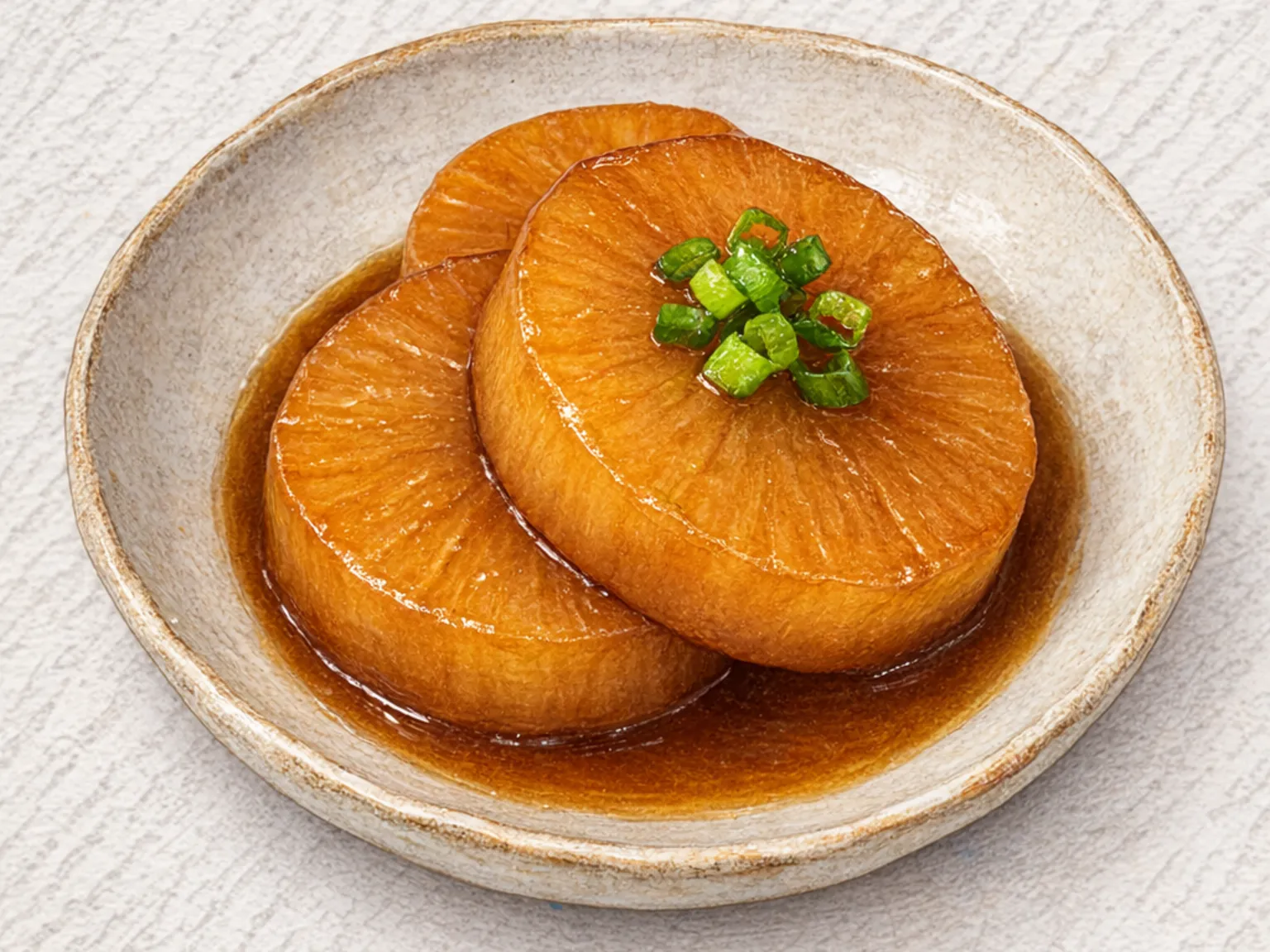
Mu-jjim is a Korean braised radish dish where thick-cut Korean radish is simmered slowly in a covered pot with soy sauce, sugar, and garlic.

What makes this special

  • Mu-jjim turns thick radish slices into translucent, savory rounds as they absorb a garlic-soy broth over low heat.
  • Radish turns translucent as it absorbs soy and sugar broth
  • Lid-on low heat lets the brine reduce slowly into the flesh
Total time
42 min
Level
Easy
Servings
2 servings
Ingredients
7
Calories
140 kcal
Protein
3 g

Key ingredients

Korean radishsoy saucewatersugarminced garlic

Core cooking flow

  1. 1 Peel away only the tough outer layer from 500 g Korean radish, then cut it i...
  2. 2 Put 250 ml water, 3 tablespoons soy sauce, 1 tablespoon sugar, and 1 teaspoon minced garlic in a pot.
  3. 3 When the seasoning boils, add the radish in as even a layer as possible and...

Mu-jjim is a Korean braised radish dish where thick-cut Korean radish is simmered slowly in a covered pot with soy sauce, sugar, and garlic. The radish absorbs the seasoned liquid as it cooks, turning translucent from edge to center and developing a natural sweetness that balances the saltiness of the soy base. A drizzle of sesame oil at the end adds a nutty fragrance, and a single sliced green chili contributes a mild kick to the finish. Despite the short ingredient list, this banchan pairs naturally with rice at any meal and holds up well as a make-ahead side throughout all seasons. Keeping the heat at medium or below for at least twenty minutes allows the radish to soften fully and take in the seasoning without becoming mushy.

Prep 12min Cook 30min 2 servings

Instructions

Read the steps as a cooking flow: prep, heat, seasoning, doneness control, and finish.

6 steps
  1. 1
    Season

    Peel away only the tough outer layer from 500 g Korean radish, then cut it into 2 cm thick rounds or half-moons.

    Score the center of each piece shallowly so the seasoning can reach the middle faster.

  2. 2
    Season

    Put 250 ml water, 3 tablespoons soy sauce, 1 tablespoon sugar, and 1 teaspoon minced garlic in a pot.

    Heat over medium-high, stirring until the sugar dissolves and the liquid comes to a steady boil.

  3. 3
    Control

    When the seasoning boils, add the radish in as even a layer as possible and spoon the liquid over the top once.

    Once it returns to a boil, reduce to medium or medium-low heat and cover the pot.

  4. 4
    Control

    Braise gently for about 20 minutes, turning or shifting the radish once halfway through.

    If the liquid reduces too fast or the pot sounds dry, add a small splash of water to prevent scorching.

  5. 5
    Control

    When the radish edges look translucent and a chopstick goes in with only slight resistance, remove the lid.

    Spoon the sauce over the pieces repeatedly and reduce for about 8 minutes until glossy.

  6. 6
    Finish

    Lower the heat, then add 1 teaspoon sesame oil and 1 sliced green chili.

    Warm for just 1 minute so the sesame aroma stays fresh, then turn off the heat and serve with the remaining sauce.

After the steps

Pick a recipe that fits this dish.

Continue with shared ingredients, meal pairings, or a similar method.

Recipes That Go Well With This

More Steamed →

Based on shared ingredients and meal pairing

Korean Braised Mackerel (Fatty Mackerel with Radish in Spicy Soy Sauce)
Shared ingredient: korean radish Steamed

Korean Braised Mackerel (Fatty Mackerel with Radish in Spicy Soy Sauce)

Godeungeo-jjim is a Korean braised mackerel dish cooked low and slow with Korean radish, sliced onion, gochugaru, soy sauce, and fresh ginger. Mackerel belongs to the blue-backed fish category with a high natural fat content, and that fat absorbs the bold, spiced seasoning during braising in a way that leaner fish cannot. The flavor that results is deeply savory with a rounded heat that does not taste sharp or one-dimensional. Radish placed at the bottom of the pan serves a dual purpose: it draws out the fishy aroma during cooking and simultaneously soaks up the braising liquid, making it almost as desirable to eat as the fish itself. Ginger neutralizes the remaining raw fish notes and keeps the overall taste from feeling heavy, providing a subtle warmth that lifts the richness. As the braising liquid reduces, it thickens into a glossy, intensely flavored sauce that is commonly spooned over steamed rice to the last drop. Mackerel is widely available and inexpensive in Korea, which has made this preparation a household staple across generations.

Korean Pan-fried Radish Pancakes
Shared ingredient: korean radish Side dishes

Korean Pan-fried Radish Pancakes

Mu-jeon is a Korean pan-fried radish pancake belonging to the same vegetable-jeon family as hobak-jeon and gaji-jeon, though daikon radish brings a textural character distinctly its own. Slicing to an even 3mm thickness is critical - the radish must cook through until soft and sweet inside while the egg coating crisps golden outside. Too thick and the raw center retains an acrid bite; too thin and the slices collapse. Five minutes of salting draws surface moisture so the flour adheres properly and the oil does not splatter during frying. Slow cooking over low heat is essential: the egg batter sets gradually into a golden shell while the heat converts the radish's starch into sugars, replacing the raw spiciness with a gentle sweetness completely unlike the uncooked root. Dipped in cho-ganjang (soy-vinegar sauce), the acidity cuts through the pan-fried richness. Mu-jeon appears on Korean holiday tables during Chuseok and Seollal alongside other vegetable jeon as part of the traditional jeon platter.

Korean Beef & Quail Egg Soy Braise
Serve together Side dishes

Korean Beef & Quail Egg Soy Braise

Jangjorim is how Korean cooks make beef last all week. Eye-round is simmered, shredded along the grain, and braised in concentrated soy sauce with sugar, garlic, and whole black peppercorns. Quail eggs are added to the pot and absorb the dark liquid until chestnut brown throughout. Low heat reduces the sauce to a thick, glossy coating on every strand of meat and the surface of each egg. Served cold, jangjorim is intensely salty - meant for small bites with plain rice, where one piece of soy-stained beef carries an entire mouthful of grain.

Korean Steamed Perilla Leaves
Similar recipe Steamed

Korean Steamed Perilla Leaves

Kkaennip-jjim is a Korean banchan made by stacking perilla leaves one by one with a soy sauce, gochugaru, and garlic seasoning between each layer, then gently braising them covered over low heat. As the leaves wilt, they absorb the sauce and release their distinctive herbal aroma, which mingles with the soy's umami into a layered flavor. Sesame oil brushed between the leaves adds a nutty fragrance, while the chili flakes provide a slow-building warmth. Wrapping a spoonful of steamed rice in a single seasoned leaf makes for a complete bite, which is why this dish is considered one of Korea's most reliable everyday side dishes.

Serve with this

Korean Cockle & Water Parsley Mixed Rice
Rice Medium

Korean Cockle & Water Parsley Mixed Rice

Kkomak-minari bibimbap is a seasonal rice bowl that comes together when cockles are at their peak in early spring, pairing the ocean sweetness of briefly blanched cockle meat with the clean, grassy sharpness of raw water parsley (minari). The cockle meat is rinsed in light salt water to remove any residual sand, then blanched for no more than thirty seconds in boiling water so the flesh stays springy rather than contracting into a rubbery texture. Julienned carrot and zucchini are each stir-fried separately, controlling moisture and flavor independently, then set aside to cool before assembly. A bowl of well-steamed rice is layered with the blanched cockles, the sauteed vegetables, and the raw minari placed on top last to protect its volatile fragrance from the heat below. A bibimbap sauce made from gochujang, sesame oil, minced garlic, and a touch of vinegar ties everything together when mixed, balancing the briny umami of the cockles against the brightness of the parsley. Sesame oil and toasted sesame seeds added at the end round the flavors and give the bowl a warm, nutty finish.

🎉 Special Occasion 🍱 Lunchbox
Prep 20min Cook 15min 2 servings
Korean Kohlrabi Kimchi (Cubed Gochugaru Fermented Crisp)
Kimchi Easy

Korean Kohlrabi Kimchi (Cubed Gochugaru Fermented Crisp)

Kolrabi kimchi is made by cutting kohlrabi into 2 cm cubes, brining them in coarse salt, then mixing with gochugaru, fish sauce, minced garlic, and plum syrup before fermentation. Kohlrabi has lower moisture content and a denser cellular structure than Korean radish, which means its crunch holds up through days of fermentation without softening into mush. The brining step draws internal moisture out of the kohlrabi while driving salt evenly into the tissue, and this stage must be completed thoroughly so that seasoning can penetrate all the way through during fermentation. Kohlrabi's natural sweetness creates a clear contrast against the heat of gochugaru, adding textural depth to the flavor profile. Fish sauce builds the savory fermented foundation, while plum syrup contributes both acidity and sweetness to keep the overall seasoning in balance. Eaten immediately after mixing, the kimchi tastes fresh and light, similar to a dressed salad. After one to two days at room temperature or three to four days in the refrigerator, the umami deepens noticeably and the characteristic tang of fermentation emerges. It works well as a substitute for kkakdugi alongside rice and grilled meats.

🍱 Lunchbox 🏠 Everyday
Prep 30min 4 servings
Imja-sutang (Royal Chilled Pine Nut Soup)
Soups Hard

Imja-sutang (Royal Chilled Pine Nut Soup)

Imja-sutang is a royal Korean chilled soup that combines finely ground pine nuts and sesame seeds with chicken broth to create an opaque, creamy liquid of remarkable richness. The nut paste is blended with cooled chicken stock and a touch of milk until smooth, producing a porridge-like consistency that coats the palate with a gentle, lingering nuttiness. Poached chicken breast is shredded along the grain and submerged in the broth, and thin slices of cucumber are sometimes added for a cool, crisp contrast. The soup is traditionally served cold or at room temperature, making it especially refreshing in summer. Seasoning is minimal - just salt - because the natural oils in the pine nuts and sesame provide all the depth the dish needs. Imja-sutang traces its origins to Joseon dynasty court cuisine, where it was prepared for royal banquets, and it retains an air of elegance that elevates any table it appears on.

🏠 Everyday 🎉 Special Occasion
Prep 25min Cook 35min 2 servings

Similar recipes

Korean Braised Beef with Dried Radish
Steamed Medium

Korean Braised Beef with Dried Radish

Mumallaengi sogogi jorim is a Korean soy-braised side dish of rehydrated dried radish strips and lean beef round, cooked down until the sauce just barely covers the ingredients. Drying concentrates the radish's natural sugars and umami, and once soaked and braised the strips become chewy and deeply flavored in a way fresh radish cannot replicate. Before soaking, a quick rinse removes any dust or impurities from the drying process, and twenty minutes or more in cold water restores just enough elasticity for a satisfying texture after cooking. Thin-sliced beef is pre-seasoned with cooking wine to neutralize any off-smell, then added to the pan so it cooks cleanly and without a heavy aroma. Oligosaccharide syrup adds a gentle sheen and sweetness to the soy base without making the dish cloying. Toasted sesame seeds scattered over the top finish the dish with a nutty fragrance. Like most Korean braised side dishes, this one improves after a night in the refrigerator as the seasoning continues to penetrate, making it a practical and reliable choice for lunchboxes and weekday meal preparation that can be made ahead and eaten across several days.

🏠 Everyday 🎉 Special Occasion
Prep 25min Cook 45min 4 servings
Korean Soy Steamed Potatoes
Steamed Easy

Korean Soy Steamed Potatoes

Gamja-jjim is a Korean braised potato banchan made by simmering potato pieces in a sauce of soy sauce, sugar, and minced garlic until the liquid reduces to a thick, glossy glaze. As the sauce concentrates, it coats every cut surface of the potato with a lacquered sheen while the seasoning penetrates through to the center, so the flavor is consistent from the outside in. The sugar caramelizes slightly during the final minutes of reduction, adding a faint toffee-like sweetness to the soy's deeper, saltier notes. Minced garlic breaks down in the heat and melds into the sauce, providing an umami backbone that rounds out the simpler flavors. Finishing with sesame oil and a generous scatter of sliced chives introduces a toasted, nutty aroma and a fresh herbal brightness. The potato itself holds its shape but is cooked through to a fluffy, yielding interior beneath the sticky exterior. Simple to make and requiring few ingredients, it is the kind of side dish that disappears from the table without much fanfare, pairing effortlessly with a bowl of rice.

🏠 Everyday 🧒 Kid-Friendly
Prep 12min Cook 25min 2 servings
Korean Steamed Shishito Pepper Banchan
Side dishes Easy

Korean Steamed Shishito Pepper Banchan

Kkwarigochu-jjim is a banchan made by coating shishito peppers with a thin dusting of flour and steaming them before tossing them in a seasoning sauce, which means no oil is used in the cooking process and the result is lighter than stir-fried or pan-fried versions. The wrinkled, bumpy surface of shishito peppers catches flour naturally. The right technique is to place the peppers in a sieve, scatter the flour over them, and shake gently to distribute an even, minimal coating. Too much flour causes the peppers to stick together into a clump during steaming. Five to six minutes of steaming wilts the peppers completely and turns the flour coat from white to translucent, while the moisture released from inside the peppers keeps the flesh tender and juicy. A quick toss in a sauce of soy sauce, gochugaru, minced garlic, and sesame oil lays a savory, mildly spicy layer over the pepper's own gentle sweetness. Because no cooking oil is involved, the calorie count is significantly lower than pan-fried shishito banchan, and steaming retains more of the pepper's vitamin C than high-heat stir-frying. Placed alongside richer, oil-based side dishes, kkwarigochu-jjim provides a clean, refreshing contrast on the table.

🏠 Everyday 🍱 Lunchbox
Prep 12min Cook 7min 4 servings

Tips

Score the center of each piece so seasoning penetrates faster.

Nutrition (per serving)

Calories
140
kcal
Protein
3
g
Carbs
24
g
Fat
4
g