Charim

2686 Korean & World Recipes

2686+ Korean recipes, clean and organized. Ingredients to instructions, all at a glance.

Korean Quick Pickled Daikon

Korean Quick Pickled Daikon

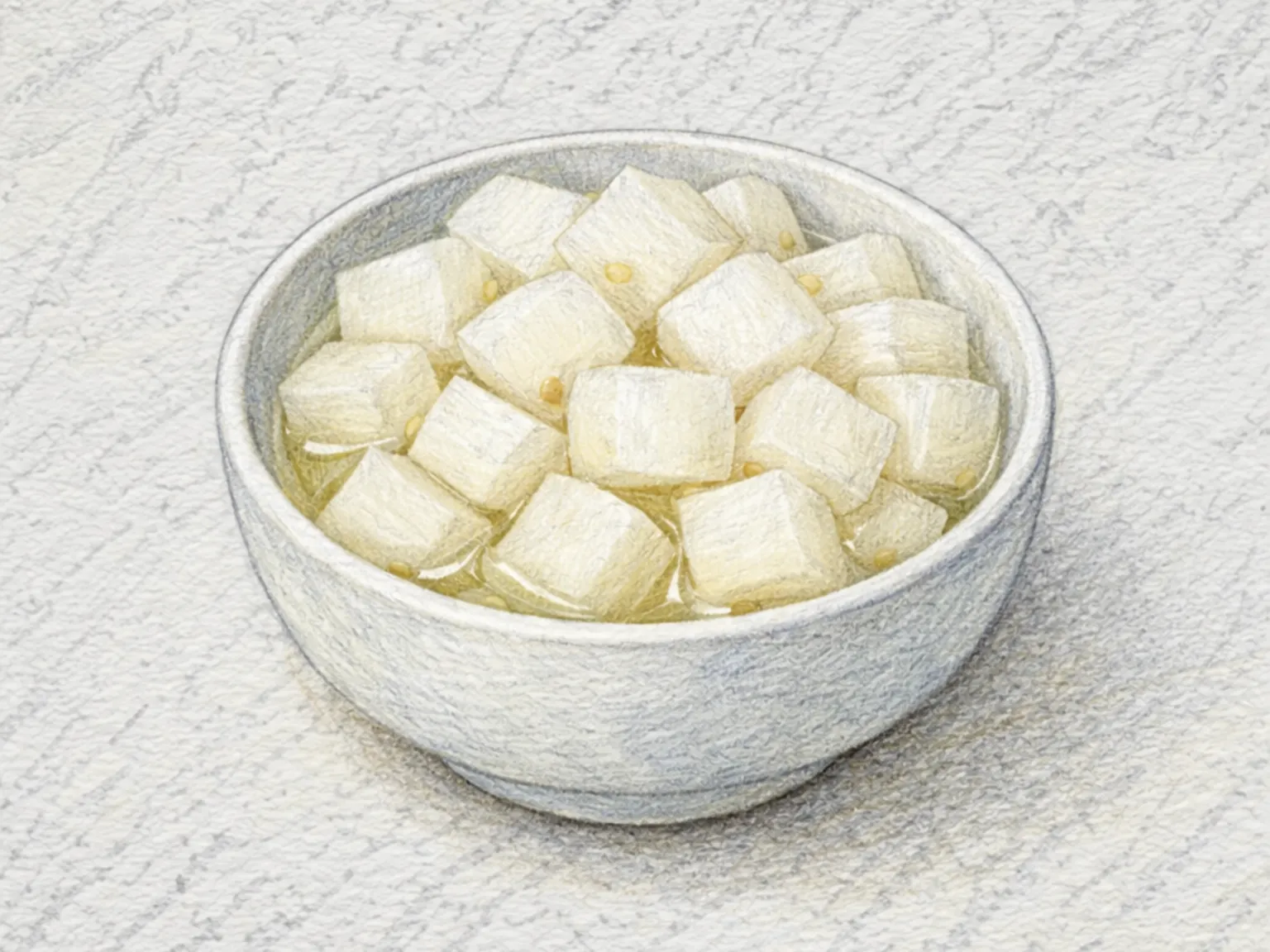
Mu-pickle - Korean quick-pickled daikon - is the yellow pickled radish that arrives alongside every order of Korean fried chicken, forming an inseparable trio with the chicken and cola. Radish is cut into cubes or half-moons and submerged in a boiled brine of vinegar, sugar, salt, and water. Though edible within thirty minutes, overnight refrigeration allows the sweet-sour brine to penetrate fully to the core. The bright yellow color of commercial chicken-mu comes from gardenia or turmeric extract - home versions skip the dye without affecting taste. The vinegar-to-sugar ratio is the critical variable: too much vinegar and the acidity overwhelms; too much sugar and it tastes like candied fruit. A 1:1 ratio is the reliable baseline. When eating greasy fried chicken or donkatsu, a single piece of mu-pickle acts as a palate reset - the vinegar's sharpness cuts through the oil and refreshes the mouth between bites. Stored refrigerated, the pickles maintain their crunch for over two weeks.

Prep 10min06 servings

Adjust Servings

2servings
servings

Instructions

  1. 1

    Cut daikon into bite-sized cubes.

  2. 2

    Mix vinegar, sugar, salt, water to make the pickling brine.

  3. 3

    Pack daikon into a jar and pour brine over.

  4. 4

    Refrigerate at least one day before eating.

🛒Shop Ingredients on Amazon

As an Amazon Associate, we may earn from qualifying purchases.

Tips

Add a pinch of turmeric powder to achieve the classic yellow color.

Nutrition (per serving)

Calories
50
kcal
Protein
1
g
Carbs
12
g
Fat
0
g

More Recipes

Korean Beet Radish Pickle
KimchiEasy

Korean Beet Radish Pickle

Beet mu pickle is a Korean pickle of beet and Korean radish cured together in a vinegar, sugar, and salt brine. The beet's intense red pigment dyes the radish pieces a vivid pink, while the radish contributes its crisp, snapping texture alongside the beet's mellow sweetness. Vinegar keeps the overall flavor bright and refreshing, and sugar smooths out any sharp acidity. This colorful pickle works as a palate cleanser alongside rich meats or as a crunchy side with Korean street food.

🥗 Light & Healthy🍱 Lunchbox
Prep 18minCook 10min4 servings
Chicken Mu (Korean Fried Chicken Radish Pickle)
KimchiEasy

Chicken Mu (Korean Fried Chicken Radish Pickle)

The crunchy, sweet-sour radish pickle served with every order of Korean fried chicken - now easy to make at home in under 15 minutes. Cubed radish is submerged in a cooled brine of vinegar, sugar, salt, and whole black peppercorns. Using fully cooled brine rather than hot is critical for maintaining the radish's firm, snapping crunch. Ready to eat after one day of refrigeration, its bright acidity cleanses the palate between bites of crispy chicken. Stored in a glass jar, this pickle keeps for over a week.

Quick
Prep 10minCook 5min4 servings
Korean Soy Pickled Radish Cubes
KimchiEasy

Korean Soy Pickled Radish Cubes

Mu jangajji is a fundamental Korean soy-pickled radish made by cutting radish into 1.5 cm cubes, packing them in a sterilized jar with dried chili, and pouring over a boiled brine of soy sauce, vinegar, and sugar. The radish's firm flesh absorbs the sweet-salty brine gradually while maintaining its crisp bite, and the dried chili adds a gentle warmth and aroma to the liquid. Vinegar balances the soy's saltiness with a clean tang, and using dense winter radish yields the best texture. This is one of the most versatile Korean pickles, appearing alongside gimbap, bibimbap, and gukbap as a standard table companion.

🍱 Lunchbox
Prep 20minCook 10min4 servings
Korean-Style Cabbage Pickle
KimchiEasy

Korean-Style Cabbage Pickle

Yangbaechu pickle is a quick Korean-style vinegar pickle made by pouring a hot brine of vinegar, sugar, salt, and whole peppercorns over bite-sized cabbage and carrot pieces. The hot liquid slightly wilts the vegetables while they retain a firm, crisp crunch. Whole black peppercorns add a subtle spiced note that gives the pickle more dimension than a plain vinegar soak. Ready after just one day of refrigeration, it is commonly served alongside fried cutlets, burgers, or other rich dishes to cut through greasiness. Best consumed within a week for peak crunchiness.

🍱 Lunchbox
Prep 15minCook 8min4 servings
Korean Soy Pickled Beet (Vinegar Soy Brine Jangajji)
KimchiEasy

Korean Soy Pickled Beet (Vinegar Soy Brine Jangajji)

Beet jangajji is a Korean soy-pickled beet prepared by slicing beets thin and submerging them in a cooled brine of soy sauce, vinegar, and sugar. The vinegar cuts through the beet's earthy undertone, leaving a clean sweetness sharpened by acidity, while onion adds a mellow depth to the pickling liquid. As the brine cools, the beet's vivid red pigment bleeds into the liquid, creating a striking appearance. After at least a day of pickling, the flavor penetrates fully, making this a crisp, refreshing side dish alongside rice or grilled meats.

🍱 Lunchbox
Prep 20minCook 10min2 servings
Korean Pickled Radish Wraps
KimchiEasy

Korean Pickled Radish Wraps

Ssam-mu is a Korean sweet-and-sour pickled radish made by slicing Korean radish into very thin two-millimeter rounds and submerging them in a warm brine of water, vinegar, sugar, salt, and bay leaves. The slices must be thin enough to wrap around grilled meat without tearing, and the brine is cooled to lukewarm before pouring - boiling hot liquid would cook the radish and destroy its crunch. Ready after one day of refrigeration, the pickle reaches its peak on day three when the vinegar tang and sugar sweetness have fully penetrated each slice. Adding a lemon slice to the jar introduces a fresh citrus note. Wrapped around a piece of grilled pork belly or fried chicken, the sweet-sour radish provides an immediate contrast that lifts the fatty richness of each bite.

🍱 Lunchbox Quick
Prep 15minCook 5min4 servings
More Side dishes