Charim

2686 Korean & World Recipes

2686+ Korean recipes, clean and organized. Ingredients to instructions, all at a glance.

Korean Spicy Radish Salad

Korean Spicy Radish Salad

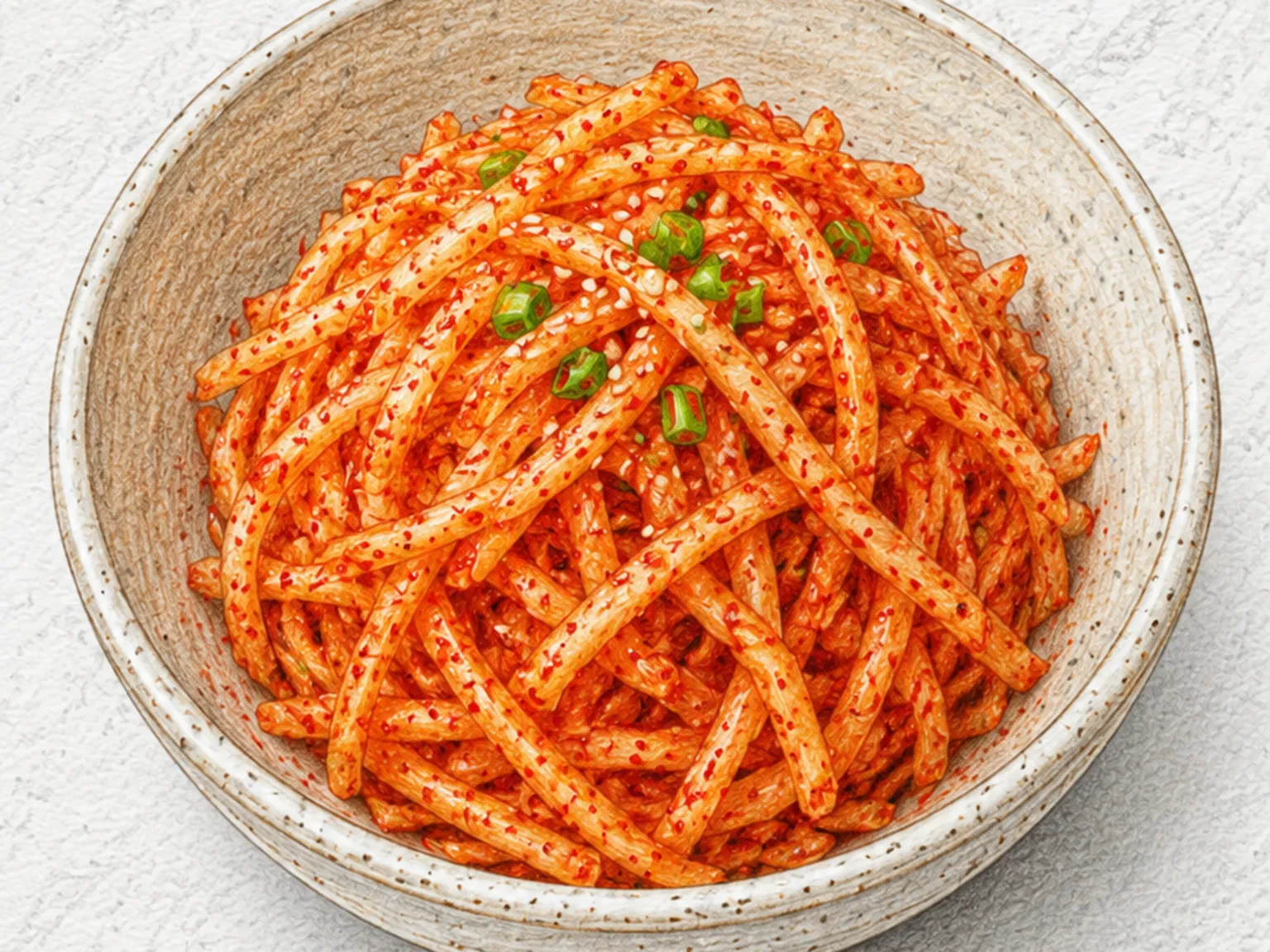
Mu-saengchae is a raw Korean radish salad dressed in gochugaru, vinegar, fish sauce, and sugar - distinct from kimchi in that it skips fermentation entirely and is eaten fresh. The radish is julienned into fine, 5cm-long strips so the dressing coats evenly; cutting too thick leaves the raw radish's sharp bite exposed beneath the seasoning. Salting with coarse salt for ten minutes is the pivotal step - it partially collapses the cell walls, drawing out moisture and priming the strips to absorb the dressing. The sauce combines gochugaru, anchovy fish sauce, vinegar, sugar, minced garlic, and sesame oil. The fish sauce deposits an umami depth over the radish's clean neutrality, while the vinegar slows moisture release to preserve crunchiness. Eaten immediately, the texture is maximally crisp; after a day in the refrigerator, the strips soften into a lightly pickled state - both stages are equally appealing. Served alongside fatty dishes like samgyeopsal or braised short ribs, mu-saengchae clears the palate between rich bites.

Prep 15min 0 4 servings

Adjust Servings

2servings
servings

Instructions

  1. 1

    Julienne 300g radish thinly using a knife or mandoline.

  2. 2

    Sprinkle salt, let sit 10 minutes, then squeeze out excess water.

  3. 3

    Mix red pepper flakes, vinegar, sugar, fish sauce, and minced garlic.

  4. 4

    Toss the radish with the seasoning until evenly coated.

  5. 5

    Top with sliced green onion and sesame seeds.

🛒Shop Ingredients on Amazon

As an Amazon Associate, we may earn from qualifying purchases.

Tips

Thinner slices absorb seasoning faster and have better texture.
Reduce red pepper flakes to 1 tbsp for less heat.

Nutrition (per serving)

Calories
35
kcal
Protein
1
g
Carbs
7
g
Fat
1
g

Variations

Apple Radish Salad

Julienned radish and apple salad tossed in a sweet and tangy red pepper vinegar dressing, refreshing and crisp.

More Recipes

Korean Spicy Ponytail Radish Salad
Side dishesMedium

Korean Spicy Ponytail Radish Salad

Chonggak - small ponytail radishes with green tops attached - are a fixture of Korean autumn markets. Unlike long-fermented chonggak kimchi, this fresh muchim salts sliced radishes for just 15 minutes to draw out water and concentrate crunch. Gochugaru, fish sauce, garlic, sugar, and vinegar coat the slices in a spicy-sour glaze. The radish bites back with a sharp, peppery heat typical of young Korean radishes. Best eaten the same day, before salt continues softening the texture.

🏠 Everyday🍱 Lunchbox
Prep 20min4 servings
Korean Spicy Seasoned Deodeok
Side dishesMedium

Korean Spicy Seasoned Deodeok

Deodeok - Codonopsis lanceolata - is a mountain root used in Korean cooking and folk medicine for centuries. Its flesh is fibrous and sticky, with a ginseng-like bitterness. Peeled and pounded with a mallet to split fibers into ribbon-like shreds, then soaked in cold water to draw out bitterness. A gochujang-vinegar dressing with garlic, sugar, and gochugaru clings to each strand's rough surface. The finished dish is chewy and resinous, with a sweet-sour-spicy glaze.

🏠 Everyday🍱 Lunchbox
Prep 20min4 servings
Korean Potato Salad (Creamy Mashed Potato Ham Cucumber)
Side dishesEasy

Korean Potato Salad (Creamy Mashed Potato Ham Cucumber)

Korean potato salad (gamja salad) arrived via Japan's yoshoku tradition but evolved its own identity in Korean home kitchens. Potatoes are boiled and mashed while hot, leaving some lumps for textural contrast - uniformly smooth is not the goal. Diced ham is pan-seared to render excess fat, then mixed with salt-drained cucumber and boiled carrot. The dressing is simply mayonnaise adjusted with sugar and salt, producing the distinctly sweet-creamy profile that separates Korean potato salad from Western versions. Chilling for at least an hour before serving lets the seasoning equalize throughout the mixture.

🏠 Everyday🍱 Lunchbox
Prep 20minCook 15min4 servings
Korean Fresh Lettuce Geotjeori
Side dishesEasy

Korean Fresh Lettuce Geotjeori

Sangchu-geotjeori is a last-minute lettuce salad where 120 grams of lettuce, torn into bite-size pieces, is tossed for no more than 20 seconds in a dressing of red pepper flakes, soy sauce, vinegar, plum syrup, minced garlic, and sesame oil. The lettuce must be thoroughly dried after washing so the dressing adheres to the leaves rather than pooling at the bottom. Thinly sliced onion adds crunch and a sharp edge that complements the mild bitterness of the lettuce. Plum syrup provides a fruity sweetness that is more subtle than granulated sugar, while the vinegar tempers the chili heat. Serving immediately is critical - within minutes the leaves begin to wilt, losing the crisp texture that defines this dish.

🏠 Everyday🍱 Lunchbox
Prep 10min2 servings
Korean Spicy Braised Tofu
Stir-fryEasy

Korean Spicy Braised Tofu

Spicy dubu-jorim pan-sears firm tofu slabs cut 1.5 centimeters thick until golden on both sides, then braises them in a sauce of soy sauce, gochugaru, garlic, and sugar. Searing first firms the tofu so it holds its shape through the eight-minute simmer, during which onion and green onion cook alongside in the reducing liquid. The chili flakes deliver a direct, persistent heat that penetrates the tofu as the sauce thickens, balanced by the sugar's sweetness. A final circle of sesame oil ties the flavors together with a roasted, nutty aroma.

🏠 Everyday🍱 Lunchbox
Prep 10minCook 15min2 servings
Korean Ponytail Radish Kimchi
KimchiMedium

Korean Ponytail Radish Kimchi

Chonggak kimchi is a classic Korean kimchi made with whole young ponytail radishes salted for two hours, then coated in a seasoning paste of gochugaru, anchovy fish sauce, garlic, ginger, and scallions. Blooming the chili flakes in fish sauce first softens their texture and intensifies the color before garlic and ginger are added for aromatic depth. Trimming the radish tops short prevents them from turning fibrous and keeps the eating experience crisp. One day of room-temperature fermentation produces a lively carbonation and refreshing tang, after which refrigeration preserves the crunchy texture and spicy umami for weeks. This is a year-round kimchi staple in Korean households.

🍱 Lunchbox
Prep 45minCook 15min4 servings
More Side dishes →