Charim

2686 Korean & World Recipes

2686+ Korean recipes, clean and organized. Ingredients to instructions, all at a glance.

Korean Seasoned Radish Greens

Korean Seasoned Radish Greens

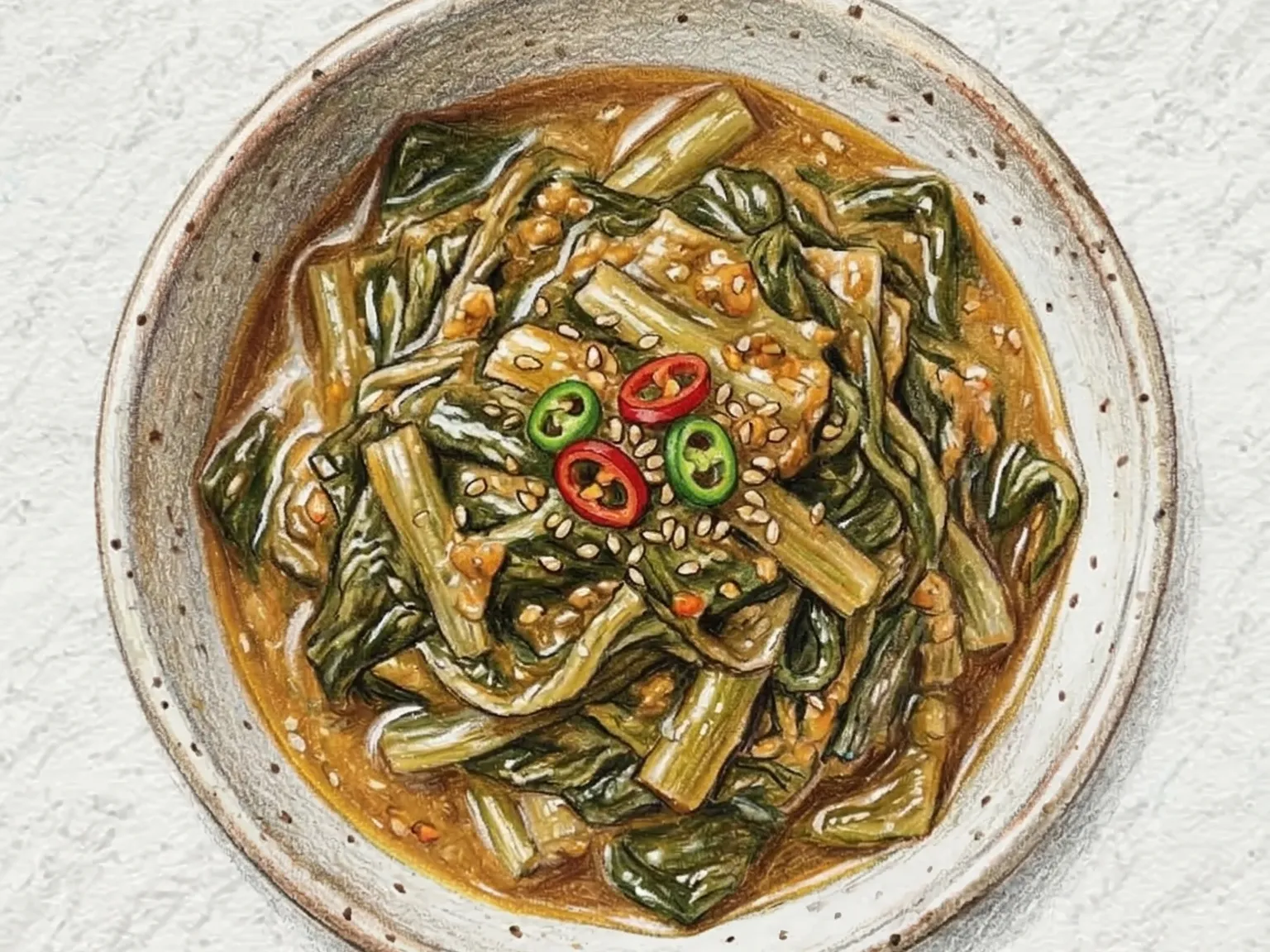
Mucheong-namul is a Korean banchan made from the leafy stems attached to daikon radish - not the fully dried siraegi, but fresh or semi-dried radish greens blanched and dressed with doenjang and perilla oil. Radish greens are a byproduct of the autumn kimjang harvest, when whole radishes are pulled from the ground and the tops would otherwise go to waste. Rural Korean kitchens have long boiled these greens into namul or sun-dried them into siraegi for winter storage. Fresh mucheong requires at least five minutes of boiling to break down the tough stem fibers, followed by a cold rinse to remove any astringent bitterness. Seasoning with doenjang and soup soy sauce layers the fermented paste's earthy depth over the greens' faintly bitter, grassy character. Perilla oil is preferred over sesame because its lighter profile complements rather than masks the greens' natural flavor. Stirring in ground perilla seeds at the end thickens the dressing and wraps each strand in a nutty coating, producing a deeper-flavored version than plain mucheong-namul. A hearty winter banchan tied to radish harvest season.

Prep 20minCook 15min4 servings

Adjust Servings

2servings
servings

Instructions

  1. 1

    Cut blanched greens into bite-size lengths and squeeze dry.

  2. 2

    Season with doenjang, soup soy sauce, garlic, and perilla oil.

  3. 3

    Cook greens with water in a pan over medium heat for 5 minutes.

  4. 4

    Add perilla powder and cook 3 more minutes.

  5. 5

    Adjust seasoning, turn off heat, and cool before serving.

🛒Shop Ingredients on Amazon

As an Amazon Associate, we may earn from qualifying purchases.

Tips

Rinse blanched greens in cold water to reduce bitterness.
Add a little extra perilla oil at the end for aroma.

Nutrition (per serving)

Calories
85
kcal
Protein
3
g
Carbs
7
g
Fat
6
g

More Recipes

Korean Seasoned Radish Greens Namul
Side dishesMedium

Korean Seasoned Radish Greens Namul

Dried radish greens are soaked, boiled until pliable, and dressed in a seasoning anchored by doenjang and ground perilla seeds. The drying process concentrates the fiber in the greens, giving them a satisfying chew that persists even after boiling: the outer layer turns silky while the inner stem retains a springy resistance. Doenjang supplies the salty, fermented backbone, and ground perilla seeds melt into a creamy coating that softens the roughness of the greens on the palate. A generous pour of perilla oil ties the dressing together, adding a glossy sheen and a rich, nutty fragrance. Minced garlic and chopped green onion introduce a sharp aromatic layer that cuts through the heaviness. Each bite releases more of the siraegi's own deep, vegetal flavor, a taste that builds rather than fades. Paired with steamed rice, the doenjang's salinity and the perilla's richness draw out the natural sweetness of the grain.

🏠 Everyday🍱 Lunchbox
Prep 20minCook 20min4 servings
Korean Seasoned Butterbur Stems
Side dishesEasy

Korean Seasoned Butterbur Stems

Meoui-namul-muchim is a seasonal spring namul made by blanching butterbur (meowi) stems and dressing them with doenjang and ground perilla seeds. Butterbur grows wild along hillsides and stream banks throughout Korea. The stems are the edible part - the leaves contain pyrrolizidine alkaloids and are generally not consumed. Peeling the tough outer skin from each stem is a mandatory prep step; unpeeled stems leave unchewable fibers in the mouth. Blanching removes about half of the plant's inherent bitterness, leaving a subtle astringent quality that creates a complex interplay between the earthy doenjang and nutty perilla seed powder. Adding perilla generously softens the bitter edge, making the dish more approachable. March through April is peak season, when fresh butterbur appears briefly at Korean markets. Dried butterbur rehydrated year-round is an alternative but cannot match the fragrance of the fresh spring harvest.

🏠 Everyday🍱 Lunchbox
Prep 15minCook 5min4 servings
Korean Seasoned Swiss Chard Namul
Side dishesEasy

Korean Seasoned Swiss Chard Namul

Geundae - Swiss chard in Korean kitchens - has been used in doenjang soup and namul for generations. Because the stems are substantially thicker than the leaves, they are blanched separately: stems go in first for thirty seconds, then leaves join for another thirty. After squeezing dry, the greens are hand-dressed with doenjang, soup soy sauce, garlic, and perilla oil, allowing the fermented paste's earthy depth to merge with chard's faintly bitter, mineral flavor. Perilla powder stirred in last thickens the dressing into a clinging coating without adding liquid. Chard leaves hold up better than spinach after dressing, making this namul a sturdy banchan that does not wilt quickly.

🏠 Everyday🍱 Lunchbox
Prep 10minCook 4min4 servings
Korean Seasoned Napa Cabbage Namul
Side dishesEasy

Korean Seasoned Napa Cabbage Namul

Boiled napa cabbage dressed with doenjang and perilla, passed down through generations of Korean home cooks. The cabbage boils two minutes - leaves collapse while white stems stay slightly firm - then is rinsed, squeezed, and cut. Perilla oil gives a distinctly herbal quality, and perilla powder thickens the dressing into a paste clinging to each piece. This quiet, understated banchan pairs well with clear soups and plain rice.

🏠 Everyday🍱 Lunchbox
Prep 10minCook 5min4 servings
Korean Radish Greens Perilla Soup
SoupsMedium

Korean Radish Greens Perilla Soup

Mucheong-deulkkae-guk is a Korean soup that layers two of the cuisine's most comforting flavors - fermented soybean paste and ground perilla seeds - over a base of dried radish greens. The greens are boiled until tender, dressed with doenjang, and then simmered in anchovy-kelp stock with a generous scoop of perilla seed powder. As the powder dissolves, the broth turns from clear to opaque and takes on a creamy, nutty character that clings to the greens and pools richly over steamed rice. Garlic and green onion build the aromatic framework, while the radish greens themselves contribute a mild, earthy chew that makes the soup feel substantial despite having no meat. This is a dish most commonly associated with rural home cooking, where dried radish greens are a pantry staple preserved from the autumn harvest. The combination of doenjang and perilla creates a umami density that is quietly addictive - the kind of soup that never appears on trendy restaurant menus but occupies a permanent place in the memory of anyone who grew up eating it.

🏠 Everyday
Prep 20minCook 30min4 servings
Korean Stir-fried Radish Greens with Perilla
Stir-fryEasy

Korean Stir-fried Radish Greens with Perilla

Siraegi deulkkae-bokkeum is a Korean stir-fry of pre-boiled dried radish greens seasoned with soup soy sauce and garlic, then cooked in perilla oil and finished with generous perilla powder. The greens are first tossed in the seasoning to let the flavors penetrate, stir-fried for three minutes, then simmered briefly with water and perilla powder until a thick, nutty sauce coats every strand. Green onion added at the end provides a fresh aromatic lift. Compared to the doenjang-based siraegi jorim, this version leans lighter and more distinctly nutty from the perilla.

🏠 Everyday🍱 Lunchbox
Prep 15minCook 20min4 servings
More Side dishes