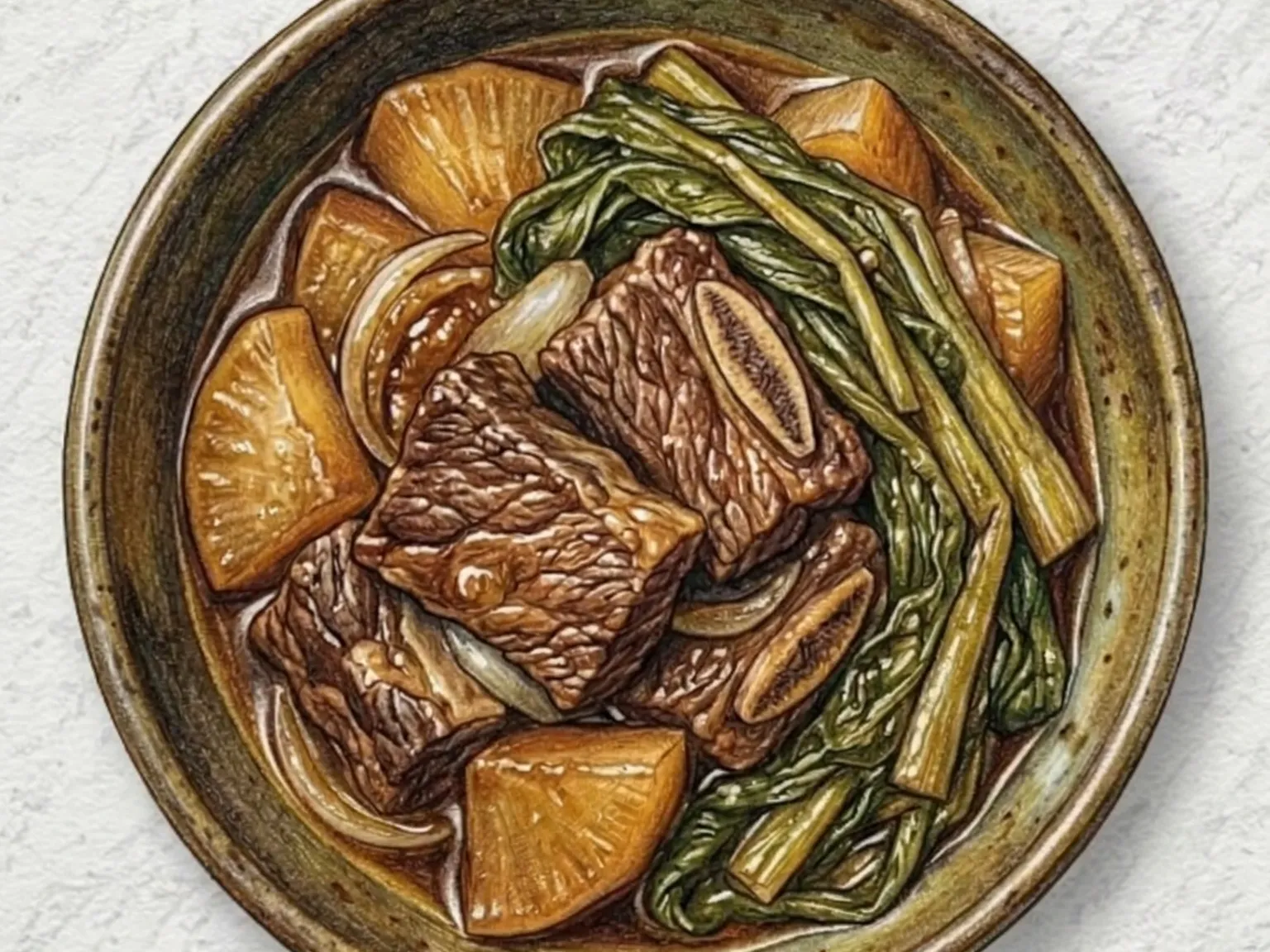
Korean Steamed Beef with Radish Greens
Mucheong sogogi jjim is a Korean braised beef dish where short rib meat is marinated in Korean pear juice and soy sauce, then slow-cooked with blanched radish greens and onion. The pear juice tenderizes the beef and lends a subtle fruit sweetness that deepens over the long braise. Radish greens are added near the end to preserve their earthy aroma and slight chew, bringing a rustic contrast to the soft meat. Ginger juice keeps the flavor clean, and sesame oil ties everything together with a toasted finish. The sauce reduces to a concentrated glaze meant to be spooned over rice.
Adjust Servings
Instructions
- 1
Soak beef in cold water for 30 minutes to remove blood, then drain.
- 2
Cut blanched radish greens into 5 cm lengths and squeeze lightly.
- 3
Mix soy sauce, pear juice, garlic, ginger juice, and sesame oil.
- 4
Marinate beef and onion with half the sauce for 15 minutes in a pot.
- 5
Add water and remaining sauce, cover, and steam-braise for 45 minutes.
- 6
Add radish greens and green onion, cook 20 more minutes until tender.
As an Amazon Associate, we may earn from qualifying purchases.
Tips
Nutrition (per serving)
More Recipes

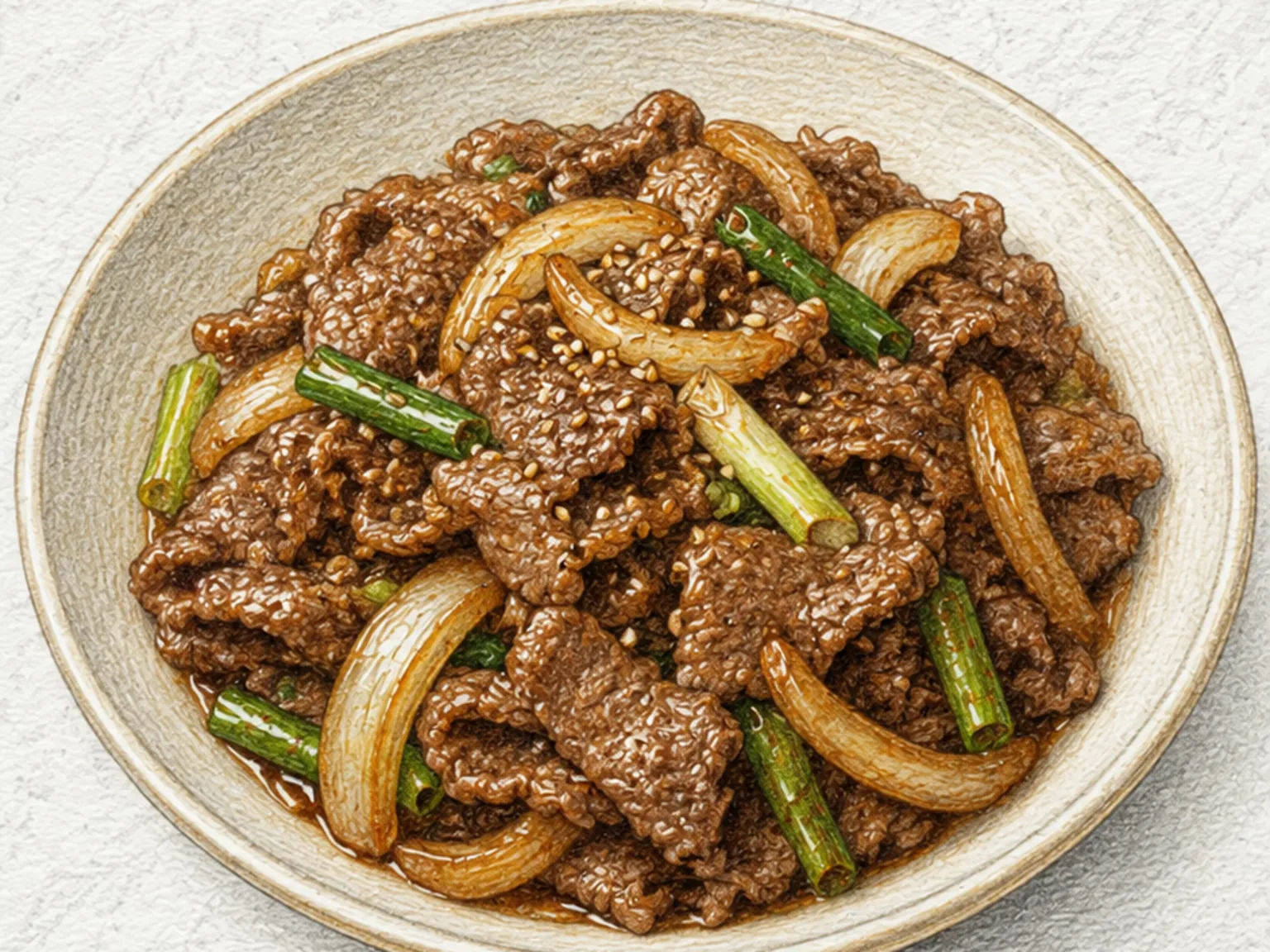
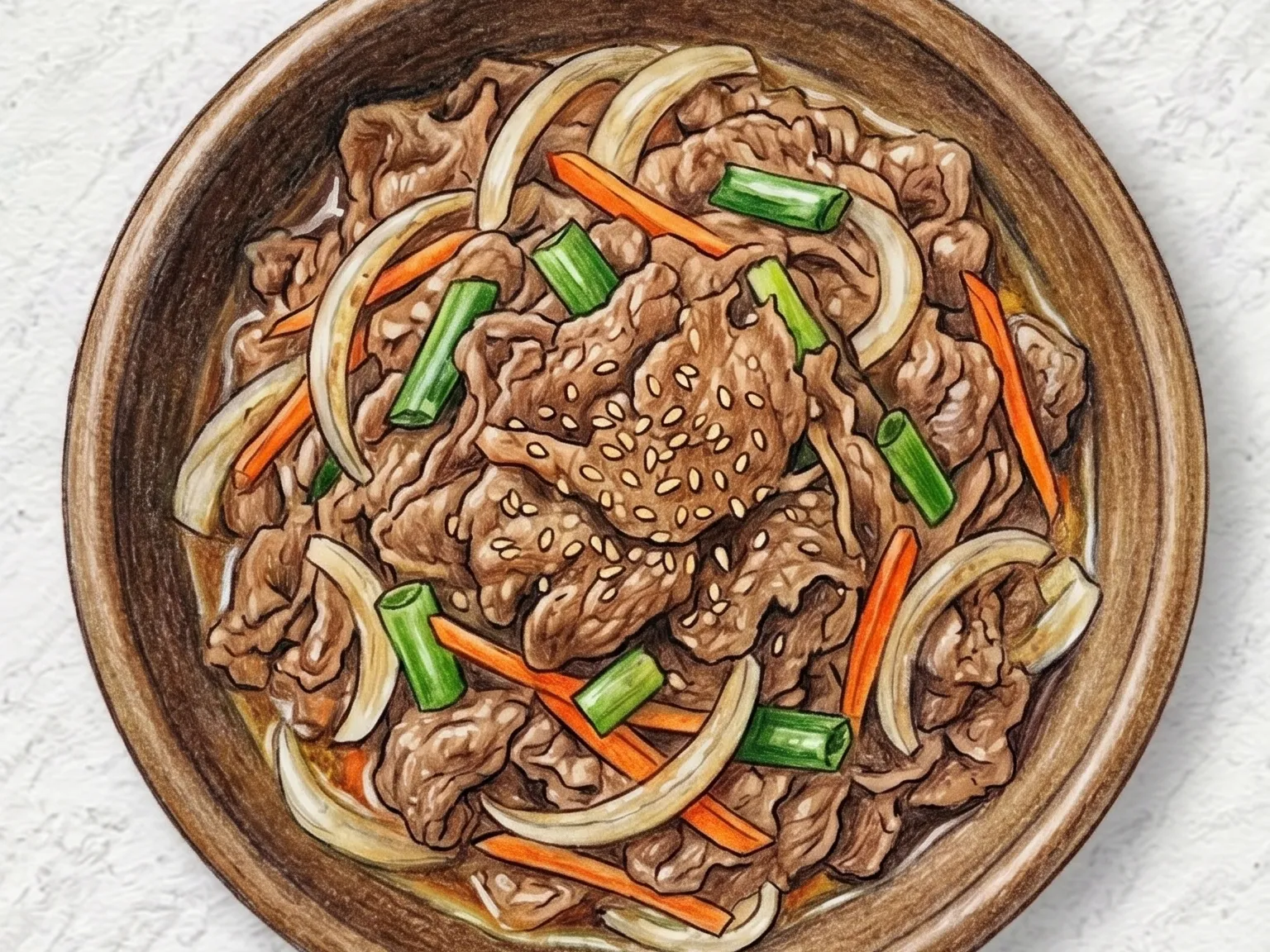
Korean Steamed Bulgogi with Cabbage
Yangbaechu bulgogi jjim is Korean steamed bulgogi with cabbage, where thin-sliced beef marinated in pear juice and soy sauce is layered with cabbage and onion, then steamed covered. The pear juice tenderizes the beef and adds a subtle fruit sweetness, while the cabbage absorbs the meat juices and turns soft and sweet. Soy sauce and sesame oil build a deep savory backbone, and green onion stirred in at the end provides an aromatic lift. The reduced braising liquid at the bottom is meant to be mixed with rice, pulling together the flavors of beef and vegetables into one cohesive bite.

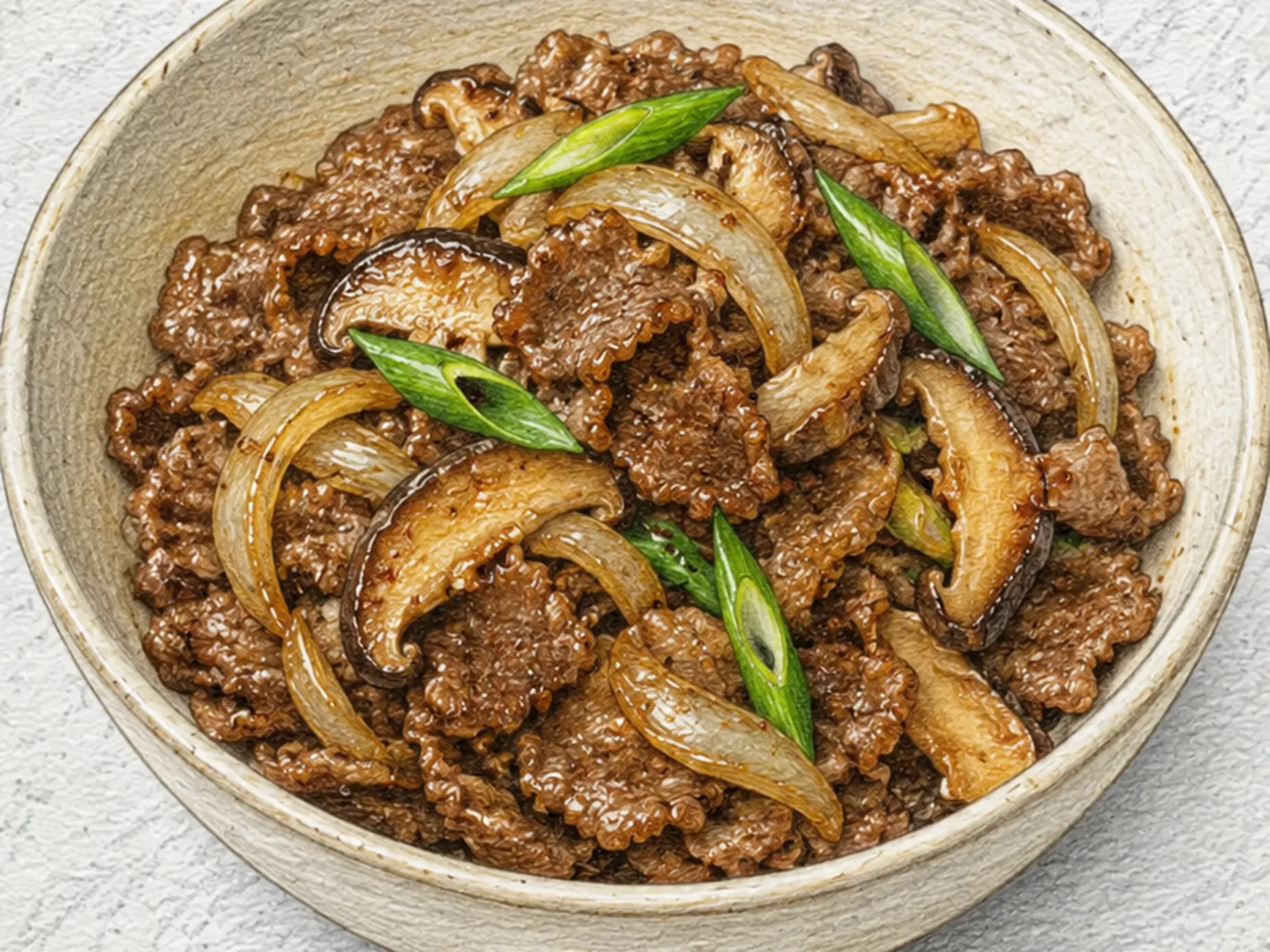
Korean Braised Beef and Burdock Steam
Ueong sogogi jjim is a Korean braised-steamed dish of beef shank and burdock root in a soy-based sauce with garlic and sugar. The shank is boiled first and skimmed to yield a clean broth, which then becomes the braising base after soy sauce and seasonings are added. After twenty minutes of simmering, burdock slices go in and the pot is covered for another fifteen minutes of gentle steaming, allowing the root vegetable to absorb the beef-enriched liquid. Slicing the burdock about 0.5 cm thick keeps its texture while ensuring it cooks through in time. Sesame oil and seeds finish the dish, and the result balances the heavy richness of slow-cooked beef against the fragrant, earthy character of burdock.

Korean Braised Pork Ribs with Young Radish Greens
Yeolmu dwaeji galbi jjim is a Korean braised pork rib dish finished with young radish greens, cooked in a gochujang and soy sauce seasoning. The ribs simmer until the meat separates from the bone, building a concentrated, spicy braising liquid from the rendered pork stock and chili paste. Young radish greens are added only in the final minutes to preserve their crisp stems and fresh, slightly peppery aroma, which lightens the rich, heavy sauce. The combination of fall-off-the-bone pork and bright summer greens makes this a seasonal main course that bridges richness and freshness.

Korean Steamed Rockfish (Spicy Gochugaru Radish Braise)
Ureok-jjim is a Korean spicy steamed rockfish cooked with Korean radish, onion, and green onion in a gochugaru and soy sauce broth. Rockfish has firm, well-defined flesh that holds its shape through the cooking process, and scoring the skin lets the bold seasoning reach deep into the meat. Radish softens in the braising liquid and absorbs the chili heat while contributing natural sweetness, and ginger keeps the fish tasting clean. The remaining sauce is concentrated enough to spoon over rice, delivering a hit of spicy, salty flavor with every bite.

Korean Radish Greens Kimchi
Mucheong kimchi is a Korean radish greens kimchi made by trimming tough parts, cutting greens into 5 cm pieces, brining in coarse salt, then dressing them in a paste of sweet rice flour, gochugaru, anchovy fish sauce, garlic, ginger, and onion. The fibrous stems absorb the seasoning deeply while retaining a substantial chew, and the rice paste acts as a binding agent that keeps the coating even throughout fermentation. Anchovy fish sauce contributes a deep seafood umami, and onion buffers the chili heat with natural sweetness. Beyond serving as a standalone side dish, this kimchi adds concentrated flavor when torn and stirred into siraegi soup or doenjang jjigae.

Korean Bellflower Root & Beef Stir-fry
Deodeok-sogogi-gochujang-bokkeum is a Korean stir-fry of pounded bellflower root and thinly sliced beef in a bold gochujang sauce. Pounding the root splits its fibers, allowing the spicy-sweet paste to penetrate deeply and giving each piece a crisp yet chewy texture. The beef adds a layer of meaty richness that melds with the fermented chili paste. It is a robust, highly flavorful dish that pairs exceptionally well with plain steamed rice.