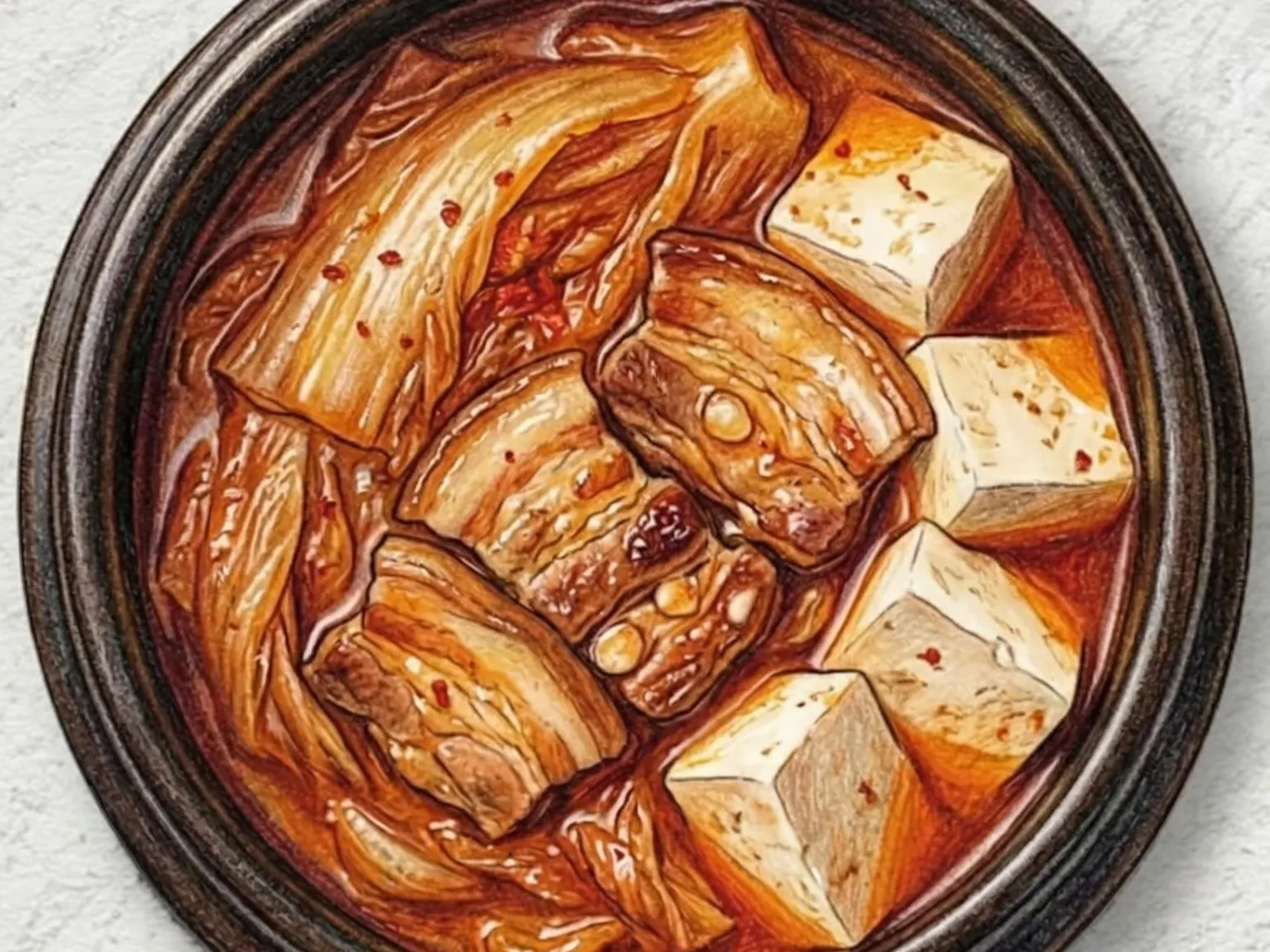
Korean Aged Kimchi Stew (Deep-Fermented Pork Belly Broth)
Mugeunji jjigae uses deeply fermented, aged kimchi that delivers an intense sour tang and concentrated umami far beyond fresh kimchi. Pork belly renders its fat into the stew, mellowing the sharp acidity while enriching the broth. Tofu cubes absorb the bold flavors and provide a soft contrast. The longer the kimchi has aged, the more complex and punchy this stew becomes.
Adjust Servings
Instructions
- 1
Roughly cut the aged kimchi and pork belly into pieces.
- 2
Stir-fry the pork first, then add the kimchi and cook together.
- 3
Add water and simmer over medium heat for at least 20 minutes.
- 4
Add tofu, season with salt, and serve.
As an Amazon Associate, we may earn from qualifying purchases.
Tips
Nutrition (per serving)
More Recipes

Korean Tofu Stew (Spicy Kimchi & Firm Tofu Pot)
A straightforward jjigae that highlights firm tofu and kimchi in a spicy anchovy broth. Gochugaru dissolves into the stock to create a vivid red, peppery base, while the kimchi's fermented tang adds complexity with each passing minute on the stove. Green onion rounds out the aromatics. Despite using only five main ingredients, the fermented kimchi does the heavy lifting, producing a broth with layered acidity and depth.

Korean Squid Stew
Ojingeo jjigae simmers a whole scored squid in an anchovy broth enriched with gochujang, yielding a sweet-spicy stew. Tofu and zucchini cook alongside, soaking up the bold red pepper paste flavor. Scoring the squid allows the seasoning to penetrate, so each bite releases the savory broth. The natural sweetness of gochujang pairs well with the mild squid, making this a straightforward but flavorful side dish stew.

Korean Mushroom Doenjang Stew
Three types of mushrooms - shiitake, oyster, and enoki - are simmered together in doenjang-seasoned anchovy broth. Each mushroom contributes a distinct texture: the meaty chew of shiitake, the silky tear of oyster mushroom, and the delicate crunch of enoki. Cubes of soft tofu round out the stew, absorbing the fermented soybean broth into every bite.

Korean Potato Stew (Pork & Potato Spicy Gochujang Pot)
A straightforward Korean stew built around whole potatoes and pork, seasoned with gochujang and gochugaru. As the potatoes soften, they thicken the broth naturally, giving it a hearty consistency. The pork adds a mild meatiness that balances the spicy-sweet kick of the chili paste. With just five core ingredients, this is a simple home-style stew that comes together quickly.

Korean Young Radish Kimchi
Young radish greens and their slender stems are salted briefly, dressed in a gochugaru-based paste, and fermented into a kimchi synonymous with Korean summer. The greens are more delicate than mature radish, absorbing the seasoning quickly while retaining a refreshing crunch that lasts well into fermentation. Gochugaru and anchovy fish sauce form the backbone of the paste, delivering heat and deep umami in equal measure, while garlic lends a pungent undercurrent that mellows as the fermentation progresses. Once dressed, the radish greens release their own moisture, creating a naturally occurring brine that becomes the hallmark of yeolmu kimchi: a tangy, chili-flecked liquid that can be spooned over cold noodles or rice. Even half a day at room temperature kicks off the fermentation, introducing a sharp, fizzy acidity that signals the kimchi is alive. Transferring it to the refrigerator slows the process and stabilizes the flavor at a bright, appetizing sourness. Draped over bibim-guksu or naengmyeon, it brings a cooling, spicy bite that defines the Korean summer table.

Korean Kimchi Rice Bowl (Stir-Fried Aged Kimchi over Steamed Rice)
Stir-frying aged kimchi drives off moisture and triggers caramelization, mellowing the sourness into a deeper, sweeter intensity. A splash of soy sauce and sesame oil adds salty nuttiness to the charred edges. Topped over plain rice with a single fried egg, this bowl is deceptively simple - yet using well-fermented kimchi (mukeunji) introduces layers of tangy complexity that elevate it beyond its minimal ingredient list. The entire dish comes together in under fifteen minutes, making it the go-to Korean rice bowl when the pantry is nearly bare.