Korean Aged Kimchi Mackerel Bibim Noodles
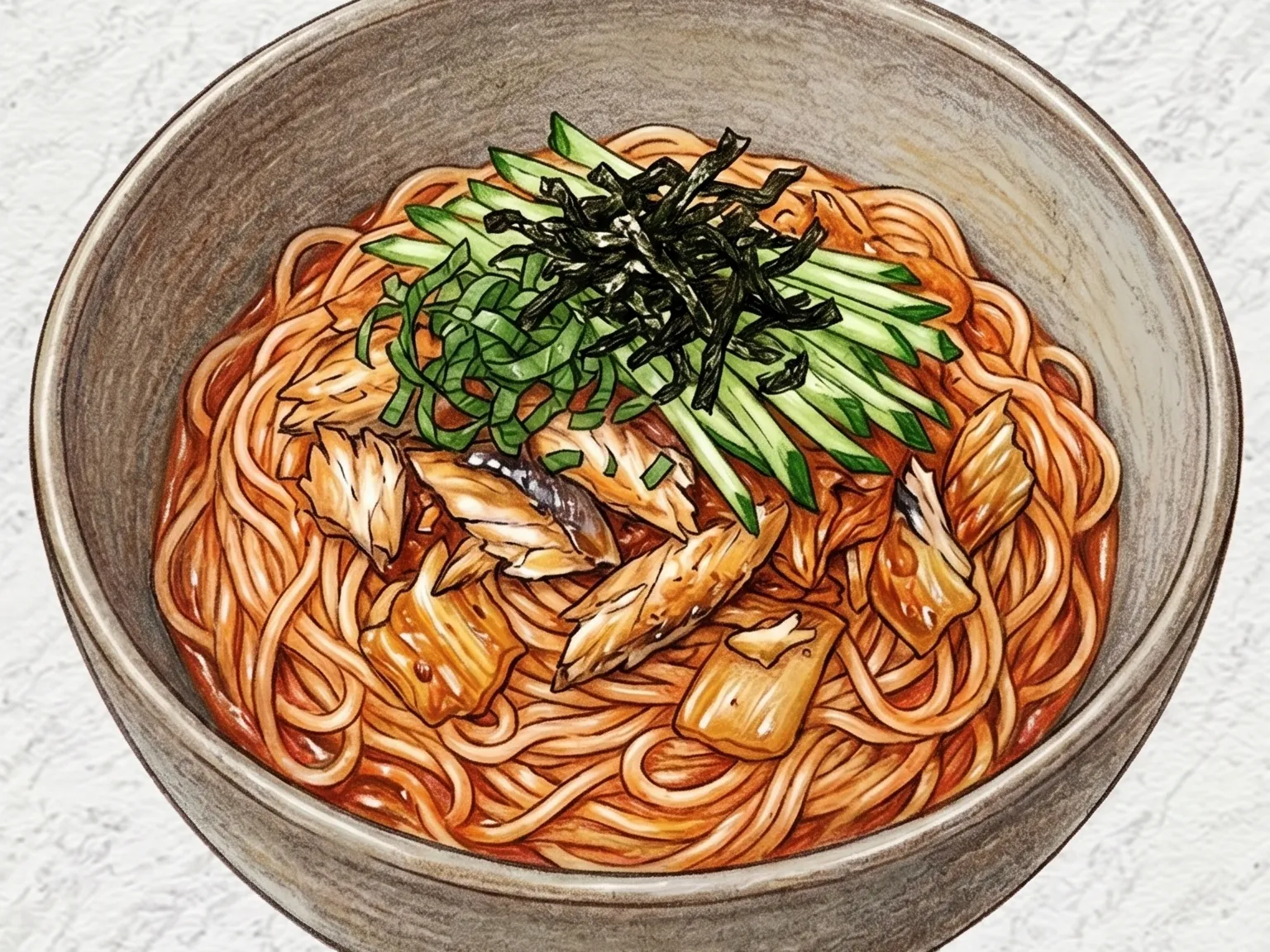
Mugunji godeungeo bibim myeon is a bold Korean mixed noodle dish where pan-seared mackerel and stir-fried aged kimchi meet spicy noodles. Salting the mackerel fillet for ten minutes draws out moisture and reduces fishiness, and pan-searing until golden before flaking the meat allows it to blend into the noodles without bones. A quick two-minute stir-fry softens the harsh acidity of the aged kimchi while preserving its deep fermented character. The sauce combines gochujang, gochugaru, plum syrup, vinegar, and sesame oil, layering spicy, sweet, and tangy notes in a single dressing. Draining the wheat noodles thoroughly prevents the sauce from becoming watery, and julienned cucumber with roasted seaweed flakes add crunch and a light oceanic note that balances the rich, oily fish.
Adjust Servings
Instructions
- 1
Salt the mackerel lightly for 10 minutes, pat dry, pan-sear, and flake the meat.
- 2
Chop the aged kimchi and stir-fry for 2 minutes to soften harsh acidity.
- 3
Mix gochujang, gochugaru, soy sauce, plum syrup, vinegar, and sesame oil for the sauce.
- 4
Boil noodles, rinse in cold water while rubbing, and drain thoroughly for a chewy texture.
- 5
Toss noodles with 80% of the sauce first, then gently mix in kimchi and mackerel.
- 6
Top with cucumber and seaweed flakes, then adjust seasoning with the remaining sauce.
As an Amazon Associate, we may earn from qualifying purchases.
Tips
Nutrition (per serving)
More Recipes

Korean Spicy Mixed Wheat Noodles
Bibim guksu is a chilled Korean noodle dish in which boiled and cold-rinsed somyeon wheat noodles are tossed in a sauce of gochujang, chili flakes, plum syrup, vinegar, soy sauce, and sesame oil. The heat from the gochujang, the sweetness of plum syrup, and the brightness of vinegar layer together into a multi-dimensional flavor in every bite. Rinsing the noodles thoroughly in cold water removes excess starch, giving them a bouncy chew and allowing the sauce to cling evenly. Torn lettuce and julienned cucumber folded in at the end contribute crunch and moisture that loosen the thick sauce just enough. A tablespoon of noodle cooking water can thin the sauce if it feels too heavy.

Korean Yeolmu Bibim Guksu
Yeolmu bibim guksu is a Korean mixed noodle dish built around young radish kimchi (yeolmu kimchi). The kimchi provides a crunchy texture and a fermented tanginess that anchors the bowl. Thin somyeon noodles are rinsed in cold water, then tossed with gochugaru or gochujang dressing, sesame oil, and sesame seeds. The heat level stays moderate, letting the kimchi's sourness come through. Total preparation is about 23 minutes, and the recipe requires no cooking beyond boiling the noodles.

Korean Aged Kimchi Tuna Mixed Noodles
Mukeunji tuna bibim myeon is a quick Korean mixed noodle dish where aged kimchi and canned tuna are tossed with chewy wheat noodles in a gochujang-based sauce. Trimming the excess paste from the aged kimchi and chopping it finely keeps the sourness in check, while draining the tuna oil thoroughly prevents the dressing from becoming diluted. The sauce blends gochujang, vinegar, oligosaccharide syrup, and sesame oil for a balanced mix of spicy, sour, and sweet. Boiling the noodles for five to six minutes and rinsing them in cold water gives them a firm, springy texture, and draining well ensures the sauce clings to every strand. Scallion and ground sesame seeds finish the bowl with color and nuttiness, and a small addition of vinegar or syrup at the table lets each person fine-tune the flavor balance.

Korean Spicy Pork Mixed Noodles
Jeyuk bibim-guksu tops cold mixed noodles with stir-fried spicy pork, combining two popular Korean dishes into one bowl. Pork shoulder is marinated in gochujang and gochugaru, then seared quickly so the edges caramelize while the inside stays moist. Shredded cabbage and onion provide a crisp contrast, and soy sauce with sugar balances the heat with savory sweetness. The temperature contrast between chilled somyeon and hot, sizzling pork creates a distinctive eating experience, finished with a drizzle of sesame oil for a nutty send-off.

Kimchi Garlic Butter Shrimp Spaghetti
Kimchi garlic butter shrimp spaghetti is an oil-based pasta where garlic browned in butter and fermented kimchi together amplify the natural sweetness of shrimp. The shrimp are seared first in olive oil to build fond on the pan, then garlic and chopped kimchi go into the same pan to absorb those flavors. Butter and starchy pasta water are emulsified into a glossy, light coating rather than a heavy sauce. Gochugaru provides a gentle background heat, and a squeeze of lemon at the end lifts the richness. Sliced scallions finish the dish with color and a mild onion note.

Korean Braised Mackerel with Aged Kimchi
Godeungeo kimchi jjim is mackerel braised with well-fermented aged kimchi in a soy sauce and gochugaru broth. The deep sourness of the aged kimchi cuts through the rich, oily mackerel flesh, creating a concentrated savory flavor without heaviness. Onion adds a gentle sweetness while a small amount of sugar balances the fermented tang. The sauce reduces to a thin, intensely flavored glaze that is meant to be spooned over steamed rice, making this one of the most satisfying ways to pair fermented ingredients with fish.