Ssuk Bam Crumble Bars (Mugwort Chestnut Bars)
Quick answer
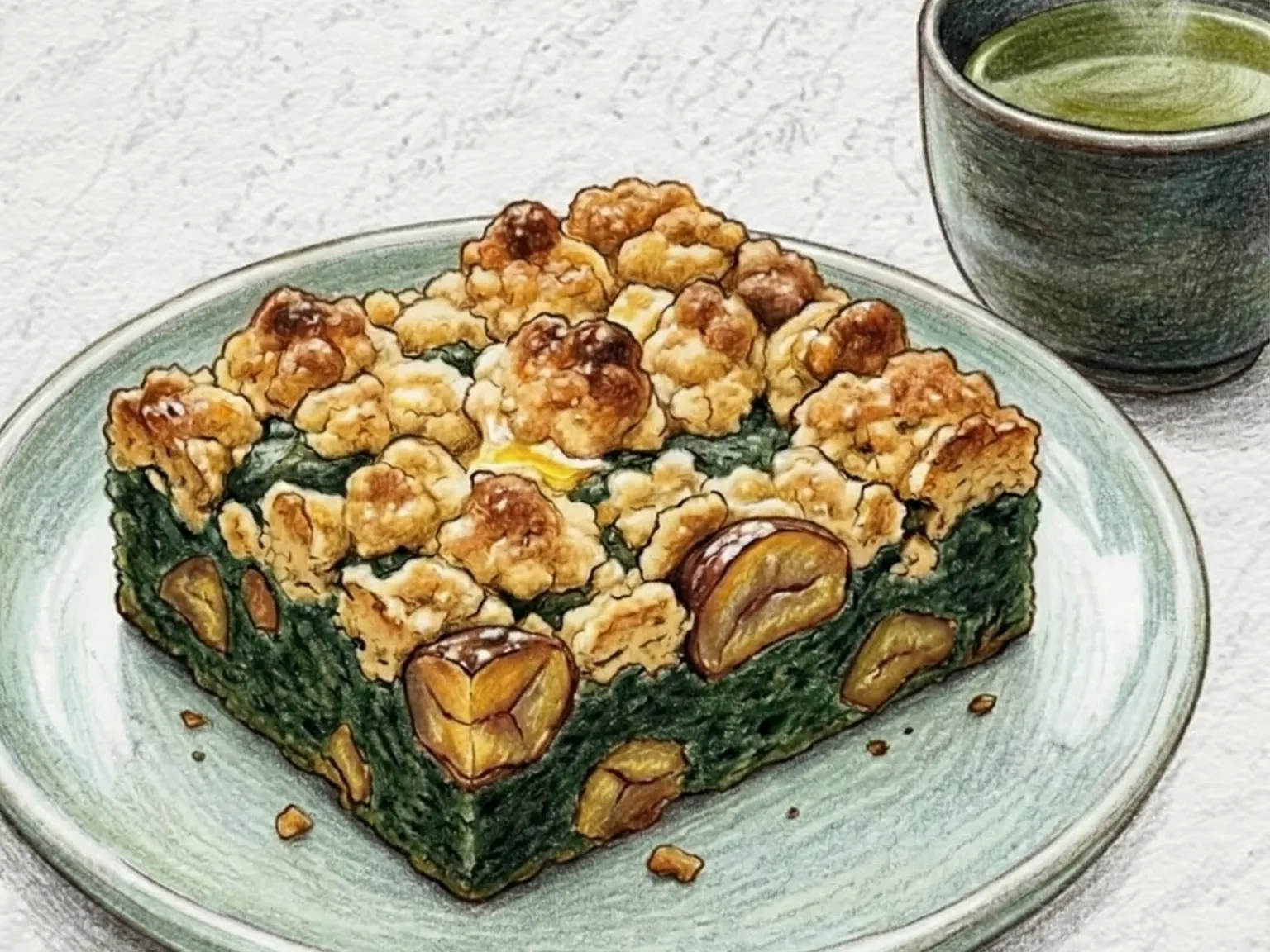
A cookie-like base made with mugwort powder supports a layer of roasted chestnut pieces, all blanketed by a crumbly butter streusel and baked until golden.
What makes this special
- Ssuk Bam Crumble Bars blend herbal mugwort aroma with roasted chestnuts and buttery streusel.
- Mugwort powder infuses the entire bar with a herbal green aroma
- Chestnuts roast and lose moisture, concentrating into dense natural sweetness
Key ingredients
Core cooking flow
- 1 Preheat the oven to 175C and line a 20cm square pan with parchment, pressing it into the corners.
- 2 Beat 120 g unsalted butter with 90 g brown sugar until the mixture looks slightly lighter and creamy.
- 3 Add 180 g cake flour, 12 g mugwort powder, and 2 g salt, then fold with a spatula using cutting motions.
A cookie-like base made with mugwort powder supports a layer of roasted chestnut pieces, all blanketed by a crumbly butter streusel and baked until golden. The mugwort infuses the entire bar with a subtle, herbal earthiness - green and faintly bitter, reminiscent of fresh spring grass - while the chestnuts lose moisture in the oven and concentrate into pockets of dense, natural sweetness. The bottom layer bakes firm and crisp, providing structural integrity, while the crumble on top breaks apart irregularly, delivering varying bursts of buttery crunch with every bite. Sugar and butter in the dough temper the mugwort's bitterness so it reads as aromatic depth rather than sharpness. Pairing these bars with warm green tea creates a resonance between the herbal notes, each reinforcing the other.
Instructions
Read the steps as a cooking flow: prep, heat, seasoning, doneness control, and finish.
- 1Heat
Preheat the oven to 175C and line a 20cm square pan with parchment, pressing it into the corners.
Leave a little overhang so the baked slab can be lifted out without cracking.
- 2Season
Beat 120 g unsalted butter with 90 g brown sugar until the mixture looks slightly lighter and creamy.
Add 1 egg and mix until even, stopping before the butter separates or turns greasy.
- 3Season
Add 180 g cake flour, 12 g mugwort powder, and 2 g salt, then fold with a spatula using cutting motions.
Stop when almost no dry flour remains so the base stays crisp instead of tough.
- 4Heat
Press two-thirds of the dough evenly into the bottom of the pan, making the corners the same thickness as the center.
Mash 140 g cooked chestnuts with 40 ml milk, adding 1 tablespoon more milk if the filling is too stiff to spread.
- 5Step
Spread the chestnut filling in a thin, even layer over the pressed dough without dragging up the base.
Break the remaining dough with your fingertips into pea-sized crumbs and scatter them evenly over the top.
- 6Heat
Bake at 175C for 30-35 minutes, until the edges feel set and the top crumble is lightly golden.
Cool completely in the pan, then lift out with the parchment and cut into bars to prevent crumbling.
After the steps
Pick a recipe that fits this dish.
Continue with shared ingredients, meal pairings, or a similar method.
Recipes That Go Well With This
More Baking →Based on shared ingredients and meal pairing
Mugwort Red Bean Muffin (Korean Herbal Sweet Bean Muffin)
This muffin combines mugwort powder and cooked sweet red beans in a soft, fluffy batter that bridges Korean traditional flavors with Western baking technique. Mugwort contributes a distinctive herbal fragrance - faintly bitter, grassy, and deeply aromatic - that permeates the entire crumb and gives it a muted green hue. The red beans, folded in whole, add pockets of grainy sweetness that burst with each bite. Cake flour and baking powder keep the rise gentle and the texture light, while melted butter adds moisture without heaviness. The combination of mugwort and red bean is deeply familiar from Korean rice cakes, but baking it as a muffin introduces a crisp top and a pillowy interior that the steamed rice cake format cannot offer. Mixing the batter in no more than ten to twelve strokes prevents toughness - visible streaks of flour are acceptable and even preferred over a smooth, overworked batter. The beans should be folded in last with a gentle spatula motion to preserve their shape. These muffins pair naturally with grain-based lattes, where the roasted notes in the drink echo the earthy quality of the mugwort.
Red Bean Baked Doughnuts (Oven-Baked Doughnuts with Bean Paste)
These baked doughnuts encase a core of sweetened red bean paste inside a soft, cake-like crumb, delivering the satisfaction of a filled doughnut without any frying. The batter is spooned halfway into a greased doughnut mould, a teaspoon of chilled red bean paste is placed on top, and more batter seals it in before baking. The result is a ring with a fluffy exterior and a hidden pocket of dense, earthy-sweet filling that reveals itself on the first bite. Because the recipe relies on cake flour and baking powder rather than yeast, the entire process from mixing to cooling takes under forty minutes. Minimal stirring is essential - overworking the batter activates too much gluten and turns the finished doughnut tough instead of tender. Keeping the bean paste cold before assembly prevents it from melting into the surrounding batter and losing its distinct layer. The absence of oil gives these doughnuts a remarkably clean finish, making them well suited as a light afternoon snack.
Mugwort Crumble Rice Cake
Ssuk beomuri is a traditional Korean spring rice cake made by tossing chopped fresh mugwort into a dry blend of rice flour, glutinous rice flour, and sugar, then steaming the loose mixture in a cloth-lined steamer. Water is worked in gradually by hand rather than poured all at once, a step that produces a texture that crumbles apart lightly while remaining moist inside rather than turning dense or gummy. Glutinous rice flour accounts for about a quarter of the blend and provides enough stickiness to hold the pieces together without making them chewy throughout. Using raw mugwort without blanching preserves the volatile aromatic compounds that would otherwise be lost in hot water, resulting in a deep, grassy fragrance that defines the cake. Steaming at full heat for fifteen minutes followed by a three-minute resting period with the lid on ensures the center cooks through evenly without the surface drying out. A generous topping of sweetened red bean crumble adds a thick, earthy sweetness that complements the clean herbal notes of mugwort. Young spring mugwort harvested between late March and April carries the most concentrated aroma, making that window the ideal season for this cake.
Black Rice Cream Cheese Tart
Black rice cream cheese tart is a Korean-style baked tart that combines a crisp, buttery shell with a cream cheese filling tinted and flavored with black rice flour. The filling is made by blending cream cheese, sugar, egg, and heavy cream until smooth, then folding in black rice powder, which gives the mixture a pale purple color and a subtle roasted grain character. Baked at a moderate temperature, the filling puffs gently in the oven before settling back into a dense, silky layer as it cools - the texture sits between a cheesecake and a custard tart, smooth and rich but not heavy. The pre-baked tart shell provides a firm, buttery crunch that contrasts the soft filling above. Vanilla extract ties the tangy cream cheese to the earthy black rice notes, rounding out the flavor so neither element dominates.
Serve with this
Korean Fish Cake Soup (Clear Anchovy Radish Broth)
Eomuk-tang is a Korean fish cake soup in which skewered fish cakes and thick radish slices simmer in a clear broth built from dried anchovies and kelp. The kelp must be removed the moment the water begins to boil, otherwise it releases a slimy texture that clouds the broth. Cutting the radish thick allows it to slowly release natural sweetness over the long simmer. Rinsing the fish cakes in hot water before adding them washes away surface oil and keeps the broth clear and clean. Soup soy sauce adjusts the seasoning, and green onion and black pepper finish the pot. Adding the radish before the fish cakes ensures it has enough time to fully soften and sweeten the broth, since it takes longer than the eomuk to cook through.
Fruit Salad (Fresh Seasonal Fruit in Yogurt)
Fruit salad dices apple, banana, kiwi, strawberries, and blueberries into uniform bite-sized pieces and folds them gently into a light dressing of plain yogurt, honey, and lemon juice. Cutting everything to a similar size ensures an even mix of crisp, soft, and juicy textures in every spoonful. The lemon juice serves two purposes - it adds a bright acidity that ties the different fruits together and slows the oxidation that turns apple flesh brown. Banana should be added last to prevent it from turning mushy under the weight of the other ingredients. Using unsweetened yogurt lets the natural sweetness of the fruit stand out more clearly, and chilling the finished salad for about ten minutes allows the fruit juices to merge with the dressing for a more cohesive flavor.
Clafoutis (French Baked Cherry Custard Dessert)
Clafoutis is a traditional French dessert from the Limousin region made by arranging fresh cherries in a buttered baking dish, then pouring over a thin batter of eggs, sugar, milk, and flour and baking at 180 degrees Celsius for thirty to thirty-five minutes. The batter is considerably thinner than pancake batter, and the result when baked is a texture that sits between a creamy custard and a light sponge -- the edges puff and turn golden while the center around the cherries stays moist and yielding. Using unpitted cherries is the traditional method: the pits release a faint almond scent during baking that perfumes the surrounding batter in a way that pitted fruit cannot replicate. The cherries also hold their shape better with the pits in. Vanilla extract deepens the egg-and-milk base, and the cherries' own tart juice seeps into the batter during baking, creating concentrated pockets of fruit flavor that balance the overall sweetness. Clafoutis is served directly from the baking dish, typically dusted with powdered sugar and brought to the table while still warm, because the custard texture softens and loosens slightly as it cools, making the warm version noticeably more appealing. Made with blueberries, plums, or apricots instead of cherries, the dessert takes a different name -- flaugnarde -- though the technique remains identical.
Similar recipes
Injeolmi Scone (Soybean Powder & Rice Cake Scone)
This scone folds roasted soybean powder and small pieces of glutinous rice cake into a classic British scone dough, capturing the flavor of Korean injeolmi in a handheld baked form. Soybean powder mixed into the dough lends the crumb a warm, toasted nuttiness that plain flour alone cannot produce, and the tteok pieces soften and melt in the oven, leaving behind chewy, stretchy pockets scattered throughout the crumb. Cold butter cut into small pieces and worked into the dry ingredients without fully melting is what allows the scone to develop distinct flaky layers that crack at the surface while the interior stays tender and moist. Minimal mixing is the central technique: working the dough only until the ingredients just come together prevents gluten development that would produce a tough, dense result instead of the desired crumbly tenderness. A drizzle of honey or a small bowl of sweetened condensed milk served alongside echoes the traditional way injeolmi is eaten and reinforces the sweet-nutty pairing that defines the dish. Warm green tea or pu-erh makes a natural companion for the afternoon. Cutting the tteok into pieces no larger than one centimeter ensures they melt evenly through the bake rather than leaving undercooked chunks in the center.
Korean Street Egg Bread (Sweet Batter Muffin with Whole Egg)
Winter streets in Seoul feature this warm handheld snack prepared by baking a whole egg atop a sweet batter. The base consists of cake flour, baking powder, milk, and melted butter poured into muffin molds. Adding a layer of finely diced ham beneath the egg creates a salty contrast against the sweetness of the dough. When baked at 180 degrees Celsius, sixteen minutes results in a soft and runny yolk, while eighteen minutes produces a firm center. Vanilla extract mixed into the batter helps neutralize the natural scent of the egg for a clean finish. A light dusting of dried parsley on the domed surface adds a subtle herbal scent as the bread turns golden in the oven. Small amounts of shredded cheese can be added to the batter to balance the sweetness. Serving the bread while it remains warm ensures the interior stays moist. This egg bread functions well as a quick breakfast option and can be made in paper muffin cups if metal molds are unavailable.