Charim

2686 Korean & World Recipes

2686+ Korean recipes, clean and organized. Ingredients to instructions, all at a glance.

Korean Aged Kimchi Tuna Stir-fry

Korean Aged Kimchi Tuna Stir-fry

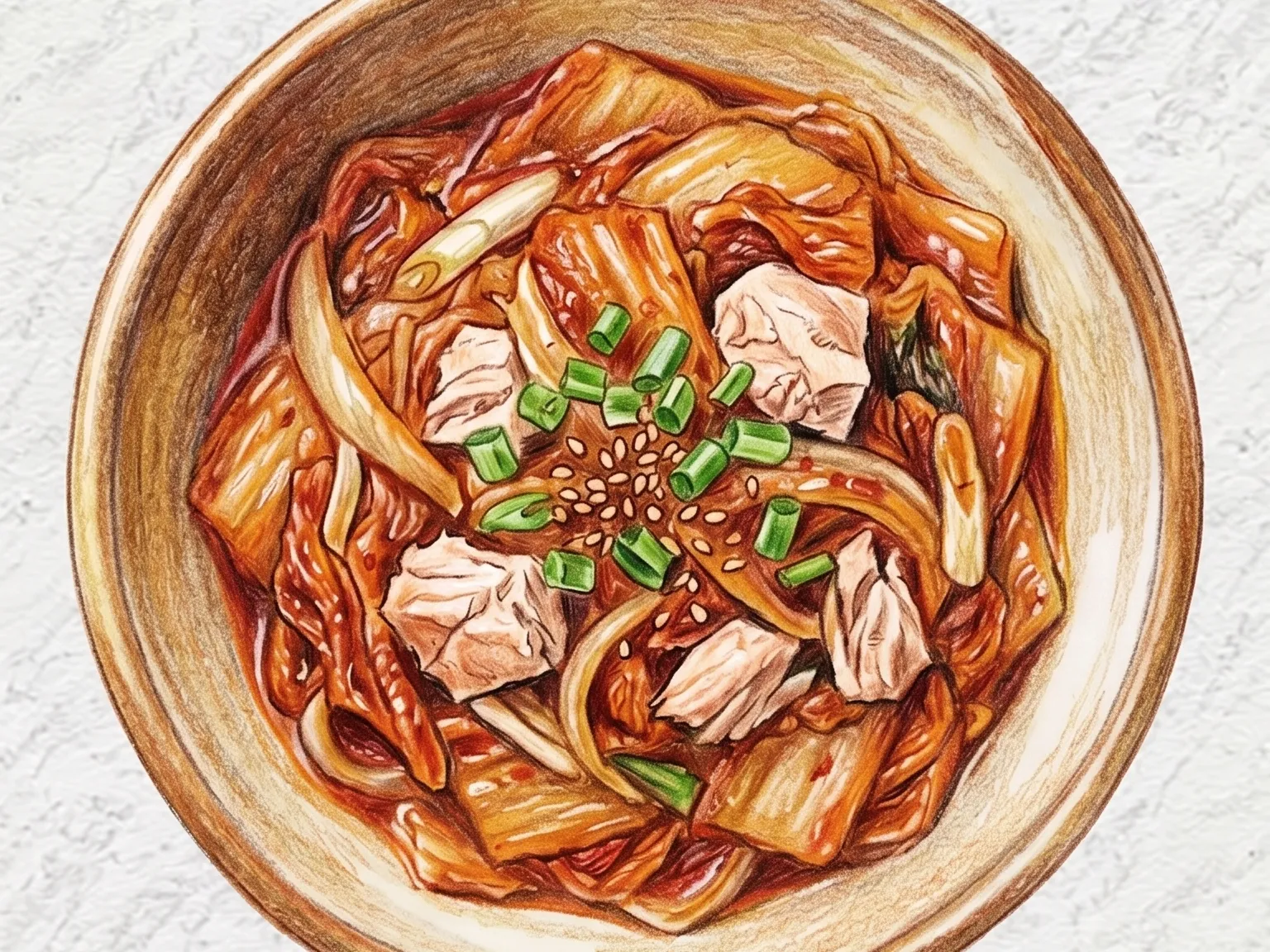
Mukeunji-chamchi-bokkeum stir-fries well-aged kimchi with drained canned tuna, concentrating the kimchi's sharp tanginess alongside the tuna's protein-rich umami. Onion and scallion whites cook first to build sweetness, then the aged kimchi is added and stir-fried for four minutes to drive off excess moisture, intensifying its flavor before gochugaru and sugar go in. The tuna joins last and needs only three minutes of tossing to absorb the bold, tangy sauce without falling apart. A finish of sesame oil and scallion greens adds fragrance to what is one of the most common Korean home-style banchan.

Prep 12min Cook 13min 2 servings

Adjust Servings

2servings
servings

Instructions

  1. 1

    Rinse excess filling from aged kimchi, cut into 4 cm pieces, and slice onion.

  2. 2

    Heat oil in a pan and stir-fry onion and white part of green onion for 2 minutes over medium heat.

  3. 3

    Add kimchi and cook for 4 minutes to reduce moisture, then mix in gochugaru and sugar.

  4. 4

    Add drained tuna and stir-fry for 3 more minutes until combined.

  5. 5

    Turn off heat and finish with sesame oil and green onion tops.

🛒Shop Ingredients on Amazon

As an Amazon Associate, we may earn from qualifying purchases.

Tips

If your kimchi is very sour, add an extra 1/2 tsp sugar.
Canned mackerel can replace tuna for deeper umami.

Nutrition (per serving)

Calories
345
kcal
Protein
24
g
Carbs
12
g
Fat
22
g

More Recipes

Korean Aehobak Chamchi Bokkeum (Zucchini Tuna Stir-fry)
Stir-fryEasy

Korean Aehobak Chamchi Bokkeum (Zucchini Tuna Stir-fry)

Aehobak chamchi bokkeum is one of the most practical banchan in the Korean home-cooking repertoire - it uses canned tuna, a pantry staple that appears in nearly every Korean household. The zucchini provides mild sweetness and body, while the drained tuna brings concentrated protein and a clean saltiness that needs little additional seasoning beyond soup soy sauce. Garlic sauteed first builds an aromatic base, and cheongyang chili threads through the stir-fry with a lingering, slow-building heat. The technique is deliberately quick - zucchini must stay intact with a visible half-moon shape, not cooked into mush. Finished with sesame oil, this banchan keeps well in lunchboxes because neither ingredient deteriorates at room temperature.

🏠 Everyday🍱 Lunchbox
Prep 8minCook 12min2 servings
Korean Stir-fried Aged Kimchi and Tofu
Stir-fryEasy

Korean Stir-fried Aged Kimchi and Tofu

Mukeunji-dubu-bokkeum brings together aged kimchi's deep sourness and firm tofu's neutral mildness in a single pan. The tofu is pan-fried to golden first, building a crust that prevents breakage and absorbs sauce more effectively. Meanwhile, onion and aged kimchi are stir-fried with gochugaru until the kimchi's moisture evaporates and its flavor concentrates, then soy sauce and sugar balance the acidity. The tofu returns to the pan to soak up the seasoning, and a final addition of perilla oil softens the kimchi's sharpness while green onion lifts the aroma.

🏠 Everyday🍱 Lunchbox
Prep 12minCook 14min2 servings
Korean Spicy Octopus Stir-fry
Stir-fryMedium

Korean Spicy Octopus Stir-fry

Muneo-bokkeum is a Korean stir-fry of pre-boiled octopus tossed with onion, carrot, and scallion in a gochujang-soy sauce blend. The octopus is cut into bite-size pieces and needs only 2-3 minutes of high-heat cooking to warm through and absorb the spicy-salty seasoning without turning chewy. Vegetables are kept slightly underdone to provide a crisp counterpoint to the octopus's springy, dense chew. The sauce is mixed from gochujang, soy sauce, and garlic before hitting the pan, so the stir-fry proceeds quickly with a final drizzle of sesame oil.

🏠 Everyday🍱 Lunchbox
Prep 20minCook 10min2 servings
Korean Tomato Dalgyal Bokkeum (Tomato Egg Stir-fry)
Stir-fryEasy

Korean Tomato Dalgyal Bokkeum (Tomato Egg Stir-fry)

Tomato-dalgyal-bokkeum uses a two-stage cooking method: eggs are scrambled to about 70% doneness and set aside, then returned to the pan with seared tomatoes for a final quick toss. The tomatoes release a small amount of juice when cooked briefly with oyster sauce and sugar, and the partially set eggs absorb this liquid to stay soft and moist. Bright tomato acidity, mild egg richness, and oyster sauce umami layer together without any single flavor dominating. Sharing roots with Chinese tomato egg stir-fry (xihongshi chaodan), it crosses easily into Korean home cooking.

🏠 Everyday🍱 Lunchbox
Prep 10minCook 7min2 servings
Korean Stir-Fried Kimchi (Caramelized Aged Kimchi Banchan)
Side dishesEasy

Korean Stir-Fried Kimchi (Caramelized Aged Kimchi Banchan)

Kimchi-bokkeum is the default way Korean households use up kimchi that has fermented past its fresh prime. Stir-frying tempers the sharp lactic acidity that over-ripe kimchi develops - the heat transforms the sourness into something mellower, sweeter, and more rounded. Onion goes in first and cooks until translucent, laying a sweet foundation before the kimchi and garlic join. Medium heat is essential: it drives off moisture gradually, yielding a thick, concentrated sauce rather than a watery stew. A small addition of gochugaru brightens the color, and a pinch of sugar balances the fermented tang. One tablespoon of kimchi brine amplifies the umami from the lactobacillus culture itself. The finished banchan is versatile enough to eat straight over rice, fold into fried rice, or pile on top of ramyeon.

🏠 Everyday🍱 Lunchbox
Prep 8minCook 10min4 servings
Korean Spicy Gochujang Dried Squid Stir-Fry
Side dishesEasy

Korean Spicy Gochujang Dried Squid Stir-Fry

Jinmichae - shredded dried squid - is a Korean pantry staple prized for its chewy texture and umami that intensifies the longer you chew. This preparation coats the strands in a gochujang glaze, making it one of the most widely kept banchan in Korean refrigerators. Briefly soaking the dried squid in water before squeezing softens the tough fibers and opens them to absorb the sauce. The sauce - gochujang, gochugaru, rice syrup, soy sauce, and garlic - is stir-fried first over low heat to mellow the raw chili edge, then the squid is tossed through quickly. Sesame oil and seeds finish the dish off heat, producing a sweet-spicy coated snack that keeps well for days.

🏠 Everyday🍱 Lunchbox
Prep 8minCook 7min4 servings
More Stir-fry →