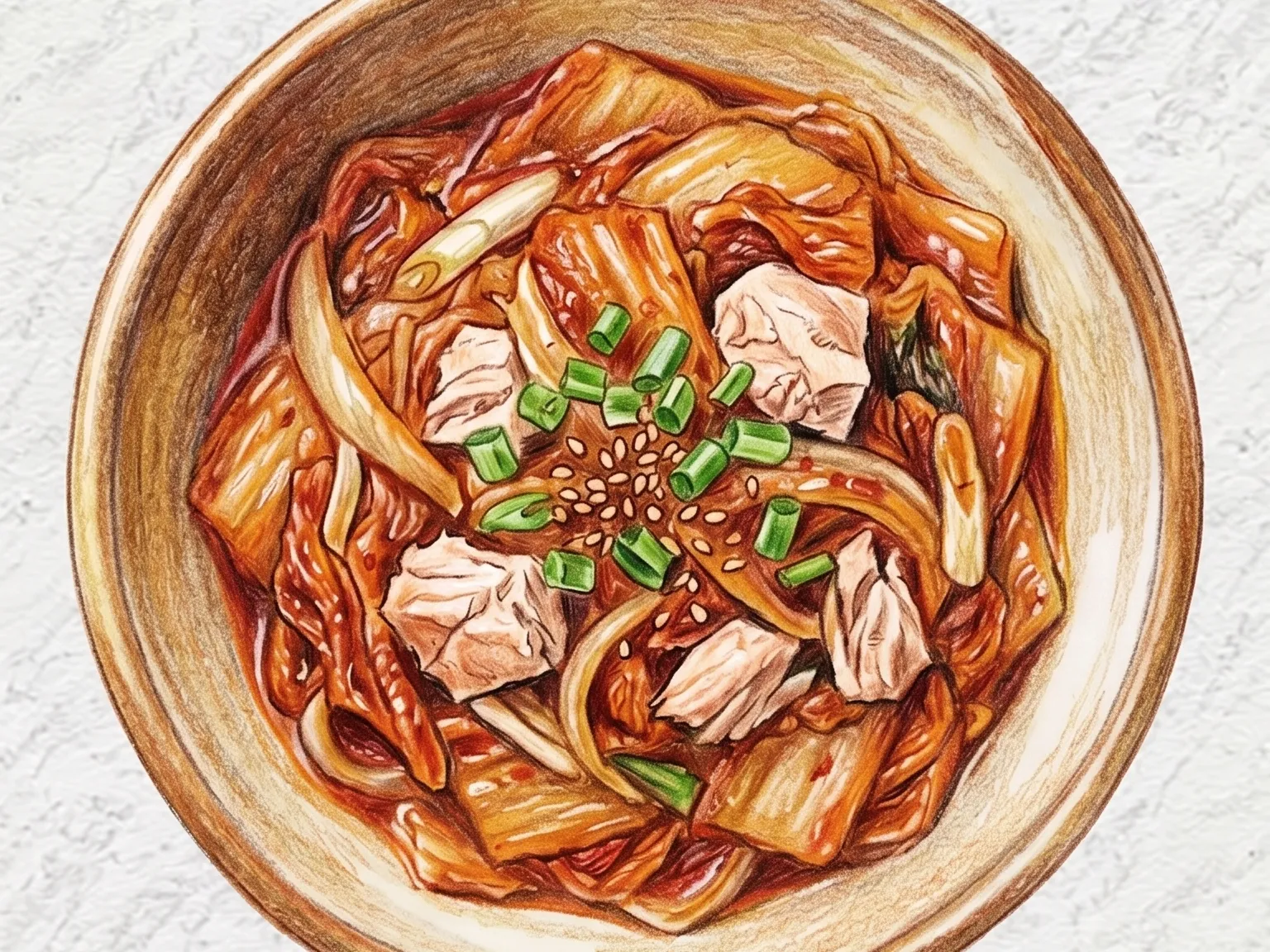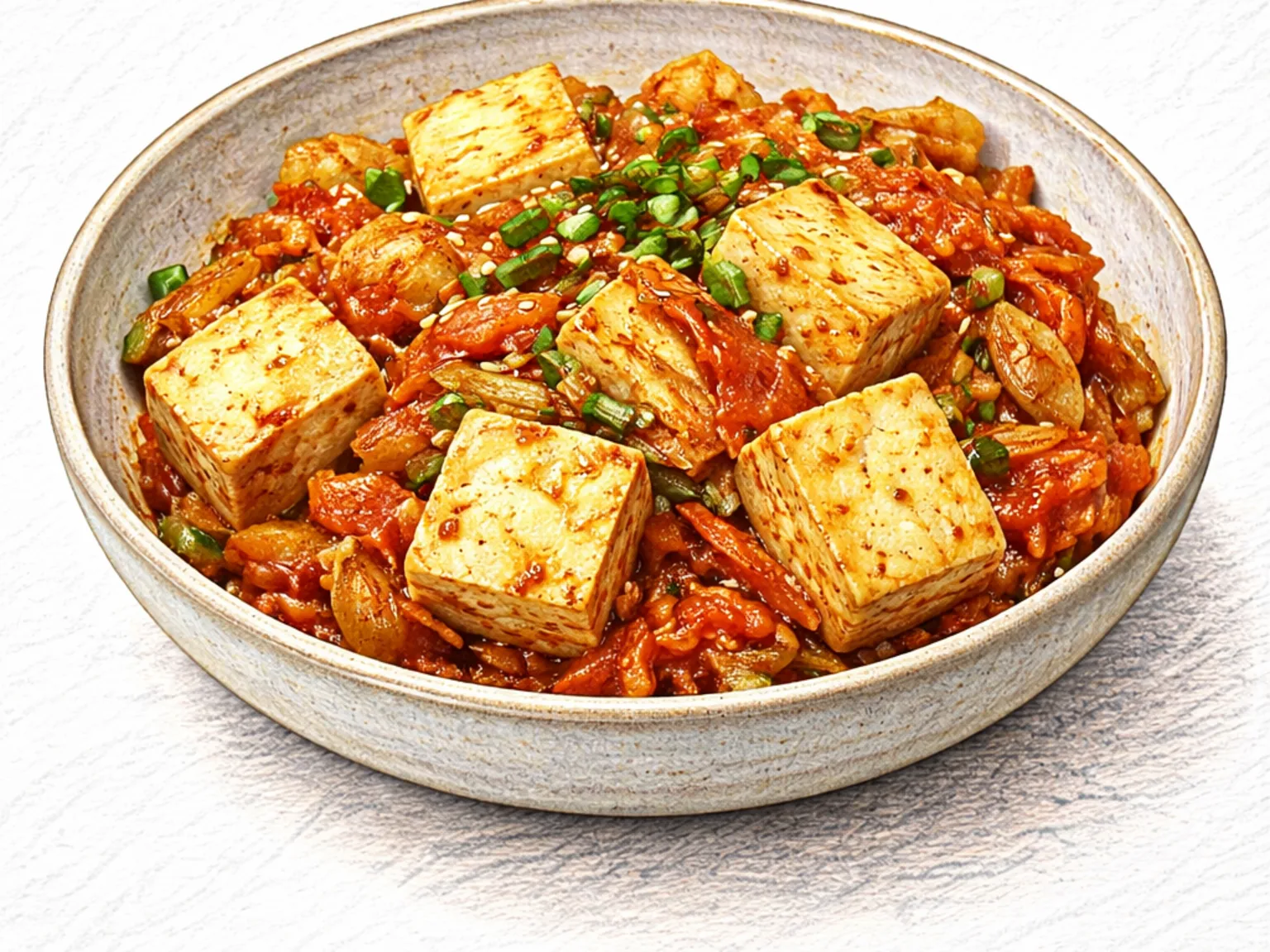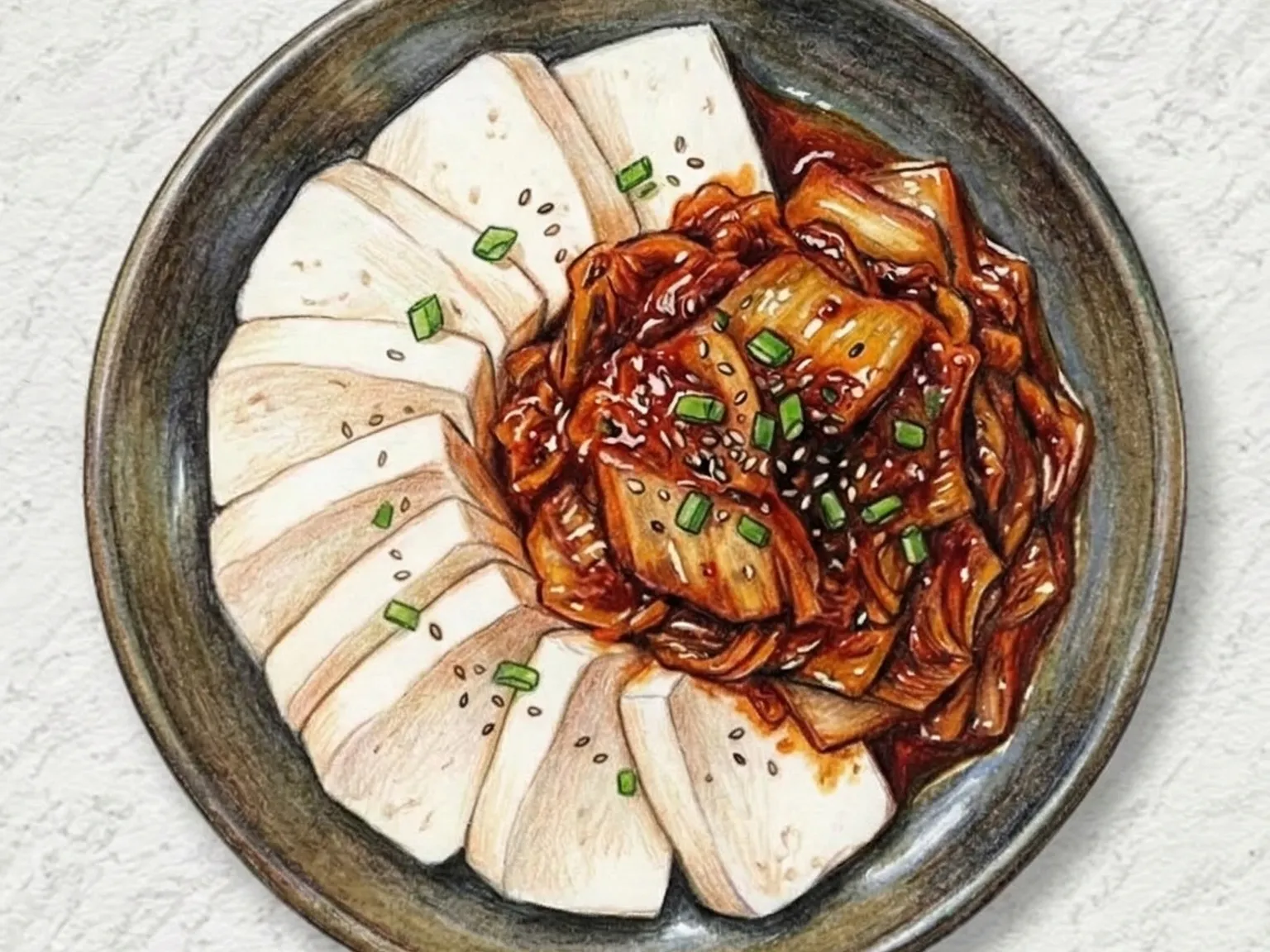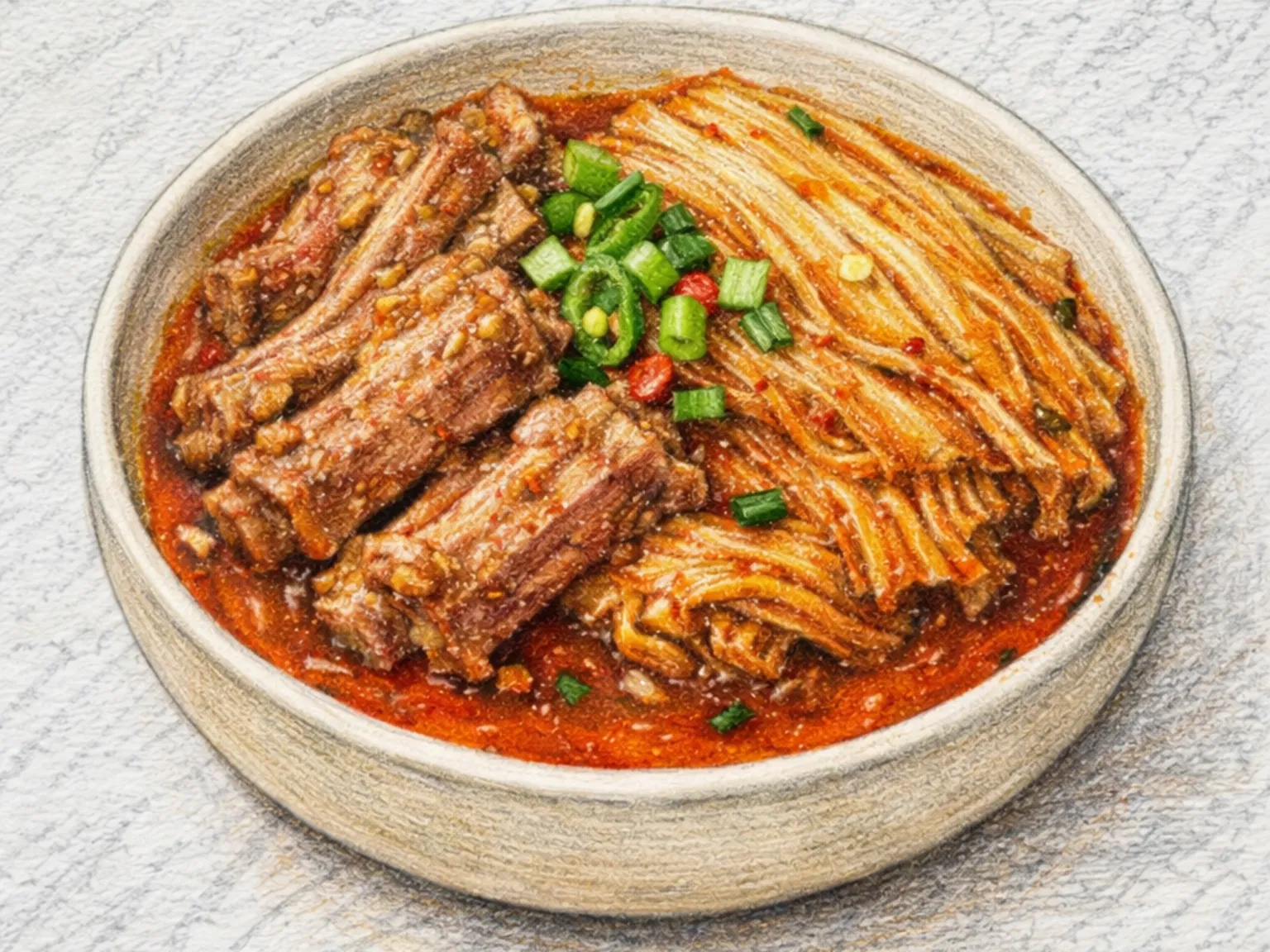
Korean Braised Pork Back Ribs with Aged Kimchi
Steamed Medium

Korean Braised Pork Back Ribs with Aged Kimchi

Quick answer

Mukeunji deunggalbi jjim is a Korean braise of pork back ribs and well-aged kimchi simmered low and slow in a sauce built from gochugaru, gochujang, and soy sauce.

What makes this special

  • Mukeunji deunggalbi jjim extracts collagen from pork ribs to balance the sharp acidity of year-aged fermented kimchi.
  • Year-aged kimchi brings deep fermented acidity to the pork rib broth
  • Rib bones release a thick collagen base as they braise
Total time
95 min
Level
Medium
Servings
4 servings
Ingredients
10
Calories
620 kcal
Protein
34 g

Key ingredients

pork back ribsaged kimchioniongreen onionKorean chili flakes

Core cooking flow

  1. 1 Soak 1200 g pork back ribs in cold water for 30 minutes to draw out blood.
  2. 2 Shake loose excess seasoning from 500 g aged kimchi and halve only the thick stems.
  3. 3 Lay the onion in the pot first, then add the ribs and aged kimchi on top.

Mukeunji deunggalbi jjim is a Korean braise of pork back ribs and well-aged kimchi simmered low and slow in a sauce built from gochugaru, gochujang, and soy sauce. The bones release a rich, collagen-heavy stock as they cook, and the deep fermented tang of kimchi aged for a year or more layers a complex acidity onto that savory foundation. Reducing the braising liquid down to roughly one-third of its original volume concentrates the flavors into a thick, lacquered glaze that coats every rib. The kimchi fibers soften through the long cook but its sharp, pungent character remains present to the final bite. By the time the dish is ready, the meat pulls cleanly from the bone with minimal effort. Served with steamed rice, it makes a filling and warming meal, and the older and more deeply fermented the kimchi, the richer and more complex the finished result.

Prep 25min Cook 70min 4 servings

Instructions

Read the steps as a cooking flow: prep, heat, seasoning, doneness control, and finish.

6 steps
  1. 1
    Heat

    Soak 1200 g pork back ribs in cold water for 30 minutes to draw out blood.

    Blanch them in boiling water for 5 minutes, then rinse well, rubbing away foam and residue from the bone ends.

  2. 2
    Season

    Shake loose excess seasoning from 500 g aged kimchi and halve only the thick stems.

    Cut 1 onion and 1 green onion into large pieces so they hold some shape during the long braise.

  3. 3
    Season

    Lay the onion in the pot first, then add the ribs and aged kimchi on top.

    Mix 2 tbsp gochugaru, 1 tbsp gochujang, 3 tbsp soy sauce, 1.5 tbsp garlic, and 1 tbsp sugar into 700 ml water and pour it in.

  4. 4
    Control

    Bring the pot to a boil over high heat, spoon the sauce over the top, then lower to medium-low.

    Cover and cook for 50 minutes, turning once or twice so the ribs glaze evenly and do not scorch.

  5. 5
    Control

    When the liquid has reduced to about one-third and the sauce looks thick, add the green onion.

    Simmer 10-15 minutes more, uncovered if needed, until the sauce clings glossily to the ribs.

  6. 6
    Season

    Turn off the heat when the meat slides easily from the bones and the kimchi stems bend softly.

    Rest for 5 minutes, then check the saltiness and acidity before serving with warm steamed rice.

After the steps

Pick a recipe that fits this dish.

Continue with shared ingredients, meal pairings, or a similar method.

Recipes That Go Well With This

More Steamed →

Based on shared ingredients and meal pairing

Korean Braised Mackerel with Aged Kimchi
Shared ingredient: aged kimchi Steamed

Korean Braised Mackerel with Aged Kimchi

Godeungeo kimchi jjim is mackerel braised together with well-fermented aged kimchi in a soy sauce and gochugaru broth. The deep, sharp acidity of the aged kimchi cuts through the fatty mackerel flesh without leaving any heaviness, drawing out a concentrated savory taste instead. The key step is removing the lid partway through cooking and letting the braising liquid reduce and absorb into the fish, which also drives off any residual fishiness. Onion softens into a gentle sweetness that rounds out the broth, while a pinch of sugar tempers the sourness of the kimchi so the seasoning stays in clear balance. The sauce reduces to a small pool of intensely flavored liquid that is meant to be mixed directly into a bowl of steamed rice.

Korean Braised Pork Kimchi
Shared ingredient: aged kimchi Steamed

Korean Braised Pork Kimchi

Pork kimchi jjim is a slow Korean braise where pork shoulder and well-aged kimchi are layered alternately in a pot with gochugaru, soup soy sauce, and minced garlic, then cooked at a low simmer for over fifty minutes. The kimchi's sharp, pungent fermented acidity gradually softens over the long cook but does not disappear; instead, it transforms into a complex, deep flavor that saturates the pork rather than overwhelming it. Pork shoulder is the preferred cut because its layered fat and muscle does not dry out over extended cooking and the rendered fat continuously bastes the braising liquid, enriching it throughout the process. Onion and green onion supply a natural sweetness that moderates the acidity and spice and prevents the dish from tipping into one-dimensional sharpness. Reducing the braise until only a small amount of sauce remains is important for flavor concentration, and lifting the lid periodically to turn the ingredients ensures that the top layers absorb the liquid as thoroughly as the bottom. The pork is done when it pulls apart with chopsticks with almost no resistance. Served over steamed rice with the remaining sauce spooned generously over the top, the soy and kimchi juices soak into the grain and make for a deeply satisfying and complete meal. Refrigerated leftovers eaten the following day taste noticeably better: the acidity stabilizes further overnight and the flavors integrate more fully.

Korean Beef Trotter Soup (Silky Collagen-Rich Slow-Cooked Broth)
Serve together Soups

Korean Beef Trotter Soup (Silky Collagen-Rich Slow-Cooked Broth)

Ujok-tang is a slow-cooked Korean soup made from beef trotters, prized for the extraordinary amount of collagen packed into the bones, tendons, and skin of the cut. The trotters are first soaked for hours in cold water to purge blood and any off-flavors, then placed in a deep pot and simmered at a gentle roll for four to six hours. During that time, the collagen gradually dissolves into the cooking liquid, transforming it from plain water into a milky, opaque broth with a viscous body that coats the spoon and sets firm when chilled. Regular skimming of fat and foam throughout the process ensures the final broth tastes clean rather than greasy. The trotter meat itself falls into two distinct textures: the skin and tendons turn gelatinous and springy, offering a bouncy chew, while the small pockets of muscle between the bones are meltingly soft. Traditional seasoning is limited to coarse salt and freshly ground pepper, allowing the broth's natural richness to speak. A dab of hot mustard or a spoonful of salted shrimp paste on the side provides a sharp contrast that keeps each mouthful interesting. Ujok-tang has long been regarded as a restorative food, particularly valued for its supposed benefits to joints and skin.

Korean Braised Pork Ribs with Young Radish Greens
Similar recipe Steamed

Korean Braised Pork Ribs with Young Radish Greens

Yeolmu dwaeji galbi jjim is a Korean braised pork rib dish finished with young radish greens, cooked in a gochujang and soy sauce seasoning. The ribs simmer until the meat separates from the bone, building a concentrated, spicy braising liquid from the rendered pork stock and chili paste. Young radish greens are added only in the final minutes to preserve their crisp stems and fresh, slightly peppery aroma, which lightens the rich, heavy sauce. The combination of fall-off-the-bone pork and bright summer greens makes this a seasonal main course that bridges richness and freshness.

Serve with this

Korean Stuffed Eggplant Seon
Side dishes Medium

Korean Stuffed Eggplant Seon

Gaji-seon is a Joseon-era royal court banchan belonging to the seon category, a class of preparations in which vegetables are stuffed with a seasoned filling and steamed. The eggplant is scored at regular intervals with deep cuts that stop short of the bottom, creating accordion-like pockets along the length of the vegetable. A filling of minced pork or beef combined with crumbled tofu, scallion, and sesame oil is pressed firmly into each slit, then the stuffed eggplant is steamed for fifteen minutes. During steaming, the juices from the filling soak into the softening eggplant flesh, and the two components merge into a single flavor. The labor of stuffing each eggplant individually made this a dish historically reserved for guests and formal occasions rather than everyday meals. After steaming, a light soy-based sauce is spooned over the top. The sharp textural contrast between the near-dissolving eggplant skin and the firm, savory filling produces a refinement that clearly separates seon from ordinary stir-fried or braised eggplant preparations.

🏠 Everyday 🎉 Special Occasion
Prep 25min Cook 20min 4 servings
Korean Ssamjang Hwe Deopbap
Rice Medium

Korean Ssamjang Hwe Deopbap

This variation on hoe-deopbap replaces the standard cho-gochujang with a dressing of ssamjang mixed with vinegar and sesame oil, shifting the dominant flavor away from sweet heat and toward fermented bean depth. The doenjang component in ssamjang works against the rawness of the fish rather than masking it with chili, producing a rounded, earthy complexity that deepens with each bite. Vinegar cuts through ssamjang's thick, pungent weight and introduces a clean acidity that keeps the overall flavor from feeling heavy. Flounder sashimi is cut into bite-sized pieces and kept refrigerated, while the rice is served at room temperature so the two elements neither clash nor blend into an indistinct warmth. Julienned carrot and perilla leaves provide a crisp, juicy resistance that contrasts directly with the chewy elasticity of the fish. Dressing the vegetables in advance draws out moisture that would soften the rice, so all the components are placed in the bowl separately and tossed together only at the moment of eating to preserve every texture.

🎉 Special Occasion 🏠 Everyday
Prep 20min Cook 5min 2 servings
Korean Fermented Kale Kimchi
Kimchi Medium

Korean Fermented Kale Kimchi

Kale kimchi is made by wilting kale leaves in coarse salt, then tossing them with julienned radish, scallions, gochugaru, soup soy sauce, and pear puree before fermenting. The kale's strong green flavor mellows during fermentation while its sturdy leaf structure maintains a satisfying chew, and the radish strips add a crisp counterpoint to the soft seasoning. Pear puree wraps around the chili heat with fruit sweetness, and soup soy sauce anchors the seasoning with a quiet umami depth. Made using the same technique as napa cabbage kimchi but carrying kale's distinctive slight bitterness, this version adds a layer of complexity and nutritional density to the traditional format. Kale requires less salting time than napa cabbage, and weighting it down evenly during the process ensures consistent wilting throughout the batch.

🍱 Lunchbox 🏠 Everyday
Prep 30min Cook 5min 4 servings

Similar recipes

Korean Braised Mackerel (Fatty Mackerel with Radish in Spicy Soy Sauce)
Steamed Medium

Korean Braised Mackerel (Fatty Mackerel with Radish in Spicy Soy Sauce)

Godeungeo-jjim is a Korean braised mackerel dish cooked low and slow with Korean radish, sliced onion, gochugaru, soy sauce, and fresh ginger. Mackerel belongs to the blue-backed fish category with a high natural fat content, and that fat absorbs the bold, spiced seasoning during braising in a way that leaner fish cannot. The flavor that results is deeply savory with a rounded heat that does not taste sharp or one-dimensional. Radish placed at the bottom of the pan serves a dual purpose: it draws out the fishy aroma during cooking and simultaneously soaks up the braising liquid, making it almost as desirable to eat as the fish itself. Ginger neutralizes the remaining raw fish notes and keeps the overall taste from feeling heavy, providing a subtle warmth that lifts the richness. As the braising liquid reduces, it thickens into a glossy, intensely flavored sauce that is commonly spooned over steamed rice to the last drop. Mackerel is widely available and inexpensive in Korea, which has made this preparation a household staple across generations.

🏠 Everyday 🍱 Lunchbox
Prep 15min Cook 40min 3 servings
Korean Pork Kimchi Stew (Fermented Kimchi & Pork Shoulder)
Stews Easy

Korean Pork Kimchi Stew (Fermented Kimchi & Pork Shoulder)

This traditional Korean stew is prepared by simmering aged kimchi and pork shoulder to create a rich and savory broth. The marbled fat from the pork shoulder balances the sharp acidity of the fermented kimchi, producing a deep umami flavor. The cooking begins by stir-frying the pork and kimchi for three minutes to mellow the sour notes. Next, chili flakes, minced garlic, and soup soy sauce are incorporated briefly, followed by water and sliced onions. Simmering the stew for fifteen minutes softens the pork and allows the flavors to meld. Adding a small amount of kimchi brine during this process enhances the fermented depth of the broth. The dish is finished by layering thick slices of tofu and chopped green onions on top, simmering until they are heated through. It is served hot, typically alongside a bowl of steamed rice.

🏠 Everyday
Prep 12min Cook 25min 2 servings
Korean Galchi Kimchi Jjigae (Hairtail Kimchi Stew)
Stews Medium

Korean Galchi Kimchi Jjigae (Hairtail Kimchi Stew)

Galchi kimchi jjigae is a Korean stew that pairs hairtail fish with deeply fermented aged kimchi, simmered together in a base of anchovy and dried kelp stock. The richness of hairtail - an oily, full-flavored white fish - works in counterpoint to the sharp, acidic punch of well-aged kimchi, and as the two cook together their flavors blur into something more complex than either ingredient alone. Korean radish and onion go into the pot first, their natural sweetness dissolving into the broth to form a mild, rounded base before the fish is added. The hairtail is laid in gently and cooked covered to preserve the flesh, which would fall apart if stirred. Gochugaru and soup soy sauce season the broth with spice and salt, while the fish releases its own deep umami gradually, enriching every spoonful of liquid. Pouring the stew over a bowl of rice is one of the most common ways to eat it - the broth soaks into the grains and pulls every element of the dish together. It is particularly well-suited to cold-weather cooking, when a hot, assertive broth is exactly what is needed.

🏠 Everyday
Prep 20min Cook 35min 4 servings

Tips

If kimchi is very sour, add an extra 0.5 tbsp sugar.
Using a pressure cooker can reduce cook time to about 30 minutes.

Nutrition (per serving)

Calories
620
kcal
Protein
34
g
Carbs
15
g
Fat
46
g