Korean Aged Kimchi Tuna Mixed Noodles
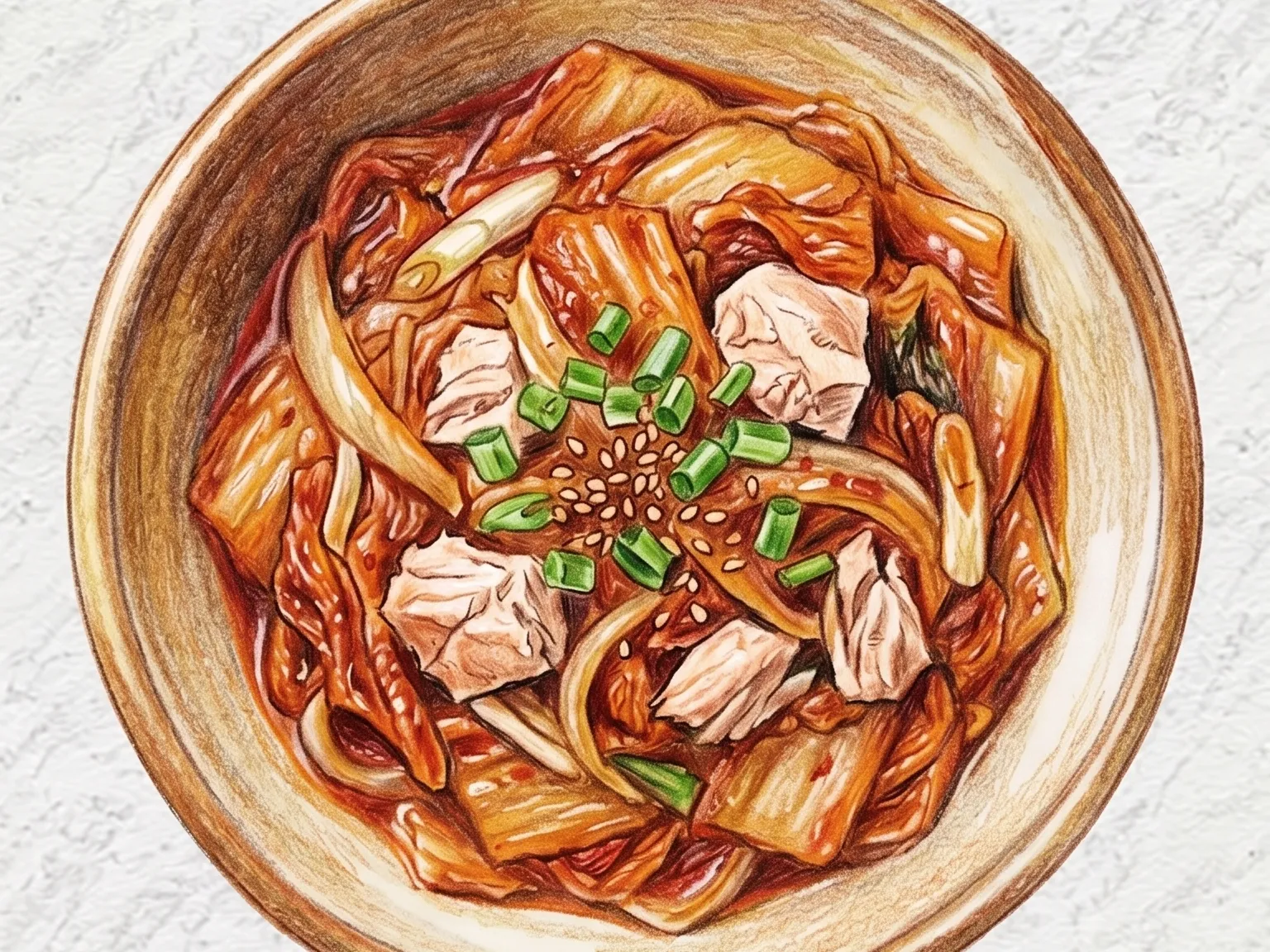
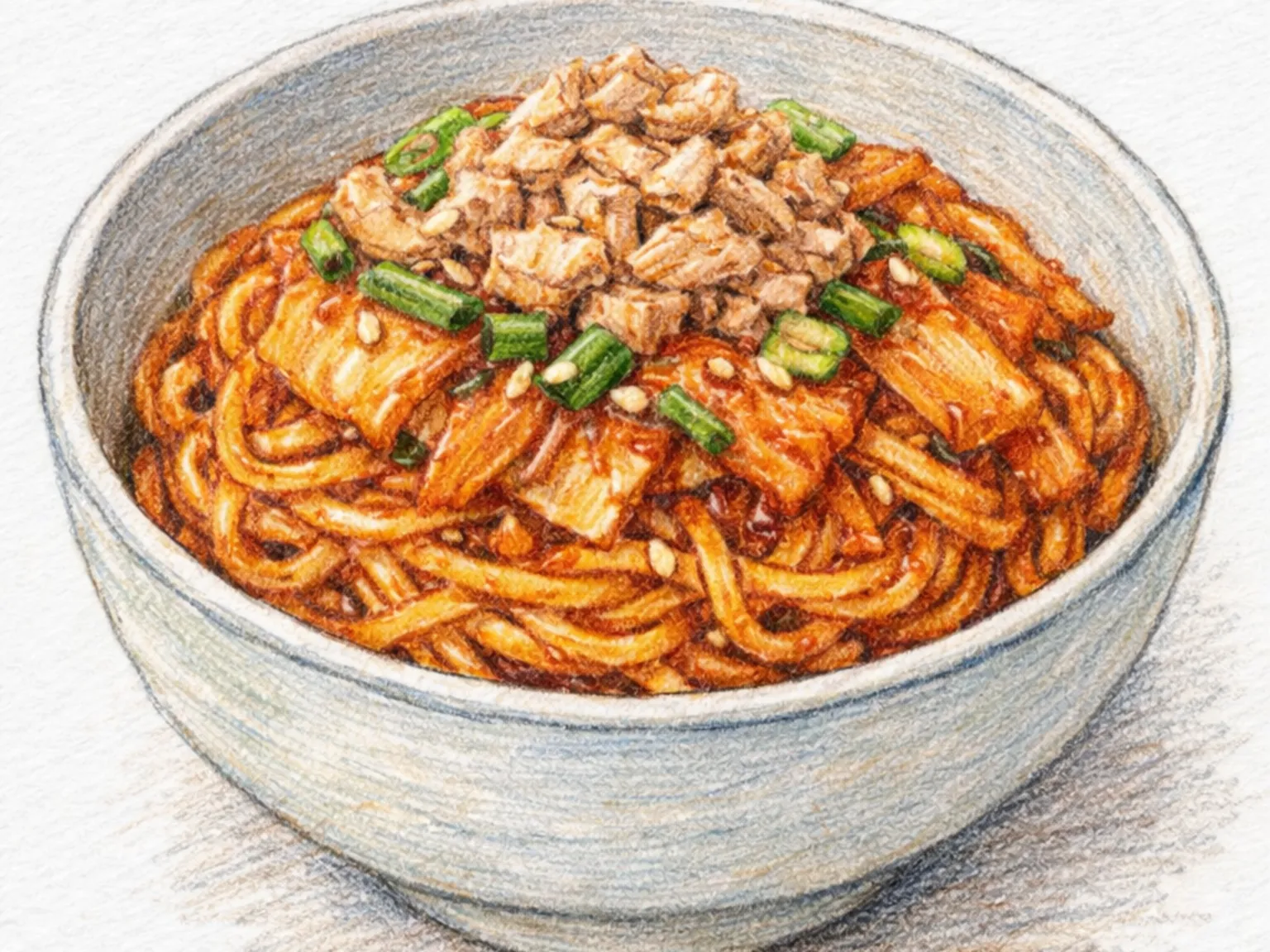
Mukeunji tuna bibim myeon is a quick Korean mixed noodle dish where aged kimchi and canned tuna are tossed with chewy wheat noodles in a gochujang-based sauce. Trimming the excess paste from the aged kimchi and chopping it finely keeps the sourness in check, while draining the tuna oil thoroughly prevents the dressing from becoming diluted. The sauce blends gochujang, vinegar, oligosaccharide syrup, and sesame oil for a balanced mix of spicy, sour, and sweet. Boiling the noodles for five to six minutes and rinsing them in cold water gives them a firm, springy texture, and draining well ensures the sauce clings to every strand. Scallion and ground sesame seeds finish the bowl with color and nuttiness, and a small addition of vinegar or syrup at the table lets each person fine-tune the flavor balance.
Adjust Servings
Instructions
- 1
Finely chop aged kimchi and drain tuna thoroughly.
- 2
Mix gochujang, vinegar, syrup, and sesame oil to make the sauce.
- 3
Boil noodles for 5-6 minutes, rinse in cold water, and drain well.
- 4
Combine sauce with noodles, kimchi, tuna, and half the scallion; toss evenly.
- 5
Taste and adjust with a little extra vinegar or syrup if needed.
- 6
Plate and finish with remaining scallion and ground sesame.
As an Amazon Associate, we may earn from qualifying purchases.
Tips
Nutrition (per serving)
More Recipes

Korean Yeolmu Bibim Guksu
Yeolmu bibim guksu is a Korean mixed noodle dish built around young radish kimchi (yeolmu kimchi). The kimchi provides a crunchy texture and a fermented tanginess that anchors the bowl. Thin somyeon noodles are rinsed in cold water, then tossed with gochugaru or gochujang dressing, sesame oil, and sesame seeds. The heat level stays moderate, letting the kimchi's sourness come through. Total preparation is about 23 minutes, and the recipe requires no cooking beyond boiling the noodles.

Korean Tofu Kimchi Bibim Myeon
Dubu kimchi bibim myeon is a Korean mixed noodle dish where ripe kimchi is stir-fried in perilla oil to deepen its fermented flavor, then combined with gochugaru and gochujang into a spicy dressing that coats each strand of boiled noodles. Pan-frying the kimchi tames its raw acidity and pushes the umami forward. The tofu is pressed dry and seared until golden-crisp on the outside while staying soft inside, creating a clean counterpoint to the bold noodles. Half a boiled egg on top is a common finishing touch - when the yolk mixes into the dressing, it adds a creamy richness that rounds out the heat.

Korean Aged Kimchi Mackerel Bibim Noodles
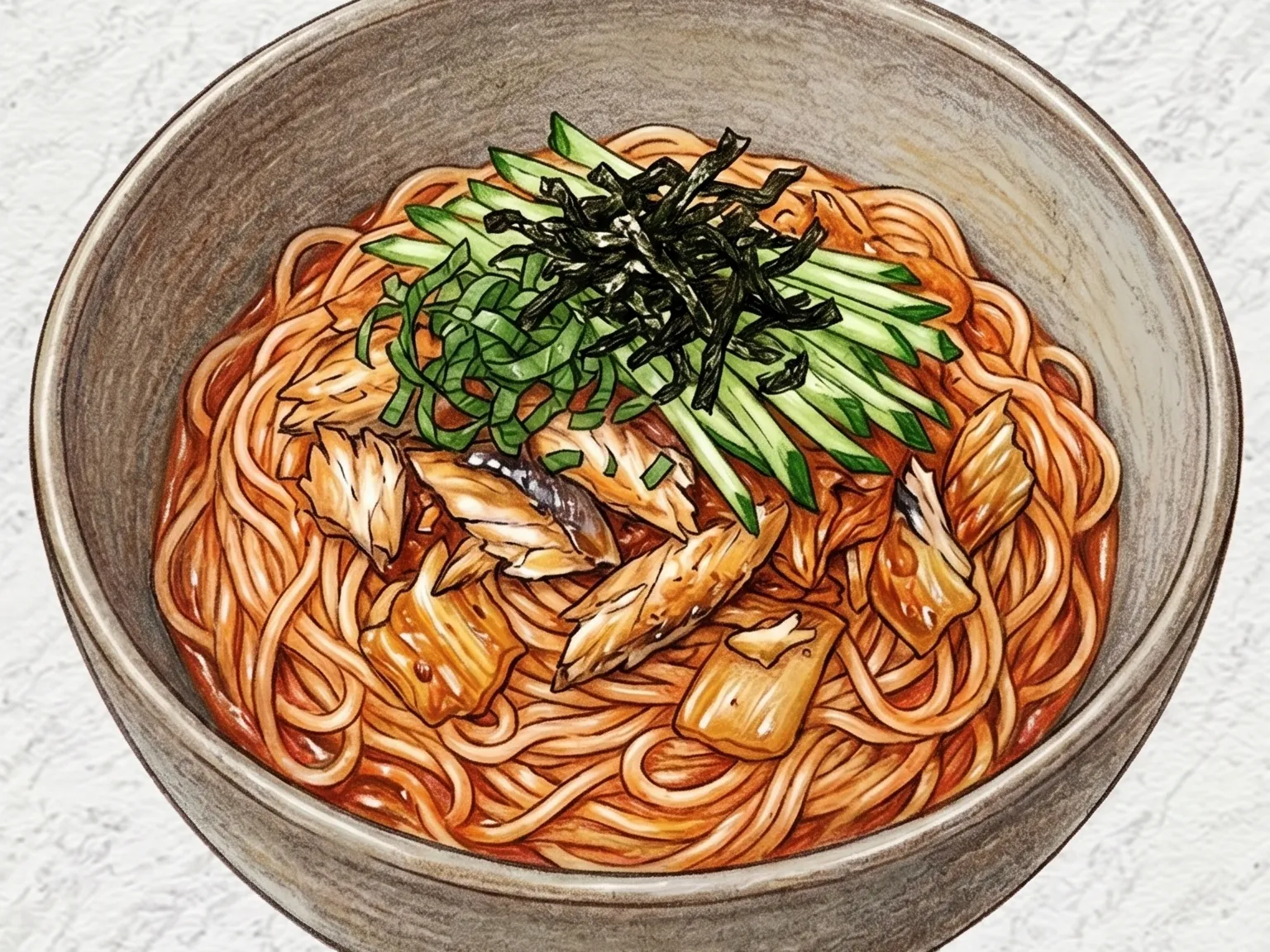
Mugunji godeungeo bibim myeon is a bold Korean mixed noodle dish where pan-seared mackerel and stir-fried aged kimchi meet spicy noodles. Salting the mackerel fillet for ten minutes draws out moisture and reduces fishiness, and pan-searing until golden before flaking the meat allows it to blend into the noodles without bones. A quick two-minute stir-fry softens the harsh acidity of the aged kimchi while preserving its deep fermented character. The sauce combines gochujang, gochugaru, plum syrup, vinegar, and sesame oil, layering spicy, sweet, and tangy notes in a single dressing. Draining the wheat noodles thoroughly prevents the sauce from becoming watery, and julienned cucumber with roasted seaweed flakes add crunch and a light oceanic note that balances the rich, oily fish.

Korean Spicy Mixed Glass Noodles
A Busan street-food staple, this dish tosses springy sweet-potato glass noodles with sliced fish cake and crisp vegetables in a bold chili dressing. The translucent noodles cling to every drop of the spicy-sweet sauce, so each forkful carries concentrated flavor. Fish cake contributes a mild, savory backbone, while shredded cabbage and cucumber provide crunch that offsets the noodles' elastic chew. A finish of sesame oil and toasted sesame seeds adds a nutty warmth to the aftertaste. Because the noodles only need boiling and a quick toss with the prepared sauce, the dish comes together in minutes, making it a practical weeknight option. It captures the lively, no-frills spirit of Busan's market food stalls in a single bowl.

Korean Gochujang Bibim Udon Cup (Spicy Mixed Udon Cup)
Gochujang bibim udon cup is a cold-tossed udon dish served in a cup, dressed with a sauce of gochujang, soy sauce, oligosaccharide syrup, vinegar, and sesame oil. The fermented heat of gochujang meets the vinegar's acidity to create a tangy-spicy profile without harshness, while the syrup adds body that helps the sauce coat the thick udon strands evenly. Raw julienned cabbage and carrot are mixed in for textural crunch against the soft noodles. Cooling the noodles completely before tossing prevents the sauce from clumping, ensuring every strand is evenly seasoned.

Korean Kimchi Bean Sprout Stew
This stew brings together fermented kimchi and soybean sprouts in an anchovy stock base for a broth that is both refreshing and spicy. The sprouts retain a slight crunch and release a clean flavor that tempers the kimchi's sharp tang. Soft tofu melts into the stew, providing creaminess, while onion and green onion add background sweetness. Seasoned with soup soy sauce and gochugaru, it is a lighter-style jjigae often enjoyed as a morning-after remedy.