Korean Braised Beef with Dried Radish
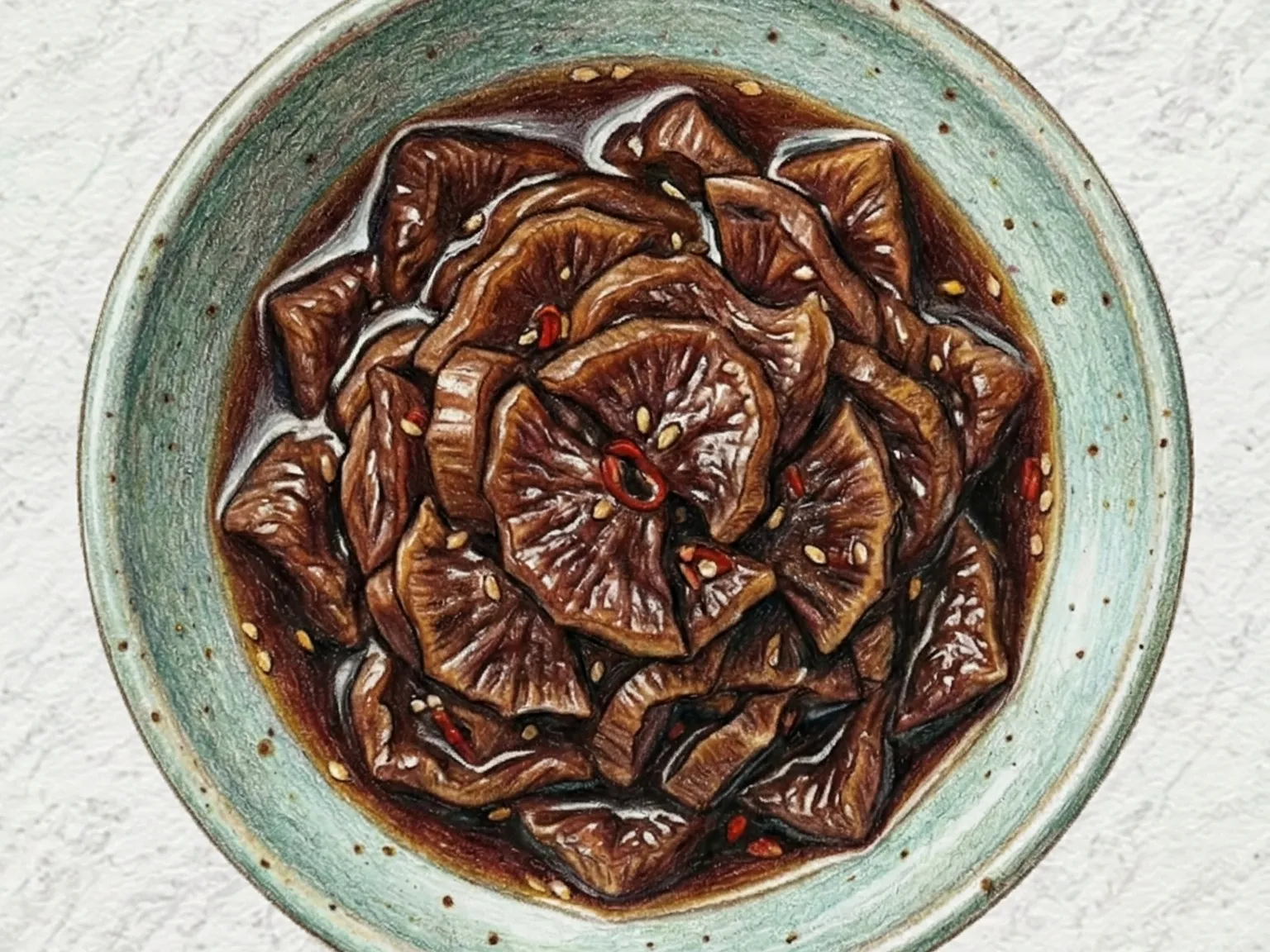
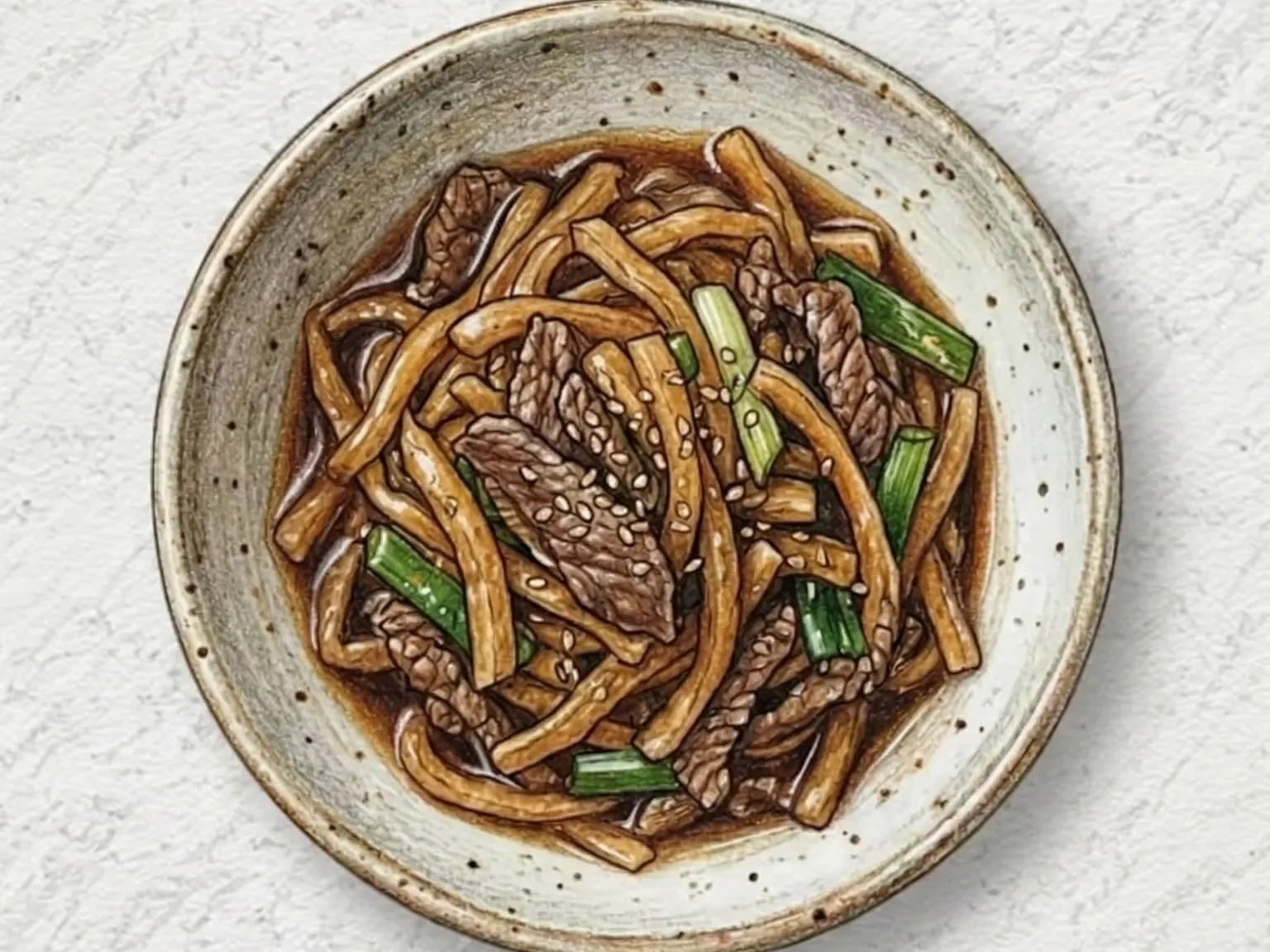
Mumallaengi sogogi jorim is a Korean soy-braised side dish of rehydrated dried radish strips and lean beef round. The drying process concentrates the radish's natural umami, and once soaked and braised, the strips turn chewy and deeply flavored. Thin-sliced beef is pre-seasoned with cooking wine to keep it clean-tasting, while oligosaccharide syrup adds a gentle sheen and sweetness to the soy base. Sesame seeds finish the dish with a toasted note. This banchan improves overnight in the refrigerator as the seasoning continues to penetrate, making it a practical choice for lunchboxes and weekday meal prep.
Adjust Servings
Instructions
- 1
Soak dried radish in lukewarm water for 20 minutes, then squeeze out excess moisture.
- 2
Slice beef thinly and marinate with 1 tbsp cooking wine and 0.5 tbsp garlic.
- 3
In a pot, bring water, soy sauces, remaining garlic, syrup, and green onion to a boil.
- 4
Add beef and cook 10 minutes, then add radish strips and braise on medium-low for 25 minutes.
- 5
When sauce is shallow, reduce heat and braise 5 more minutes to deepen flavor.
- 6
Remove green onion and finish with sesame seeds.
As an Amazon Associate, we may earn from qualifying purchases.
Tips
Nutrition (per serving)
More Recipes

Korean Braised Beef and Radish
Sogogi mu jorim is a Korean braised beef and radish dish where brisket and thick-cut Korean radish are slowly simmered in soy sauce with garlic, ginger, and a touch of sugar. Boiling the beef first and skimming the foam produces a clean broth base for braising. The radish goes in later so it cooks until semi-translucent, absorbing the beef-enriched liquid and developing a natural sweetness that balances the soy. Green onion added at the end contributes a fresh note. Cutting the radish thick is important so it holds its shape through the braise, and resting the dish overnight before reheating deepens the flavor noticeably.

Braised Korean Radish (Soy Garlic Slow-Cooked Side)
Mu-jjim is a Korean braised radish dish where thick-cut Korean radish is simmered slowly in a covered pot with soy sauce, sugar, and garlic. The radish absorbs the seasoned liquid as it cooks, turning translucent and developing a deep sweetness that balances the salty soy base. A drizzle of sesame oil at the end adds a nutty fragrance, and a single sliced green chili contributes a mild kick to the finish. Despite its simplicity, this is a satisfying everyday banchan that pairs naturally with rice throughout the year.

Korean Soy-Braised Beef with Mushrooms
Sogogi beoseot jangjorim is a Korean soy-braised banchan of beef eye round, shiitake mushrooms, and whole garlic cloves. The beef is boiled first and the resulting clear stock becomes the braising liquid, layering the soy sauce with deep meat flavor from the start. Shiitake mushrooms contribute their own aromatic umami, and whole garlic cloves lose their sharpness during the long simmer, turning mellow and sweet. Shredding the beef along the grain exposes more surface area to the sauce, and an overnight rest in the refrigerator lets every component absorb the seasoning more fully. It stores well for days, making it a reliable lunchbox and meal-prep staple.

Korean Sogogi Jangjorim (Soy-Braised Beef)
Sogogi jangjorim is one of Korea's essential make-ahead side dishes, made by boiling lean beef round until tender, shredding it along the grain, and braising the shreds with quail eggs in soy sauce, sugar, and garlic. Using the beef cooking broth as the braising base means every spoonful of liquid carries concentrated meat flavor. The quail eggs take on a deep brown color as they simmer and absorb the soy seasoning throughout. Cooling the pot completely before storing is a critical step because the meat and eggs continue to draw in flavor as the temperature drops. Refrigerated, this banchan lasts well over a week, making it a staple of Korean meal prep.

Korean Braised Flounder with Radish
Gajami-jorim is a Korean braised flounder dish where the fish is gently simmered with Korean radish in a soy sauce and chili flake broth. The delicate flounder flesh absorbs the seasoning while careful low heat keeps it from breaking apart. The radish serves a dual purpose, neutralizing any fishiness while contributing a clean, refreshing sweetness to the braising liquid. Spooning the reduced sauce over rice makes it a complete, standalone meal.

Korean Beef Radish Soup (Sesame Oil Braised Beef and Daikon)
Sogogi muguk is one of the most frequently cooked soups in Korean households, built from just two main ingredients: beef and daikon radish. Thin-cut beef is stir-fried in sesame oil until lightly browned, then thick radish slices go into the pot before water is added. As the soup comes to a boil and then settles into a steady simmer, the radish transforms: its initial sharpness mellows into a clean sweetness that balances the beef's depth, and its starch clouds the broth just enough to give it body. Soup soy sauce provides the seasoning, tinting the liquid a pale amber while pushing umami forward over saltiness. Minced garlic added near the end lends a quiet heat that sits behind the main flavors rather than competing with them. The radish, when properly cooked, should yield easily to a spoon yet still hold a hint of structure at its center. This soup also serves as the foundational broth for tteokguk on Lunar New Year, and Koreans reach for it instinctively when the weather turns cold or the body needs warming.