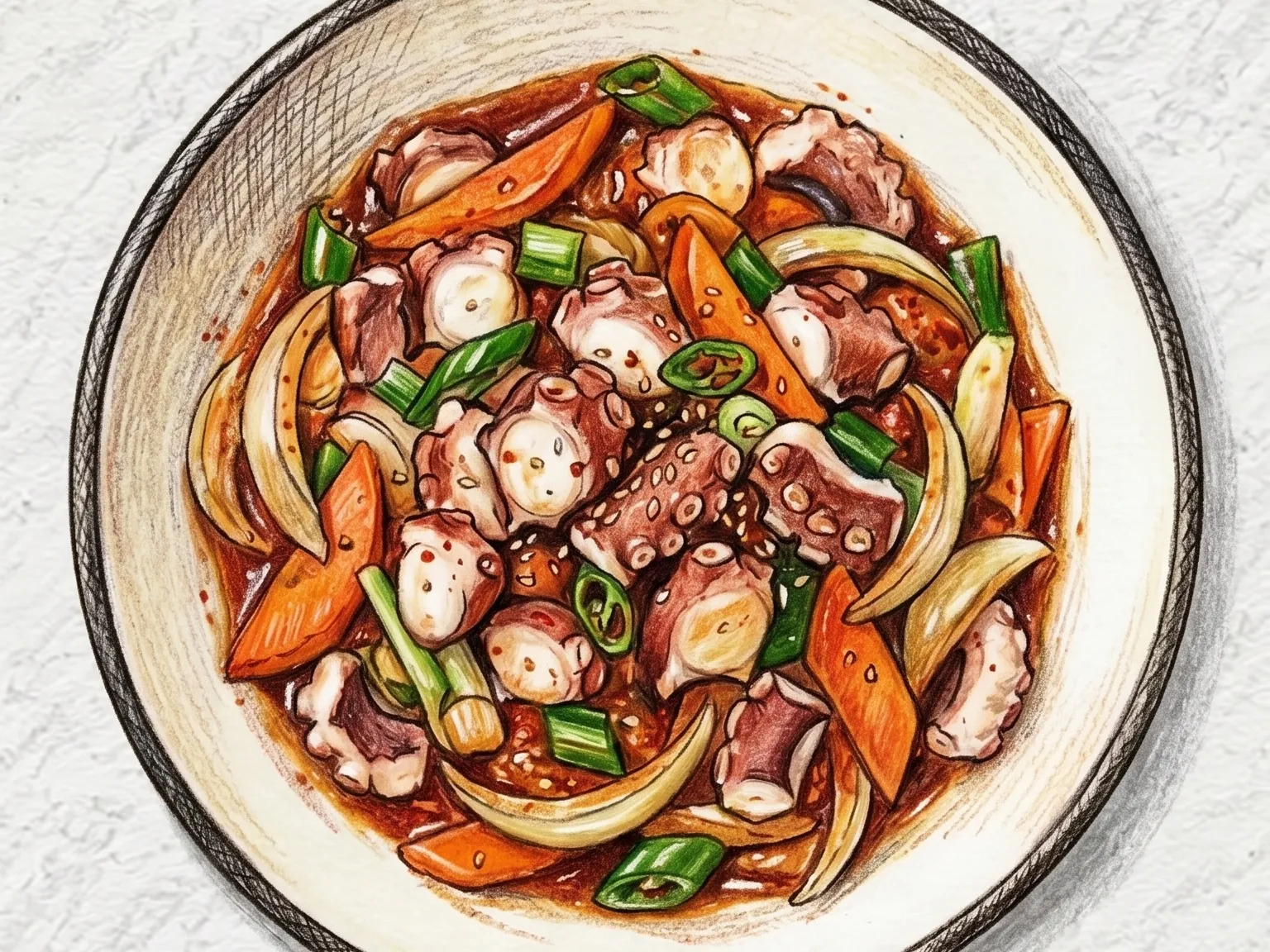
Korean Spicy Octopus Stir-fry
Mix 1 tbsp each gochujang, soy sauce, and minced garlic until smooth before the pan is hot, because clumps will not coat the octopus evenly later. Stir-fry the onion, carrot, and scallion over high heat for about 1 minute, add the boiled octopus and sauce all at once, and cook 2 to 3 minutes, until the sauce clings with a glossy coating. Once the octopus starts shrinking noticeably, finish quickly, then turn off the heat and stir in 1 tsp sesame oil.
Quick answer
- Total time
- 30 min
- Level
- Medium
- Servings
- 2 servings
- Ingredients
- 8
About this dish
The octopus is already boiled, so the pan only has to warm it through and coat it in gochujang sauce.
Read more
The heat goes off the moment it starts to visibly shrink, and the onion and carrot are left a little underdone so they keep some crunch.
Ingredients
Instructions
- 1
Pat 280 g of boiled octopus lightly dry, then cut it into bite-size pieces.
Slice the onion, carrot, and scallion to a similar thickness so they cook quickly and keep a little bite.
- 2
Mix 1 tablespoon gochujang, 1 tablespoon soy sauce, and 1 tablespoon minced garlic until smooth.
Break up thick clumps now, because the sauce will not coat the octopus evenly once it hits the hot pan.
- 3
Heat the pan well over high heat, then add the onion, carrot, and scallion.
Stir and toss for about 1 minute, just until the edges soften slightly while the centers stay crisp.
- 4
Add the octopus and sauce all at once, keeping the heat high.
Stir-fry for only 2 to 3 minutes, until the octopus is hot and the sauce clings with a glossy coating.
- 5
Keep turning the mixture so the gochujang sauce does not scorch on the bottom of the pan.
If the octopus starts shrinking noticeably, stop cooking soon to keep it springy instead of tough.
- 6
Turn off the heat and drizzle in 1 teaspoon sesame oil, mixing it through with the pan's remaining heat.
Plate right away while the vegetables are still crisp and the octopus is springy.
Official cooking and safety guidance
Public-agency cooking and food safety guidance that applies to this recipe.
Official cooking and safety guidance
-
Storage and reheating
Refrigerate leftovers in shallow containers within 2 hours and use them within 3 to 4 days. Reheat the center to 74°C.
Source: USDA Food Safety and Inspection Service. Leftovers and Food Safety
Sources checked 2026-07-22
Use-up ingredient planner
Turn these ingredients into two more meals
The overlap excludes basic seasonings. Open the next recipe and your selected dishes will stay with you.
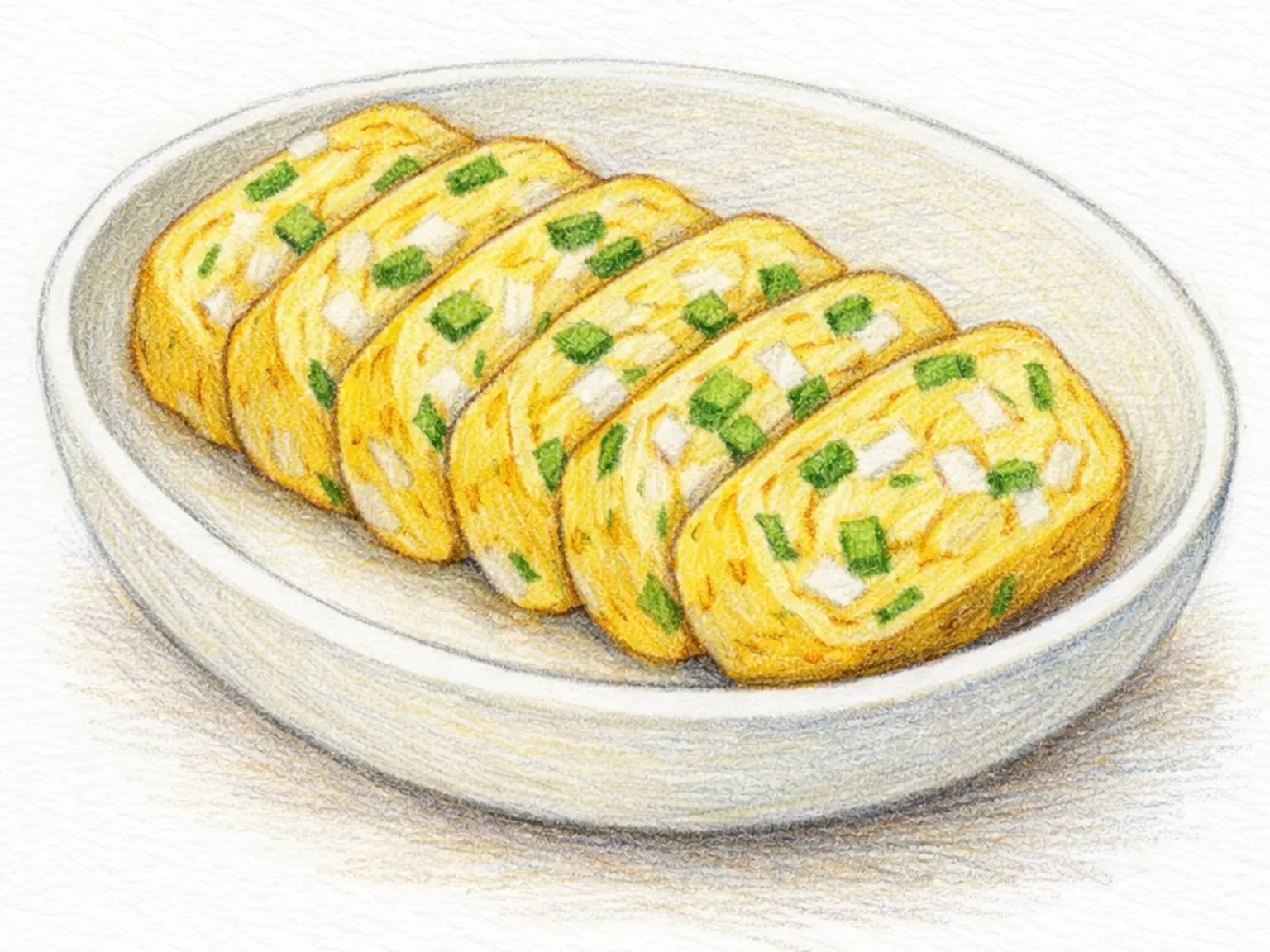
Korean Rolled Omelette (Layered Vegetable Egg Roll)
onion, carrot
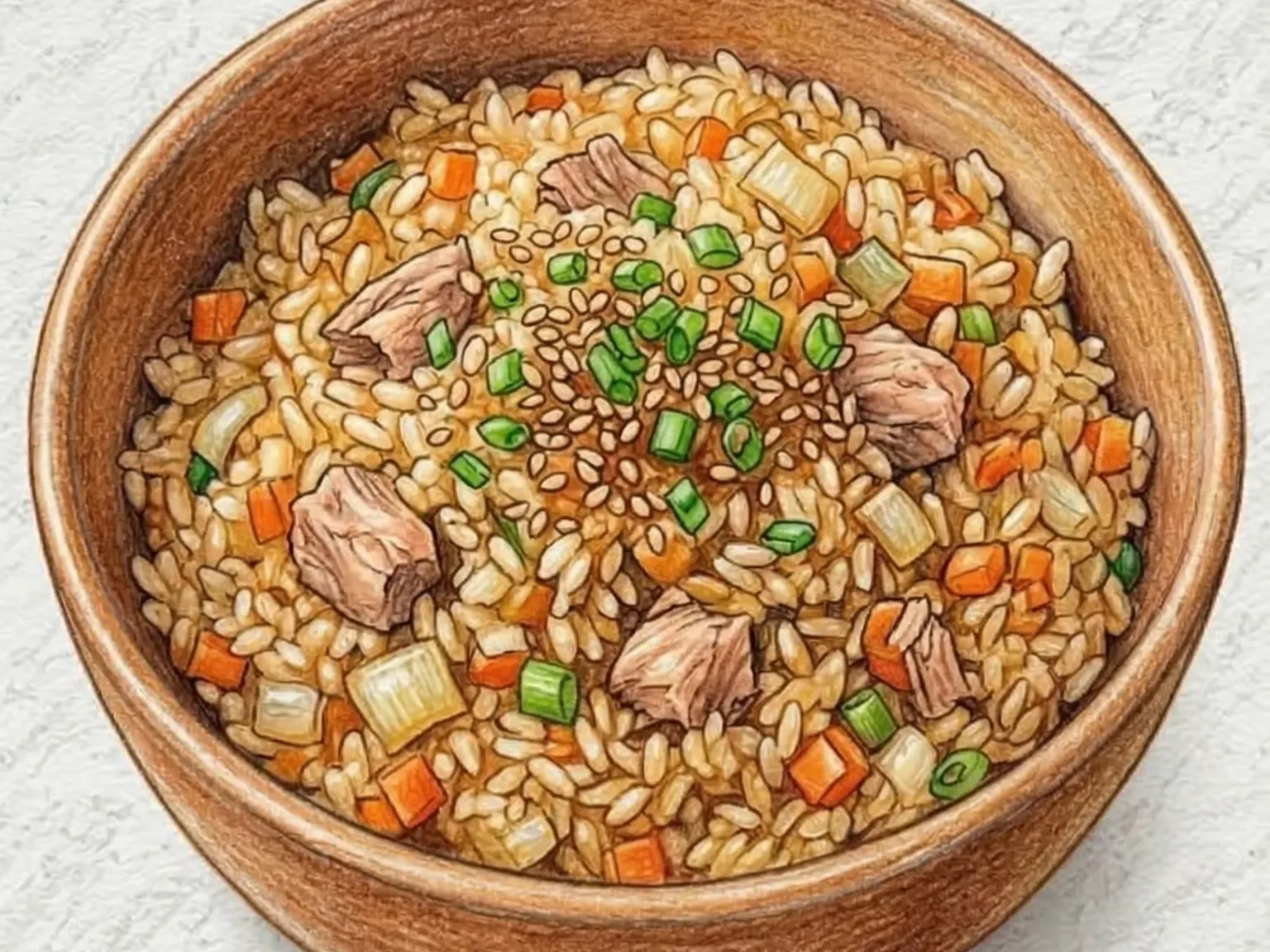
Tuna Fried Rice
onion, carrot
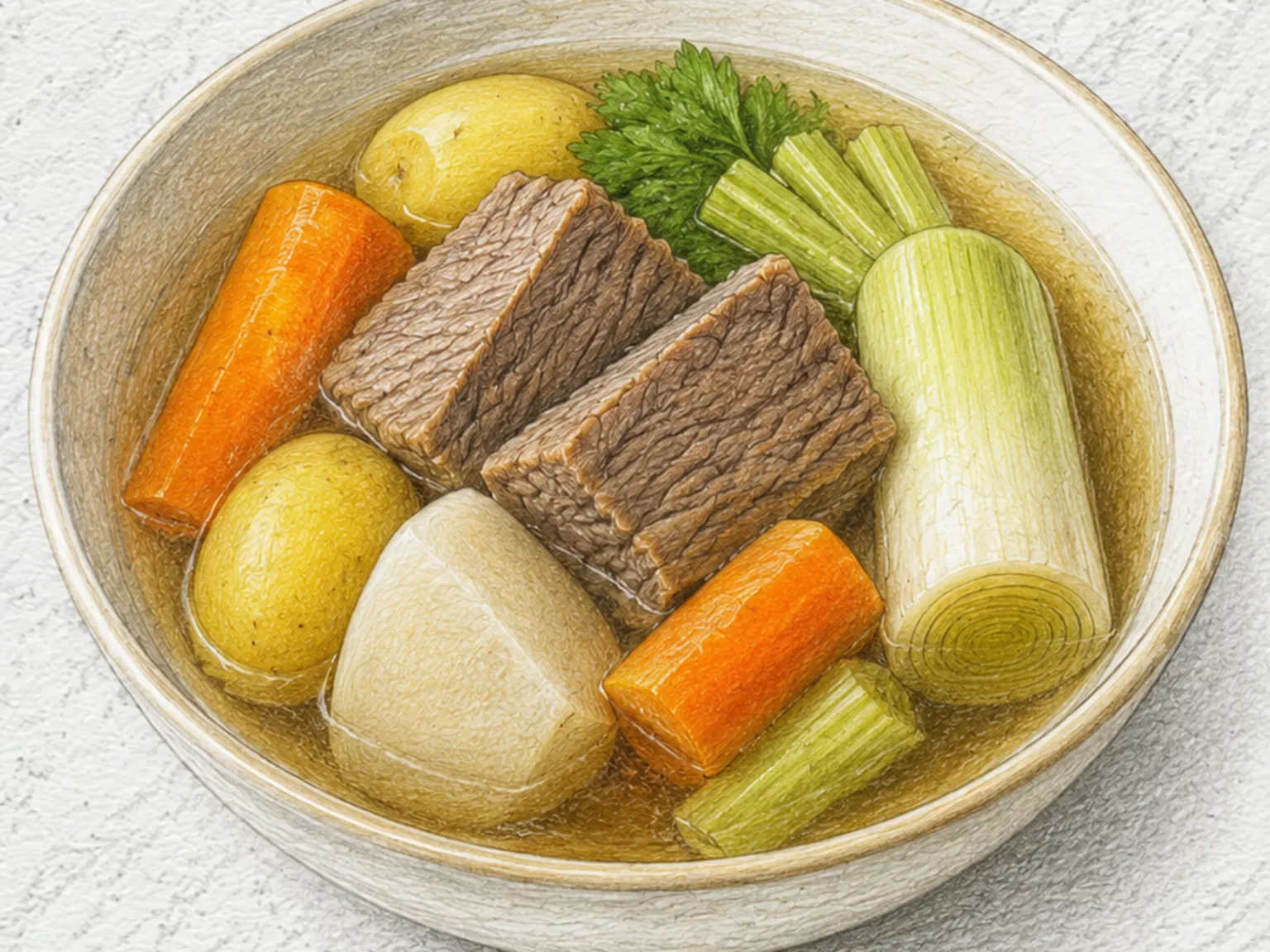
Pot-au-Feu (French Slow-Simmered Beef and Root Vegetable Broth)
onion, carrot