Korean Octopus Chogochujang Buckwheat Noodles
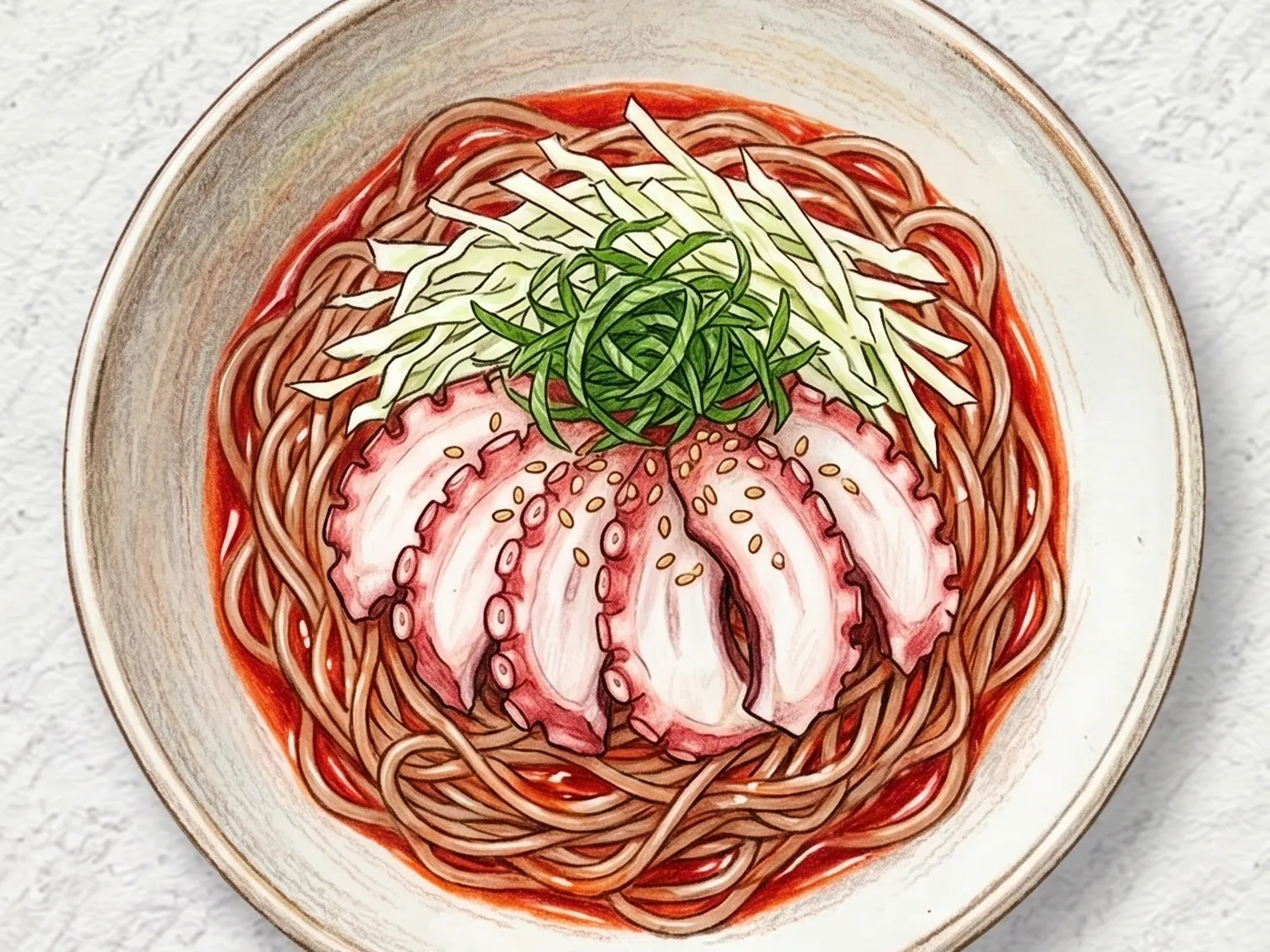
Muneo chogochujang memilmyeon is a Korean cold noodle dish featuring thinly sliced boiled octopus on chilled buckwheat noodles, dressed in chogochujang - a sauce made by combining gochujang with vinegar, sugar, garlic, and sesame oil. Patting the octopus dry after boiling helps the sauce adhere to each slice, and cooking the buckwheat noodles thirty seconds under the package time prevents them from breaking during the cold water rinse. The sweet-sour tang of the chogochujang complements the mild, clean flavor of the octopus without overpowering it. Shredded cabbage and perilla leaves contribute crunch and herbal fragrance, while a finishing sprinkle of sesame seeds adds nuttiness that ties the cold noodles and seafood together.
Adjust Servings
Instructions
- 1
Slice the boiled octopus diagonally and pat dry with paper towels.
- 2
Mix gochujang, vinegar, sugar, minced garlic, and sesame oil to make chogochujang sauce.
- 3
Cook buckwheat noodles, rinse well in cold water, and drain completely.
- 4
Layer cabbage and perilla in a bowl, add noodles, and toss with half the sauce.
- 5
Top with octopus and dot with remaining sauce, then lightly mix before serving.
- 6
Finish with sesame seeds for extra nuttiness.
As an Amazon Associate, we may earn from qualifying purchases.
Tips
Nutrition (per serving)
More Recipes

Korean Buckwheat Mixed Noodles
Memil makguksu is a Gangwon-do regional dish where nutty buckwheat noodles are mixed with a soy sauce, vinegar, and gochugaru dressing that balances sweet, sour, and spicy notes. Buckwheat noodles have low gluten content and break apart easily when overcooked, so precise timing is essential during boiling. Rinsing several times in cold water removes surface starch and prevents clumping. Chopped kimchi brings fermented tang and a crunchy bite, while julienned cucumber adds freshness and a crisp contrast. A touch of sesame oil gives the dressing a glossy richness, and extra vinegar can be added at the table to sharpen the acidity to individual preference.

Korean Ojingeo Ssamjang Bibim Myeon (Squid Ssamjang Mixed Noodles)
Ojingeo ssamjang bibim myeon is a Korean mixed noodle dish combining blanched squid rings with medium wheat noodles in a ssamjang-based sauce spiked with chili flakes, vinegar, and syrup. The squid is blanched for only forty seconds to keep it springy rather than chewy, and the noodles are rinsed under cold water while gently rubbing to remove surface starch. The dressing merges the fermented depth of ssamjang with the heat of gochugaru and the brightness of vinegar, creating a layered flavor that is salty, spicy, and tangy at once. Resting the sauce for about ten minutes before tossing softens the heavy note of ssamjang. Julienned perilla leaves on top add an herbal fragrance, and sesame seeds finish the dish with nuttiness. The recipe yields four generous servings.

Korean Spicy Mixed Wheat Noodles
Bibim guksu is a chilled Korean noodle dish in which boiled and cold-rinsed somyeon wheat noodles are tossed in a sauce of gochujang, chili flakes, plum syrup, vinegar, soy sauce, and sesame oil. The heat from the gochujang, the sweetness of plum syrup, and the brightness of vinegar layer together into a multi-dimensional flavor in every bite. Rinsing the noodles thoroughly in cold water removes excess starch, giving them a bouncy chew and allowing the sauce to cling evenly. Torn lettuce and julienned cucumber folded in at the end contribute crunch and moisture that loosen the thick sauce just enough. A tablespoon of noodle cooking water can thin the sauce if it feels too heavy.

Korean Spicy Pork Mixed Noodles
Jeyuk bibim-guksu tops cold mixed noodles with stir-fried spicy pork, combining two popular Korean dishes into one bowl. Pork shoulder is marinated in gochujang and gochugaru, then seared quickly so the edges caramelize while the inside stays moist. Shredded cabbage and onion provide a crisp contrast, and soy sauce with sugar balances the heat with savory sweetness. The temperature contrast between chilled somyeon and hot, sizzling pork creates a distinctive eating experience, finished with a drizzle of sesame oil for a nutty send-off.

Korean Spicy Steamed Baby Octopus
Jjukkumi-jjim is spicy steamed baby octopus marinated for 10 minutes in a sauce of gochugaru, gochujang, soy sauce, and garlic, then steamed over a bed of cabbage and onion. The key to the dish is brief cooking - steaming for about 10 minutes keeps the octopus chewy and bouncy rather than tough. The cabbage absorbs excess spice and provides a mild, sweet contrast to the bold chili seasoning. A drizzle of sesame oil at the end rounds out the heat, and the dish is at its best in spring when baby octopus is in season and its ink sacs add extra depth.

Korean Spicy Salted Octopus Jeotgal
Nakji jeotgal is a Korean fermented octopus side dish made by salting cleaned octopus for forty-five minutes to draw out moisture and firm the flesh, then dressing it in a paste of gochugaru, minced garlic, ginger, anchovy fish sauce, and plum syrup. The initial salt cure tightens the octopus's naturally chewy texture, and the chili seasoning coats every surface in a spicy, crimson layer that penetrates deeper as it sits. Plum syrup counteracts any residual marine smell while adding a subtle fruit sweetness that balances the salt and heat. After two to three days of refrigeration, fermentation begins to develop, pushing the umami forward. Each piece has a springy, resistant chew that releases concentrated ocean flavor against the warmth of steamed rice.