Korean Poached Octopus Slices
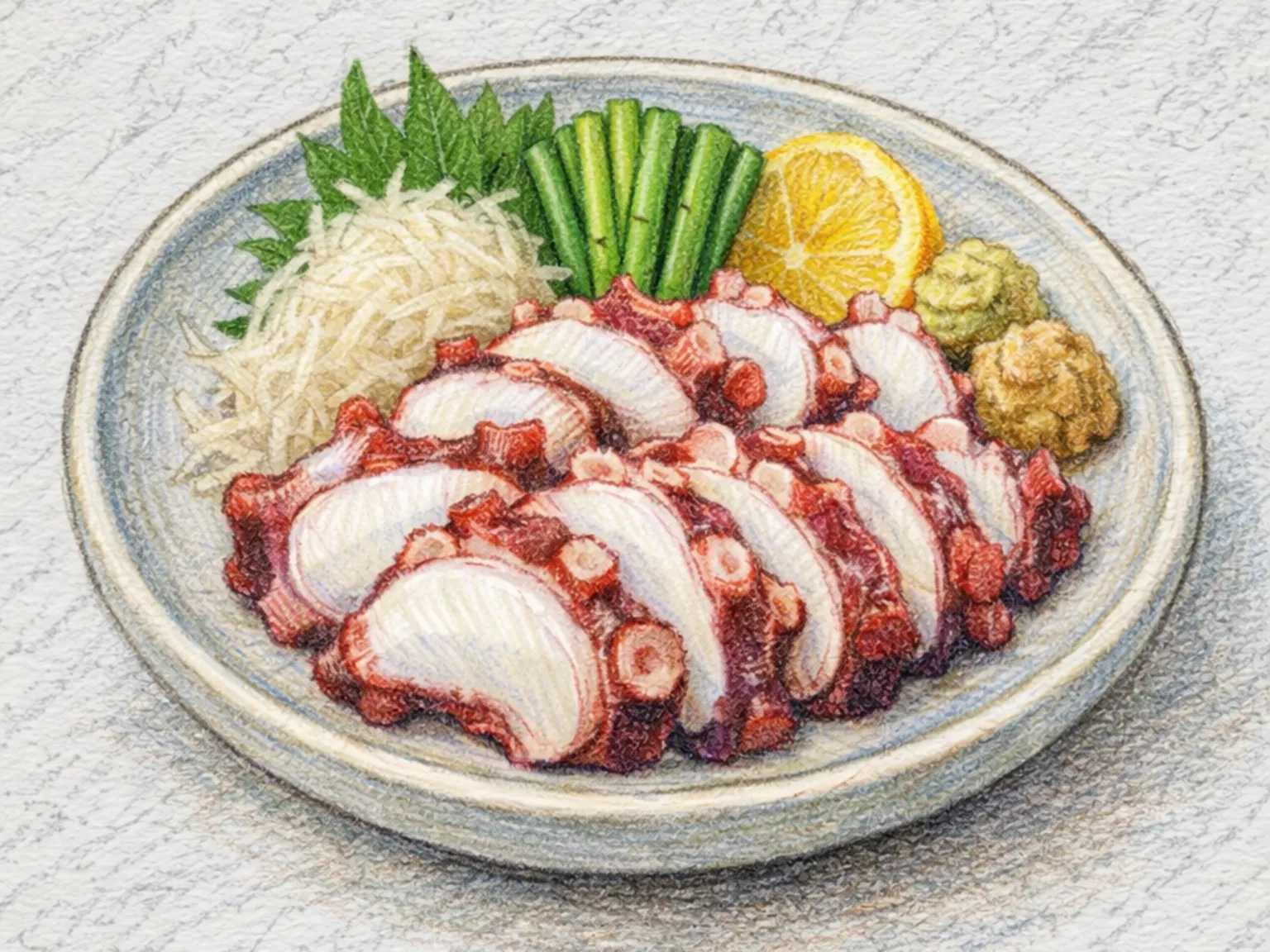
Muneo-sukhoe is a Korean poached octopus dish prepared by simmering whole raw octopus in water with radish, green onion, and ginger for about 20 minutes, then slicing it thin and serving with vinegared gochujang. Before cooking, the octopus is rubbed thoroughly with salt to strip away its slippery mucus, which is the critical step for eliminating any off-putting ocean smell. Turning off the heat and letting the octopus rest in the pot for five minutes relaxes the muscle fibers, yielding a texture that is chewy without being tough. The radish in the poaching liquid absorbs impurities, while ginger suppresses fishiness, leaving the sliced octopus clean-tasting and ready for the tangy-spicy dipping sauce.
Adjust Servings
Instructions
- 1
Rub octopus with salt and rinse thoroughly.
- 2
Boil water with radish, green onion, and ginger.
- 3
Add octopus legs first and simmer over medium heat for 20 minutes.
- 4
Turn off heat and rest for 5 minutes to set texture.
- 5
Slice thinly and serve with vinegared gochujang sauce.
As an Amazon Associate, we may earn from qualifying purchases.
Tips
Nutrition (per serving)
More Recipes

Korean Poached Squid Slices
Ojingeo-sukhoe is a Korean poached squid dish where cleaned whole squid is blanched for just two to three minutes in boiling water seasoned with salt, cooking wine, and green onion, then sliced and served with vinegared gochujang. Removing the innards thoroughly and rinsing well is the key step for a clean taste, and the cooking wine in the poaching liquid neutralizes any remaining fishiness. Pulling the squid out promptly and letting it cool briefly prevents carryover cooking from toughening the flesh, preserving smooth, clean-cut slices. The tangy, spicy dipping sauce provides a sharp contrast against the mild squid, turning a minimalist preparation into a dish with genuine depth of flavor.

Korean Steamed Octopus (Whole Salted Radish Broth)
Muneo-jjim is a Korean steamed whole octopus prepared by rubbing the octopus with coarse salt, then cooking it in water flavored with radish and green onion. Dipping the head end in and out of the boiling water two or three times curls the tentacles into an attractive shape before the full cook. Simmering for about fifteen minutes followed by a brief rest off the heat yields a texture that is springy and chewy without being tough. Sliced and served with a simple sesame oil and salt dipping sauce, the dish highlights the octopus's clean ocean flavor and works well as both a banchan and a drinking accompaniment.

Korean Garlic-Grilled Octopus
Muneo-garlic-gui is a Korean seafood snack made by searing pre-boiled octopus with minced garlic in olive oil over high heat. The octopus is cut into bite-size pieces, seasoned with salt, pepper, and red chili flakes, then rested briefly before hitting a smoking-hot pan. The garlic blooms in the oil first at low heat, and when the octopus goes in, the temperature is cranked up so the surface chars quickly while the interior stays springy and resilient. A squeeze of lemon juice at the end cuts through the richness and sharpens the natural brininess of the octopus.

Korean Jellyfish Salad (Chilled Mustard Vinegar Dressed Cold Dish)
Haepari-naengchae starts with salted jellyfish rinsed thoroughly in cold water to remove excess brine, then blanched in boiling water for about ten seconds to firm up its texture before being chilled. The jellyfish is cut into strips and tossed with julienned cucumber and bell pepper, then dressed in a mixture of vinegar, sugar, and Korean mustard that delivers a sharp nasal heat followed by bright acidity. A small drizzle of sesame oil ties the dish together with a nutty gloss. Served cold, the jellyfish maintains a distinctive crunchy, snappy bite that contrasts with the crisp vegetables.

Korean Grilled Dried Pollack
Hwangtae-po-gui is a grilled dried pollack snack prepared by brushing seasoning paste onto semi-dried hwangtae fillets and cooking them over medium-low heat. Hwangtae is pollack that has been freeze-dried repeatedly through winter cycles, a process that puffs up the flesh and gives it a softer grain and chewier texture than ordinary dried fish. A paste of gochujang, soy sauce, and oligosaccharide syrup is spread on both sides and grilled slowly so the sugars caramelize into a glossy, sticky coating. Minced garlic, sesame oil, and sesame seeds add roasted richness, and each torn piece delivers alternating salty and sweet notes.

Korean Octopus Pot Rice (Chewy Octopus Ocean-Scented Grain Pot)
Chewy octopus tentacles are placed on top of rice in a heavy pot and cooked together so the briny aroma penetrates every grain. Thin radish slices line the bottom of the pot, preventing sticking while adding natural sweetness, and cooking the octopus alongside radish helps tenderize the meat. The pot starts on high heat to bring it to a boil, then drops to low for a gentle cook that keeps the octopus from becoming rubbery. A dipping sauce of soy sauce, sesame oil, cheongyang chili, and green onion adds a spicy, clean finish.