Mushroom Truffle Gnocchi
Quick answer
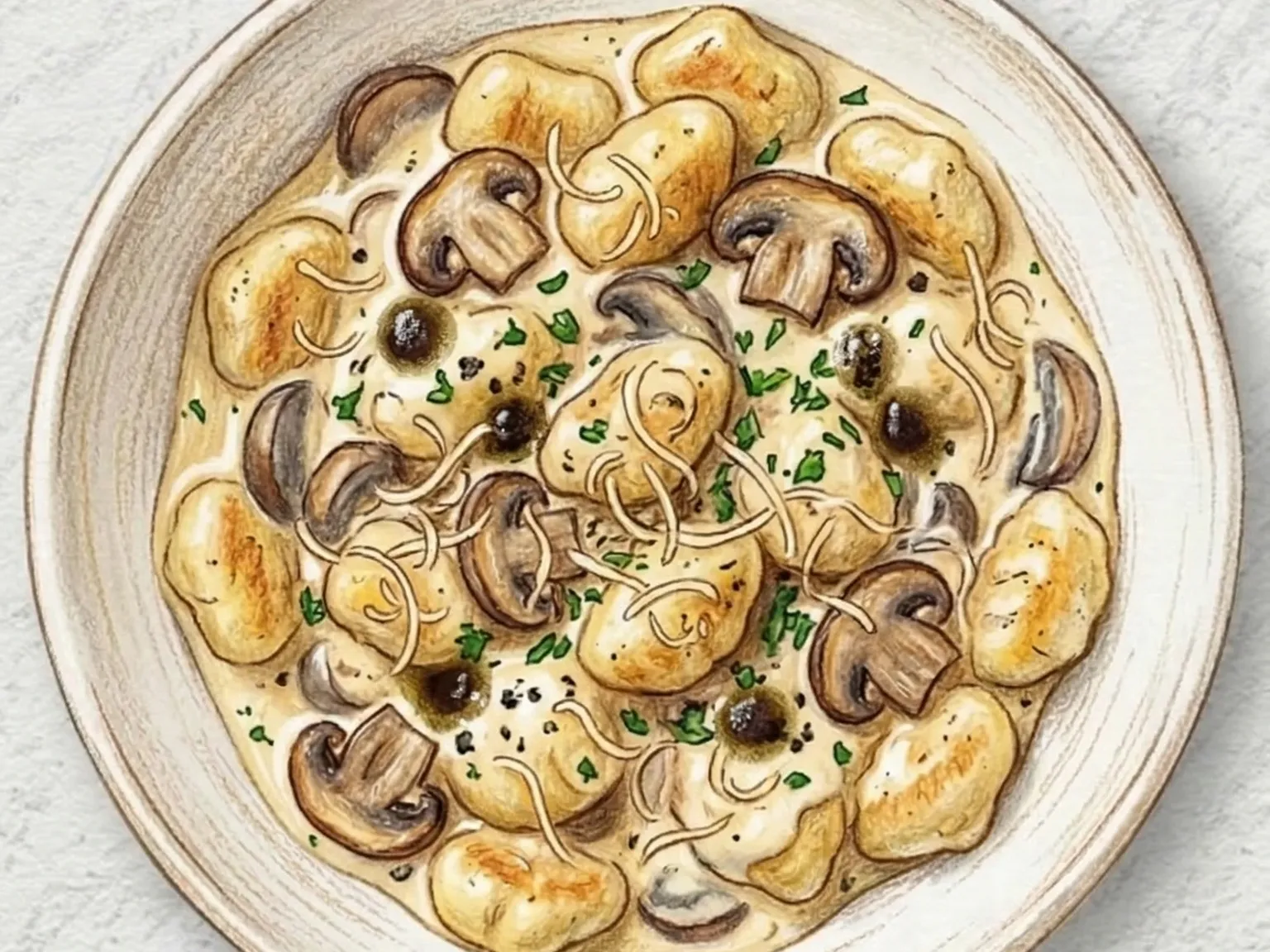
Mushroom truffle gnocchi boils potato gnocchi until they float, then tosses them in a sauce of butter-browned mushrooms finished with heavy cream and grated Parmesan.
What makes this special
- Gnocchi pulled the moment they float retain a pillowy texture in this Mushroom Truffle Gnocchi.
- Gnocchi pulled the moment it floats preserves its pillowy texture
- Moisture fully driven off mushrooms before adding cream keeps flavor intense
Key ingredients
Core cooking flow
- 1 Slice 180 g button mushrooms so they can sit in one layer in the pan.
- 2 Bring a generous pot of water to a steady boil and add 300 g potato gnocchi.
- 3 Heat a wide pan over high heat, melt 1 tablespoon butter, and spread the mushrooms in a single layer.
Mushroom truffle gnocchi boils potato gnocchi until they float, then tosses them in a sauce of butter-browned mushrooms finished with heavy cream and grated Parmesan. The mushrooms must be cooked in a single layer over high heat so their moisture evaporates and they develop a deep sear rather than steaming in their own liquid. The cream simmers on low heat for just two to three minutes - enough to thicken into a coating consistency without reducing too far. Truffle oil is drizzled on only after the heat is turned off, because cooking destroys the volatile aromatic compounds that give truffle its distinctive earthy, nutty fragrance. The combination of chewy gnocchi, savory mushrooms, rich cream sauce, and the lingering truffle aroma creates a dish that tastes far more luxurious than its short ingredient list suggests.
Instructions
Read the steps as a cooking flow: prep, heat, seasoning, doneness control, and finish.
- 1Finish
Slice 180 g button mushrooms so they can sit in one layer in the pan.
Finely mince 2 garlic cloves, measure the cream, parmesan, butter, salt, and keep the truffle oil ready for finishing only.
- 2Season
Bring a generous pot of water to a steady boil and add 300 g potato gnocchi.
Once they float, cook only 20 to 30 seconds longer, then lift them out and drain well so the sauce will not turn watery.
- 3Control
Heat a wide pan over high heat, melt 1 tablespoon butter, and spread the mushrooms in a single layer.
Cook 3 to 4 minutes without stirring often, letting moisture evaporate and the edges brown instead of steam.
- 4Season
Lower the heat to medium and add the minced garlic for just 30 seconds.
Stir until fragrant, but pour in 150 ml heavy cream before the garlic browns or it can make the sauce taste bitter.
- 5Control
Simmer the cream on low heat for 2 to 3 minutes and season with 1/2 teaspoon salt.
When it lightly coats the back of a spoon, add the drained gnocchi and toss gently.
- 6Finish
Add 35 g parmesan and toss until the sauce clings evenly to the gnocchi.
Turn off the heat, drizzle 1 teaspoon truffle oil over the pan, mix once, and serve immediately while the aroma is clear.
After the steps
Pick a recipe that fits this dish.
Continue with shared ingredients, meal pairings, or a similar method.
Recipes That Go Well With This
More Western →Based on shared ingredients and meal pairing
Truffle Mushroom Tagliatelle
This Italian pasta pairs wide tagliatelle ribbons with a creamy sauce built from sauteed mixed mushrooms, shallot, and garlic. The mushrooms release their liquid during cooking, which concentrates into an umami-rich base before cream is added. A drizzle of truffle oil at the end provides a distinctive earthy aroma without overpowering the dish. Grated Parmigiano-Reggiano is folded in for additional depth. The flat, broad shape of tagliatelle holds the thick sauce effectively. Total cooking time is about 33 minutes.
Polenta con Funghi (Italian Creamy Cornmeal with Sauteed Mushrooms)
Polenta con Funghi is a staple winter dish in northern Italian households, made by stirring cornmeal into water or stock for over thirty minutes to achieve a smooth, porridge-like consistency, then topped with sauteed mushrooms. Constant stirring is essential - pausing even briefly causes the polenta to stick to the bottom and form lumps. Folding in butter and grated Parmigiano-Reggiano at the end transforms the coarse grain into a velvety texture enriched with dairy fat and cheese umami. The mushrooms - a mix of porcini, oyster, and cremini - are cooked quickly in olive oil with garlic over high heat to drive off moisture and allow the edges to caramelize and develop depth. The gentle sweetness of the cornmeal against the earthy, woodsy mushrooms creates a pairing that is humble yet deeply satisfying.
Bam Tiramisu (Chestnut Tiramisu)
Chestnut tiramisu is a variation of the traditional Italian dessert that incorporates chestnut puree into the mascarpone cheese filling. This modification transforms a standard cafe dessert into a preparation specifically associated with the autumn season in Korea. The fundamental elements of the recipe remain consistent with the classic version. It utilizes ladyfinger biscuits that have been soaked in espresso, a filling made of whipped mascarpone and cream, and a final layer of cocoa powder. However, the introduction of chestnut puree alters the profile of the cream. Instead of a simple dairy richness, the mixture takes on an earthy quality. Using a puree made from chestnuts boiled at home, rather than a store-bought paste, helps maintain the natural grain of the nut. This provides the cream with a specific texture that is noticeable in every spoonful. When preparing the ladyfingers, the espresso soak requires a high level of precision. Each biscuit should be dipped for approximately one to two seconds. If the ladyfingers are submerged for a longer duration, they absorb an excessive amount of liquid. This leads to a waterlogged consistency which can cause the structural layers of the dessert to collapse while it sits in the refrigerator. The assembly process follows a predictable sequence. A layer of soaked ladyfingers is placed at the bottom, followed by a layer of the chestnut cream. This pattern is repeated once more before the entire dish is placed in the refrigerator to rest for at least four hours. This period of refrigeration is essential to the final outcome. During these hours, the ladyfingers absorb moisture from both the espresso and the cream layer above them. This process changes the biscuits from a crunchy state to a soft texture similar to cake, which allows for clean slices. Just before the dessert is served, a thin layer of cocoa powder is applied to the top. This adds a bitter element that balances the sweetness of the chestnuts. Preparing the tiramisu in individual glass containers or cups ensures that the portions are easy to manage and allows the different layers of the dessert to be clearly visible from the side.
Gnocchi alla Romana (Baked Semolina Cheese Rounds)
Gnocchi alla Romana is made by cooking semolina into hot milk until the mixture thickens into a stiff, smooth dough, then enriching it with butter, egg yolks, and Parmigiano-Reggiano before spreading it flat to cool and firm up. The milk is brought to heat with salt, nutmeg, and half the butter, and the semolina is trickled in slowly while whisking without pause to prevent lumps from forming. Removing the pan from the heat before folding in the yolks and cheese ensures the residual warmth binds everything together without scrambling the eggs, contributing a rich golden color and a deeper, more savory character to the dough. Once the slab has cooled completely and set firm, a round cutter stamps out discs that are overlapped in a buttered baking dish, topped generously with the remaining butter and cheese, then slid into a 200-degree oven. Finishing under the broiler for the last few minutes drives the surface to a crackling, golden crust while leaving the center tender and creamy. Unlike fresh pasta or potato gnocchi, the semolina slab can be prepared a day in advance and refrigerated, making this an excellent option when cooking for guests.
Serve with this
Gorgonzola Pear Walnut Gnocchi
Gorgonzola pear walnut gnocchi pairs the sharp, salty punch of Italian blue cheese with ripe pear natural sweetness over pillowy potato gnocchi. The sauce is built by melting gorgonzola into butter and heavy cream until it forms a smooth, pungent coating that clings to each dumpling. Pear slices are sauteed briefly so their sugars concentrate without losing structure, and dry-toasted walnuts contribute crunch and a roasted nuttiness that complements the cheese. A small amount of lemon juice cuts through the richness to keep the palate fresh. Cook time is just 15 minutes, making it one of the faster gnocchi dishes despite its layered flavor profile.
Caprese Salad
Caprese salad alternates slices of ripe tomato, fresh mozzarella, and basil leaves of equal thickness, dressing them with nothing more than extra virgin olive oil and salt. The recipe excludes cooking entirely, so the tomato's ripeness and the mozzarella's fresh, milky quality carry the entire flavor of the dish - substituting underripe tomatoes or low-moisture mozzarella changes the result significantly. A thin drizzle of balsamic glaze over the top introduces a concentrated grape-vinegar sweetness that contrasts directly with the cheese's fat, while basil's volatile aromatic compounds release on contact with the oil rather than surviving any heat. Dressing the salad at the last possible moment prevents the salt from drawing moisture out of the tomatoes ahead of time, which dilutes the oil on the plate. The dish originates from the island of Capri and is recognized by the green, white, and red color arrangement that mirrors the Italian flag.
Tomato Basil Juice
Tomato basil juice is a cold savory drink made by blending ripe tomatoes with fresh basil leaves and straining the result through a fine sieve to remove seeds and skins. The ripeness of the tomato determines much of the flavor: fully ripe tomatoes carry free glutamates that produce a natural umami depth, whereas underripe fruit tastes predominantly sour without the sweetness and savory body that makes the juice satisfying. Basil should be added to the blender immediately before blending rather than sitting cut or torn, because the volatile oils that produce its aroma begin oxidizing quickly once the leaves are damaged. After blending to a smooth consistency, passing the juice through a fine-mesh strainer or cheesecloth removes the solids and produces a texture smooth enough to drink without resistance. Salt and black pepper season the juice, and fresh lemon juice raises the acidity in a way that brightens the overall flavor rather than making it sour. A small addition of olive oil emulsifies into the juice and activates fat-soluble aromatic compounds in both the tomato and the basil, producing a fuller, rounder flavor than the unstrained version. The juice must be thoroughly chilled before serving, as warmth mutes the herbal freshness. It works well as a brunch drink, a light non-alcoholic aperitif, or a base for savory cocktails.
Similar recipes
Spinach Mushroom Lasagna
Spinach mushroom lasagna layers sautéed spinach and mushrooms with ricotta cheese, tomato sauce, and mozzarella, then bakes at 190 degrees Celsius until the surface turns golden and the interior melts into a cohesive whole. Cooking the mushrooms long enough to drive off all their moisture is critical - residual water makes the finished lasagna soggy and weakens the structure between layers. The assembly follows a strict order of tomato sauce, pasta sheet, ricotta, vegetables, and mozzarella, repeated three times, with the final layer sealed under sauce and cheese. Baking covered with foil for the first 25 minutes lets heat penetrate evenly, while removing the foil for the remaining 10 to 15 minutes crisps the top and browns the mozzarella. Resting for at least 10 minutes before slicing is essential - cutting too early causes the layers to collapse and the filling to run.
Porcini Truffle Mushroom Tagliatelle
Porcini truffle mushroom tagliatelle relies on the liquid left over from rehydrating dried porcini as the flavor engine of the entire dish. Soaking dried porcini for thirty minutes or more produces a deep brown, intensely earthy liquid that carries far more umami than any fresh mushroom can alone. Shallots and garlic are cooked slowly in butter and olive oil until soft, then white wine is added to deglaze the pan and lift the savory residue from the bottom. Rehydrated porcini and a selection of fresh mixed mushrooms go in next, followed by the strained soaking liquid, and the sauce is simmered down until concentrated and thick. Truffle paste is stirred in only after the pan is removed from heat - adding it while still on the flame burns off the volatile compounds responsible for its aroma. Grated Parmigiano-Reggiano and flat-leaf parsley are folded through at the end. Wide tagliatelle ribbons are the ideal carrier: their surface area and chewy structure hold the dense sauce without falling apart.
Zuppa Toscana (Hearty creamy soup with sausage)
Zuppa Toscana is a warm Italian style soup featuring seasoned sausage, potatoes, and kale in a creamy broth. The cooking starts by browning the Italian sausage to render its flavorful fat, which is then used to sauté the minced garlic and chopped onion. Slicing the potatoes to a thickness of at least 0.5 centimeters prevents them from disintegrating during the twelve minutes of simmering in chicken stock. Once the potatoes soften, the cooked sausage and kale are incorporated, allowing the greens to wilt without releasing any bitterness. The dish is finished by stirring in heavy cream and black pepper over low heat. Keeping the heat low prevents the cream from splitting, resulting in a cohesive, smooth broth that pairs well with the textured ingredients.