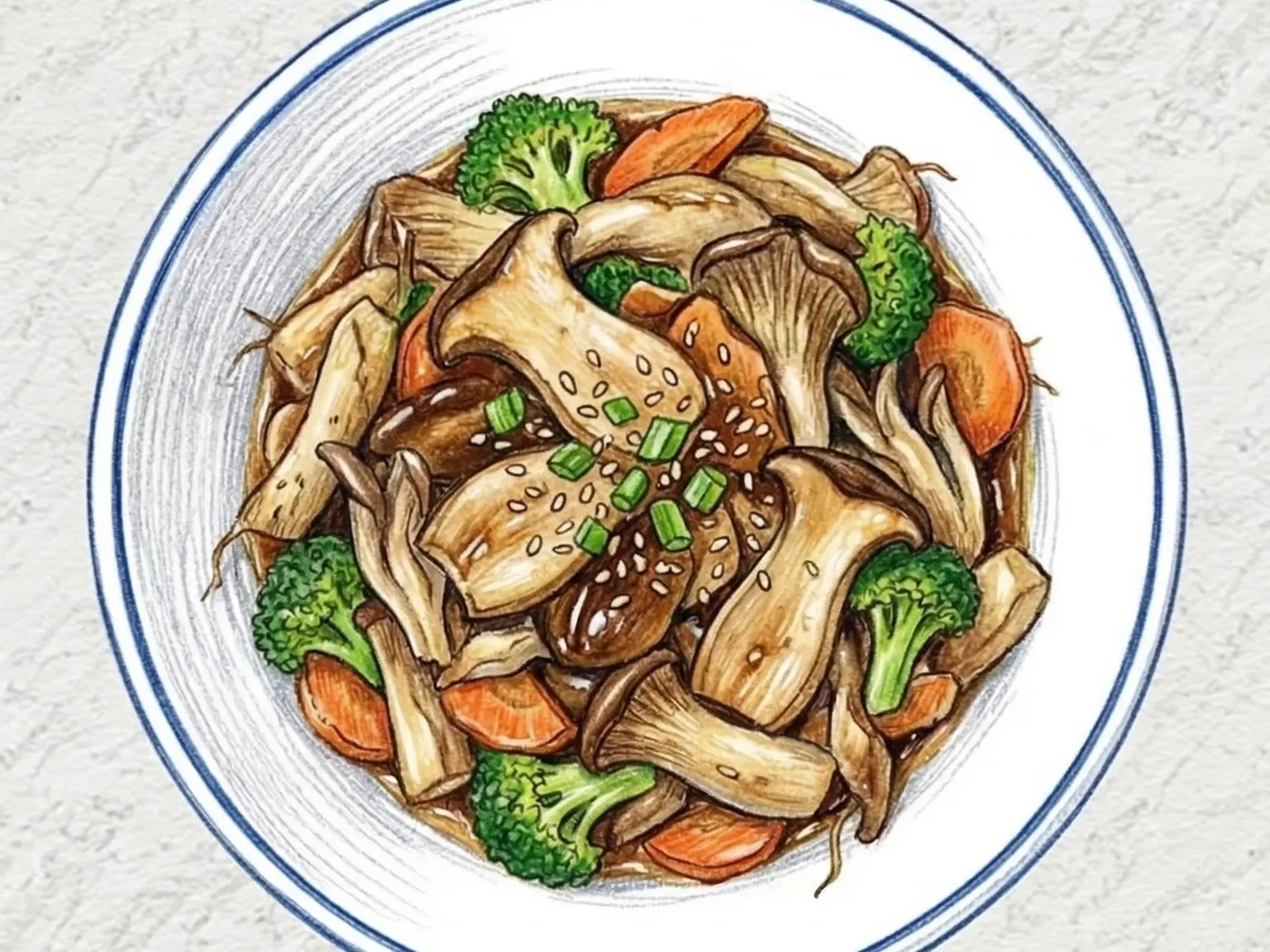
Korean Mushroom and Vegetable Stir-Fry
High heat throughout keeps the mushrooms from steaming. Stir-fry the carrot for 1 minute, add the broccoli, then spread all the mushrooms out in the pan and cook for about 2 minutes, stirring less often if liquid collects so it can evaporate. Pour 2 tbsp soy sauce and 1 tbsp oyster sauce around the edge of the pan, toss quickly, turn off the heat and drizzle in 1/2 tbsp sesame oil.
Quick answer
- Total time
- 20 min
- Level
- Easy
- Servings
- 2 servings
- Ingredients
- 9
About this dish
King oyster mushrooms are firm and meaty while oyster mushrooms pull apart into soft strands, so cooking both together keeps the texture from being one note.
Read more
Broccoli and carrot brighten it up, and soy and oyster sauce do the seasoning.
Ingredients
Instructions
- 1
Slice 150 g king oyster mushrooms lengthwise and tear 100 g oyster mushrooms along their natural strands.
Cut the broccoli and carrot into similar thicknesses so the firm vegetables cook evenly before the mushrooms go in.
- 2
Heat the pan well over high heat, then add 1 tablespoon cooking oil.
Add 1 tablespoon minced garlic and stir for about 20 seconds, just until fragrant, keeping it moving so it does not burn.
- 3
Add 50 g carrot first and stir-fry for 1 minute, then add 100 g broccoli.
Keep the heat high and cook until the colors look brighter and the edges are just starting to soften.
- 4
Add all the mushrooms and spread them out in the pan, then stir-fry over high heat for about 2 minutes.
If liquid collects, stir less often and let the moisture evaporate instead of steaming the vegetables.
- 5
Pour 2 tablespoons soy sauce and 1 tablespoon oyster sauce around the edge of the pan.
Toss quickly so the vegetables and mushrooms turn glossy and the salty, savory seasoning coats everything evenly.
- 6
Turn off the heat and drizzle in 0.5 tablespoon sesame oil, mixing with the residual heat.
Serve when the broccoli still has a slight bite and the mushrooms look glossy but not wet.
Use-up ingredient planner
Turn these ingredients into two more meals
The overlap excludes basic seasonings. Open the next recipe and your selected dishes will stay with you.
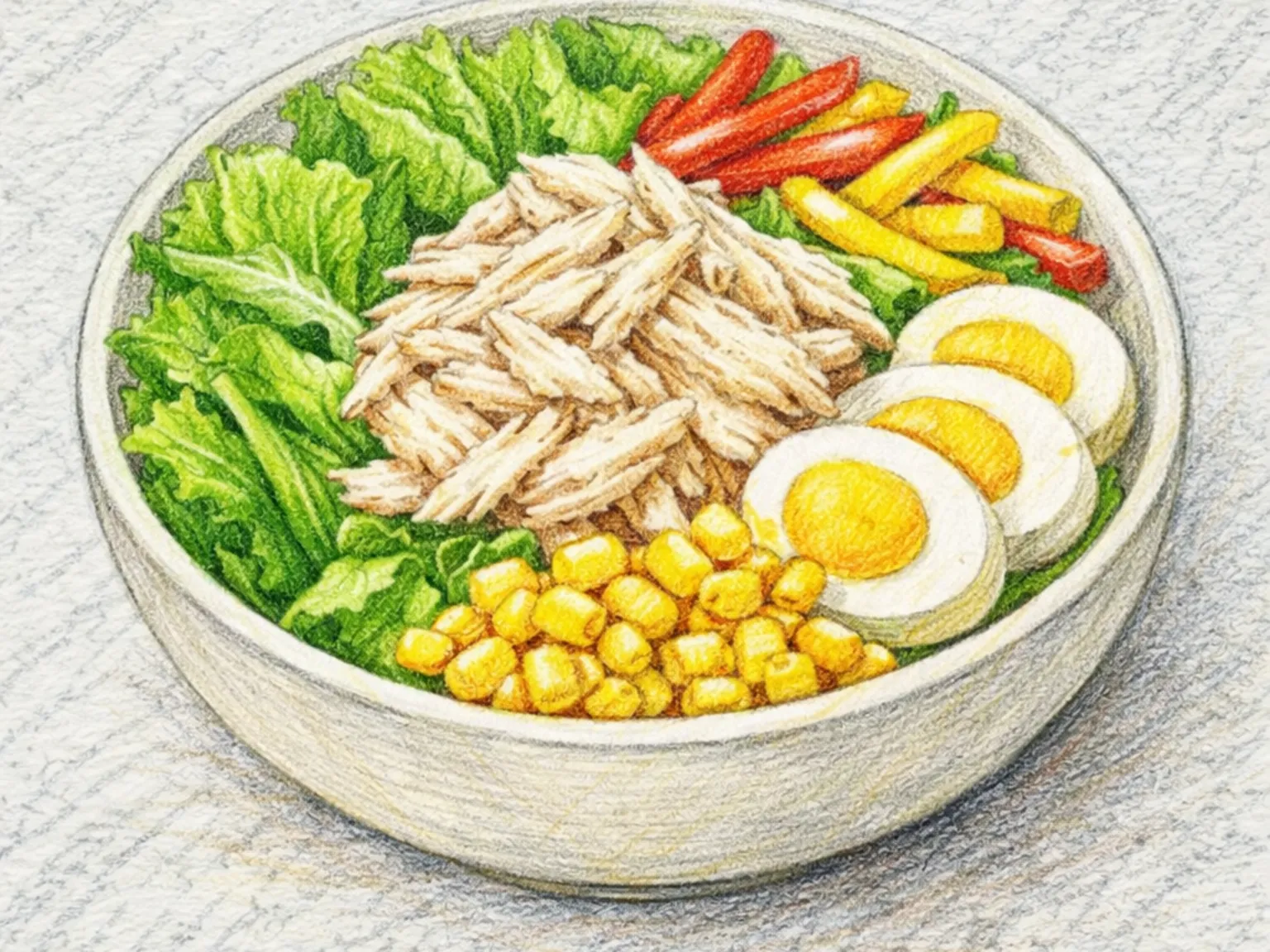
Chinese Lo Mein
Broccoli, Carrot
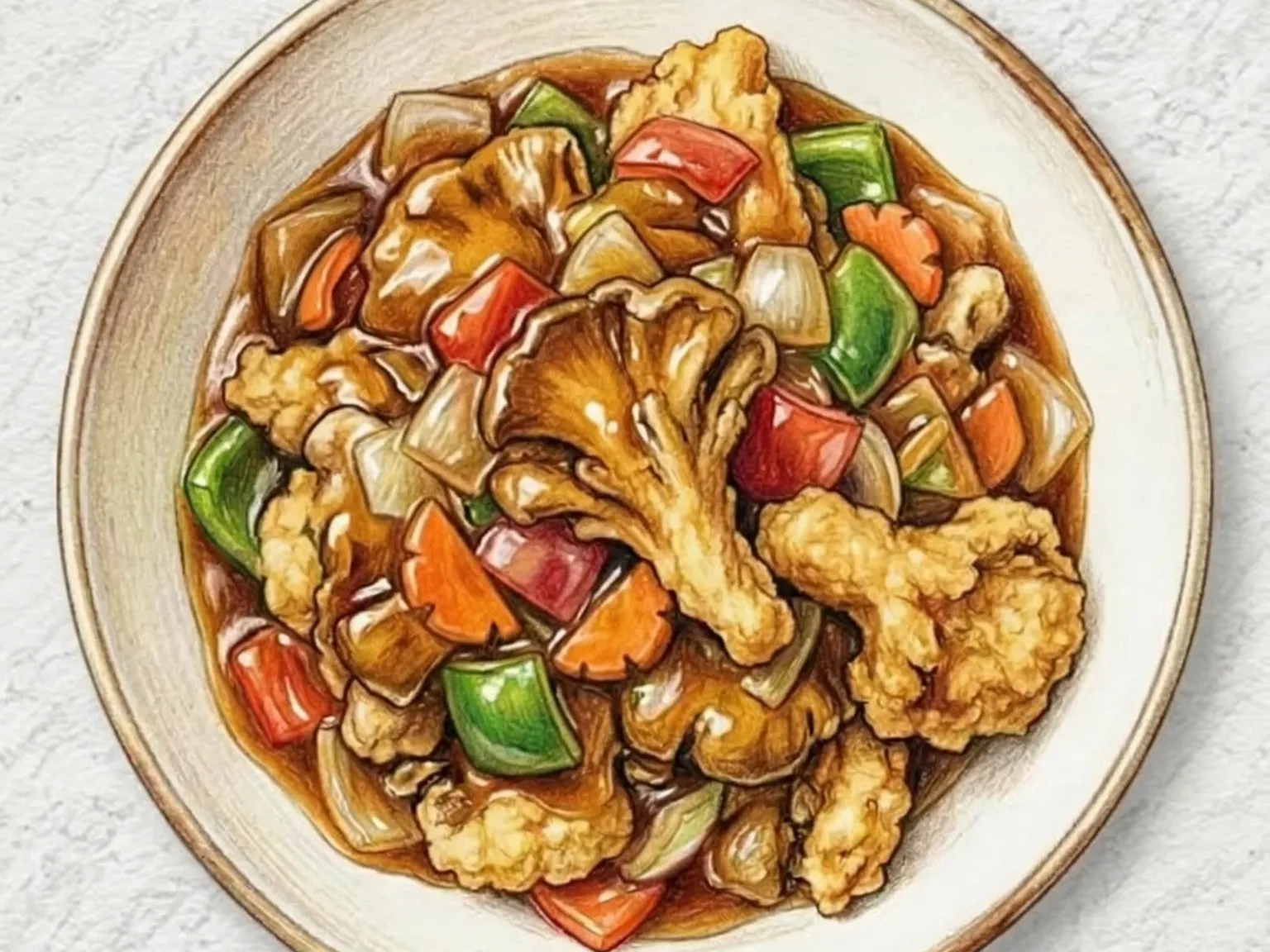
Beoseot Tangsu
Oyster mushroom, Carrot
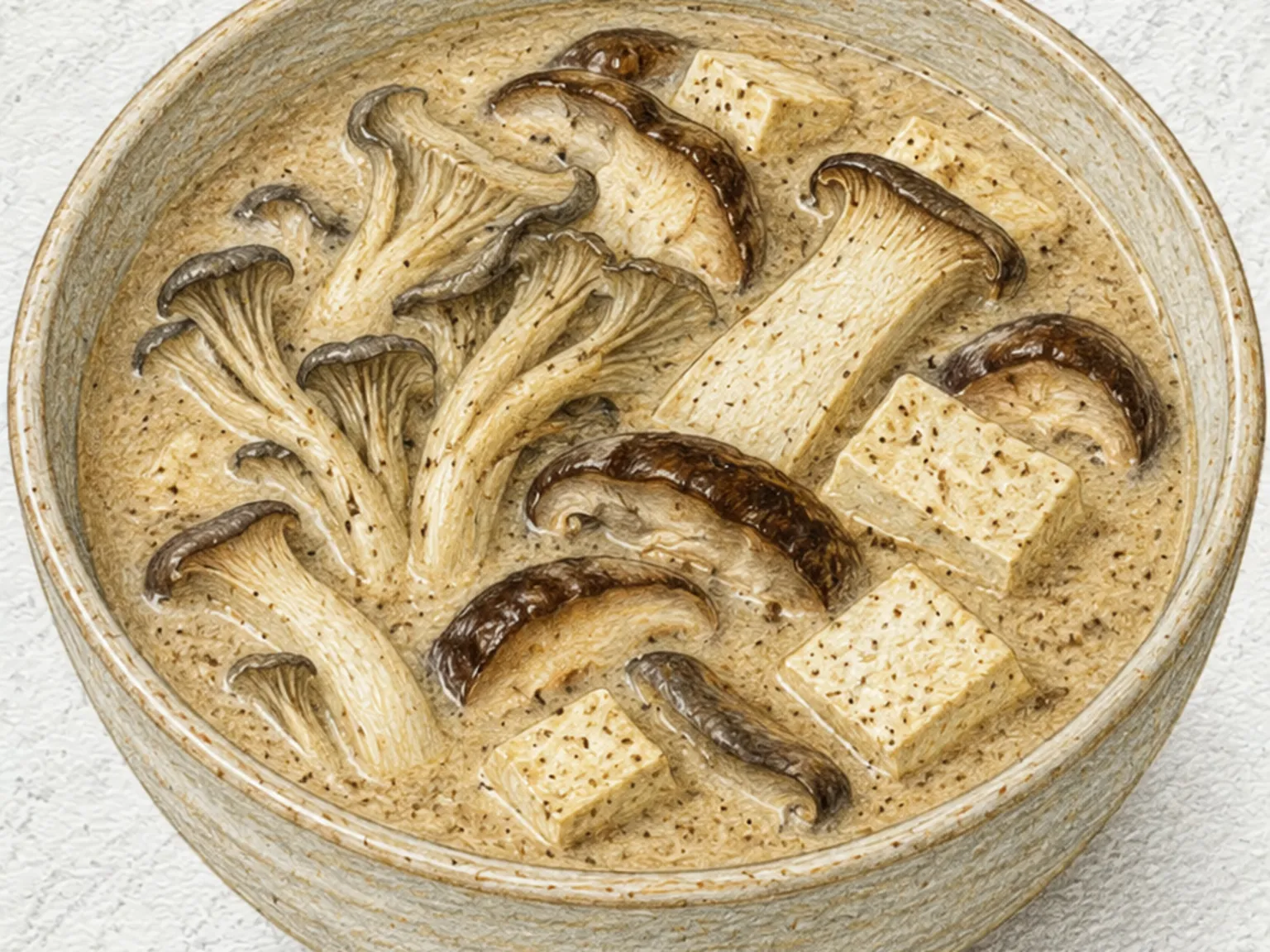
Korean Mushroom Perilla Soup
King oyster mushroom, Oyster mushroom