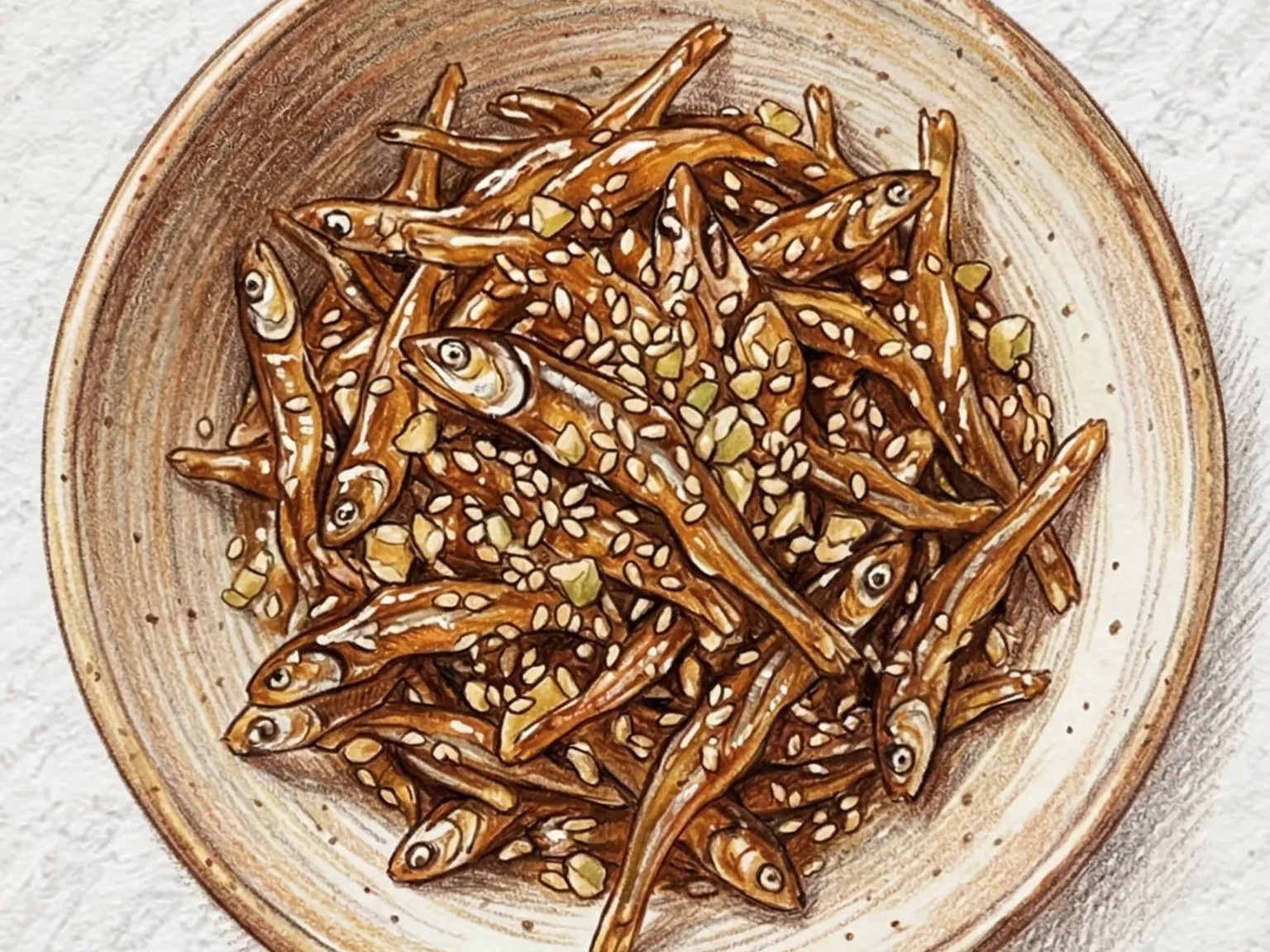
Korean Stir-fried Anchovies
Myeolchi-bokkeum is a foundational Korean banchan of small dried anchovies glazed in a sweet-salty coating of soy sauce and oligosaccharide syrup. The anchovies are first dry-roasted in a clean pan on low heat for three minutes to remove fishiness and build crunch. A sauce of garlic, soy sauce, and syrup is bubbled separately, and the anchovies are tossed back in for a quick, even coating. Sesame oil and toasted sesame seeds finish the dish; once fully cooled, the glaze sets firm, giving the anchovies a snappy texture that keeps well in an airtight container for over a week.
Adjust Servings
Instructions
- 1
Remove heads and dark innards from 100g anchovies. Dry-roast on low heat for 3 minutes to reduce fishiness.
- 2
Transfer roasted anchovies to a plate. Add 1 tbsp oil to the same pan.
- 3
Saute 0.5 tbsp garlic on low heat 30 seconds, then add 1.5 tbsp soy sauce.
- 4
Add 2 tbsp syrup, wait for it to bubble, then return anchovies and toss quickly.
- 5
Turn off heat, drizzle 1 tsp sesame oil and sprinkle 1 tbsp sesame seeds.
As an Amazon Associate, we may earn from qualifying purchases.
Tips
Nutrition (per serving)
Variations
Spicy Stir-Fried Anchovies
Dried anchovies stir-fried in a spicy gochujang glaze. Crispy, salty, and hot — a powerfully flavorful, addictive side dish.
More Recipes

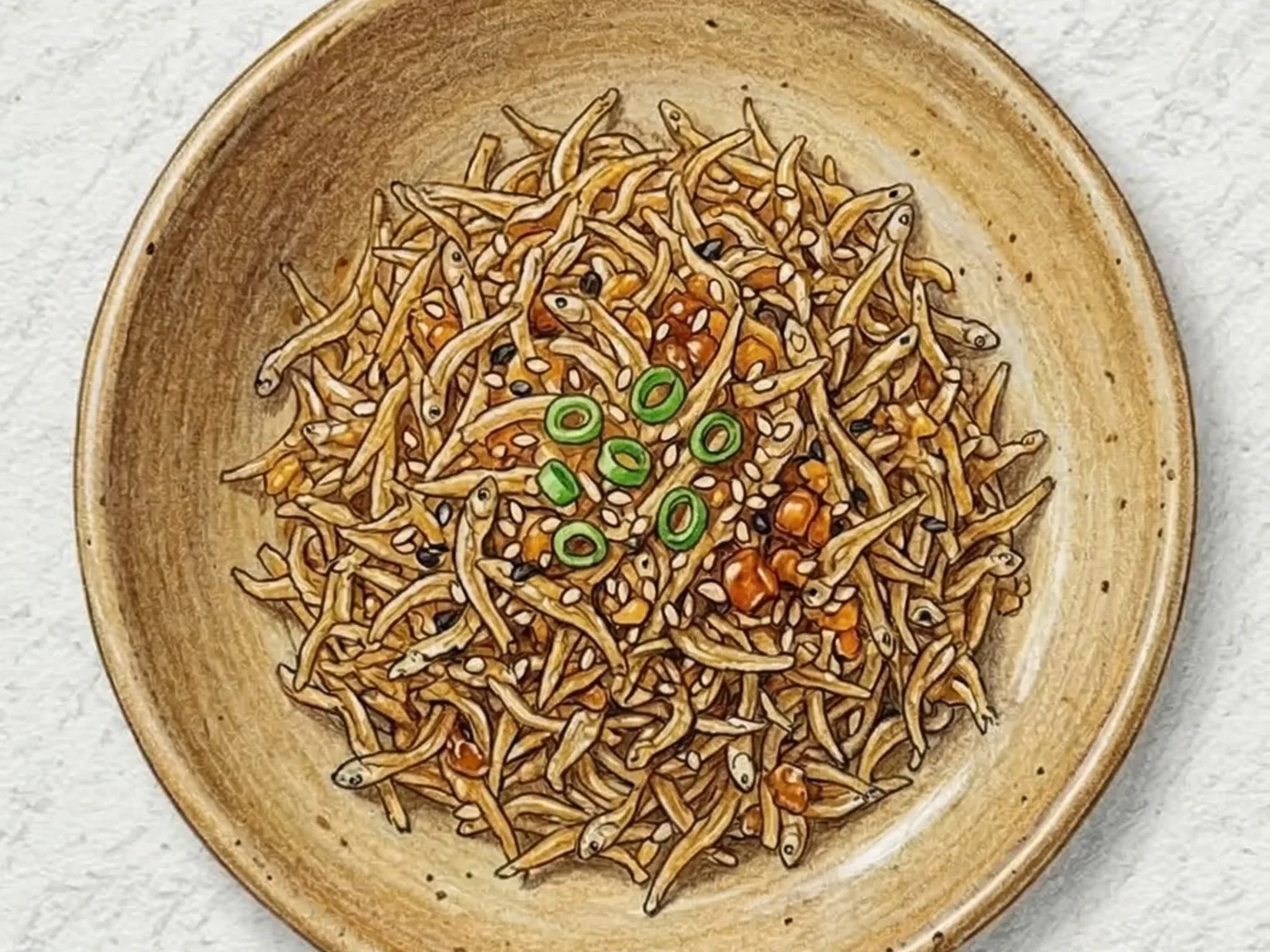
Korean Sweet Stir-Fried Anchovies
Sweet stir-fried anchovies (dalkomhan myeolchi-bokkeum) coat tiny dried anchovies (jiri-myeolchi) in a glossy soy-syrup glaze without any chili heat, making it the go-to lunchbox banchan for Korean children. The anchovies are dry-toasted in an ungreased pan for two minutes first - this drives off residual moisture, intensifies the nutty aroma, and sets up the crispy base. Skipping this step produces a soggy, fishy-smelling result. Soy sauce, rice syrup or oligosaccharide, and sugar are added over low heat, and the critical moment arrives when the syrup begins to bubble: the heat must drop immediately, or the glaze hardens into a tooth-cracking candy. Generous sesame seeds tossed in at the end add nuttiness, and once fully cooled, the anchovies clump lightly into clusters that are easy to pick up by the handful. Though made from the same ingredient, this sweet version has a completely different character from the spicy gochujang version - many Korean households alternate between the two preparations week to week.

Korean Stir-fried Seaweed and Anchovies
Gamtae myeolchi bokkeum is a crispy Korean banchan of dry-toasted anchovies tossed with gamtae seaweed and sliced almonds in a soy-syrup glaze. The anchovies are first toasted to mellow their fishiness, then quickly coated in the sauce before the delicate gamtae is folded in at the very end to preserve its ocean aroma and green color. Almond slices contribute a pleasant crunch that contrasts with the tiny anchovies. It stores well in an airtight container and makes an excellent make-ahead side for weekly meal prep.

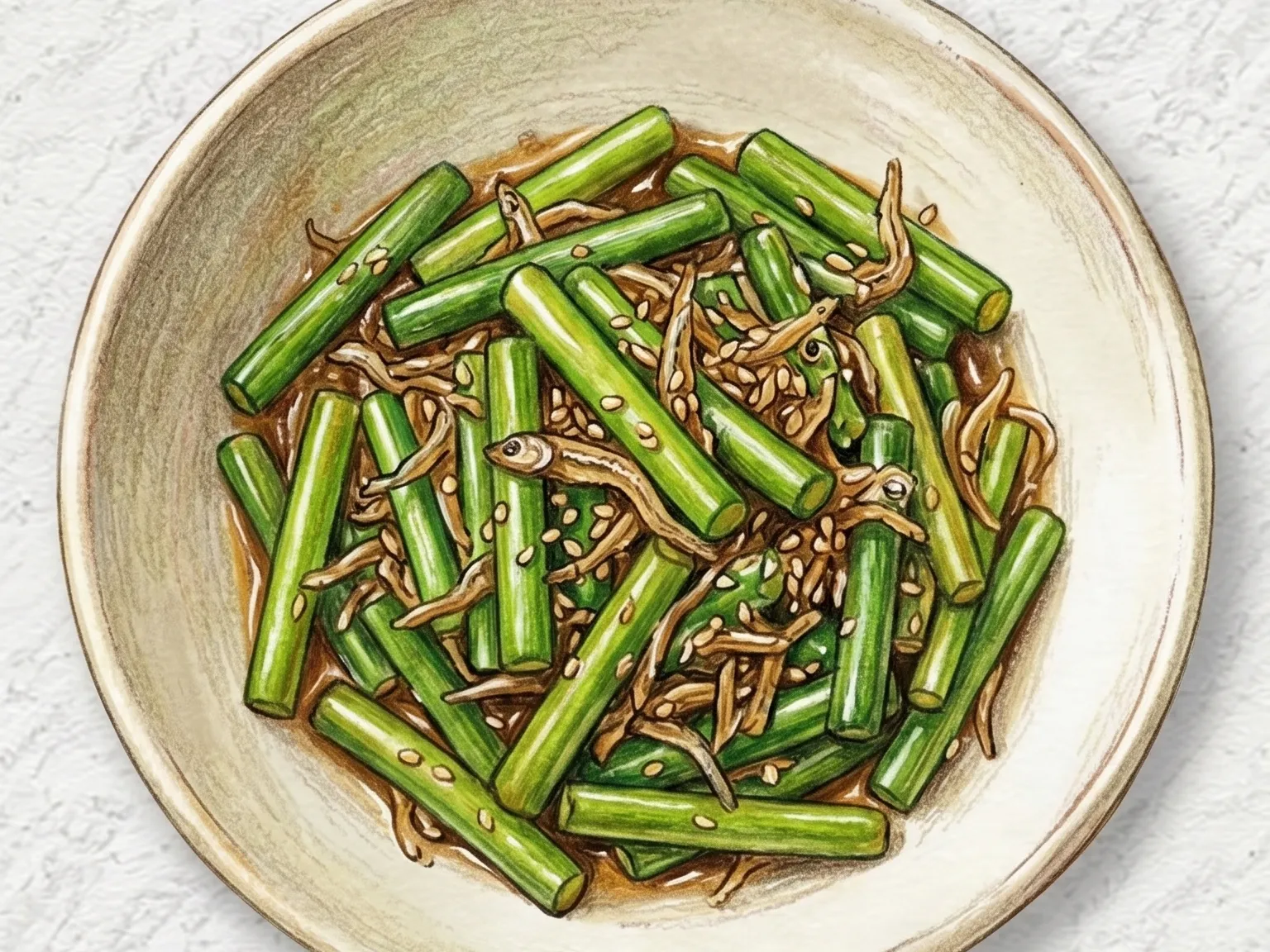
Korean Stir-fried Anchovies with Shishito Peppers
Kkwarigochu myeolchi bokkeum is a Korean pantry side dish of small dried anchovies dry-toasted to remove fishiness, then combined with oil-blistered shishito peppers and glazed in soy sauce and oligosaccharide syrup. The anchovies stay crunchy and salty while the syrup adds a gentle sweetness, and the peppers' mild heat keeps the flavor from becoming one-note. Adding the syrup on reduced heat prevents burning and produces a glossy coat. Sesame oil and sesame seeds finish the dish, which stores well refrigerated for several days of banchan service.

Korean Stir-Fried Eggplant Banchan
Gaji bokkeum transforms eggplant - a vegetable Koreans have cultivated since the Goryeo period - into a quick, oil-glazed banchan where the cooking speed matters as much as the seasoning. The eggplant is sliced into half-moons, and the pan must be scorching hot before the pieces enter; any hesitation and the eggplant will steam rather than sear, turning it into a soggy mass. High heat with minimal oil produces lightly charred edges while the interior turns silky and almost custardy. Soy sauce, garlic, and sesame oil go in during the final thirty seconds, sizzling against the hot surface and coating each piece in a thin, caramelized layer. The dish has a concentrated, clean umami taste without the heaviness of a braised preparation. Korean home cooks make this as a weeknight banchan precisely because it takes under ten minutes from cutting board to table.

Korean Spicy Stir-fried Octopus
Nakji-bokkeum is a fiery Korean stir-fry of small octopus (nakji) coated in a sauce of gochujang, gochugaru, soy sauce, sugar, and garlic, tossed with bean sprouts, onion, carrot, and scallion. Bean sprouts line the bottom of the pan, releasing moisture to prevent sticking while adding crunch. The vegetables and half the sauce go on next, then the octopus on top, covered and steamed on medium heat for three minutes before a final high-heat stir-fry sears everything for two minutes. Speed is critical - octopus toughens with prolonged cooking - and the dish is often mixed with boiled thin wheat noodles for a heartier meal.

Korean Stir-fried Dried Pollock Strips
Hwangtae-chae-bokkeum is a Korean side dish of shredded dried pollock strips soaked until soft, then stir-fried in a gochujang, oligosaccharide syrup, and soy sauce glaze. The pollock absorbs the seasoning as it cooks, turning chewy and moist with a balanced spicy-sweet coating. Once prepared, it keeps well in the refrigerator for several days, making it a practical banchan to have on hand. It works equally well in lunchboxes and as a casual snack with drinks.