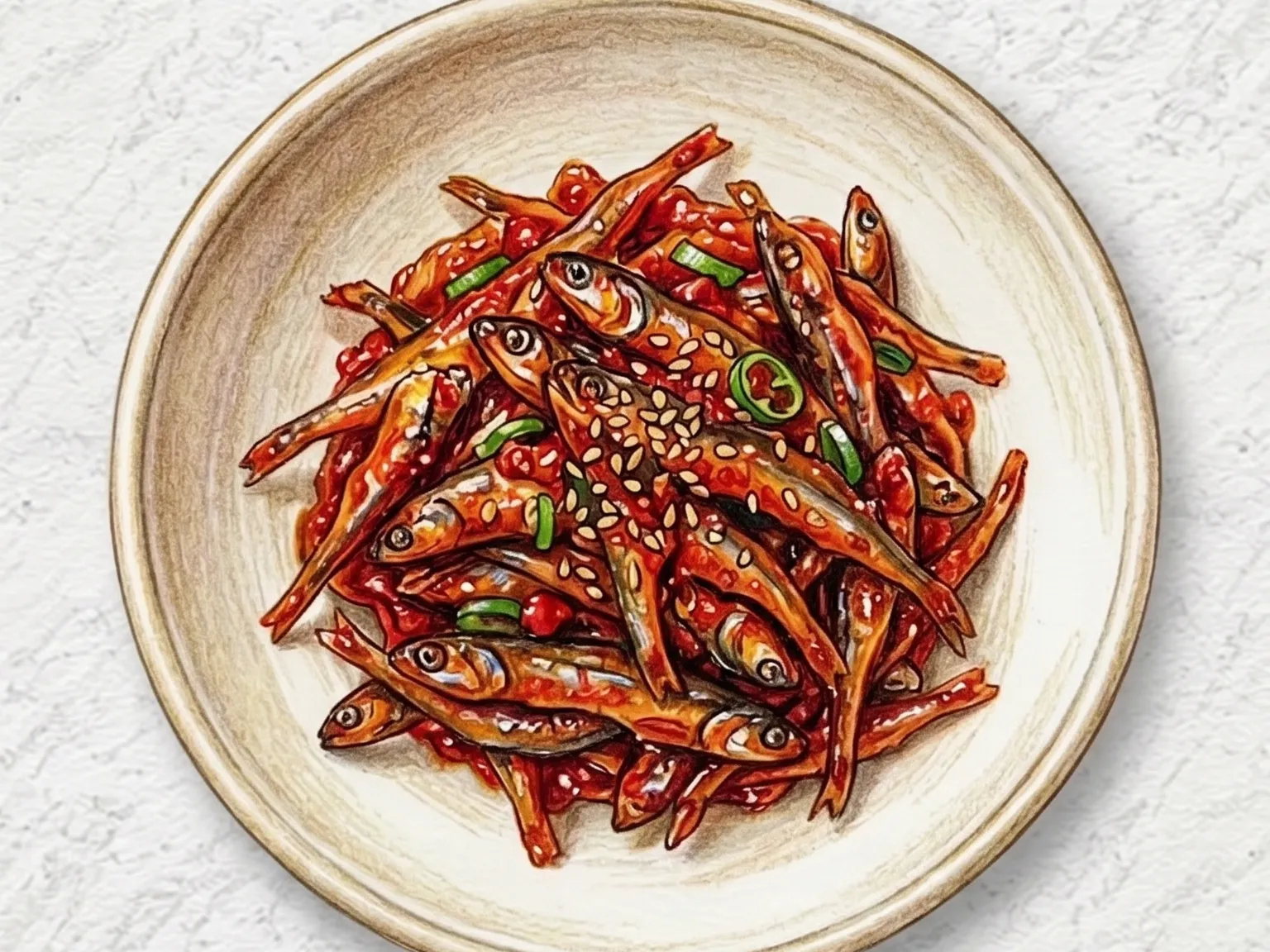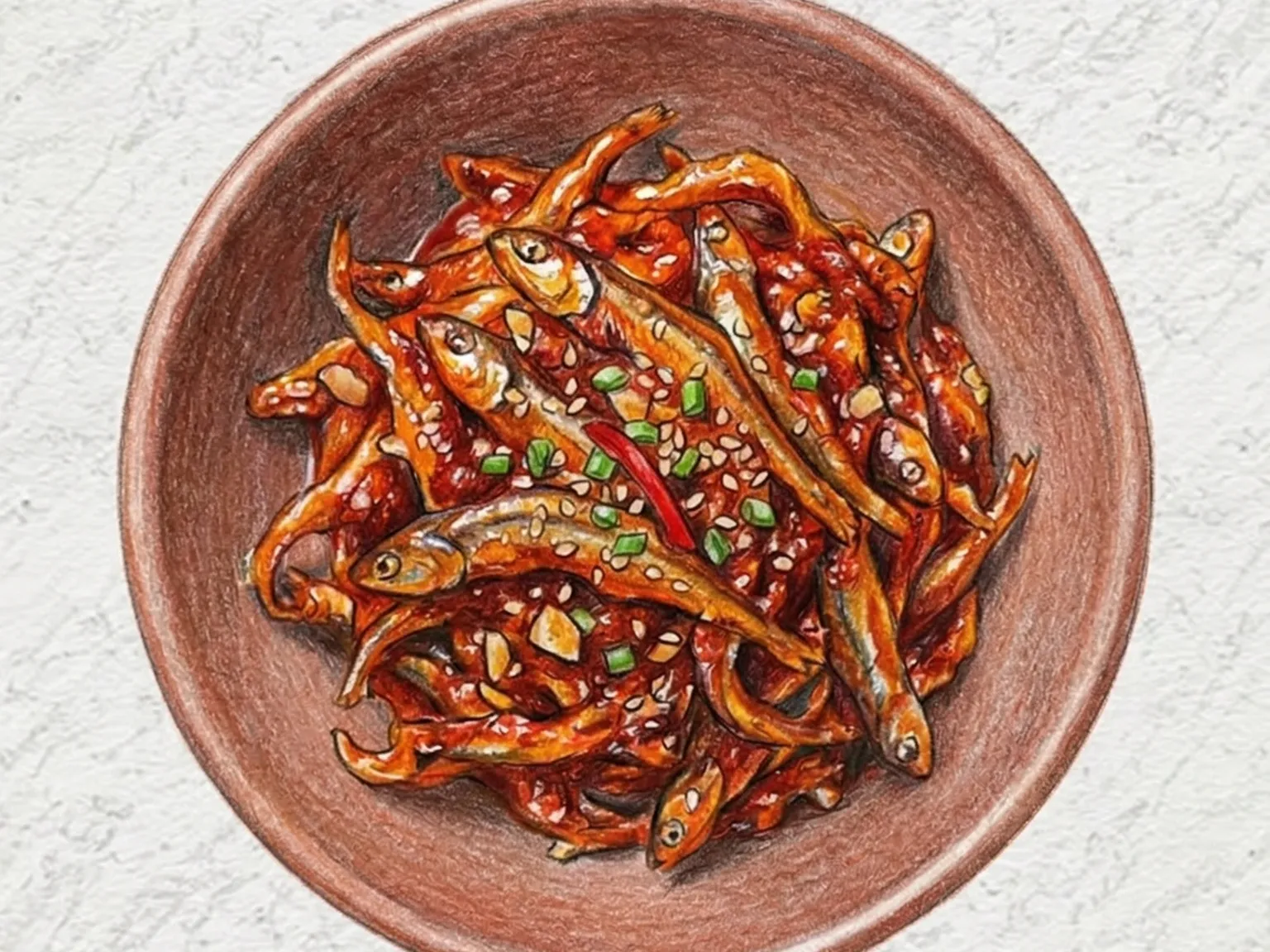
Korean Gochujang Grilled Anchovies
Myeolchi-gochujang-gui is a Korean gochujang-glazed anchovy side dish where medium-sized dried anchovies are first dry-toasted in a pan for one minute to reduce fishiness and drive off moisture, then tossed in a sauce of gochujang, soy sauce, oligosaccharide syrup, cooking wine, and minced garlic. The sauce is simmered briefly over low heat before the anchovies go in, cooking off the alcohol in the wine and thickening the glaze so it clings to each fish. Once the anchovies are added, the tossing should finish within two minutes-longer cooking hardens them rather than keeping them pleasantly chewy. Sesame oil and toasted sesame seeds folded in at the end round out the sweet-spicy-salty profile with a nutty finish.
Adjust Servings
Instructions
- 1
Shake anchovies in a sieve to remove dust and trim larger heads or innards if needed.
- 2
Dry-toast anchovies for 1 minute without oil to reduce fishy odor, then set aside.
- 3
Mix gochujang, soy sauce, syrup, cooking wine, and garlic into a sauce.
- 4
Simmer the sauce over low heat for 1 minute to cook off alcohol and thicken slightly.
- 5
Add anchovies and toss quickly for about 2 minutes until evenly coated.
- 6
Turn off heat and finish with sesame oil and sesame seeds.
As an Amazon Associate, we may earn from qualifying purchases.
Tips
Nutrition (per serving)
More Recipes

Korean Gochujang Grilled Garlic Scapes
Maneuljjong-gochujang-gui is a Korean grilled garlic scape dish where the scapes are cut into six-centimeter pieces, blanched for just thirty seconds, then stir-grilled in a pan with a sauce of gochujang, gochugaru, soy sauce, oligosaccharide syrup, and minced garlic. The brief blanch softens the fibrous outer layer while preserving the interior crunch, and an immediate cold-water rinse stops carryover cooking. The garlic scapes' sharp, pungent bite compounds with gochujang's fermented heat to create a layered spiciness that goes beyond simple chili burn. If the sauce begins to stick and scorch, a tablespoon of water loosens it without diluting the flavor, and a final drizzle of sesame oil with toasted sesame seeds closes the dish with a roasted nuttiness.

Korean Spicy Braised Tofu
Spicy dubu-jorim pan-sears firm tofu slabs cut 1.5 centimeters thick until golden on both sides, then braises them in a sauce of soy sauce, gochugaru, garlic, and sugar. Searing first firms the tofu so it holds its shape through the eight-minute simmer, during which onion and green onion cook alongside in the reducing liquid. The chili flakes deliver a direct, persistent heat that penetrates the tofu as the sauce thickens, balanced by the sugar's sweetness. A final circle of sesame oil ties the flavors together with a roasted, nutty aroma.

Korean Grilled Bellflower Root
Bellflower root is shredded lengthwise, soaked in salted water, and blanched for one minute to draw out its characteristic bitterness without eliminating it entirely. A ten-minute soak in a sauce of gochujang, gochugaru, soy sauce, oligosaccharide syrup, garlic, and sesame oil seasons the root before it hits a medium-heat pan for three to four minutes per side. The result has a crisp, crunchy bite - distinct from any other vegetable - with a red-glazed surface that carries moderate heat. Open-flame grilling adds a smoky dimension that pairs well with the spicy coating, and sesame seeds provide a finishing touch.

Korean Gochujang Fish Cake Stir-fry
Gochujang eomuk bokkeum stir-fries chewy fish cake sheets in a punchy sauce of gochujang, soy sauce, oligosaccharide syrup, and minced garlic. Blanching the fish cakes briefly beforehand removes excess grease, producing a cleaner-tasting dish where the spicy-sweet glaze clings evenly to each piece. Onion lends natural sweetness, while diagonally sliced green onion adds a fresh finishing aroma. Sesame oil and sesame seeds round out the flavors with a nutty layer. It is one of Korea's most popular everyday banchan, reliable enough for both daily meals and lunchbox packing.

Korean Stir-fried Sausage
Sosegi-bokkeum is a Korean sausage stir-fry where scored Vienna sausages are dry-fried until golden, then tossed with onion in a sauce of ketchup, gochujang, oligosaccharide syrup, and soy sauce. Scoring the sausages lets the sweet-spicy glaze seep into every cut, so the flavor is consistent from edge to center. The sauce caramelizes quickly -- just two minutes of tossing coats the sausages in a glossy, clingy layer. Finished with sesame seeds and sliced green onion, it is a staple banchan that packs well in lunchboxes.

Korean Gochujang Grilled Pork Ribs
Gochujang dwaeji-galbi-gui is a Korean spicy grilled pork rib dish that begins with soaking the ribs in cold water for thirty minutes to draw out blood, then marinating them for at least an hour in a paste of gochujang, soy sauce, sugar, Asian pear juice, garlic, sesame oil, cooking wine, and black pepper. The pear juice serves a dual purpose: its enzymes break down tough muscle fibers to tenderize the meat, while its natural fructose adds a clean sweetness that balances the fermented heat of gochujang. Because the sugar-heavy marinade burns easily, each side is grilled four to five minutes over medium heat before lowering the flame to finish cooking the interior without charring the glaze. Resting the ribs for three minutes before slicing locks the juices inside, keeping every piece moist under its glossy, caramelized crust.