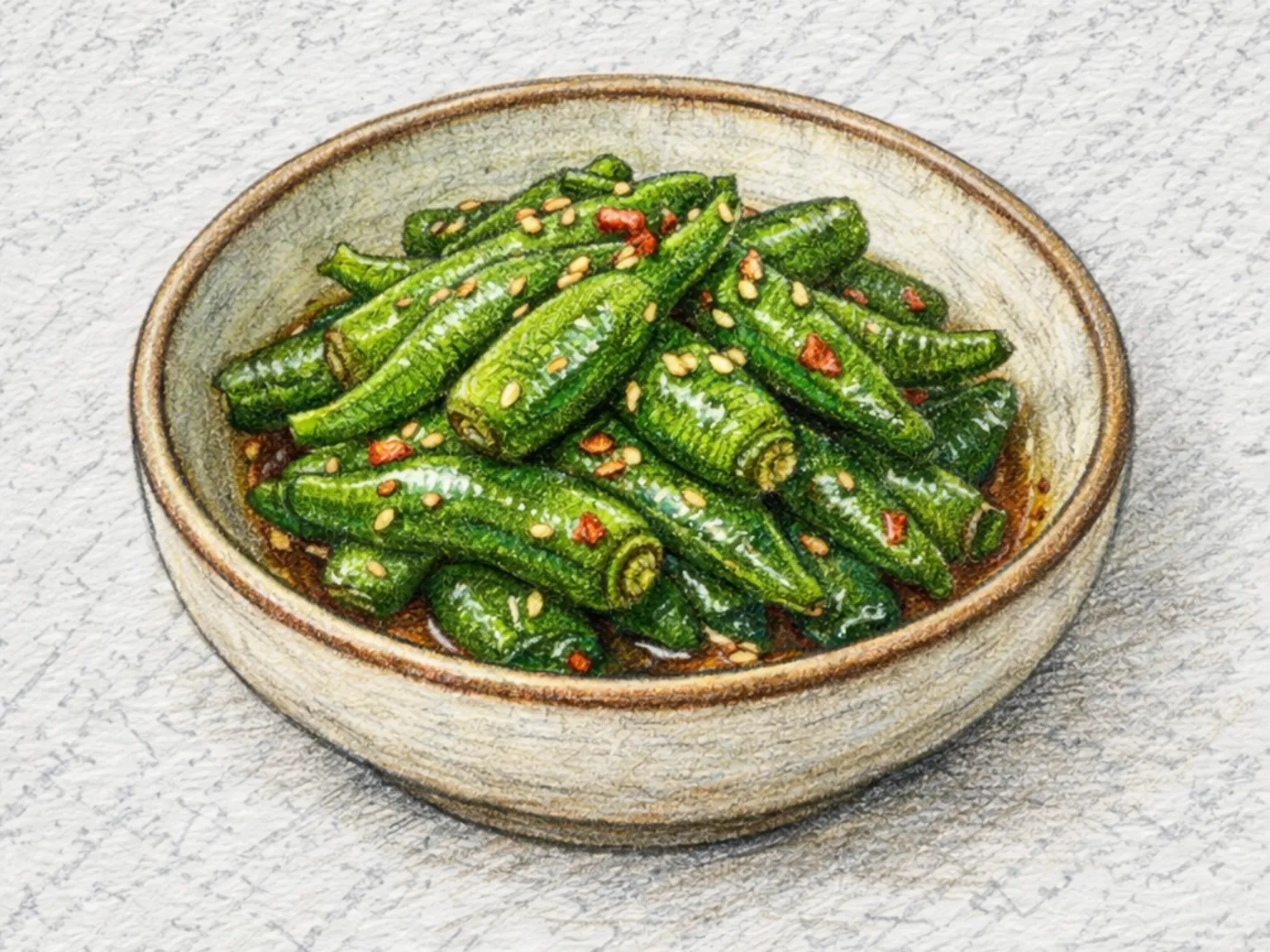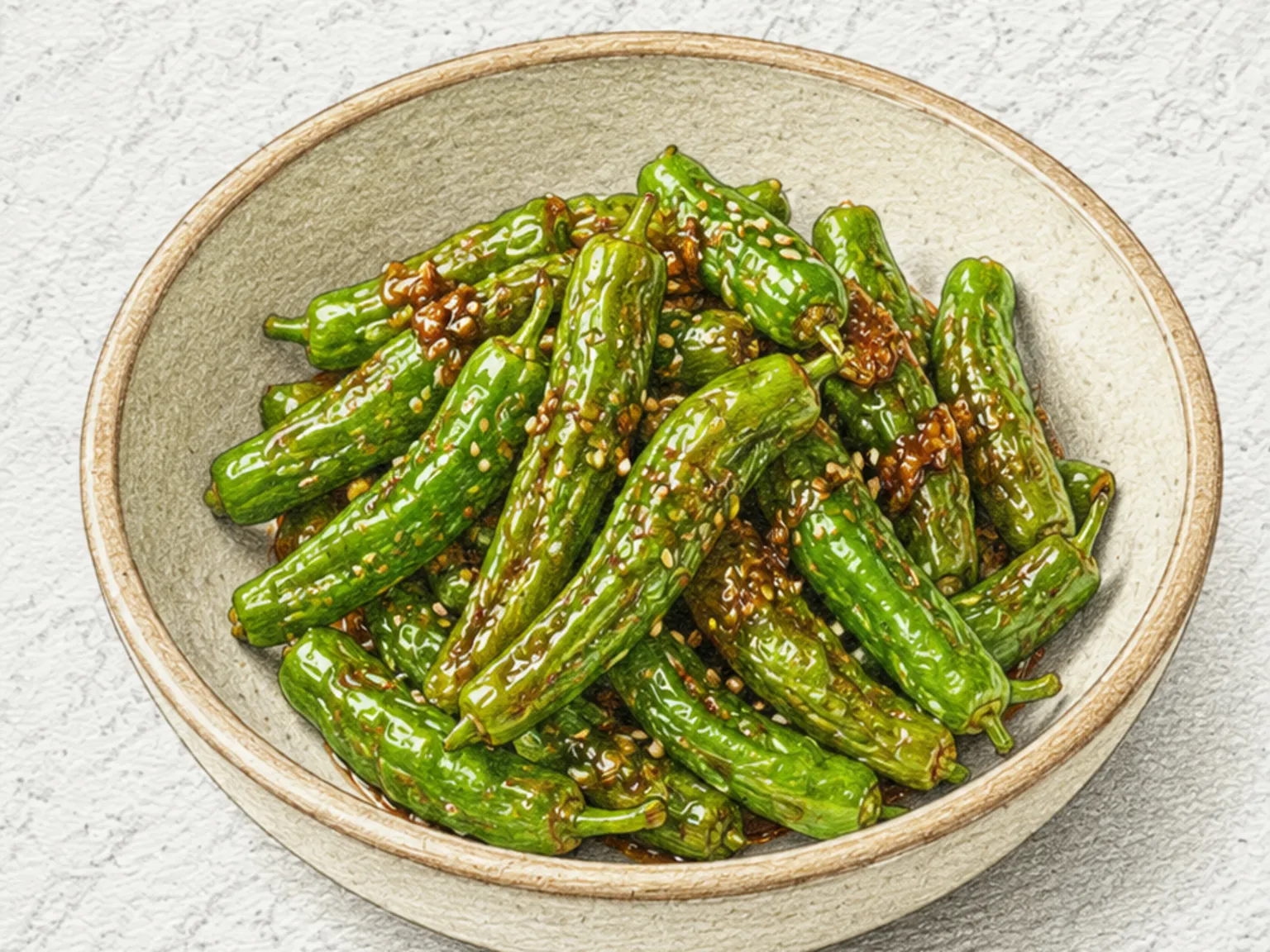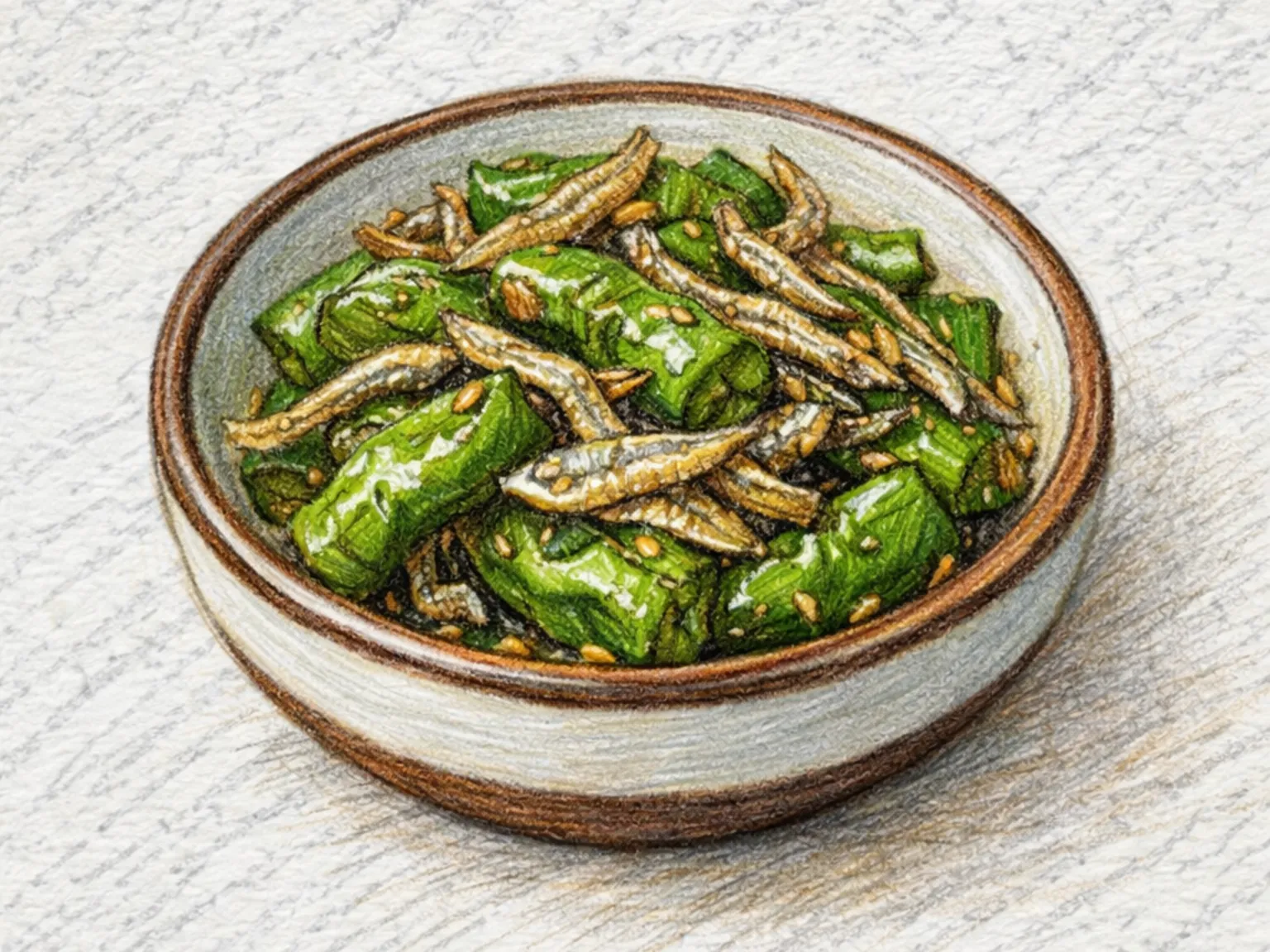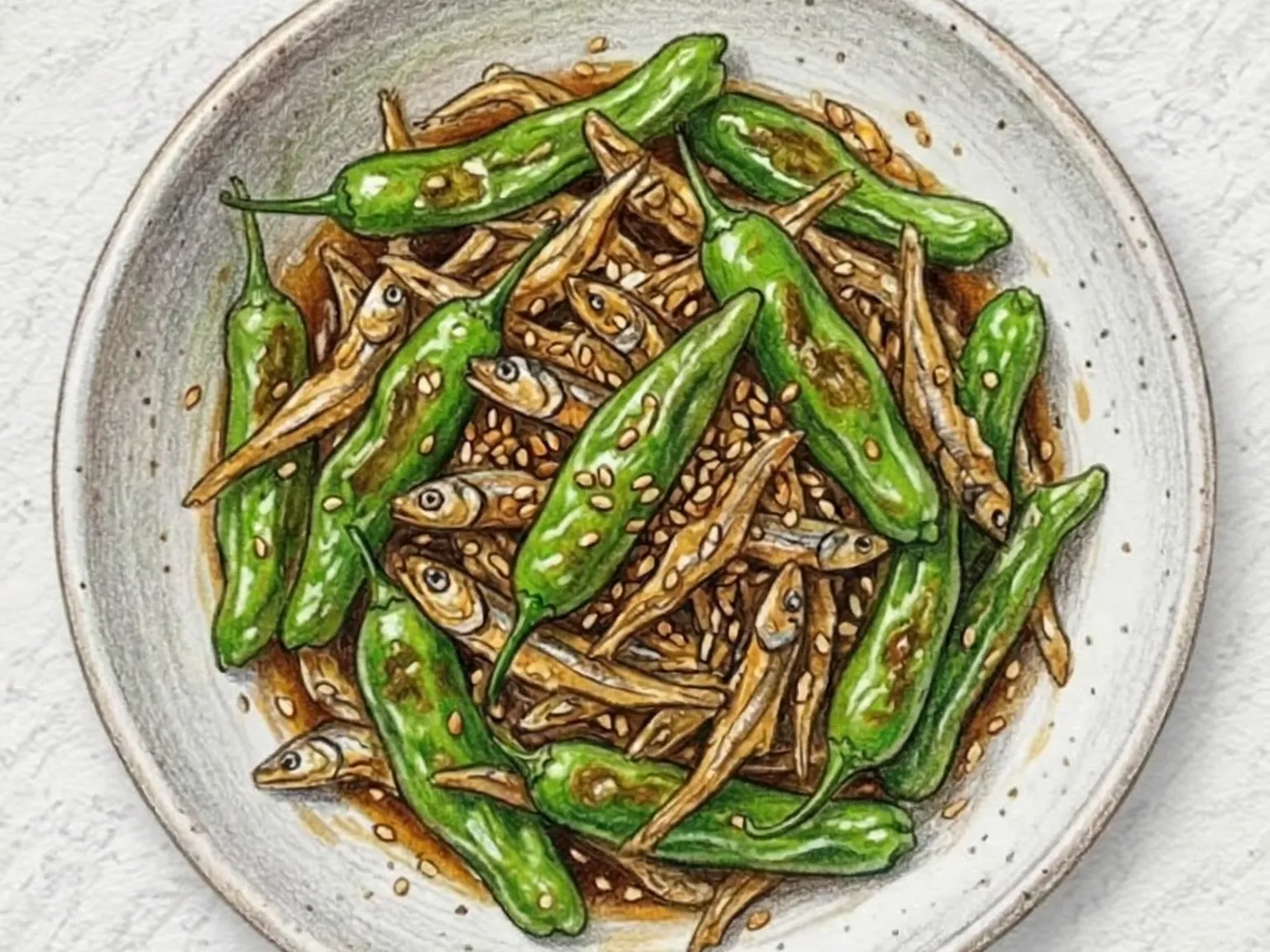
Korean Anchovy & Shishito Braise

Korean Anchovy & Shishito Braise

Quick answer

Myeolchi kkwari jorim is a Korean side dish of dry-toasted small anchovies and shishito peppers glazed in a sweet soy sauce with corn syrup and cooking wine.

What makes this special

  • Myeolchi kkwari jorim coats dry-toasted anchovies and shishito peppers in a glossy soy glaze for a nutty, savory side dish.
  • Dry-pan toasting removes fishiness and crisps the anchovies
  • Wrinkled peppers stir-fried in oil before glazing to bind the sauce
Total time
22 min
Level
Easy
Servings
4 servings
Ingredients
9
Calories
156 kcal
Protein
12 g

Key ingredients

small dried anchoviesshishito pepperssoy saucecooking winecorn syrup

Core cooking flow

  1. 1 Rinse 140 g shishito peppers, dry them well, and remove the stems.
  2. 2 Heat a dry pan over medium-low heat, add 90 g small dried anchovies, and toast for about 1 minute.
  3. 3 Add 1 tablespoon neutral oil to the same pan and stir-fry the peppers over m...

Myeolchi kkwari jorim is a Korean side dish of dry-toasted small anchovies and shishito peppers glazed in a sweet soy sauce with corn syrup and cooking wine. Toasting the anchovies first drives off any fishy smell and brings out their nuttiness, while the peppers are stir-fried in oil to release a mild, lingering heat. The glaze coats everything in a shiny, sweet-salty finish, and sesame oil with sesame seeds add a final toasted aroma. This banchan tastes even better the next day after the sauce has fully settled in, making it one of the most reliable lunchbox staples in Korean home cooking.

Prep 10min Cook 12min 4 servings

Instructions

Read the steps as a cooking flow: prep, heat, seasoning, doneness control, and finish.

6 steps
  1. 1
    Step

    Rinse 140 g shishito peppers, dry them well, and remove the stems.

    Prick each pepper 1-2 times with a fork so steam can escape and the peppers do not burst while braising.

  2. 2
    Control

    Heat a dry pan over medium-low heat, add 90 g small dried anchovies, and toast for about 1 minute.

    Stir constantly, then remove them as soon as they smell nutty so they do not turn hard.

  3. 3
    Control

    Add 1 tablespoon neutral oil to the same pan and stir-fry the peppers over medium heat for about 2 minutes.

    Stop when the skins look glossy and lightly wrinkled, before the peppers collapse.

  4. 4
    Control

    Add 2 tablespoons soy sauce, 1.5 tablespoons cooking wine, 1.5 tablespoons corn syrup, and 1 teaspoon sugar.

    Stir over medium heat until the sugar dissolves and the sauce bubbles around the edges.

  5. 5
    Control

    Return the toasted anchovies and toss quickly over medium heat for 3-4 minutes.

    When the glaze clings and looks shiny, stop reducing so the anchovies stay pleasantly crisp instead of tough.

  6. 6
    Season

    Turn off the heat, then mix in 1 teaspoon sesame oil and 1 teaspoon sesame seeds.

    Spread the braise out to cool before storing; the seasoning settles in better after cooling.

After the steps

Pick a recipe that fits this dish.

Continue with shared ingredients, meal pairings, or a similar method.

Recipes That Go Well With This

More Steamed →

Based on shared ingredients and meal pairing

Korean Braised Quail Eggs and Shishito Peppers
Shared ingredient: shishito peppers Steamed

Korean Braised Quail Eggs and Shishito Peppers

Kkwari-mechurial-jorim is a Korean banchan of boiled quail eggs and shishito peppers braised in soy sauce and oligosaccharide syrup until the glaze turns deeply glossy. The quail eggs absorb the soy-based liquid over the heat, gradually browning on the outside while the seasoning penetrates all the way to the yolk, giving every bite a uniform, savory depth. The peppers hold onto their crunch and mild grassy flavor even after cooking, providing a textural and aromatic contrast to the dense richness of the eggs. Oligosaccharide syrup keeps the glaze shiny and adds a gentle, rounded sweetness that does not overwhelm the soy, and sesame oil stirred in at the end along with whole sesame seeds finishes the dish with a clean, nutty aroma. The braising liquid should be cooked down until almost completely reduced -- that is when the glaze adheres firmly to each piece and stays shiny even as the dish cools. Piercing each shishito with a toothpick before cooking lets the seasoning penetrate the interior and prevents the peppers from bursting. Refrigerated, the flavors deepen overnight and the dish stays good for three to four days, which makes it a practical choice for weekly meal prep and packed lunches alike.

Korean Braised Potatoes with Shishito Peppers
Shared ingredient: shishito peppers Steamed

Korean Braised Potatoes with Shishito Peppers

Kkwari-gamja-jorim is a Korean braised side dish of cubed potatoes and shishito peppers cooked down in soy sauce, oligosaccharide syrup, and minced garlic. The potatoes start in a sauce with enough moisture to cook through, and as the liquid reduces, the seasoning thickens into a glossy coating. By the time the pan is nearly dry, the outside of each potato piece has taken on a sweet-salty glaze while the inside stays floury and soft. Shishito peppers, with their wrinkled skins, hold the sauce well and require only brief cooking to stay crisp. A final drizzle of sesame oil and a scatter of sesame seeds add a nutty aroma and a visual finish that signals the dish is done. The heat level stays mild, suitable for children, and the glaze sets firmly enough that the dish travels well in a packed lunch without losing flavor at room temperature.

Korean Beef & Shiitake Japchae
Serve together Side dishes

Korean Beef & Shiitake Japchae

Japchae originated as a Joseon royal court dish of stir-fried vegetables before sweet potato glass noodles were added to create the form recognized today. This version pairs glass noodles with soy-marinated beef and sliced shiitake mushrooms. Each component cooks separately: beef and mushrooms stir-fried with garlic, spinach blanched and squeezed dry, carrots and onions sauteed until just tender. A final toss with sesame oil brings everything together. The noodles should be translucent and springy, carrying a sweet-salty soy glaze into each forkful. A standard presence on every Korean holiday table at Chuseok, Seollal, and birthday celebrations alike.

Korean Garlic Scape Anchovy Braise
Similar recipe Steamed

Korean Garlic Scape Anchovy Braise

Maneuljjong-myeolchi-jorim is a Korean pantry side dish of garlic scapes and small dried anchovies glazed in soy sauce, oligosaccharide syrup, and sesame oil. The anchovies are coated evenly as the seasoning heats around them, building a sweet-salty shell that deepens into nuttiness with each bite. Garlic scapes are cut into short pieces and stir-fried directly in the sauce without blanching, which keeps them snappy rather than soft. Oligosaccharide syrup holds its shine and moisture longer than plain sugar, and sesame oil is added only at the very end to preserve its aroma. The finished dish keeps for well over a week under refrigeration, making it a reliable weekly batch cook. It travels well in lunchboxes, and spooned over hot white rice the glaze soaks into the grains and brings the whole bowl together.

Serve with this

Korean Cockle & Water Parsley Mixed Rice
Rice Medium

Korean Cockle & Water Parsley Mixed Rice

Kkomak-minari bibimbap is a seasonal rice bowl that comes together when cockles are at their peak in early spring, pairing the ocean sweetness of briefly blanched cockle meat with the clean, grassy sharpness of raw water parsley (minari). The cockle meat is rinsed in light salt water to remove any residual sand, then blanched for no more than thirty seconds in boiling water so the flesh stays springy rather than contracting into a rubbery texture. Julienned carrot and zucchini are each stir-fried separately, controlling moisture and flavor independently, then set aside to cool before assembly. A bowl of well-steamed rice is layered with the blanched cockles, the sauteed vegetables, and the raw minari placed on top last to protect its volatile fragrance from the heat below. A bibimbap sauce made from gochujang, sesame oil, minced garlic, and a touch of vinegar ties everything together when mixed, balancing the briny umami of the cockles against the brightness of the parsley. Sesame oil and toasted sesame seeds added at the end round the flavors and give the bowl a warm, nutty finish.

🎉 Special Occasion 🍱 Lunchbox
Prep 20min Cook 15min 2 servings
Eomuk-guk (Fish Cake Radish Clear Soup)
Soups Easy

Eomuk-guk (Fish Cake Radish Clear Soup)

Eomuk-guk is a straightforward Korean soup centered around fish cakes and a base liquid prepared by simmering sliced radish. The initial step involves boiling the radish in water for a sufficient duration so that it releases a mild, natural sweetness into the broth while the liquid itself takes on a slightly translucent appearance. Depending on individual preference, the radish can be taken out of the pot or left in as part of the final dish. Once the base is ready, pieces of fish cake are added to the boiling liquid along with soup soy sauce and minced garlic. The mixture then simmers for approximately six minutes, a period during which the fish cakes soften and absorb the saltiness of the soy sauce while simultaneously contributing their own flavor back into the soup base. To finish the preparation, thinly sliced green onions and a sprinkle of black pepper are stirred in. These final additions provide a sharp fragrance and a gentle heat that helps recreate the specific taste found at traditional Korean snack bars and street food carts. The entire cooking procedure is completed in about twenty minutes. Because the required ingredients are minimal and often staples, this recipe serves as a practical option for times when there are few groceries available in the kitchen. This makes the dish accessible even when the refrigerator is nearly empty and only basic pantry items remain.

🏠 Everyday 🥗 Light & Healthy
Prep 10min Cook 20min 2 servings
Korean Green Chili Kimchi
Kimchi Easy

Korean Green Chili Kimchi

Gochu kimchi is a spicy Korean kimchi made with whole or halved green chili peppers that are salted, then dressed in gochugaru, salted shrimp, anchovy fish sauce, and garlic before a short fermentation period. The thick pepper walls retain a firm crunch through salting and fermentation, and the seeds clustered inside deliver a concentrated burst of heat when bitten into. Salted shrimp brings immediate umami even without extended aging, and the pepper's own grassy sweetness supports the seasoning in place of added sugar. Salting the peppers for thirty to forty minutes with coarse salt draws out moisture without making them overly salty, which keeps the finished kimchi well-balanced. Served alongside grilled pork belly or bossam, this kimchi acts as a sharp, refreshing counterpoint that cuts through the richness of fatty meats.

🍱 Lunchbox 🏠 Everyday
Prep 25min 4 servings

Similar recipes

Korean Braised Anchovy Side Dish
Side dishes Easy

Korean Braised Anchovy Side Dish

Myeolchi-jorim simmers tiny dried anchovies in soy sauce, rice syrup, and garlic into a moist, glazed banchan that contrasts fundamentally with stir-fried anchovy preparations. Where bokkeum chases crispness by cooking over high heat with minimal liquid, jorim pursues the opposite - anchovies braise in a seasoned liquid on low heat until they absorb it from the inside out, becoming pliant and saturated with sweet-salty flavor all the way through their flesh. A one-minute dry toast in a bare pan removes any residual fishiness before soy sauce, syrup, minced garlic, and water go in together, simmering uncovered for ten minutes while the liquid steadily reduces. As the sauce thickens, a sticky dark glaze wraps around each anchovy; biting one releases a rush of seasoned juice from within rather than the crunch of a dehydrated fish. Sesame seeds and sesame oil stirred in off heat add a final layer of warmth and nuttiness. Once fully cooled, the reduced sauce thickens further into an almost jelly-like coating that holds the anchovies together in a satisfying cluster. Stored in an airtight container in the refrigerator, myeolchi-jorim keeps well for over a week and the flavor continues to deepen as the anchovies sit in the congealed glaze.

🏠 Everyday 🍱 Lunchbox
Prep 8min Cook 15min 4 servings
Korean Braised Squid with Shishito Peppers
Steamed Medium

Korean Braised Squid with Shishito Peppers

Kkwari-ojingeo-jorim is a Korean braise of squid and shishito peppers simmered in a gochujang and soy sauce seasoning. The squid retains its chewy bounce while soaking in the bold sauce, and the peppers absorb enough flavor to stand on their own while keeping a slight crunch. Gochujang brings a warm spiciness that combines with soy sauce's depth into a multilayered seasoning, and garlic with ginger neutralizes any seafood odor. As the liquid reduces, it coats each piece in a concentrated glaze that makes this banchan work especially well spooned over a bowl of steamed rice.

🏠 Everyday 🍱 Lunchbox
Prep 18min Cook 17min 2 servings
Korean Stir-fried Anchovies with Shishito Peppers
Stir-fry Easy

Korean Stir-fried Anchovies with Shishito Peppers

Kkwarigochu myeolchi bokkeum is a Korean banchan of dried anchovies and shishito-style peppers cooked together and glazed with soy sauce and oligosaccharide syrup. The anchovies are dry-toasted first in an unoiled pan over medium heat until their moisture evaporates and the fishiness reduces, then set aside. Oil goes into the pan next and the kkwarigochu peppers are fried over medium-high heat until blistered and darkened in spots, which develops a slightly bitter, charred edge that adds character to the finished dish. The anchovies return to the pan along with the peppers, soy sauce is added for the base seasoning, and then the heat is reduced before the oligosaccharide syrup goes in. Adding the syrup over reduced heat is the step that most often goes wrong: high heat scorches the syrup almost immediately, preventing the glaze from forming and leaving a bitter residue instead. Over low heat, the syrup coats the anchovies and peppers in a thin, shiny layer as it slowly reduces. Sesame oil and whole sesame seeds are stirred in at the end for fragrance and texture. The finished dish layers the crunchy, salty anchovies against the syrup's gentle sweetness, with the peppers providing mild heat that prevents the flavor from becoming cloying. Stored in a sealed container in the refrigerator, the banchan keeps well for several days.

🏠 Everyday 🍱 Lunchbox
Prep 10min Cook 9min 4 servings

Tips

Add anchovies late; over-braising makes them tough.
It tastes better the next day as the sauce settles in after cooling.

Nutrition (per serving)

Calories
156
kcal
Protein
12
g
Carbs
11
g
Fat
7
g